If your voice has become softer since a Parkinson's diagnosis, you are not alone. Up to 90% of people with Parkinson's notice changes in their voice and speech at some point. Family members ask you to repeat yourself, phone calls get harder, and conversations in noisy places feel tiring.
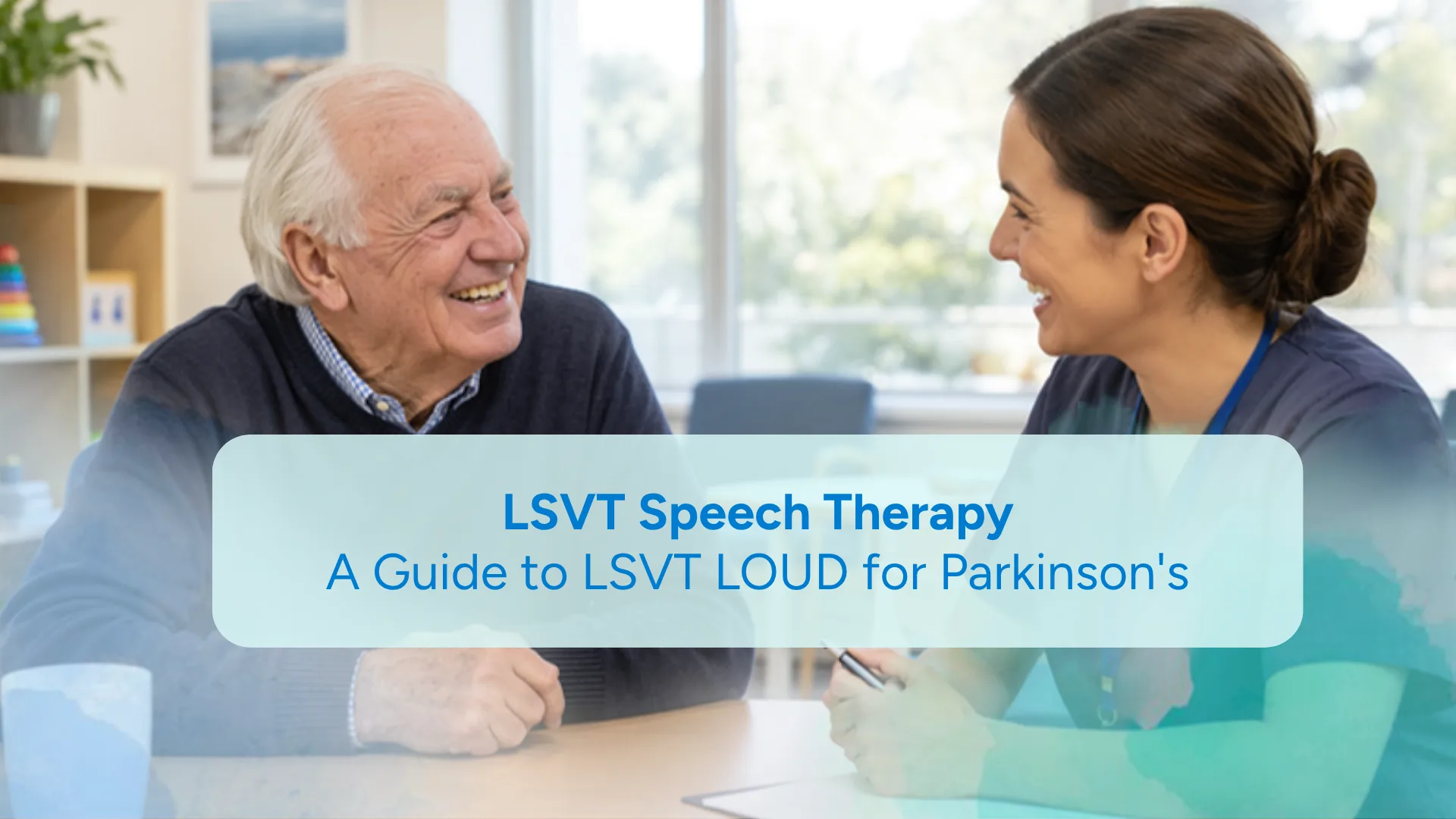
LSVT speech therapy, known as LSVT LOUD, is one of the most researched voice treatments for Parkinson's. This guide explains what it is, how it works, what a typical month of therapy looks like, and how you can fund it in Australia, including through the NDIS.
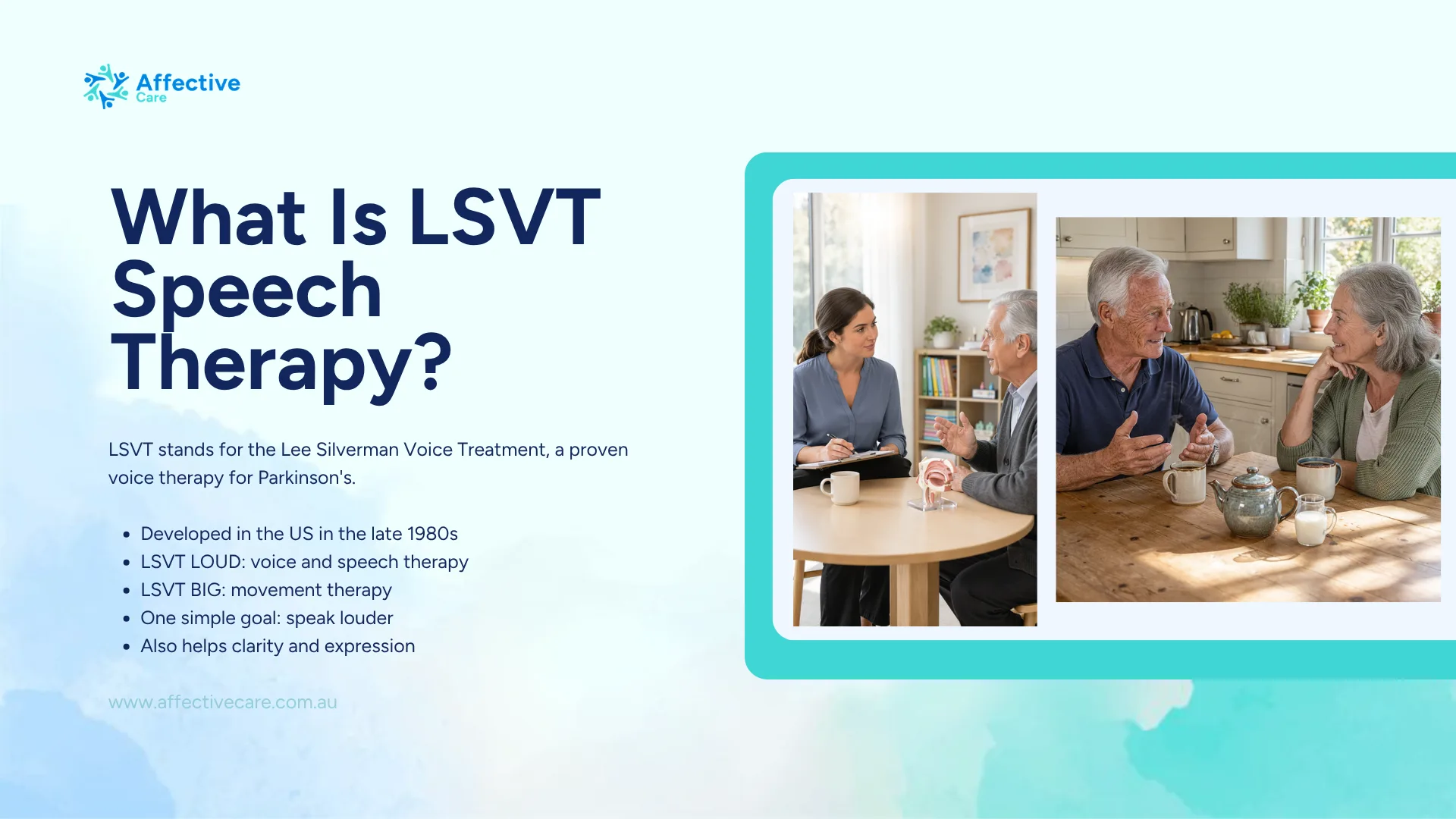
What Is LSVT Speech Therapy?
LSVT stands for the Lee Silverman Voice Treatment. It was developed in the United States in the late 1980s and named after Mrs Lee Silverman, one of the first people with Parkinson's to receive the therapy.
Today there are two LSVT programs:
- LSVT LOUD, delivered by speech pathologists, which focuses on voice and speech.
- LSVT BIG, delivered by physiotherapists and occupational therapists, which focuses on larger, more confident movement.
When people search for "LSVT speech therapy", they almost always mean LSVT LOUD. It has a single, simple goal: speak louder. Working on loudness tends to improve many other parts of speech at the same time, such as clarity, voice quality, facial expression and even swallowing.
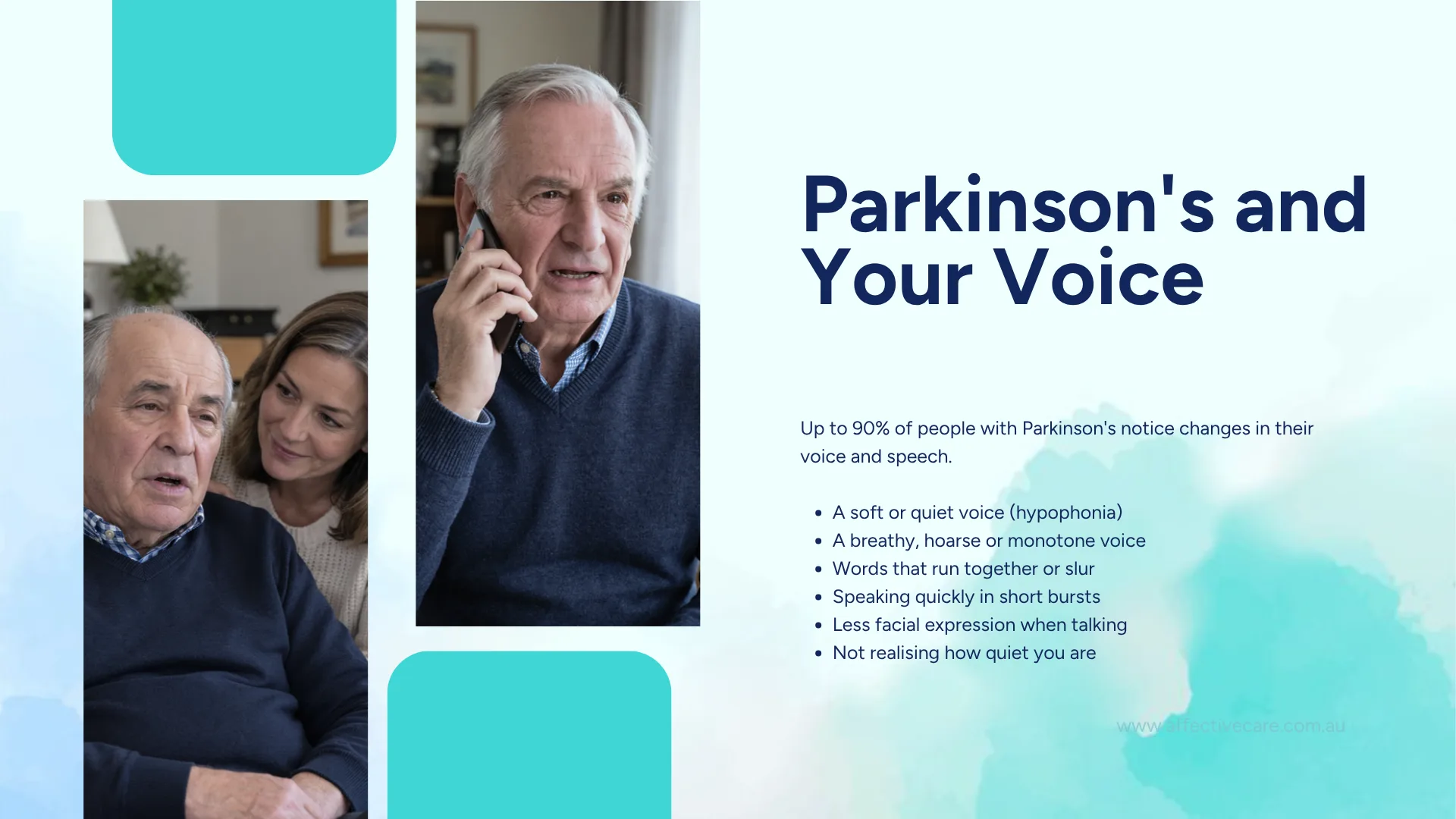
How Parkinson's Affects Your Voice
Parkinson's reduces dopamine in the brain, which affects how big and strong your movements are. In speech, this often shows up as:
- A soft or quiet voice (hypophonia)
- A breathy, hoarse or monotone voice
- Words that run together or sound slurred
- Speaking quickly in short bursts
- Less facial expression when talking
A key problem is that many people with Parkinson's don't realise how quiet they are. Your voice sounds normal to you, even when others struggle to hear it. This change in "internal calibration" is exactly what LSVT LOUD targets.
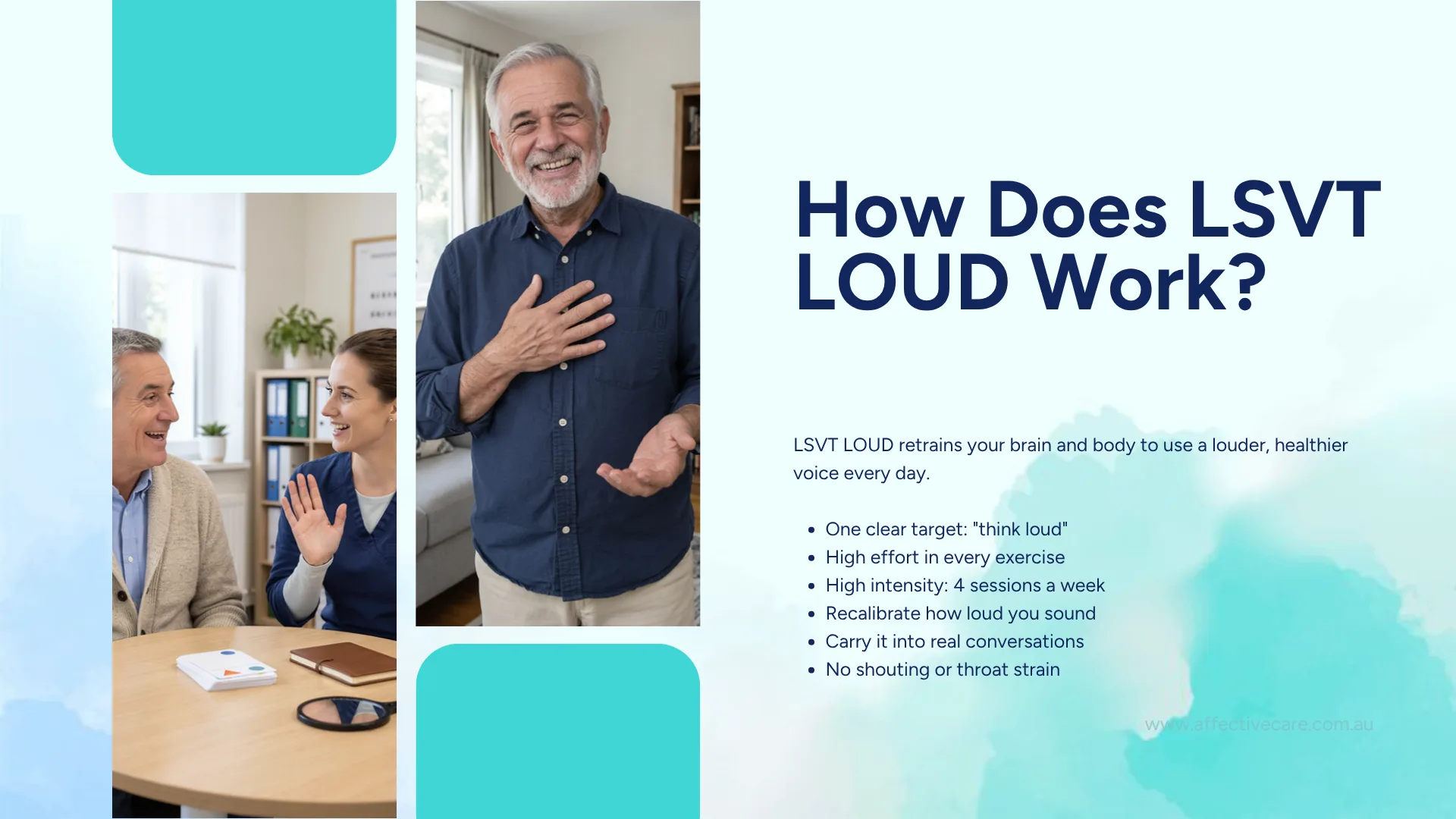
How Does LSVT LOUD Work?
LSVT LOUD retrains the brain and body to use a louder, healthier voice in everyday life. It is built on a few core principles:
- One clear target. Everything focuses on loudness, using the cue "think loud".
- High effort. Each exercise asks for maximum effort so the muscles and brain pathways get a strong workout.
- High intensity. Frequent sessions in a short time help new habits stick.
- Recalibration. You learn that a voice that feels "too loud" to you actually sounds normal to others.
- Carryover. Practice moves from simple drills to real conversations at home, at work and in the community.
This is not about shouting. Your speech pathologist will teach you to use a strong, healthy voice without straining your throat.
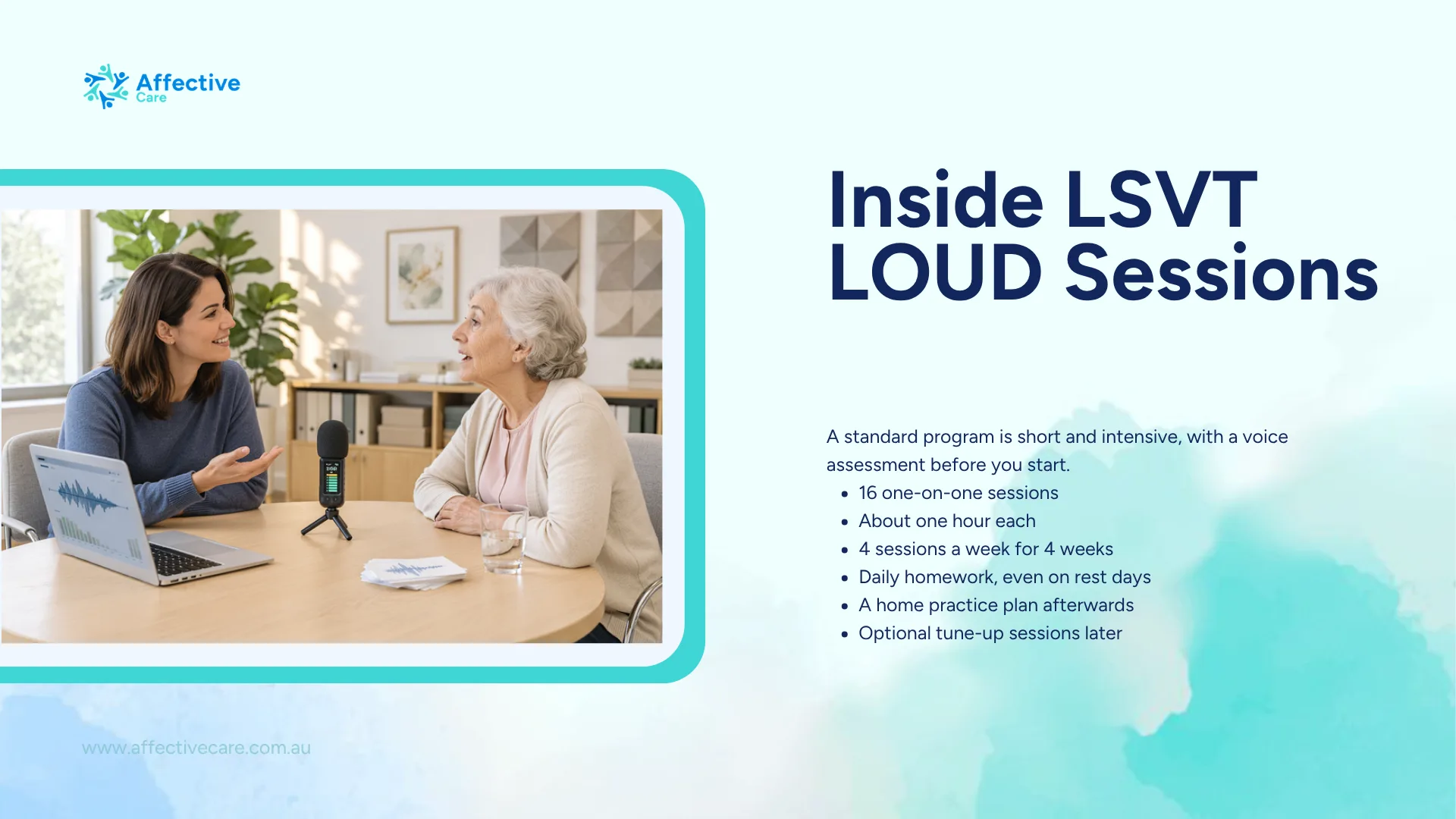
What Happens in LSVT LOUD Sessions?
A standard LSVT LOUD program includes:
- 16 individual sessions, each about one hour
- 4 sessions a week for 4 weeks
- Daily homework, including on non-therapy days
- An ongoing home practice plan after the program ends
Before you start, your speech pathologist will assess your voice, loudness, speech clarity and daily communication goals. Each session then follows a similar pattern, moving from short drills to longer, more natural speech. Many clinics also offer short "tune-up" sessions in the months after treatment to help you keep your gains.
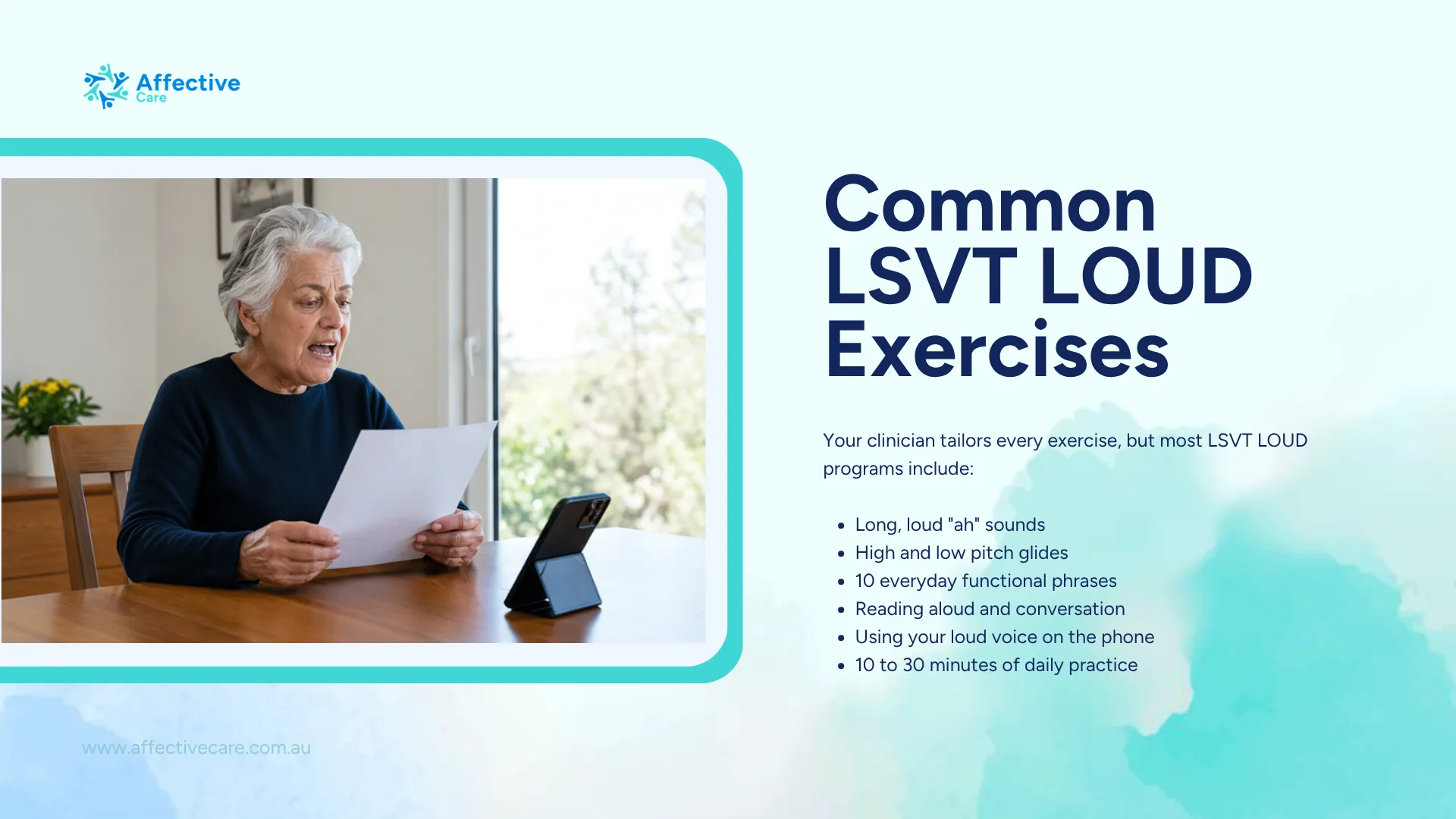
Common LSVT LOUD Exercises
Your clinician will tailor the exercises to you, but most programs include:
- Long "ah" sounds. Holding a loud, good-quality "ah" for as long as you can.
- High and low pitch glides. Sliding your voice up and down to build range and flexibility.
- Functional phrases. Saying 10 phrases you use every day, such as "Good morning" or "Can I have a coffee, please?", in a loud voice.
- Reading and conversation. Using your loud voice when reading aloud, telling stories and chatting.
- Daily carryover tasks. Using your loud voice on the phone, at the shops or with family.
Home practice usually takes 10 to 30 minutes a day. Sticking with it is one of the biggest factors in how well LSVT LOUD works.
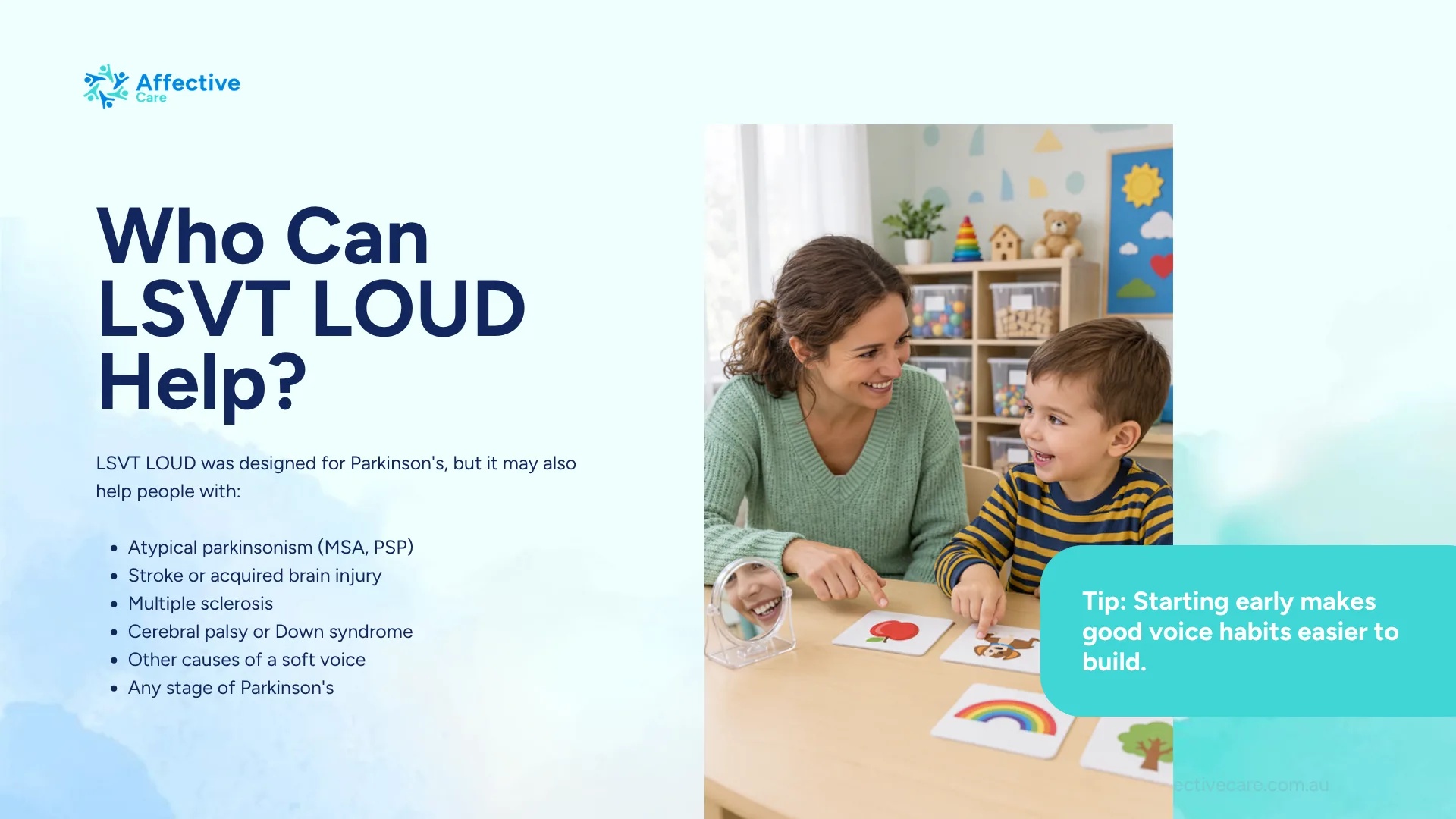
Who Can Benefit From LSVT LOUD?
LSVT LOUD was first designed for Parkinson's, and that is where the research is strongest. It may also help people with:
- Atypical parkinsonism, such as multiple system atrophy or progressive supranuclear palsy
- Stroke or acquired brain injury
- Multiple sclerosis
- Children with cerebral palsy or Down syndrome, through the LSVT LOUD for kids approach
- Other conditions that cause a soft or unclear voice
It can help at any stage of Parkinson's, but starting early often makes it easier to build and keep good habits. A speech pathologist can tell you whether LSVT LOUD suits you or whether another approach to speech therapy in your NDIS plan would be a better fit.
Is LSVT LOUD Effective?
LSVT LOUD has been studied for more than 30 years, including in randomised controlled trials. Studies have found that people with Parkinson's who completed LSVT LOUD:
- Spoke louder after treatment, compared with people who had other or no therapy
- Kept many of those gains for up to two years with home practice
- Showed improvements in speech clarity, intonation and facial expression
Results vary from person to person. Your progress will depend on your health, how often you practise and how your condition changes over time.
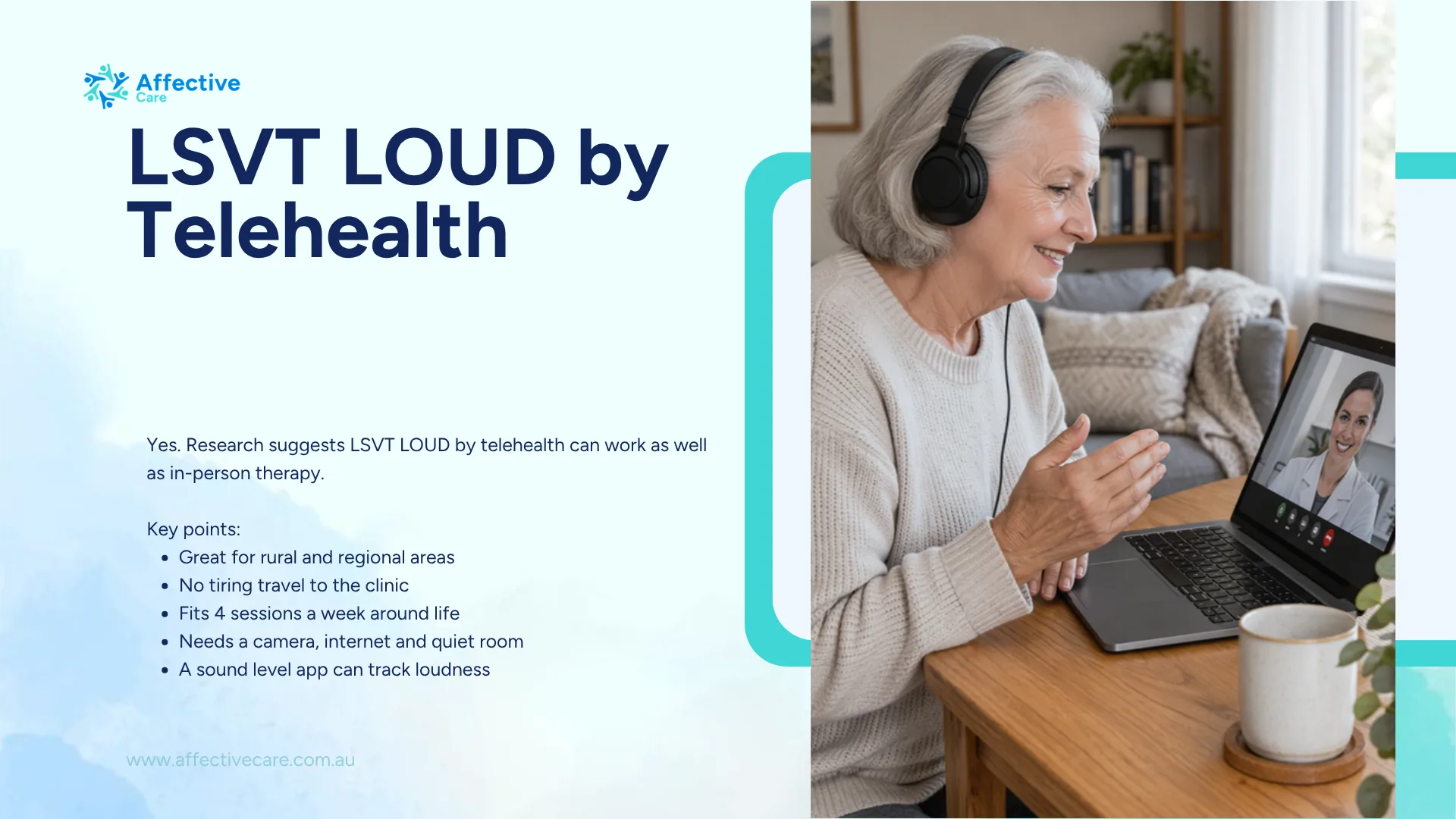
Can You Do LSVT LOUD by Telehealth?
Yes. LSVT LOUD can be delivered online, and research suggests telehealth results can be similar to in-person therapy. If you are new to online therapy, our guide to NDIS telehealth explains how it works. Telehealth is helpful if you:
- Live in a rural or regional area
- Find travel tiring or difficult
- Want to fit four sessions a week around your routine
For telehealth you'll need a computer or tablet with a camera, a reliable internet connection and a quiet room. Your clinician may also ask you to use a sound level meter app so you can track your loudness at home.
Funding LSVT LOUD Through the NDIS and Medicare
The cost of LSVT LOUD depends on the provider and how sessions are delivered. Because it is an intensive program, it helps to plan your funding before you start. Common options in Australia include:
- NDIS. If you are an NDIS participant and your speech supports relate to your disability, LSVT LOUD may be funded under Capacity Building – Improved Daily Living. Talk to your support coordinator or plan manager about whether your plan has enough funding for 16 sessions plus reports.
- Medicare. A GP Chronic Condition Management Plan can give you a Medicare rebate for a limited number of allied health sessions each year. This may cover part of the program.
- Private health insurance. Many extras policies include speech pathology. Check your limits and gap fees.
- My Aged Care. If you are over 65 and receive aged care services, allied health supports may be available through your package.
Always ask for a written quote and confirm how assessment and report-writing time will be charged.
How to Find an LSVT LOUD Speech Pathologist
Only clinicians who have completed LSVT LOUD training and certification can deliver the program. When looking for support:
- Ask whether the speech pathologist is LSVT LOUD certified and how often they deliver it.
- Check whether they offer telehealth, home visits or clinic sessions.
- Ask how they will support you after the 4 weeks, including tune-up sessions.
- Confirm they are a registered NDIS provider if you plan to use NDIS funding.
Your GP, neurologist or a local Parkinson's organisation can also help you find a certified clinician near you.
Speech Therapy Support With Affective Care
At Affective Care, our speech therapy team supports adults and children with voice, speech, language and swallowing needs, both in person and via telehealth. We work closely with NDIS participants, families and support coordinators so therapy fits your goals and your plan.
If you or someone you care for has noticed a softer or less clear voice, contact our team to talk through your options and find the right speech support for you.
Frequently asked questions
Is LSVT LOUD only for people with Parkinson's?
No. It was designed for Parkinson's, but it is also used for people with stroke, multiple sclerosis, cerebral palsy and other conditions that cause a soft or unclear voice.
How long does LSVT LOUD take?
The standard program is 16 one-hour sessions over 4 weeks, plus daily home practice. Ongoing practice afterwards helps you keep your results.
Will LSVT LOUD make me shout?
No. It teaches you to use a healthy, louder voice that sounds normal to other people, without straining your throat.
Can the NDIS pay for LSVT LOUD?
It may. If the therapy relates to your disability and your goals, it can be funded through Capacity Building – Improved Daily Living supports in your plan.
Can I do LSVT LOUD online?
Yes. LSVT LOUD can be delivered by telehealth, which suits people in regional areas or anyone who finds travel difficult.
What is the difference between LSVT LOUD and LSVT BIG?
LSVT LOUD is speech therapy that focuses on your voice. LSVT BIG is physiotherapy or occupational therapy that focuses on bigger, safer movement.