NDIS support coordinator burnout is a state of physical and emotional exhaustion caused by long-term work stress that hasn't been managed well.
It often shows up as constant tiredness, feeling detached from participants, and a sense that nothing you do is enough. It is common, it is not a personal failure, and it can be prevented and treated.
Support coordinators sit between participants, families, providers and the NDIA. You chase quotes, write reports, handle crises and keep plans on track, often with more participants than hours.
This guide explains why the role carries such a high risk of burnout, the signs to watch for, and what both coordinators and NDIS providers can do about it.
What Is NDIS Support Coordinator Burnout?
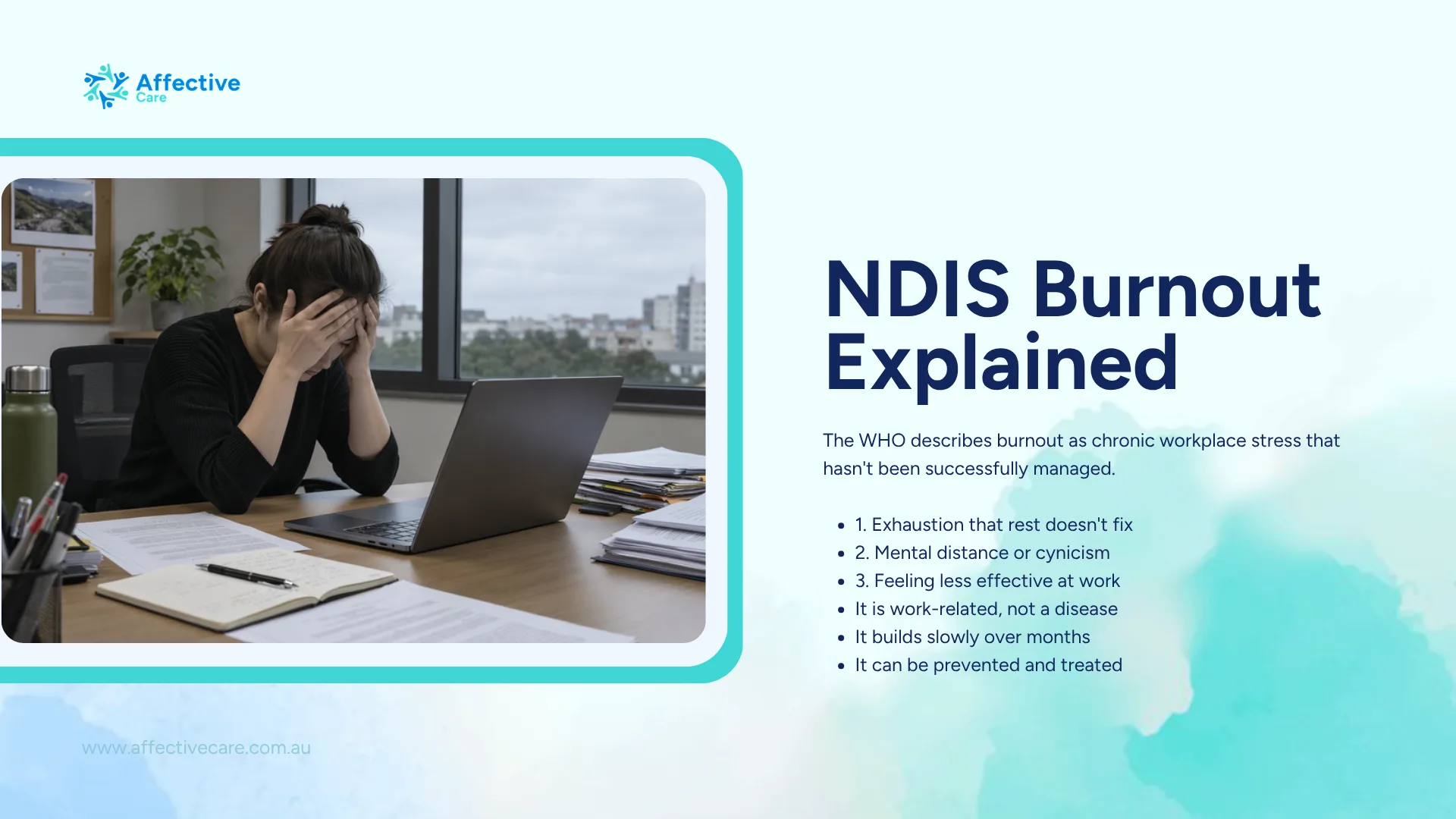
Burnout is a work-related syndrome, not a medical diagnosis. In its ICD-11 classification, the World Health Organization describes burnout as resulting from "chronic workplace stress that has not been successfully managed".
The WHO lists three features:
- Exhaustion. Feeling drained of energy, even after a weekend or a break.
- Mental distance. Feeling negative, cynical or detached from your job and the people you support.
- Reduced effectiveness. Feeling you are not doing your job well, or not achieving anything.
For an NDIS support coordinator, this might look like dreading Monday's phone calls, feeling numb when a participant shares bad news, or doubting whether your work makes any difference.
Why Are NDIS Support Coordinators at Risk of Burnout?
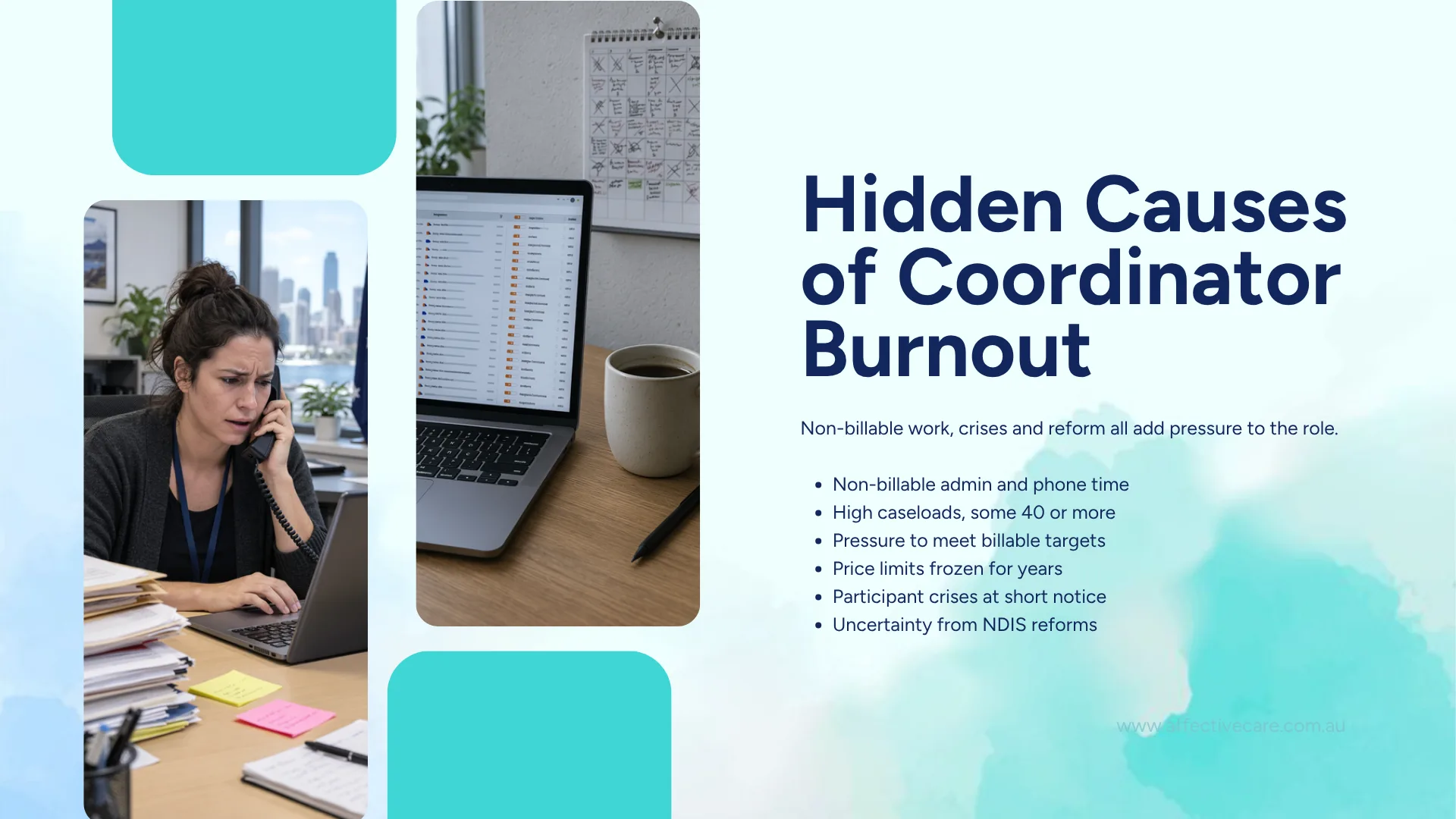
Support coordinators carry a heavy mix of emotional, administrative and financial pressure. Many of the stresses are built into how the role works.
Common causes include:
- High caseloads. Some coordinators manage 40 or more participants, each with their own plan dates, providers and goals.
- Non-billable time. Chasing providers, waiting on hold and doing admin can't always be claimed, so coordinators work hard to meet billable hours targets.
- Frozen pricing. Price limits for Level 2 and Level 3 support coordination have stayed largely unchanged for several years, according to NDIS Pricing Arrangements, while costs keep rising.
- Participant crises. Housing breakdowns, hospital discharges, safeguarding concerns and family conflict often land on the coordinator's desk with little notice.
- Limited funded hours. Many plans include only a small number of support coordination hours, so coordinators feel pressure to do more with less.
- Ongoing reform. Changes to the NDIS, including the proposed navigator model, have left many coordinators unsure about the future of their role.
These pressures affect the whole sector. A 2025 Health Services Union survey of almost 500 disability workers found 62% reported frequent or constant burnout.
What Are the Signs of Support Coordinator Burnout?
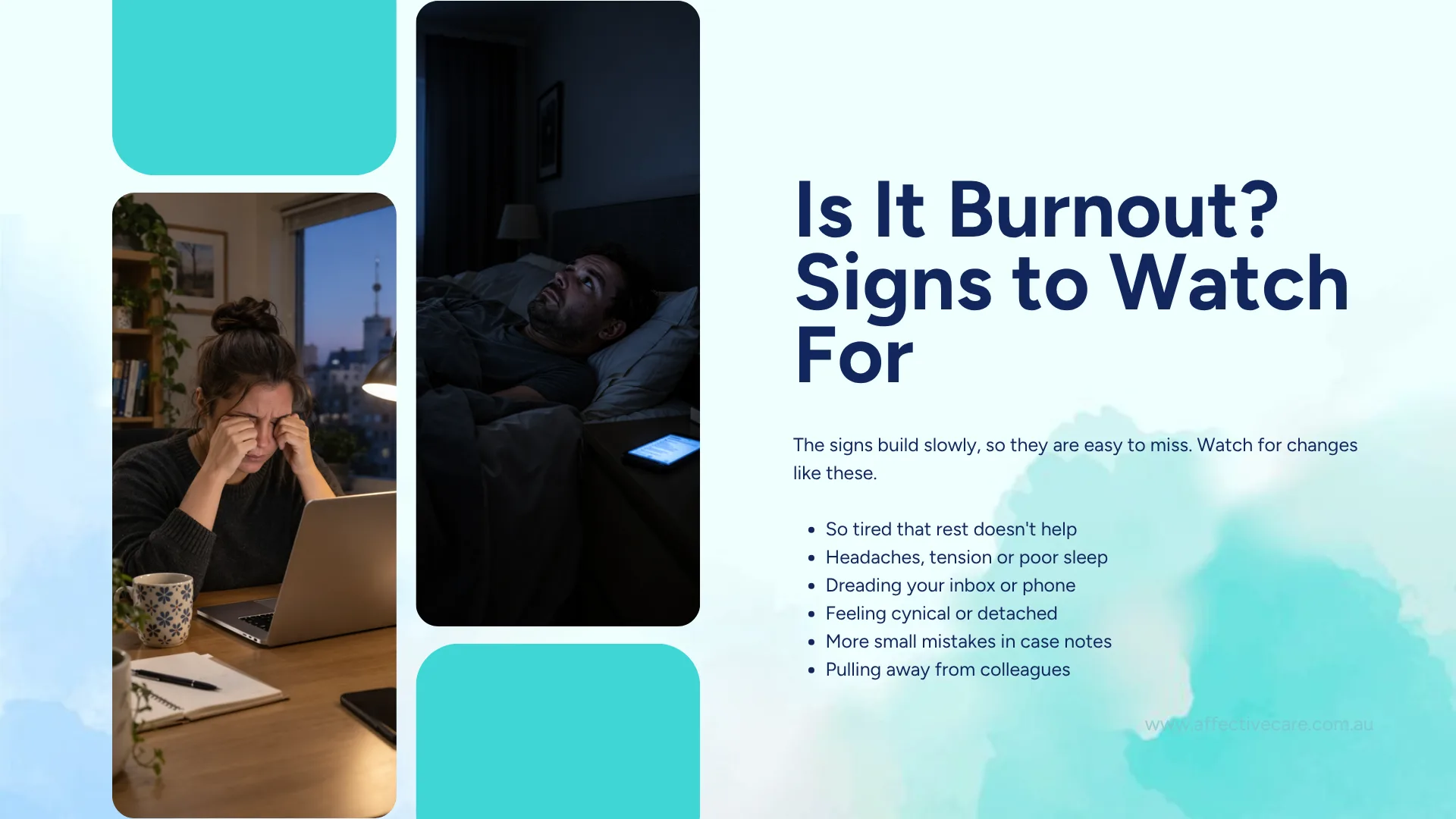
The signs of burnout build slowly, so they are easy to miss. Look for changes across your body, your emotions and the way you work.
Physical signs
- Feeling tired most of the time, even after rest
- Headaches, tight shoulders or stomach problems
- Trouble falling or staying asleep
- Getting sick more often
Emotional signs
- Feeling irritable, flat or tearful
- Dreading your inbox or phone
- Feeling cynical about participants, providers or the NDIS
- Losing the sense of purpose that brought you to the role
Work signs
- Making more small mistakes in case notes or service bookings
- Putting off reports and plan review evidence
- Working through lunch and late into the evening
- Pulling away from colleagues and team meetings
If several of these sound familiar and have lasted weeks rather than days, it is worth taking them seriously.
Burnout vs Compassion Fatigue: What Is the Difference?
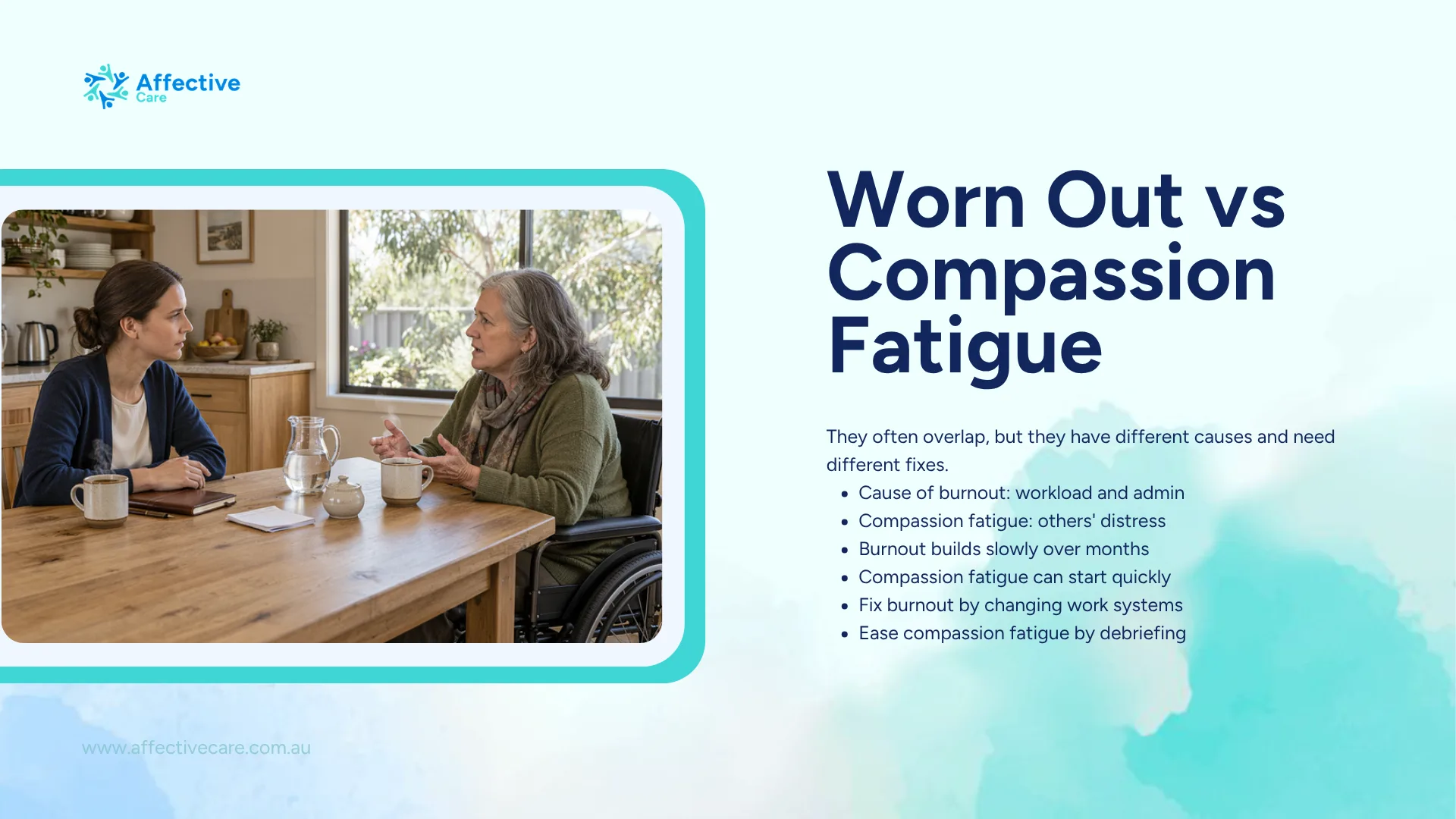
Burnout and compassion fatigue often overlap, but they have different causes. Burnout comes from long-term workload and workplace stress. Compassion fatigue comes from repeatedly caring for people who are going through pain or trauma.
| Burnout | Compassion fatigue | |
|---|---|---|
| Main cause | Workload, admin and work conditions | Emotional cost of supporting people in distress |
| How it starts | Slowly, over months | Can come on quickly after a hard case |
| Key feeling | Exhausted and detached from the job | Numb, overwhelmed or less able to feel empathy |
| What helps most | Changing workload and work systems | Debriefing, supervision and emotional recovery |
Many support coordinators experience both at once. Our guide to compassion fatigue in support coordinators explains that side of the picture in more detail.
How Can Support Coordinators Prevent Burnout?
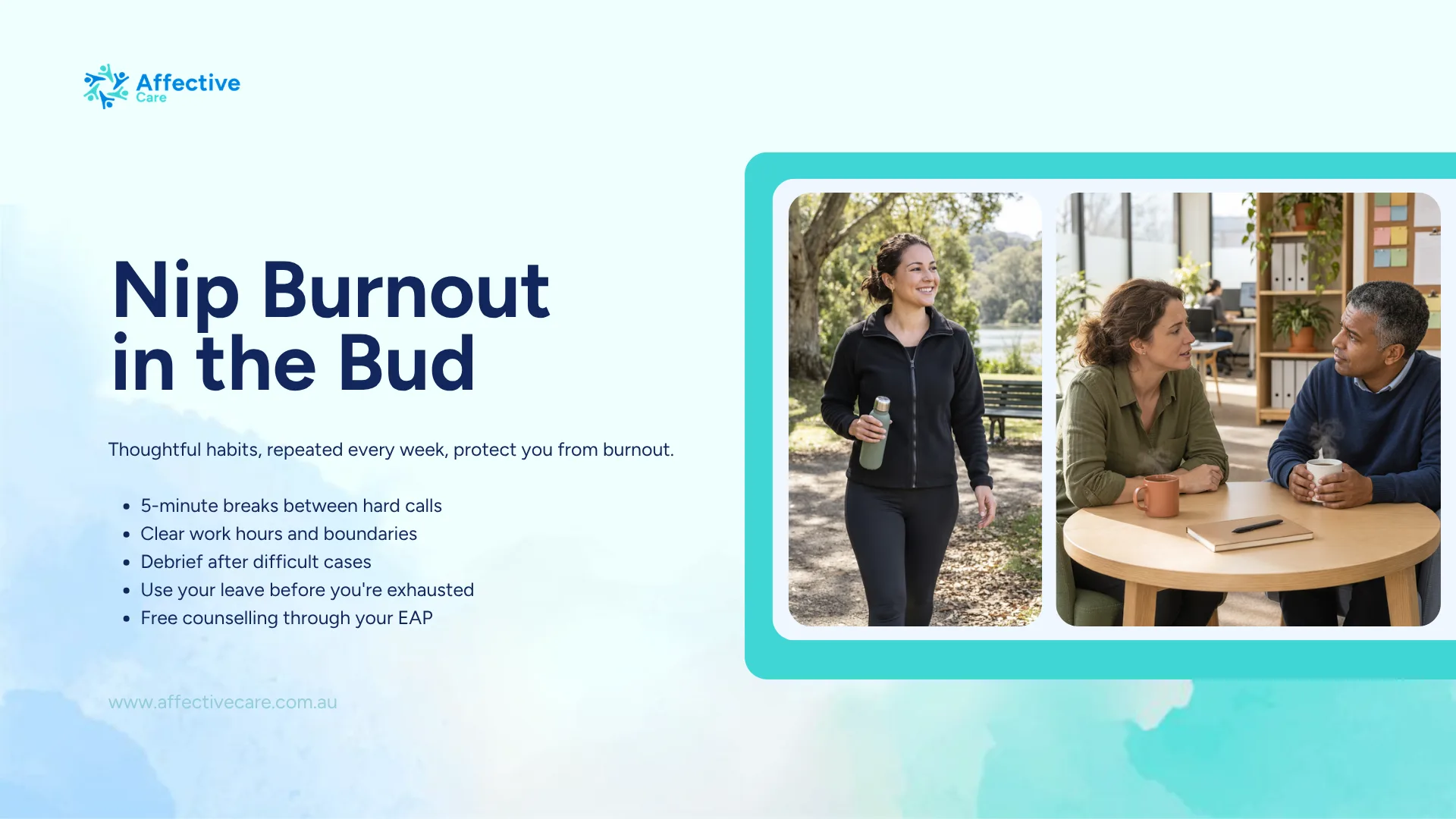
The best protection against burnout is a mix of boundaries, routines and support. Small habits, repeated every week, make the biggest difference.
- Set clear work hours. Tell participants and providers when you are available and use an out-of-hours message.
- Agree on boundaries early. Explain your role at the first meeting so participants know what you can and can't do.
- Protect your breaks. Step away from your desk for lunch and take short breaks between hard calls.
- Debrief after difficult cases. Talk with your team leader or a trusted colleague instead of carrying it alone.
- Use your leave. Plan time off regularly rather than waiting until you are exhausted.
- Look after the basics. Sleep, movement, food and time with people outside work all help your body recover from stress.
- Use your Employee Assistance Program (EAP). Many employers offer free, confidential counselling sessions.
Self-care helps, but it can't fix a workload that is too big. If your caseload is the problem, the fix needs to come from the way work is organised.
How Do You Manage Caseload Pressure Without Burning Out?
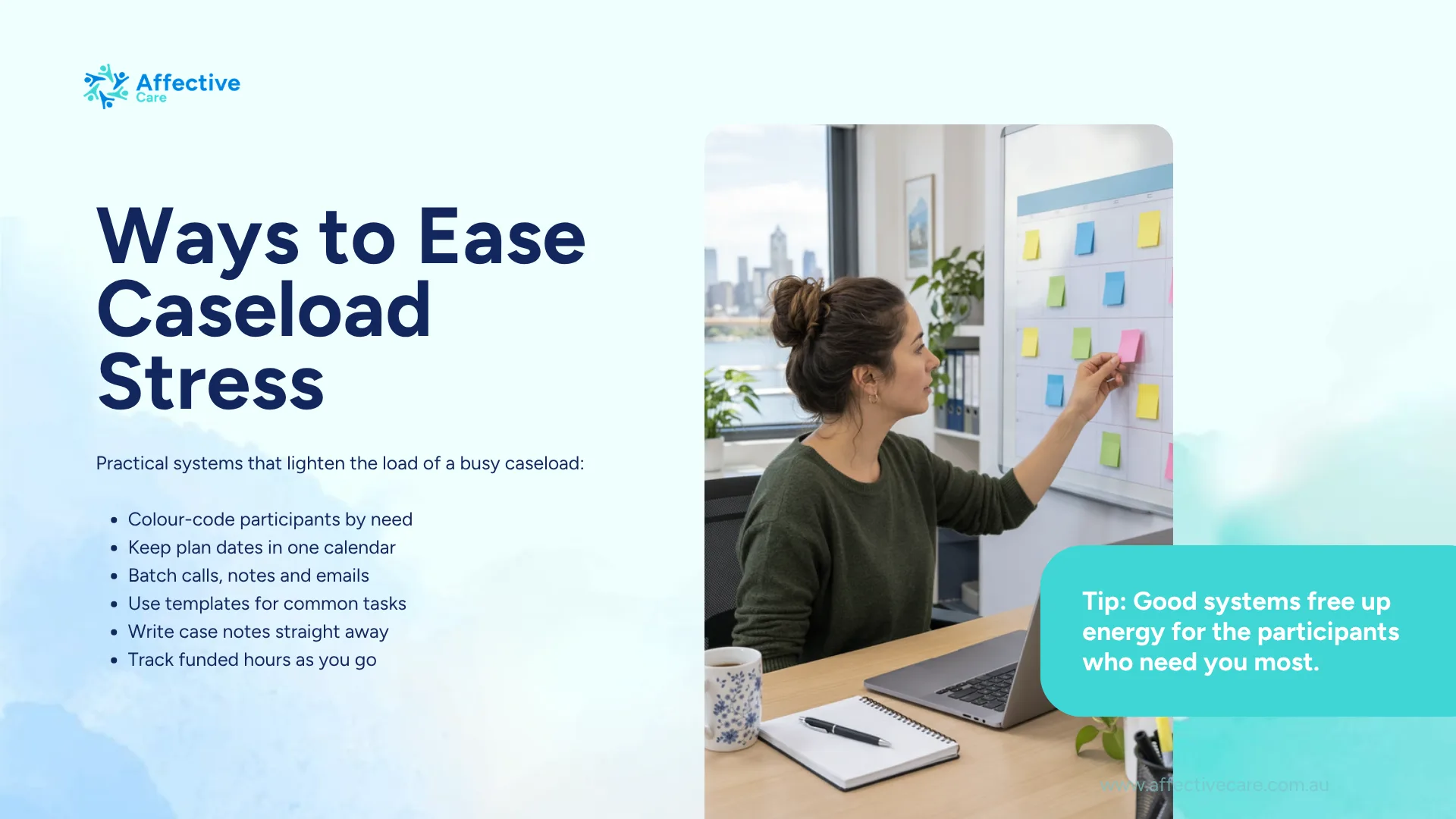
Good systems reduce the mental load of a busy caseload. When you aren't holding everything in your head, there is more energy left for participants.
Practical strategies include:
- Sort participants by need. Flag who needs weekly contact, who is in crisis and who is stable.
- Track plan dates in one place. Keep plan end dates, review dates and report due dates on a shared calendar.
- Batch similar tasks. Make provider calls, write notes and send emails in set blocks of time.
- Use templates. Standard emails, referral forms and report outlines save hours each week.
- Write notes straight away. Short notes after each contact are faster than reconstructing your day on Friday.
- Track hours as you go. Watching your participants' support coordination hours helps you avoid running out mid-plan.
Our guide to support coordinator time management has more ideas for using funded hours wisely.
How Can NDIS Providers Reduce Support Coordinator Burnout?
Burnout is a workplace issue, so providers play the biggest role in preventing it. In Australia, it is also a legal responsibility.
Under work health and safety laws, employers must manage psychosocial hazards just like physical ones. The Safe Work Australia model Code of Practice lists hazards such as high job demands, low job control, poor support and exposure to traumatic events, all of which apply to support coordination.
Providers can reduce burnout by:
- Setting realistic caseloads based on participant complexity, not just headcount.
- Offering regular supervision and reflective practice, not only when something goes wrong.
- Allowing for non-billable work in targets, such as training, team meetings and travel.
- Sharing crisis cases so one coordinator isn't carrying every complex participant.
- Giving flexibility around hours, location and leave.
- Keeping staff informed about NDIS reforms and what they mean for their roles.
- Recognising good work and asking staff what would help.
Supporting staff wellbeing also improves retention. When experienced coordinators stay, participants keep the relationships and knowledge that make their plans work.

When Should You Get Help for Burnout?
Get professional help if burnout symptoms last more than two weeks, affect your sleep or relationships, or make it hard to function. Burnout can overlap with anxiety and depression, so it is worth checking in early.
Good places to start:
- Your GP. They can check your health and may refer you to a psychologist under a Mental Health Treatment Plan.
- Your EAP. Free, confidential counselling through your employer.
- Beyond Blue on 1300 22 4636 for support and information.
- Lifeline on 13 11 14 if you are in crisis or need someone to talk to now.
If you ever feel unsafe or have thoughts of harming yourself, call 000 or Lifeline straight away.
This article is general information only. Please speak with your GP or a mental health professional about your own situation.

Support Coordination With Affective Care
At Affective Care, our support coordination team helps participants understand their plans, connect with providers and build skills to manage their supports.
We know how demanding the role can be, so we focus on manageable caseloads, regular supervision and a team culture where coordinators can ask for help.
If you are a participant looking for steady, reliable coordination, or a coordinator interested in joining a supportive team, visit our careers page or contact us to start a conversation.
Frequently asked questions
What causes burnout in NDIS support coordinators?
Common causes include high caseloads, non-billable admin, pressure to meet billable hours, participant crises, limited funded hours and uncertainty about NDIS reforms. Burnout usually comes from a build-up of these pressures over months, not from one bad week.
How many participants should a support coordinator have?
There is no set NDIS rule. A safe caseload depends on how complex each participant's needs are, how many funded hours they have and how much admin the role involves. A smaller caseload of complex participants can be as demanding as a large caseload of stable ones.
Is support coordination a stressful job?
It can be. Support coordinators juggle many participants, providers and deadlines, and often deal with crises. With realistic caseloads, good supervision and clear boundaries, many coordinators find the role rewarding and sustainable.
What is the difference between burnout and compassion fatigue?
Burnout comes from long-term workplace stress, such as workload and admin. Compassion fatigue comes from the emotional cost of repeatedly supporting people in distress. Support coordinators can experience both at the same time.
Can you recover from burnout without leaving your job?
Often, yes. Recovery usually involves reducing workload, setting boundaries, taking time off and getting support from a manager, GP or counsellor. If the workplace can't change, a new role may be the healthier option.
What should NDIS providers do about staff burnout?
Providers should treat burnout as a work health and safety issue. That means realistic caseloads, regular supervision, fair billable targets, sharing complex cases and giving staff flexibility and recognition.