



Navigating an NDIS plan can feel overwhelming, especially when you are trying to understand unfamiliar terms, funding categories, and what support you can actually use in daily life.
Many people living with disability, along with their families and carers, describe the early stages of the NDIS as confusing, emotional, and difficult to interpret.
If you have ever looked at your plan and wondered “What does this funding actually cover?” or “Am I allowed to use this budget for that support?”, you are not alone.
NDIS funding categories exist to help organise supports that meet everyday needs, build skills over time, and support long-term independence.
However, understanding how these categories work and how flexible they are is not always straightforward.
This guide is designed to walk beside you with clarity and care.
We explain the NDIS funding categories, including Core Supports, Capital Supports, Capacity Building Supports, and how funding is intended to be used in real life.
Whether you are a participant, parent, carer, or support coordinator, this article aims to support confidence, understanding, and informed choice.
What Are NDIS Funding Categories and Why Do They Matter?
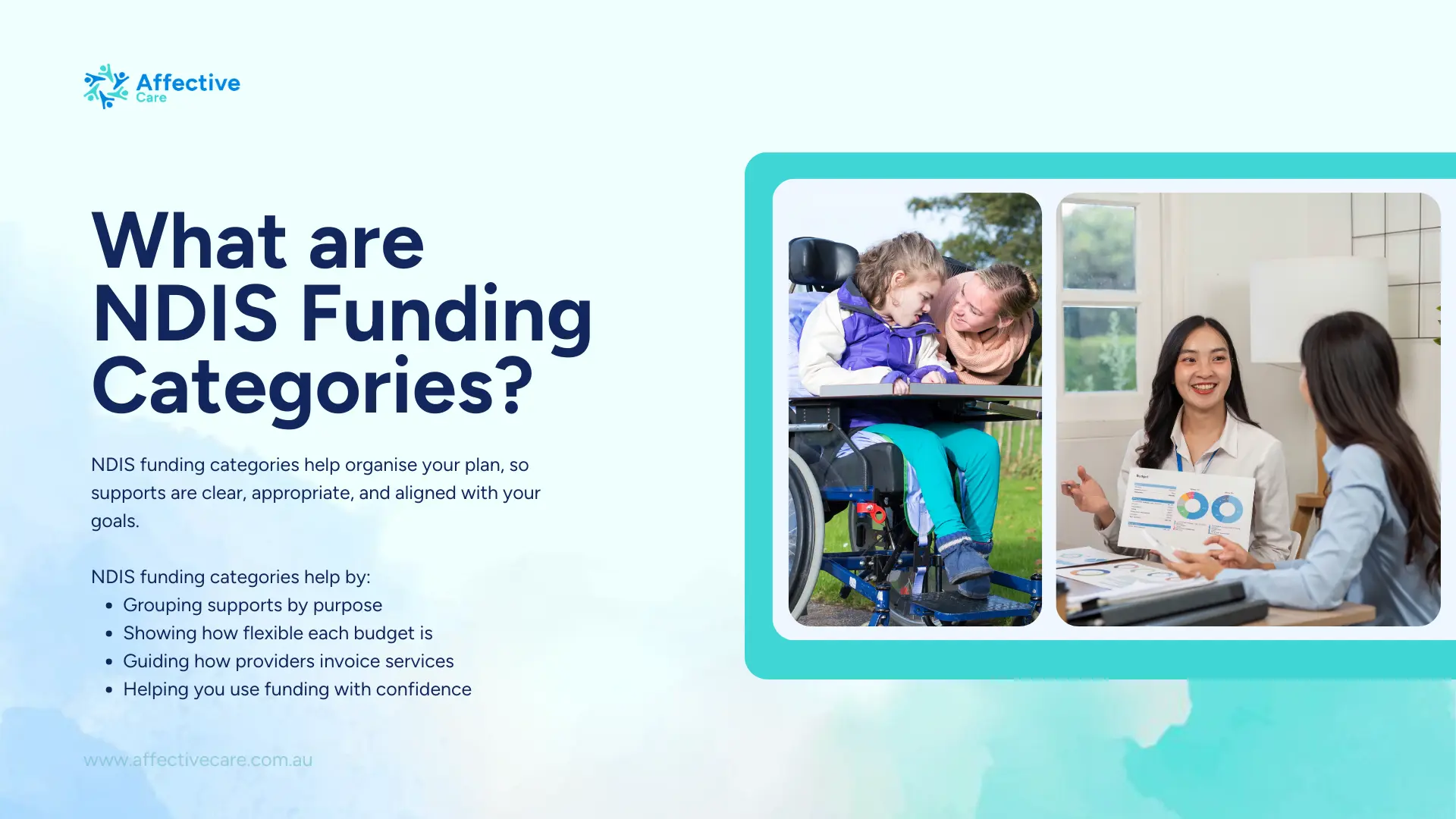
NDIS funding categories are the framework used to organise how support funding is allocated within a participant’s plan.
Each category has a specific purpose and is designed to support different aspects of daily life, skill development, and long-term independence for people living with disabilities.
Rather than offering one general pool of funding, the NDIS separates supports into categories so funding can be used appropriately and transparently.
This structure helps ensure supports are reasonable, necessary, and aligned with a participant’s individual goals.
At a high level, most National Disability Insurance Scheme plans include funding across three main categories:
- Core Supports, which assist with everyday activities and immediate needs
- Capital Supports, which fund higher-cost items such as assistive technology or home modifications
- Capacity Building Supports, which focus on developing skills, independence, and confidence over time
Some newer plans may also refer to Recurring supports, particularly under the updated PACE system, but these still align closely with the three core categories above.
Understanding how funding categories work matters because it affects:
- How flexible is your funding is
- Which supports can access
- How providers invoice and claim services
- Whether funds can be moved between supports
When funding categories are misunderstood, people may underspend, miss out on supports, or feel uncertain about using their plan.
A clear understanding helps participants feel more confident, in control, and supported.
Once you understand the different funding categories, it can also help to review the NDIS Price Guide to see how support prices, rates and claiming rules are generally structured.

Core Supports Explained: Supporting Everyday Life
Core Supports are designed to help people living with disabilities manage everyday activities and participate in daily life.
This is often the most flexible funding category and the one most commonly used by participants and families.
Core Supports focus on what is happening right now in a person’s life.
They are about maintaining routine, safety, and connection rather than long-term skill-building or major purchases.
|
Core Support Area |
What It Can Support |
Practical Examples |
|
Assistance with Daily Life |
Personal and household support |
Showering, dressing, cooking, cleaning |
|
Community & Social Participation |
Access to community and activities |
Attending appointments, social groups, programs |
|
Consumables |
Everyday disability-related items |
Continence products, low-cost assistive items |
|
Transport |
Travel where disability impacts independence |
Getting to work, therapy, or community activities |
Within Core Supports, funding is often flexible. This means participants may be able to shift funds between different Core Support sub-categories depending on their needs, as long as supports remain disability-related and aligned with their plan goals.
Moreover, reports can help explain why a support may be needed under different NDIS funding categories. You can read more about reports that explain NDIS support needs and funding use in our dedicated guide.
For many families and carers, Core Supports are essential for reducing daily stress and maintaining stability.
They support people to live with dignity, safety, and choice in everyday routines.
Because Core Supports are frequently used, it is important to monitor spending and understand how funds are being used.
A support coordinator or plan manager can help ensure funding lasts across the full plan period and is used effectively.
Capital Supports: Assistive Technology, Home Modifications and Housing
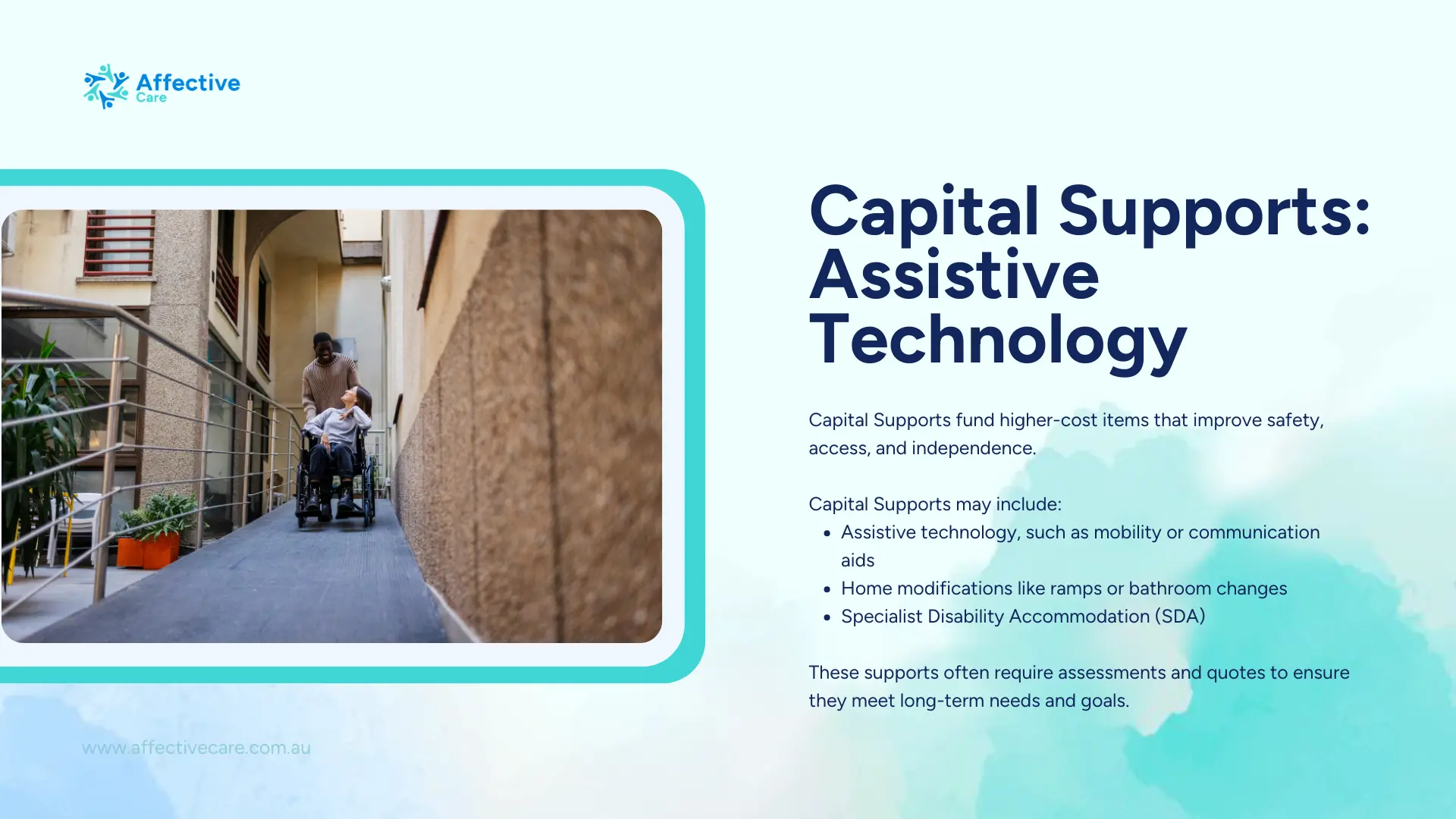
Capital Supports fund higher-cost items that improve safety, accessibility, and independence for people living with disabilities.
Unlike Core Supports, Capital funding is generally not flexible and must be used for specific approved items.
These supports often involve assessments, quotes, and professional recommendations to ensure they are reasonable, necessary, and aligned with long-term goals.
Capital Support Types and What They Cover
|
Capital Support Type |
Purpose |
Examples |
|
Assistive Technology |
Support independence and function |
Wheelchairs, communication devices, mobility aids |
|
Home Modifications |
Improve safety and accessibility |
Ramps, bathroom modifications, handrails |
|
Specialist Disability Accommodation (SDA) |
Housing for people with very high needs |
Purpose-built accessible housing |
Capital Supports can feel complex because of the evidence required.
Many people feel anxious about getting this “wrong,” especially when large items or home changes are involved.
Support coordinators and allied health professionals can help gather the right evidence and guide the process step by step, so decisions feel informed rather than stressful.
Capital Supports often require assessments, quotes, and professional reports to demonstrate how the item or modification relates to disability needs and goals.
Because these items are significant investments, the NDIA assesses them carefully to ensure they are reasonable and necessary.
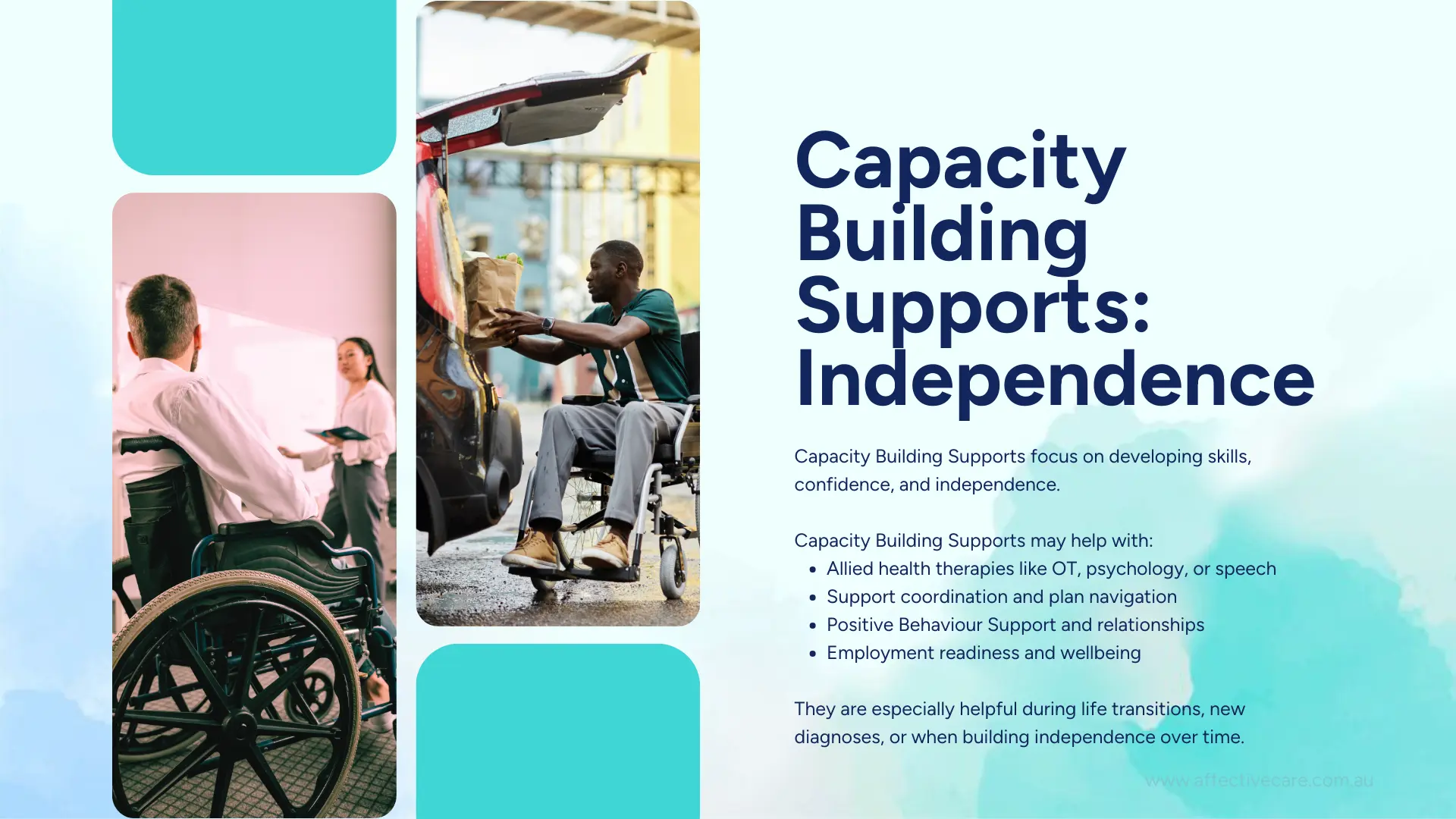
Capacity Building Supports: Building Skills and Independence Over Time
Capacity Building Supports focus on developing skills, confidence, and independence.
These supports help people work towards goals over time and strengthen long-term wellbeing.
Funding in this category is goal-focused and usually tied to specific outcomes, such as improved communication, emotional regulation, employment readiness, or daily living skills.
Key Capacity Building Support Areas
|
Capacity Building Area |
Focus |
Examples of Supports |
|
Improved Daily Living |
Skill development and therapy |
OT, psychology, speech pathology |
|
Support Coordination |
Understanding and using the NDIS |
Connecting services, plan navigation |
|
Improved Relationships |
Social and behavioural support |
Positive Behaviour Support |
|
Employment Supports |
Work readiness and skills |
Job coaching, workplace support |
|
Health & Wellbeing |
Physical and emotional health |
Exercise physiology, counselling |
Capacity Building Supports are especially important for children, young people, and adults navigating transitions, new diagnoses, or increasing independence.
Moreover, understanding funding categories is easier when you also follow an NDIS plan implementation checklist that shows how each budget may be used in practice.
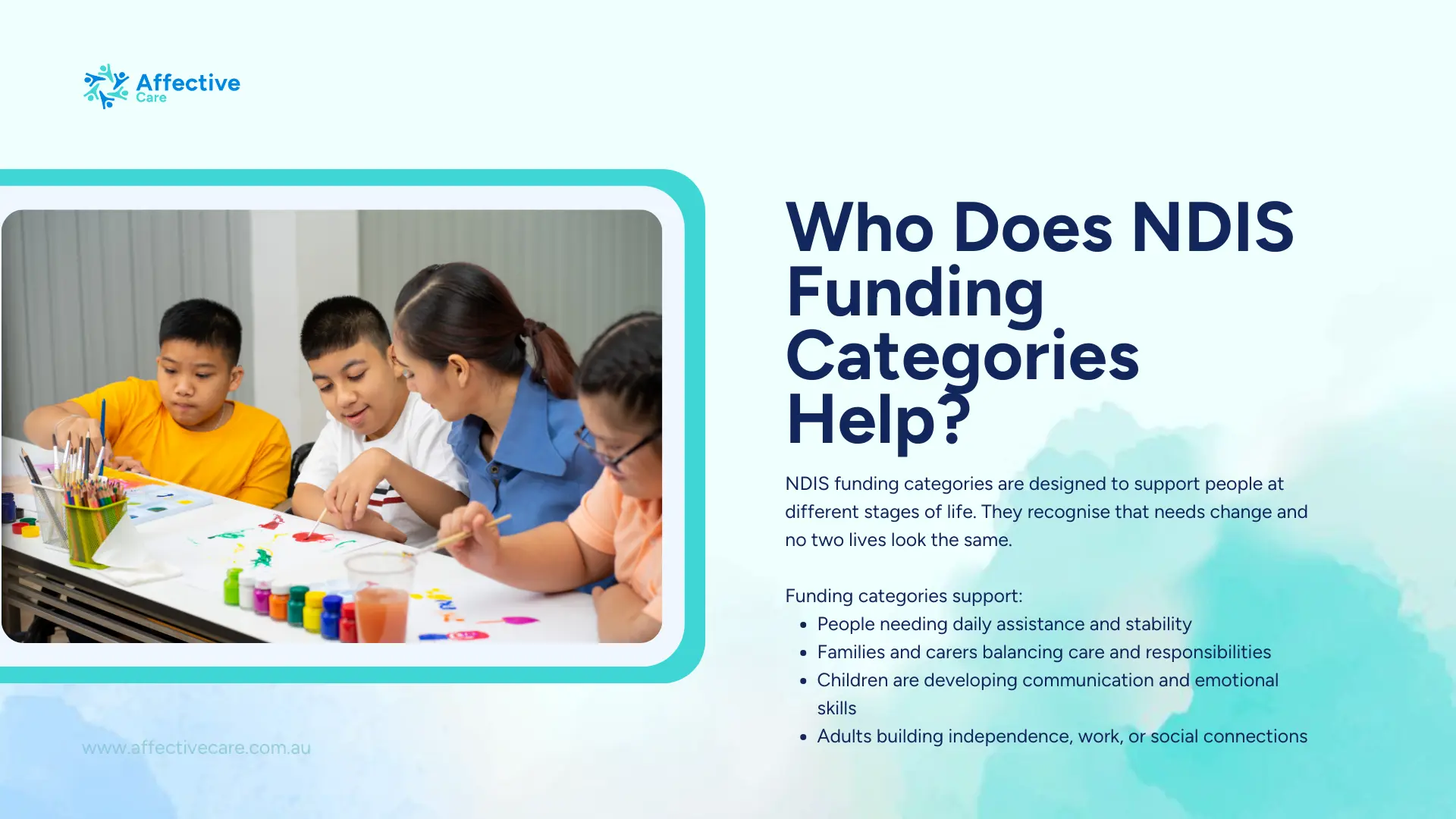
Who NDIS Funding Categories Help and How
NDIS funding categories support people living with disabilities across all stages of life.
They are designed to be adaptable, recognising that needs change over time and that no two lives look the same.
Funding categories help:
- Participants who need daily support to live safely and comfortably
- Families and carers managing care responsibilities alongside work and life commitments
- Children and young people are developing communication, learning, and emotional skills
- Adults building independence, employment readiness, or social connection
- People navigating changes such as hospital discharge, housing transitions, or life events
Moreover, understanding Core, Capacity Building and Capital Supports is essential, but participants should also know what steps to take when funding within these NDIS categories feels limited.
By separating funding into categories, the NDIS aims to ensure supports are appropriate, transparent, and tailored.
This structure helps planners, providers, and participants work together while keeping the participant’s goals at the centre.
Moreover, understanding each funding category can also help participants use their NDIS funding with more clarity and confidence.
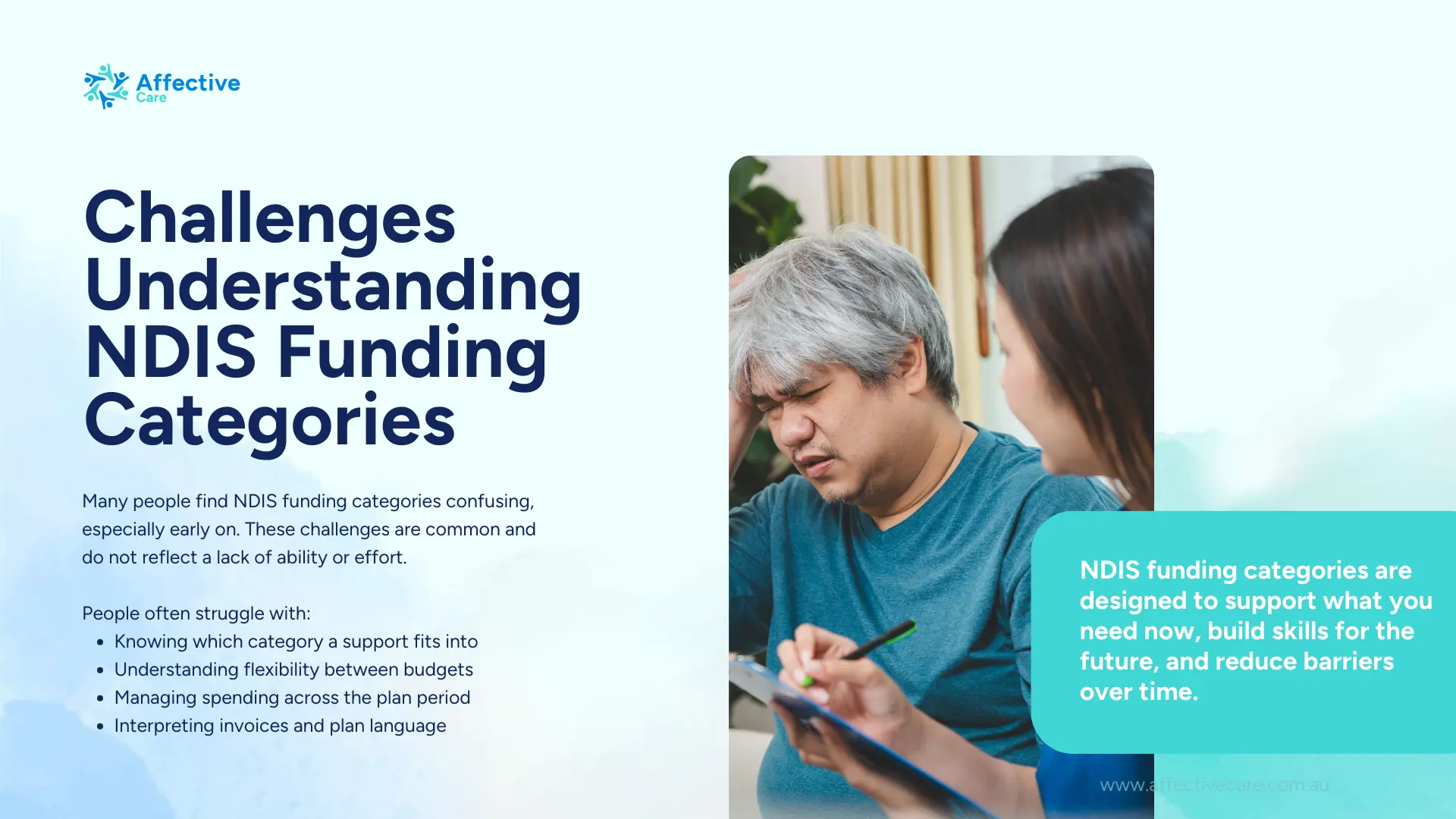
Common Challenges Understanding NDIS Funding Categories
Many participants and families experience challenges when trying to understand how funding categories work. Common concerns include:
- Not knowing which category a support fits into
- Feeling unsure about flexibility and what is allowed
- Worrying about underspending or overspending
- Confusion around provider invoices and claims
- Difficulty understanding plan language
These challenges are common and do not reflect a lack of ability or effort. The NDIS is complex, and it is reasonable to need guidance and clarification.
Support coordinators, plan managers, and trusted providers can help explain funding and ensure supports align with goals and budgets.
If you have questions about invoices, tax or financial responsibilities, our guide to NDIS Taxation explains key points participants, families and providers may need to know.
The Role of Affective Care in Supporting Funding Understanding
At Affective Care, we understand that NDIS funding is not just a financial tool; it directly affects daily life, wellbeing, and emotional security.
Our approach is emotionally-centred and participant-led.
We take the time to explain funding categories clearly, listen to concerns, and support people to feel confident using their plan.
Moreover, we recognise that confidence grows when people feel heard, respected, and supported.
We support participants by:
- Explaining Core, Capital and Capacity Building supports
- Helping people understand what their plan includes and how funding can be used
- Supporting informed choice without pressure or assumptions
- Working collaboratively with families, carers, and support teams
- Prioritising dignity, emotional safety, and trust in every interaction
Moreover, before requesting behaviour support, it’s helpful to understand how to apply for Positive Behaviour Support funding and which NDIS budget it may be funded from.

Real-Life Reassurance: You’re Allowed to Ask Questions
Many people living with disabilities and their families worry they are “getting it wrong” when using their NDIS funding, and this is completely understandable.
The NDIS can feel complex, especially when plans, budgets, and rules are new or changing. In reality, the system is designed to be navigated with guidance, not managed alone.
Asking questions, requesting clear explanations, or seeking help to understand your plan is not a sign of failure or uncertainty.
It is a valid and important part of exercising choice, control, and informed decision-making under the NDIS.
You are entitled to understand how your supports work and to feel confident using them.
Whether you are new to the NDIS, adjusting to changes, or reviewing an existing plan, support is available.
With the right guidance and time, clarity is possible, and you do not have to carry the process on your own.
When learning about plan budgets, it can help to understand the difference between the NDIA and NDIS, including how the scheme provides funding and how the agency manages the system.
You Don’t Have to Navigate NDIS Funding Alone
Understanding NDIS funding categories can feel heavy, especially when you’re already managing health, care, or family responsibilities.
You’re not expected to figure it all out by yourself.
If you’d like calm, emotionally-centred guidance to help you understand your plan, use your funding with confidence, and feel supported at every step, Affective Care is here to walk beside you at your pace, with respect for what matters most to you.