
Introduction to Hidden Disabilities
Hidden disabilities; also known as invisible or non-visible disabilities are conditions that affect how a person thinks, feels, or functions in daily life, but cannot be seen from the outside.
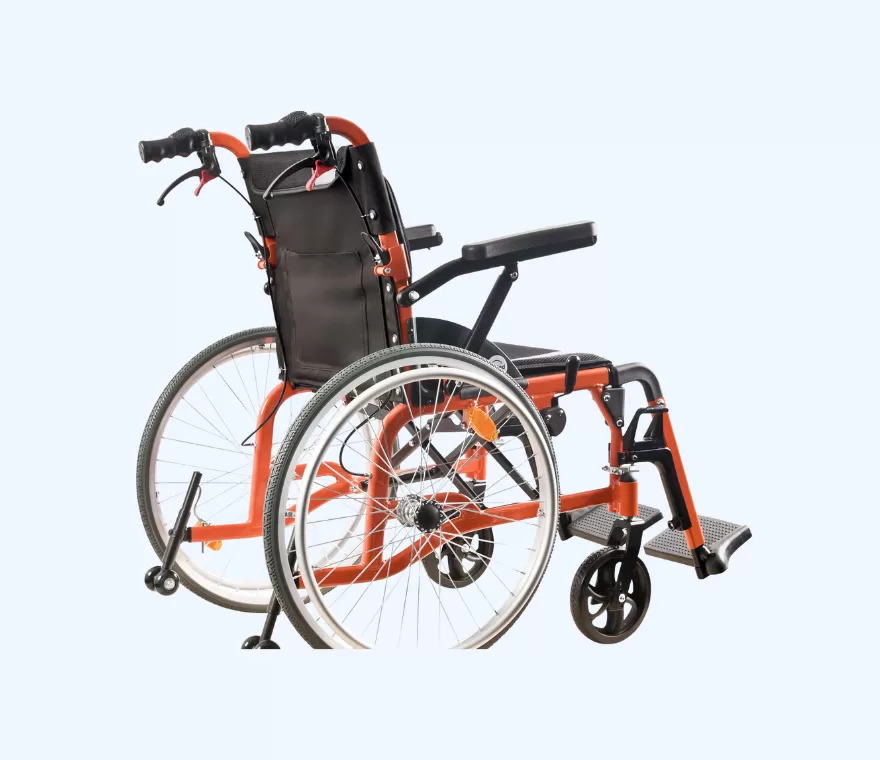
Unlike a visible disability, such as someone using a wheelchair or wearing a hearing aid, hidden disabilities are often misunderstood because they show no outward signs.
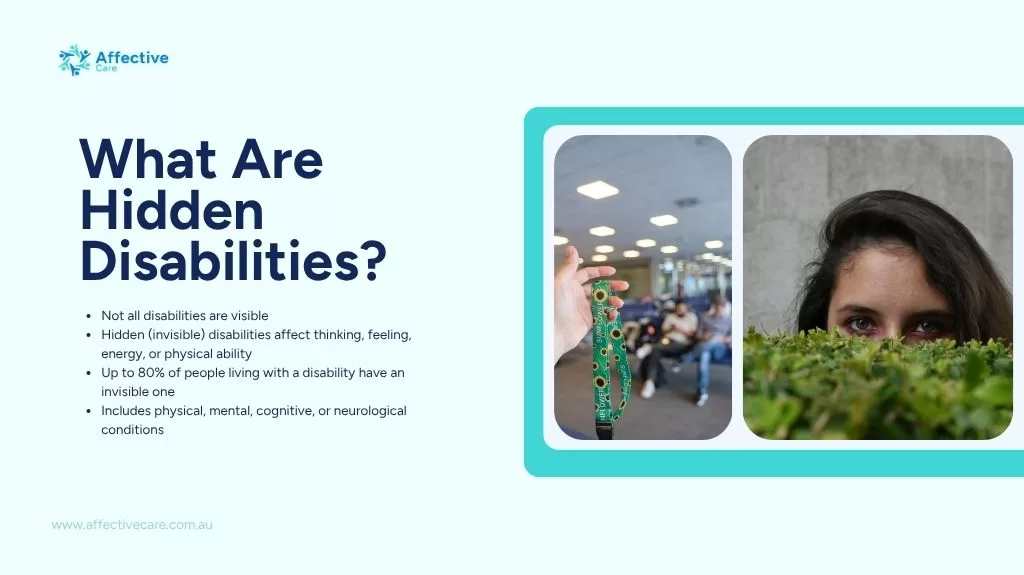
Many people are surprised to learn that nearly 80% of all disabilities are invisible. This means the majority of individuals living with disability may not “look” like the one living with a disability. at all.
These conditions include a wide range of physical, mental, and neurological challenges that make daily activities harder.
From fatigue and pain to difficulties with communication or memory, hidden disabilities impact each person differently.
Yet because the signs are not obvious, people often face extra challenges in being seen, heard, and supported.
Whether it’s managing energy levels, coping with sensory overload, or facing misunderstanding from others, the journey can be deeply personal and isolating.
Types and Examples of Hidden Disabilities
There are many types of hidden disabilities, each with its own set of challenges.
Some affect physical health, while others impact mental or neurological function. What they all share is that their symptoms aren’t always visible to others.
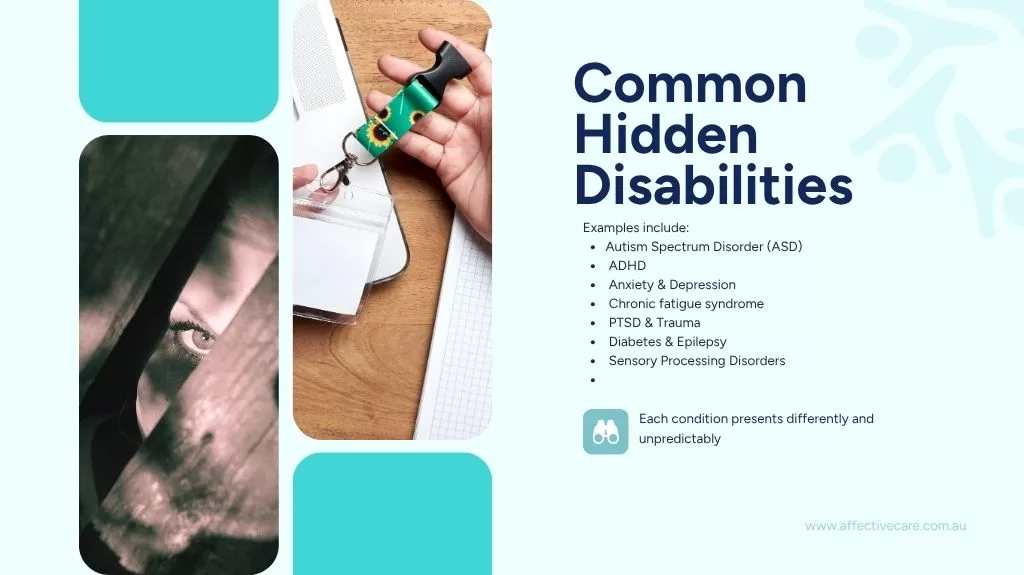
Common examples of hidden disabilities include:
- Autism Spectrum Disorder (ASD)
- Attention Deficit Hyperactivity Disorder (ADHD)
- Anxiety and depression
- Chronic fatigue syndrome
- Chronic pain
- Diabetes
- Epilepsy
- Fibromyalgia
- Lupus
- Multiple sclerosis (MS)
- Post-traumatic stress disorder (PTSD
Moreover, ADHD is one example of a hidden disability that may affect focus, emotions and routines, and our guide to ADHD treatment options in Australia explains support pathways in simple terms.
Each of these conditions may affect someone’s memory, focus, mobility, energy, or emotional well-being.
Symptoms can vary day by day, and some people may appear fine even when they are struggling internally. It’s important to remember that not all disabilities are visible.
Many people with chronic illness or neurological disorders live with pain, fatigue, or emotional distress that others can’t see.
Being aware of these invisible conditions helps build a more inclusive and supportive community.
To explore conditions that may be recognised under the Scheme, you can visit our NDIS List of Disabilities A for disability-related information and access considerations.
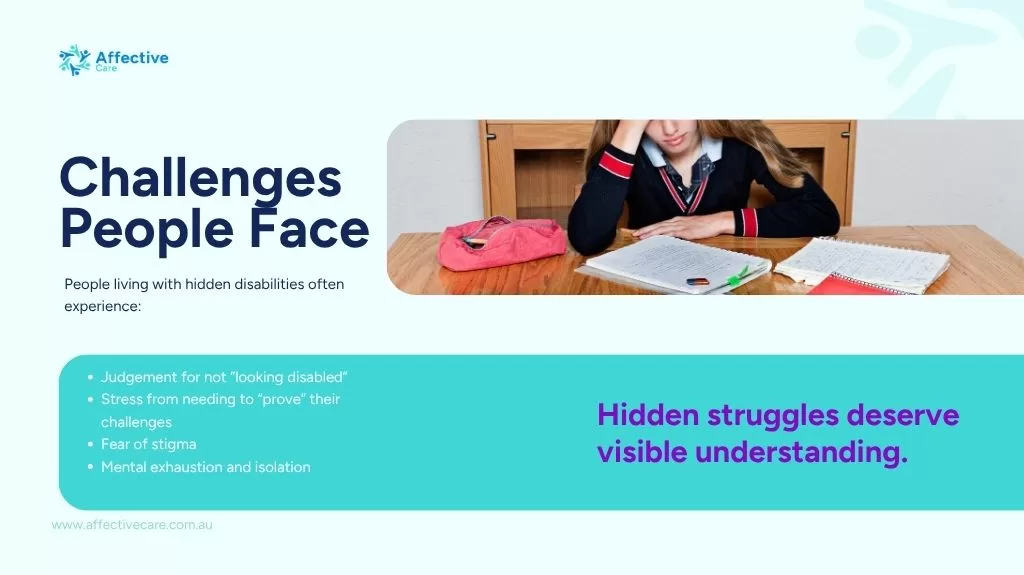
Challenges Faced by People with Hidden Disabilities
Living with a hidden disability can be overwhelming not only because of the symptoms, but also due to how others respond.
Many people face scepticism, misunderstanding, and even discrimination, simply because their disability isn’t visible.
One of the biggest challenges is the constant pressure to “look normal.” People often feel they need to prove they are struggling, which can lead to stress, exhaustion, and emotional pain.
Everyday activities like working, studying, or socialising can become harder when others don’t understand the hidden effort it takes.
Some common challenges include:
- Being judged or dismissed for not looking like the one living with a disability.
- Fear of disclosing their condition due to stigma
- Limited access to support or accommodations
- Isolation from friends, family, or co-workers
- Mental health struggles such as anxiety or low self-worth
As one participant shared, “It’s like carrying an invisible weight; others don’t see it, but you feel it every day.”
These hidden struggles highlight the need for greater understanding, empathy, and support in both personal and public spaces.
Recognising the invisible can make a real difference in someone’s life.
Misconceptions and Social Stigma
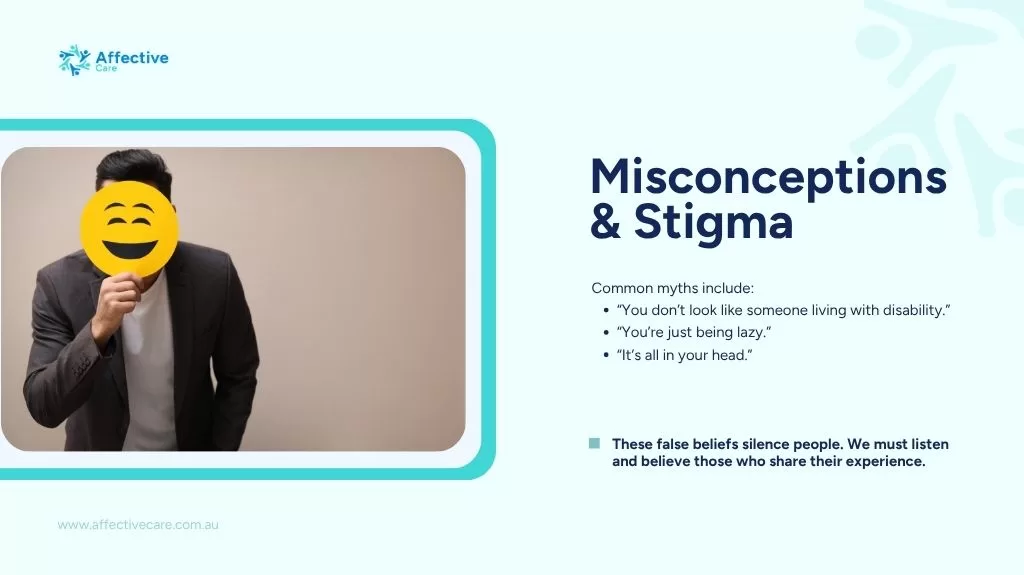
One of the biggest issues surrounding hidden disabilities is the many misconceptions people have.
Because these conditions are not visible, others often assume the person is healthy or exaggerating their struggles.
Common stereotypes include:
- “You don’t look like the one living with a disability.”
- “It’s just in your head.”
- “You’re just being lazy or overreacting.”
These false beliefs can cause real harm. They make it harder for people to speak up, ask for help, or feel accepted.
This kind of social stigma often leads to isolation, self-doubt, and missed opportunities for support.
To change this, we need to listen, believe, and learn. Trusting what people share about their experience is a powerful way to build public awareness and create safe spaces for everyone.
No one should have to prove they deserve understanding.
Legal Protections and Rights
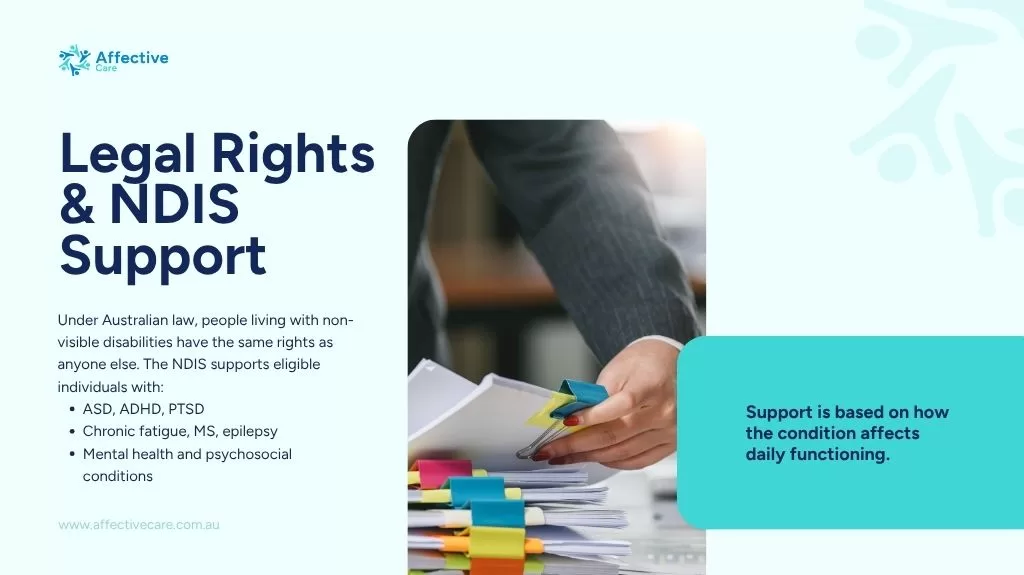
People with hidden disabilities have the same legal rights as those with visible ones.
In Australia, the Disability Discrimination Act 1992 (DDA) protects individuals from being treated unfairly because of their disability; whether it’s seen or unseen.
This means people with non-visible conditions are entitled to:
- Workplace accommodations, like flexible hours or quiet spaces
- Equal access to public services and facilities
- Support in education, such as learning adjustments or extra time
Globally, programs like the Sunflower Lanyard scheme help identify individuals with hidden disabilities in public spaces, encouraging patience and support from staff and the public.
Understanding that disability rights apply to both visible and invisible conditions is key to creating fair and welcoming environments.
Employers, service providers, and communities all play a role in respecting these rights and making accessibility a reality for everyone.
Moreover, when planning supports for hidden disabilities, it can also help to understand what are typical NDIS price guide rates for support services? so participants and families can make more informed decisions.
Being an Ally: Breaking Down Barriers
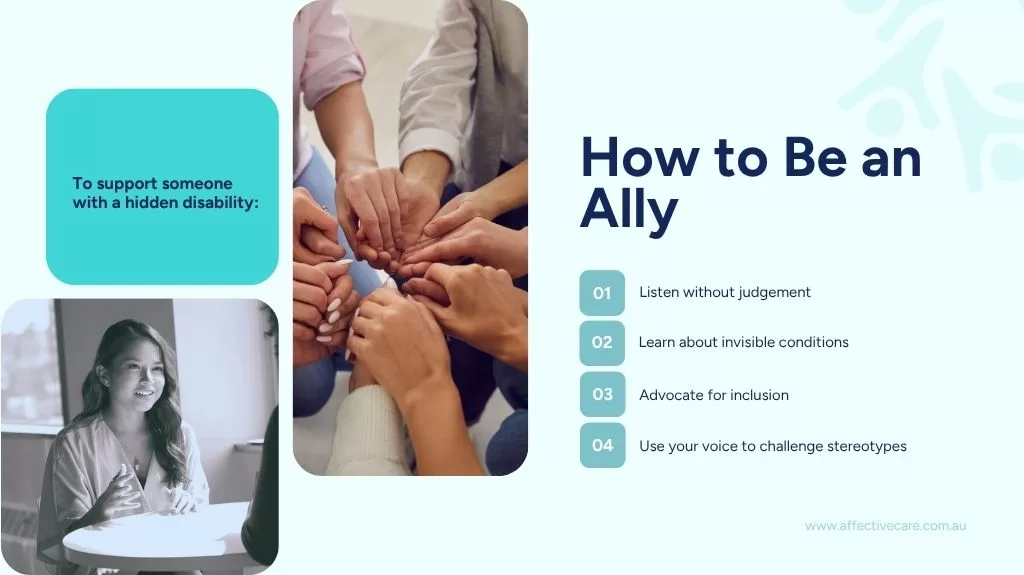
Being an ally to someone with a hidden disability means standing beside them, even when others can’t see what they’re facing.
It’s about using your voice, actions, and awareness to help create a more inclusive and understanding world.
Here’s how you can start:
- Challenge stereotypes when you hear them
- Educate yourself about different invisible conditions
- Support advocacy efforts that raise awareness and push for change
- Speak up for fair policies in your workplace, school, or community
Allyship isn’t about having all the answers; it’s about being willing to learn and to stand with people who often feel invisible.
By promoting advocacy and understanding, we can help remove the barriers that hidden disabilities create in everyday life.
Moreover, if you want to understand how disability support payments, services and financial responsibilities may interact, our guide to NDIS Taxation explains the key points in simple terms.
Are Hidden Disabilities Supported by the NDIS?
Yes, the NDIS (National Disability Insurance Scheme) does provide support for people living with hidden disabilities; as long as the condition is permanent and significantly impacts daily functioning.
To better understand how hidden disabilities may relate to eligibility, support planning and participant rights, read our guide on the NDIS explained.
Many people with invisible disabilities may not realise they are eligible.
However, the NDIS recognises a wide range of psychosocial, neurological, cognitive, and physical conditions as disabilities. These can include:
- Autism Spectrum Disorder (ASD)
- ADHD (when it causes significant impairment)
- Mental health conditions like anxiety, depression, and PTSD
- Chronic fatigue syndrome or fibromyalgia
- Neurological disorders such as multiple sclerosis or epilepsy
- Intellectual or learning disabilities
- Sensory processing disorders
To access NDIS funding, the condition must be diagnosed, and there needs to be clear evidence showing how it affects the person’s ability to manage everyday life, such as working, learning, or participating in the community.
If you or someone you care about is living with a non-visible disability, it’s important to explore NDIS eligibility criteria.
A support coordinator or disability advocate can help guide you through the process.
Conclusion: Building a More Inclusive Society
Understanding hidden disabilities is a step toward building a world where everyone feels seen, supported, and respected. While these conditions may be invisible to the eye, the challenges they bring are very real.
By listening, learning, and offering flexible support, we can all play a part in creating a more inclusive community; at home, at work, and in public spaces.
Whether it’s through everyday kindness or strong advocacy, each action helps remove barriers and open doors.
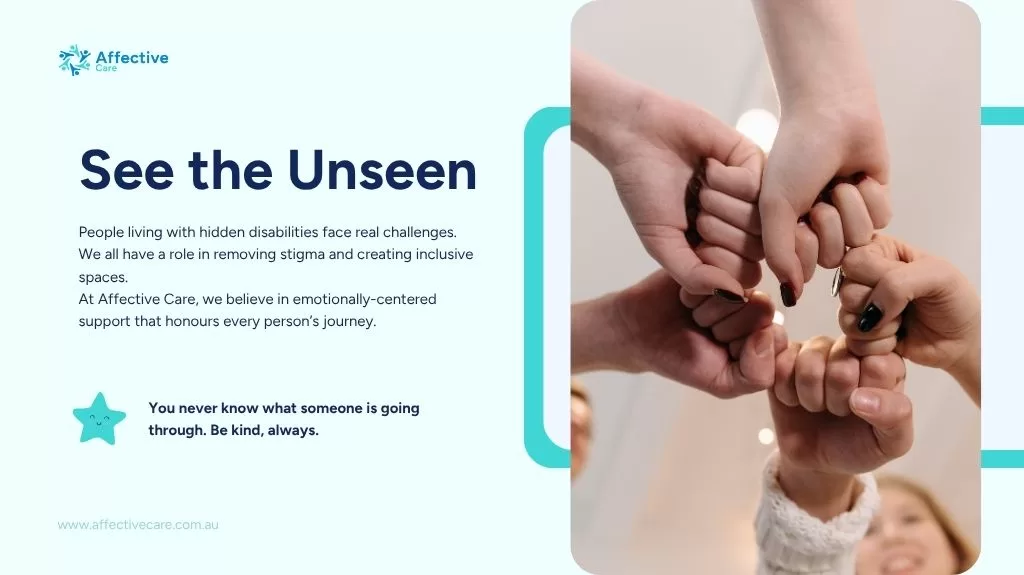
At Affective Care, we believe in emotionally centred support that values each person’s journey. Because every story matters; even the ones we can’t see.
“You never know what someone is going through. Be kind, always.”