


Receiving an NDIS plan with limited funding can feel stressful, confusing and even upsetting.
You may have expected more support, or you may feel that the funding in your plan does not match your real daily needs.
For many participants, families and carers, limited funding can raise difficult questions: What should we use first? What happens if important supports are not covered? Can we ask for more funding? What evidence do we need?
Limited funding does not always mean there are no options.
It usually means the plan needs to be reviewed carefully, priorities need to be clear and evidence may need to be strengthened.
The NDIS looks at each participant’s individual situation, disability support needs and the information provided when deciding what supports may be reasonable and necessary.
This guide explains what limited funding may mean in an NDIS plan, why it can happen, how to use current funding carefully and what steps may help if the plan does not appear to meet the participant’s disability-related needs.
What Does Limited Funding Mean in an NDIS Plan?
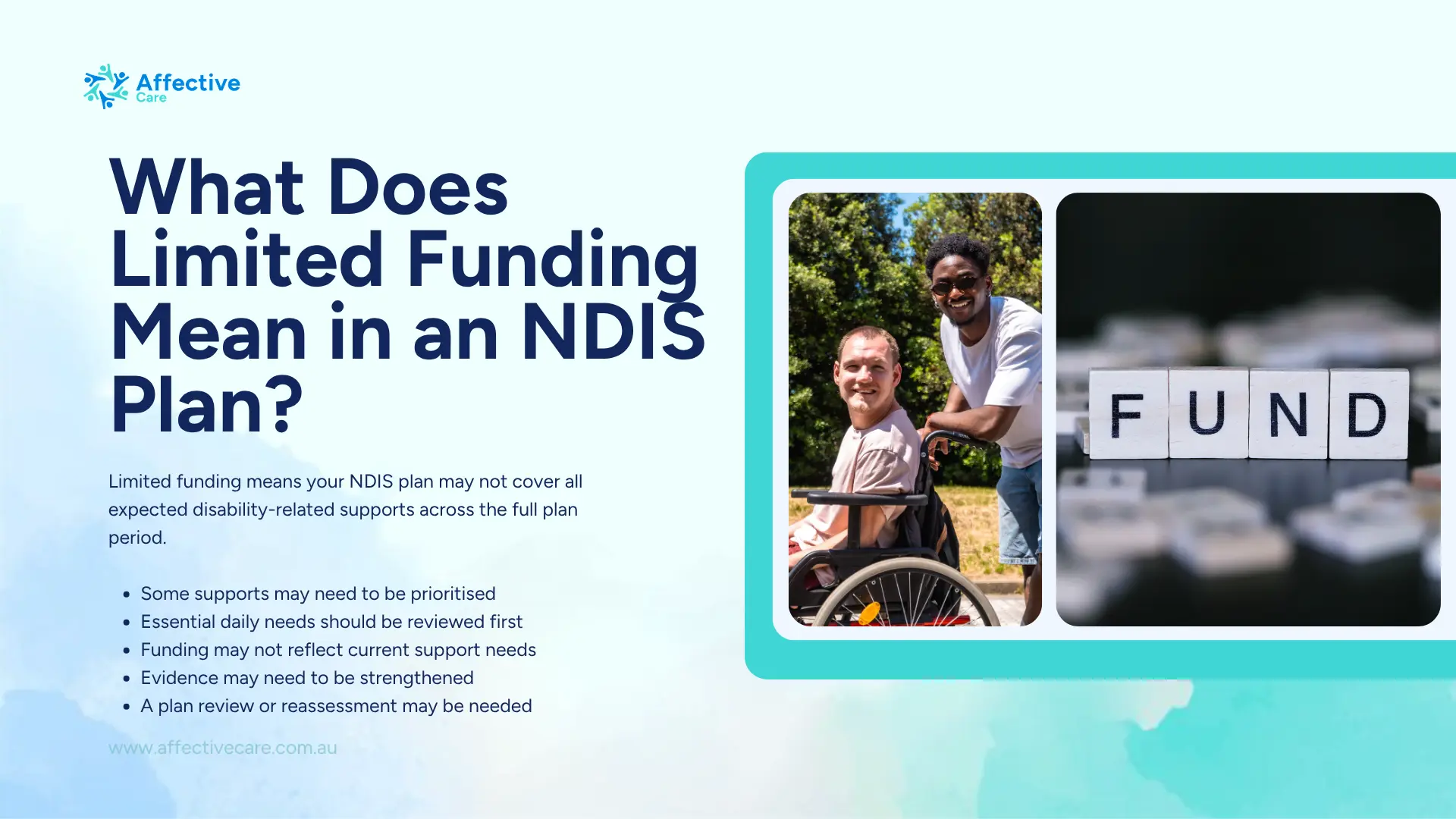
Limited funding means the participant’s NDIS plan may not appear to include enough budget to cover all expected disability-related supports across the plan period.
This can affect daily living supports, therapy, behaviour support, social inclusion and community participation, home and living needs or other services connected to the participant’s goals.
An NDIS plan is not designed to fund every possible support. It should fund supports that meet the NDIS funding criteria and are connected to the participant’s disability-related needs.
The NDIS explains that reasonable and necessary supports are based on the participant’s individual situation, disability support needs, and the evidence provided.
When a participant has limited funding, they may need to make careful decisions about which supports are most urgent, which supports reduce risk and which supports are directly connected to their NDIS goals.
|
Limited funding may mean |
What this can look like |
|
The plan has less funding than expected |
Some supports may need to be delayed, reduced or reviewed |
|
The funding does not match current needs |
The participant may have unmet daily, therapy or safety needs |
|
Evidence may not have been strong enough |
Reports may not have clearly explained functional impact |
|
Circumstances may have changed |
The participant’s needs may now be different from when the plan was approved |
|
Supports need to be prioritised |
Essential supports may need to come before lower-priority services |
Why Might NDIS Funding Be Limited?
There are several reasons why a participant may receive limited funding in their NDIS plan. This does not always mean the participant’s needs are not real.
Sometimes, it means the information provided did not clearly show the level of support needed.
Possible reasons may include:
- Evidence did not clearly explain functional impact.
- Reports focused on diagnosis but not daily support needs.
- The participant’s circumstances changed after the plan was created.
- Informal supports may have been considered.
- Requested supports may not have been clearly linked to NDIS goals.
- The NDIA may not have received enough current information.
- Provider recommendations may not have explained risk or outcomes.
- The plan may have been based on previous support use.
- Some supports may not have met the NDIS funding criteria.
The NDIS states that when considering whether a support may be funded, it looks at the information provided against the NDIS funding criteria.
This is why evidence is so important when limited funding does not appear to reflect the participant’s real needs.
Common Signs Your NDIS Funding May Be Limited
Sometimes, limited funding is obvious as soon as the plan is received.
Other times, it becomes clear after the participant starts trying to use the plan.
|
Sign of limited funding |
What it may indicate |
|
Essential supports cannot be maintained |
The plan may not cover the participant’s ongoing needs |
|
Therapy recommendations cannot be followed |
Therapy funding may not reflect current functional needs |
|
Family or carers are under pressure |
Informal support may be unsustainable |
|
Providers identify support gaps |
The plan may not match the participant’s real-life support needs |
|
Behaviour, safety or health risks increase |
More evidence may be needed to explain risk |
|
Community participation becomes difficult |
Funding may not support the participant’s goals adequately |
|
Housing or daily living needs are not covered |
A reassessment may need to be considered |
|
The participant’s needs have changed |
The current plan may no longer reflect their situation |
If limited funding is affecting safety, health, daily routines, communication, behaviour, housing stability or carer wellbeing, it is important to document what is happening and seek advice about next steps.
Moreover, if your plan feels tight, these strategies to stretch NDIS funding can help you use your current budget more carefully across the plan period.

What Types of Supports Can Be Affected by Limited Funding?
Limited funding can affect different parts of a participant’s plan.
The impact depends on the participant’s goals, disability-related needs and available supports.
Daily Living Supports
Daily living supports may include personal care, meal preparation, household tasks, community access, transport-related support and help with routines.
When there is limited funding, participants may struggle to maintain the level of support they need for everyday life.
For example, a participant may need support with showering, dressing, preparing meals or attending appointments.
If funding is limited, the participant and their support network may need to prioritise the most essential daily supports first.
Therapy Supports
Therapy supports may include occupational therapy, speech therapy, psychology, counselling or other capacity-building supports.
Limited funding may affect how often a participant can access therapy or whether they can complete recommended assessments.
Therapy reports can be important because they often explain functional impact, support needs, risks and recommended strategies.
A strong report should explain why the support is needed and how it connects to the participant’s goals.
Positive Behaviour Support
Participants with behaviours of concern may need Positive Behaviour Support (PBS) to understand behaviour, reduce risk and improve quality of life.
Limited funding can make it difficult to complete assessments, develop strategies, train support teams or review behaviour support needs.
If behaviour-related risks are present, evidence should clearly explain what is happening, how often it occurs, what triggers may be involved, what risks exist and what support is recommended.
Home and Living Supports
For participants exploring Supported Independent Living, Specialist Disability Accommodation, Individualised Living Options, home modifications or support to live more independently, limited funding may create uncertainty.
Home and living needs often require strong evidence.
This may include functional assessments, provider reports, housing-related information, carer statements and details about safety or support needs at home.
Community Participation
Community participation can support confidence, social connection, independence and wellbeing.
When there is limited funding, participants may have fewer opportunities to attend programs, build skills, access community spaces or maintain social routines.
Community access should be linked to the participant’s goals and disability-related needs.
Evidence may need to explain why support is needed and what outcomes it may help achieve.

How to Review Your Plan When Funding Feels Limited
If your NDIS plan has limited funding, the first step is to review the plan carefully.
Do not rush into using the funding without understanding what is included.
|
Step |
What to check |
|
Read the full plan |
Look at goals, funding categories, stated supports and plan dates |
|
Identify essential needs |
List the supports the participant cannot safely go without |
|
Compare funding to real needs |
Check whether the plan reflects daily, therapy, behaviour and living needs |
|
Review provider recommendations |
See whether reports match what was requested |
|
Check for missing evidence |
Identify what may not have been clearly explained |
|
Record support gaps |
Write down what needs are not covered |
|
Ask questions early |
Speak with providers, plan managers or support coordinators where relevant |
A careful plan review can help you understand whether the issue is a budgeting problem, a service planning issue or a possible funding gap that may need to be raised with the NDIA.
How to Prioritise Supports When Funding is Limited
When there is limited funding, it is important to separate essential supports from lower-priority supports.
This does not mean less urgent supports are unimportant. It simply means the available funding needs to be used carefully.
Start With Safety
Supports connected to safety, health, personal care, behaviour risk, housing stability or communication needs may need to be prioritised first.
If the participant is at risk without support, this should be clearly documented.
Focus on Disability-Related Needs
NDIS funding should be connected to disability-related support needs.
If a support is important, explain why it is needed because of the participant’s disability and how it connects to their goals.
Consider Functional Impact
Functional impact means how the participant’s disability affects everyday life.
This may include mobility, communication, self-care, emotional regulation, decision-making, learning, social participation or independent living.
Think About Long-Term Outcomes
Some supports may help build independence, reduce future risk or prevent crisis.
When funding is limited, it can be useful to prioritise supports that create practical outcomes for daily life.
|
Priority level |
Examples of supports |
|
High priority |
Safety, personal care, health-related support, behaviour support, housing stability |
|
Medium priority |
Therapy programs, skill development, community participation, routine building |
|
Lower priority |
Supports that are helpful but not urgent or not clearly linked to current goals |
Moreover, before deciding which supports to prioritise, it helps to understand the different NDIS funding categories and how each budget may be used.

What to Do If Limited Funding Does Not Meet Your Needs
If limited funding does not appear to meet the participant’s disability-related needs, there are several steps you can take.
Document What Is Missing
Write down which supports are difficult to access because of limited funding.
Be specific. Instead of saying “we need more support,” explain what support is needed, how often it is needed and what happens without it.
Collect Evidence
Evidence may include therapy reports, provider reports, functional assessments, behaviour support reports, carer statements, medical information, incident records or documentation of changed circumstances.
Speak With Providers
Providers may be able to explain what support is needed and why.
A clear provider report can help show the connection between the participant’s disability, functional impact, risk and recommended support.
Consider a Plan Reassessment
If the participant’s current plan no longer meets their needs, a plan reassessment may be relevant.
The NDIS explains that a plan reassessment may happen when there is a significant change in life, when the current plan no longer meets needs, or when more, less or different NDIS supports are needed.
Be Clear About Changed Circumstances
If the participant’s needs have changed, explain what has changed and why it matters.
This may include changes in health, behaviour, family support, housing, school, work, communication, mobility or daily living needs.
Evidence That May Help When Funding is Limited
Strong evidence is one of the most important parts of responding to limited funding.
Evidence should not only name a diagnosis. It should explain how the disability affects everyday life and why support is needed.
The NDIS says evidence provided for a plan reassessment can help decide whether recommended supports meet reasonable and necessary criteria.
|
Evidence type |
What it can explain |
|
Functional capacity assessment |
How the participant manages daily life and where support is needed |
|
Occupational therapy report |
Self-care, mobility, home safety, equipment or daily living needs |
|
Speech therapy report |
Communication, swallowing, social communication or language needs |
|
Psychology report |
Emotional wellbeing, behaviour, mental health and functional impact |
|
Behaviour support report |
Behaviours of concern, triggers, risks and recommended strategies |
|
Provider report |
Current supports, progress, gaps and concerns |
|
Carer or family statement |
Informal support pressure and real-life daily challenges |
|
Medical letter |
Health conditions connected to disability-related support needs |
|
Incident records |
Safety concerns, behaviour incidents or support breakdowns |
|
Hospital discharge information |
New support needs after hospital or rehabilitation |
|
School or workplace report |
Functional impact in education or employment settings |
|
Quotes from providers |
Cost and type of recommended support |
Good evidence should answer these questions:
|
Question |
Why it matters |
|
What support is needed? |
Helps identify the specific service or item |
|
Why is it needed? |
Connects the support to disability-related needs |
|
How often is it needed? |
Helps explain the level of support required |
|
What goal does it support? |
Links the request to the participant’s NDIS goals |
|
What happens without it? |
Explains risk, unmet need or functional impact |
|
Why is it reasonable and necessary? |
Helps connect the request to NDIS funding criteria |
How to Explain Limited Funding in a Review or Reassessment
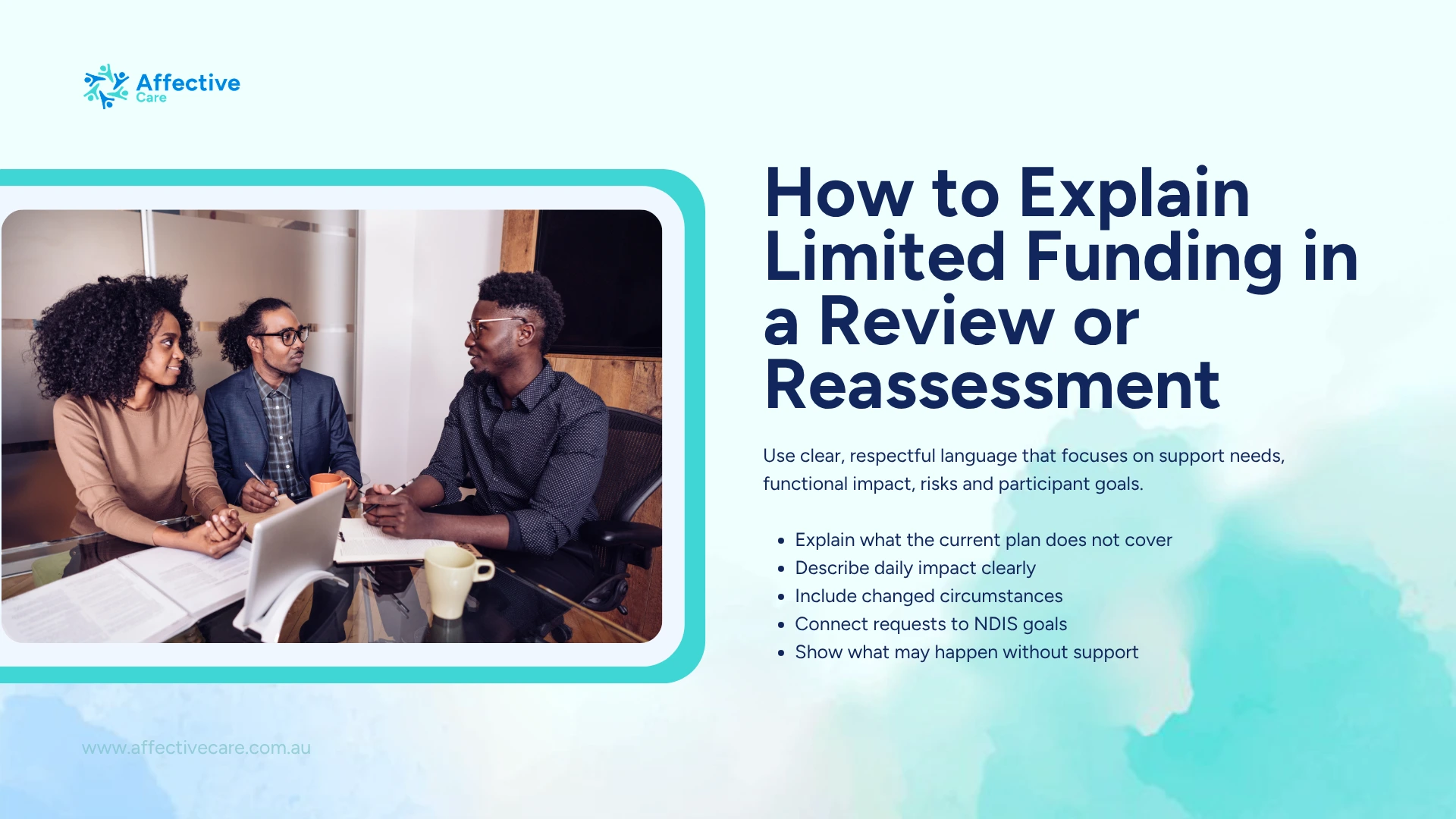
If you are preparing for a plan review or reassessment, it can help to use clear and practical language.
The focus should be on support needs, functional impact, risks and goals.
|
Instead of saying |
Say this |
|
“The funding is not enough.” |
“The current funding does not appear to cover the participant’s disability-related support needs across the plan period.” |
|
“We need more therapy.” |
“Therapy is recommended to support communication, emotional regulation, daily living skills and progress toward NDIS goals.” |
|
“The family is doing too much.” |
“Informal supports are currently providing unsustainable support, which is creating stress and risk of support breakdown.” |
|
“The plan is wrong.” |
“The current plan may not reflect recent changes in the participant’s functional needs and support requirements.” |
|
“We need more help.” |
“Additional support is needed to reduce risk, maintain daily routines and support the participant’s independence.” |
Common Mistakes to Avoid When Funding is Limited
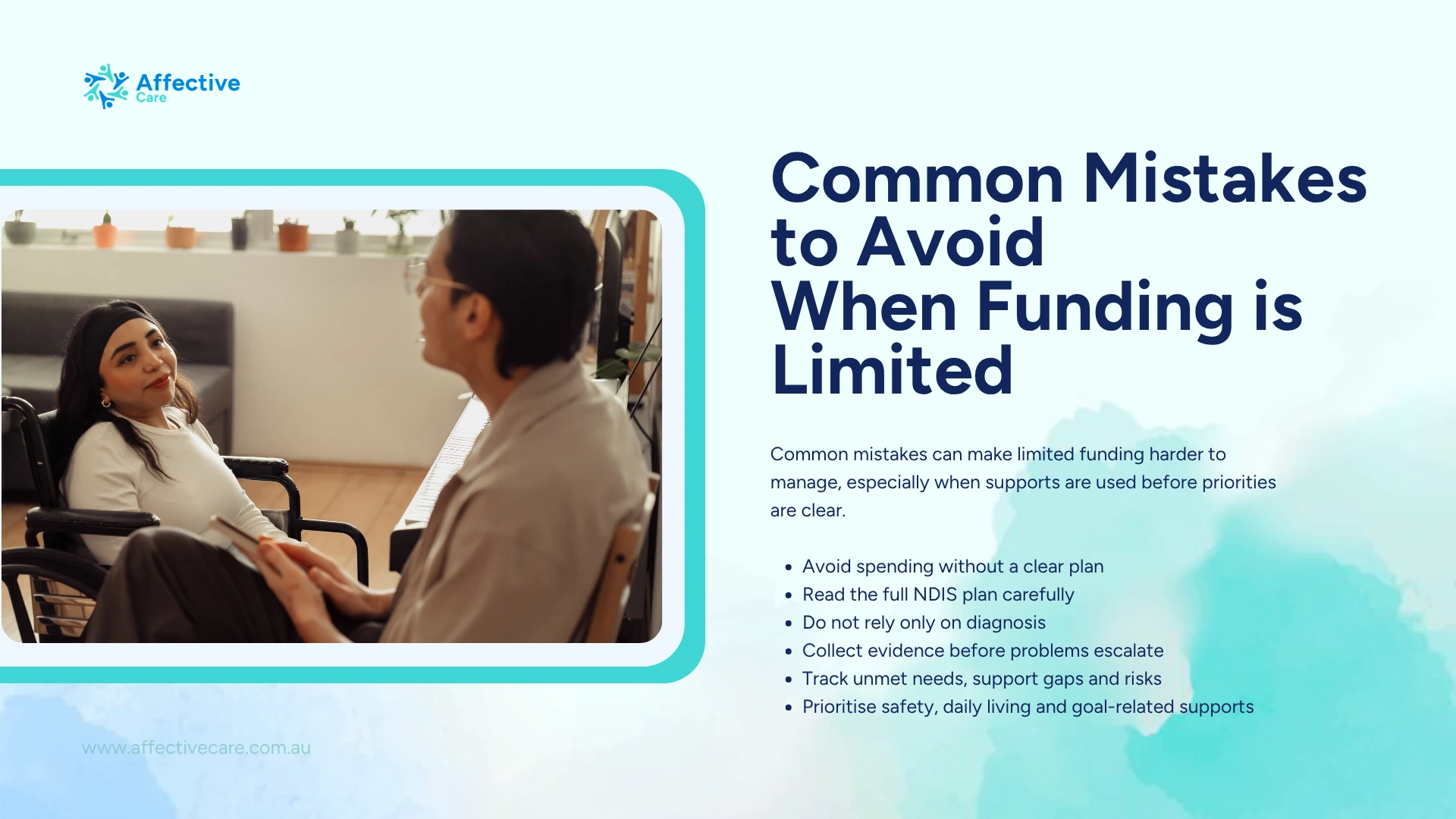
When participants and families are dealing with limited funding, it is easy to feel rushed. However, some mistakes can make the situation harder.
|
Mistake |
Why it can be a problem |
|
Spending without a plan |
Funding may be used before essential supports are covered |
|
Not reading the plan carefully |
Important details may be missed |
|
Relying only on diagnosis |
Diagnosis alone may not explain functional support needs |
|
Not collecting evidence early |
It may be harder to explain funding gaps later |
|
Not documenting unmet needs |
Support gaps may not be visible |
|
Waiting until crisis point |
Risks may increase before action is taken |
|
Not asking providers for reports |
The plan may not have enough professional evidence |
|
Assuming more funding is guaranteed |
NDIS decisions depend on criteria and evidence |
The NDIS also notes that it generally will not change a plan simply because someone has used all the funding or wants the same supports others have received.
Significant changes in situation may require a reassessment and new information.
When Limited Funding May Create Higher Risk
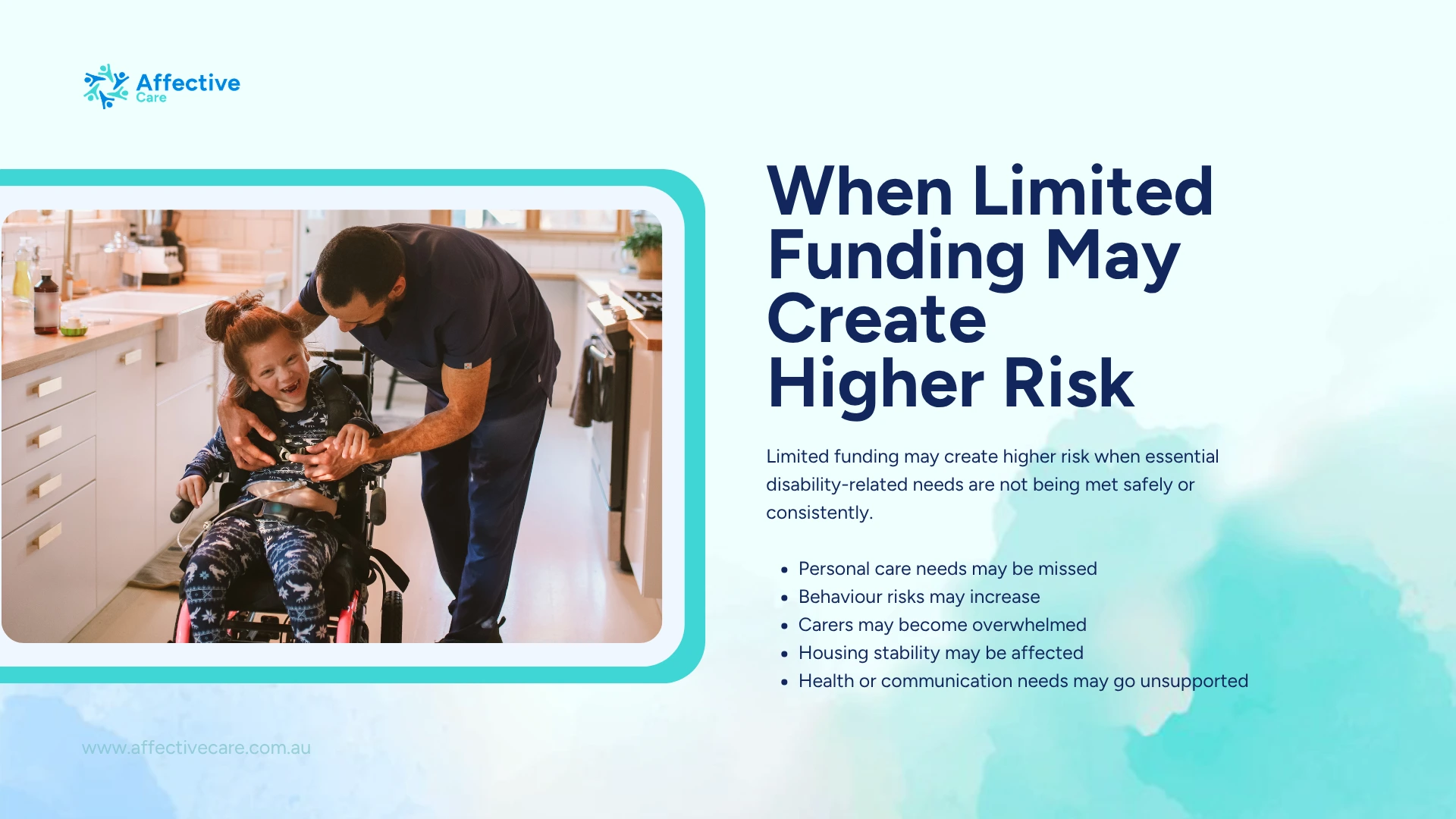
In some situations, limited funding may create higher risk for the participant, family or support network.
These situations should be documented carefully.
|
Situation |
Possible risk |
|
High daily support needs |
Personal care, safety or routine needs may not be met |
|
Complex behaviour support needs |
Risk may increase without consistent support |
|
Limited informal support |
Family or carers may not be available or able to continue |
|
Hospital discharge |
The participant may need new or increased support at home |
|
Housing instability |
The participant may be at risk of unsafe or unsuitable living arrangements |
|
Communication barriers |
Needs, choices or distress may not be understood |
|
Health-related support needs |
Daily care may become difficult to manage safely |
|
Carer stress |
Informal supports may become unsustainable |
|
Recent change in circumstances |
The plan may no longer reflect current needs |
If limited funding creates risk, evidence should clearly explain the risk, the support required and how the support connects to the participant’s disability-related needs.
Can You Request More NDIS Funding?
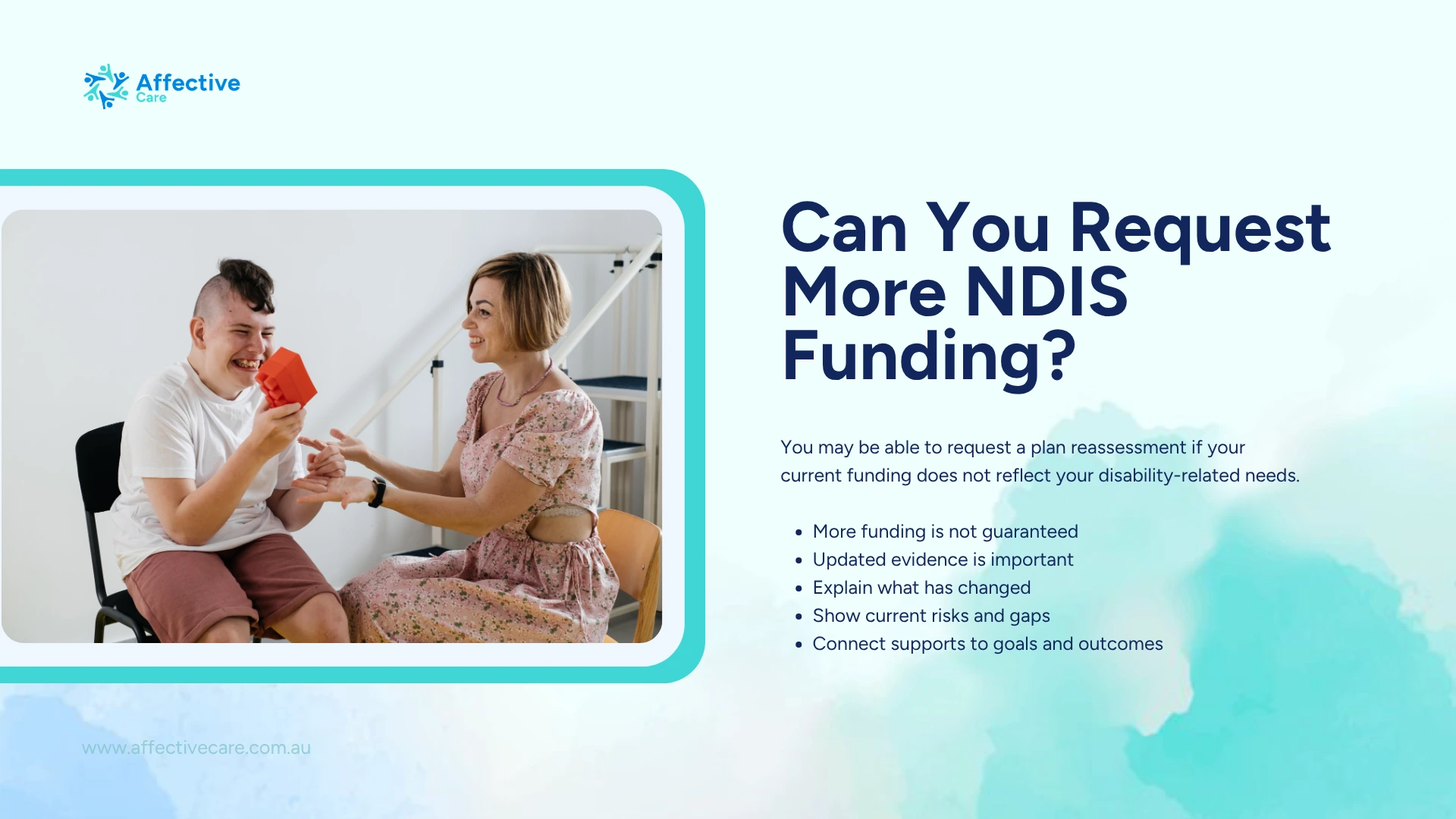
You may be able to request a plan reassessment or provide updated evidence if limited funding does not meet the participant’s current disability-related needs.
More funding is not guaranteed, and the NDIA will consider the information and evidence provided.
The NDIS explains that during a plan reassessment, evidence is reviewed to decide what NDIS supports should be included.
The NDIS also states that after evidence is provided, a planner will consider supports that are related to disability, help work toward goals, increase independence, and support work, study or social participation.
A request for more funding should usually explain:
- What support is needed
- Why the support is needed
- How the current plan is limited
- What needs are unmet
- What has changed
- What risks exist without support
- How the support relates to NDIS goals
- What evidence supports the request
- What outcomes the support may help achieve
Moreover, Participants looking for local support can also compare NDIS providers in Campsie to find services that match their goals, needs and funding.
Example: How to Explain a Limited Funding Gap
The following example shows how a participant or family may explain limited funding in a clear and respectful way.
|
Area |
Example wording |
|
Current issue |
“The current plan includes limited funding and does not appear to cover the participant’s current disability-related needs.” |
|
Functional impact |
“The participant requires support with daily routines, communication, emotional regulation and safe community access.” |
|
Risk |
“Without consistent support, there is increased risk of isolation, distress, carer pressure and service breakdown.” |
|
Evidence |
“Recent provider reports and therapy recommendations explain the participant’s current support needs and changed circumstances.” |
|
Request |
“A plan reassessment is requested so the participant’s current needs, risks and goals can be reviewed.” |
How Providers Can Help When Funding is Limited
Providers can play an important role when a participant has limited funding. They can help by explaining support needs clearly, documenting progress and identifying gaps.
Providers may assist with:
- Writing reports
- Explaining functional impact
- Identifying support gaps
- Providing service recommendations
- Documenting risks
- Explaining why support is needed
- Connecting recommendations to NDIS goals
- Supporting review or reassessment preparation
A provider report should be practical, specific and evidence-based.
It should avoid vague wording and clearly explain why the recommended support is connected to the participant’s disability-related needs.
In addition, the NDIS Price Guide 2026 can help participants, families and carers understand how support costs are structured.
How Families and Carers Can Help Explain Limited Funding
Families and carers often see the real impact of limited funding in everyday life. Their observations can be helpful because they show what happens outside appointments, therapy sessions or formal provider reports.
A carer statement can help explain the participant’s daily support needs, what is currently missing and how limited funding is affecting safety, wellbeing, independence or family capacity.
A carer statement may include:
- Daily support provided: Explain the support currently being provided, such as help with routines, meals, personal care, communication, transport or emotional regulation.
- Support gaps: Describe what needs are not currently being met because of limited funding or lack of available support.
- Carer pressure: Explain any emotional, physical, time-related or financial strain placed on family members, carers or informal supports.
- Safety concerns: Include examples of risks such as falls, distress, behaviours of concern, health issues, support breakdown or unsafe routines.
- Changed circumstances: Mention any changes such as increased needs, new diagnosis, family changes, housing issues, hospital discharge or changes in informal support.
- Impact on the participant: Explain how limited funding affects the participant’s independence, social connection, wellbeing, daily routines, safety or progress toward NDIS goals.
Clear, practical examples can make a carer statement more useful.
Instead of only saying that more support is needed, explain what support is needed, when it is needed and what happens when that support is not available.
Furthermore, When reviewing service agreements or provider quotes, it is useful to understand NDIS pricing arrangements so you can check rates, travel, cancellations and claimable supports.
How to Use Current Funding More Carefully
Even when funding feels limited, careful planning may help reduce stress and make the plan easier to manage.
|
Strategy |
How it helps |
|
Identify essential supports first |
Protects safety and daily needs |
|
Review service agreements |
Helps avoid unexpected costs |
|
Ask providers for clear plans |
Keeps supports goal-focused |
|
Track spending |
Helps avoid running out early |
|
Keep records |
Supports future review or reassessment |
|
Review progress regularly |
Helps identify what is working |
|
Avoid duplicate services |
Reduces unnecessary use of funding |
|
Prioritise evidence-based supports |
Keeps funding linked to outcomes |
The goal is not just to spend less. The goal is to use available funding in a way that supports safety, independence, daily life and NDIS goals.
Limited Funding and Reasonable and Necessary Supports
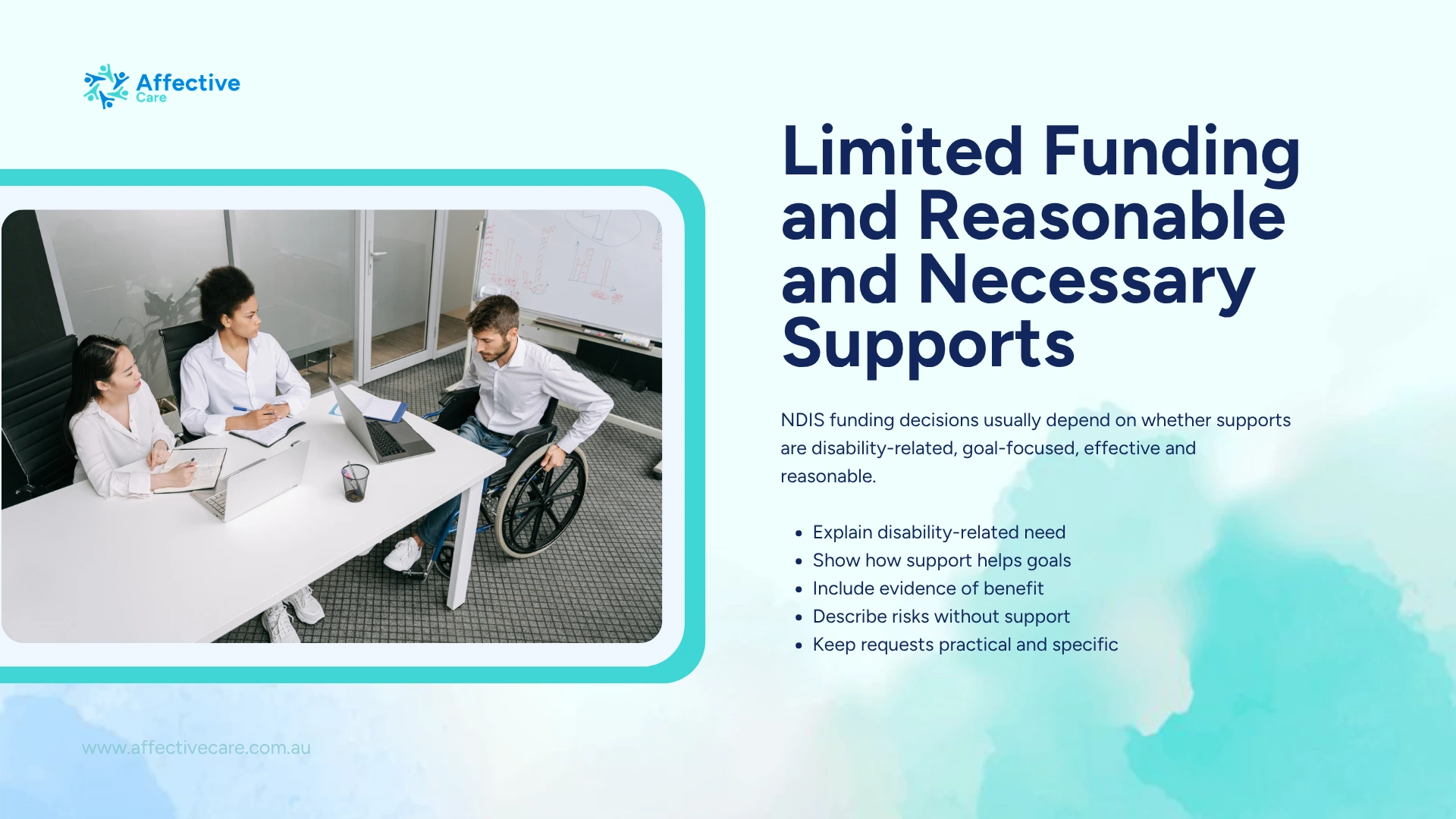
A key part of understanding limited funding is understanding how the NDIS thinks about reasonable and necessary supports.
The NDIS explains that supports need to meet funding criteria, including being related to disability, value for money, effective and beneficial, and most appropriately funded by the NDIS.
This means a request for more funding should not only say that the participant wants a support.
It should explain why the support is needed, how it relates to disability, how it supports goals and what evidence supports the request.
|
NDIS consideration |
What your evidence should explain |
|
Disability-related need |
How the support connects to the participant’s disability |
|
Goals |
How the support helps the participant work toward their goals |
|
Independence |
How the support may build or maintain independence |
|
Social and community participation |
How the support helps the participant join everyday life |
|
Risk |
What may happen if the support is not provided |
|
Value and benefit |
Why the support is useful, appropriate and practical |
Questions to Ask When Your Funding Feels Limited
If you are unsure what to do next, these questions may help guide the conversation.
Questions to Ask When Your Funding Feels Limited
If you are unsure what to do next, these questions may help guide the conversation:
- What supports are most important right now?
- What needs are not covered by the current plan?
- What has changed since the plan was approved?
- What evidence do we already have?
- What evidence is missing?
- Are informal supports under pressure?
- Are there safety or behaviour risks?
- Are provider reports current?
- Do recommendations link to NDIS goals?
- Should we discuss a reassessment?
If you are unsure how payments, invoices or financial records are treated, our guide to NDIS Taxation Considerations explains important points in simple terms.
How Affective Care Can Help
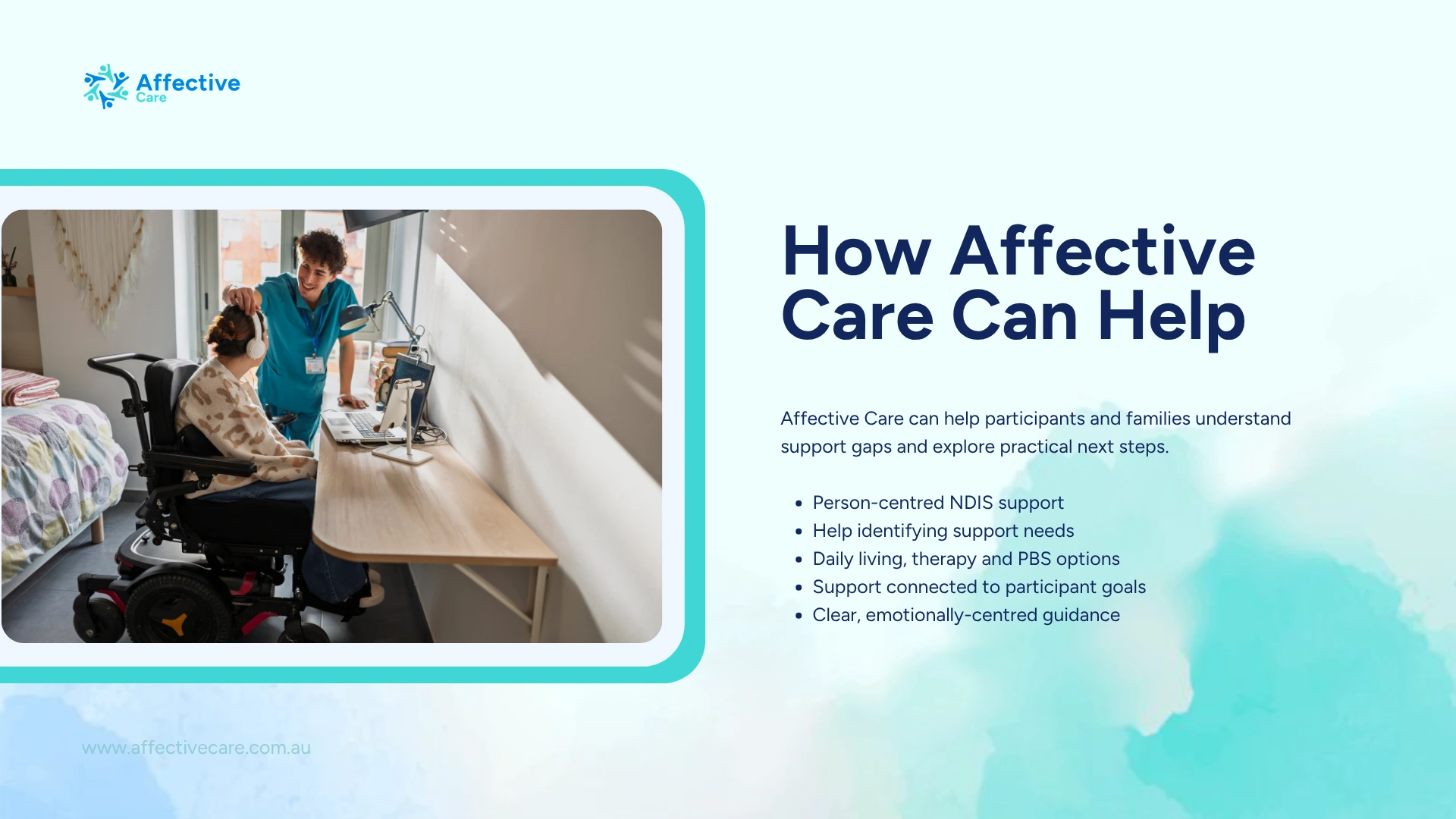
At Affective Care, we understand that limited funding can feel overwhelming for participants, families and carers.
It can be difficult to know what to prioritise, what evidence may help and how to explain support needs clearly.
Our team provides emotionally-centred, person-centred NDIS support that focuses on clarity, dignity and practical next steps.
Depending on the participant’s plan and needs, we may support people through services such as daily living support, therapy, psychology, Positive Behaviour Support, community participation, Supported Independent Living and other disability-related supports.
We can help participants and families better understand support gaps, connect with suitable services and prepare for conversations about current and future support needs.
Moving Forward with Limited Funding
Limited funding in an NDIS plan can feel frustrating, especially when the participant has important daily, therapy, behaviour, housing or community support needs. However, limited funding does not mean you have no options.
The first step is to understand the plan, identify essential supports and document what is missing.
If the current plan does not reflect the participant’s disability-related needs, evidence may help explain why more, different or updated supports should be considered.
Strong evidence should explain functional impact, risk, goals, informal support pressure and the real-life impact of unmet needs.
With the right preparation, participants and families can feel more informed, organised and confident when discussing limited funding and future NDIS support needs.