
If you are a speech pathologist looking for greater flexibility, meaningful clinical work and the opportunity to support people from different parts of Australia, telehealth speech therapy jobs may be worth considering.
Telehealth has changed how many allied health services are delivered.
Speech pathologists can now provide assessment, therapy, communication support, caregiver education and ongoing review through secure online appointments where telehealth is clinically suitable.
For clinicians, telehealth speech therapy jobs can offer a different way to structure work while still maintaining professional standards, collaboration and participant-centred care.
For NDIS providers such as Affective Care, telehealth also makes it possible to support participants who may experience geographical, mobility or access barriers.
This guide explains what telehealth speech therapy jobs involve, the skills commonly needed, how NDIS telehealth work may operate and what to consider before applying for a remote speech pathology position.
What is a Telehealth Speech Therapy Job?
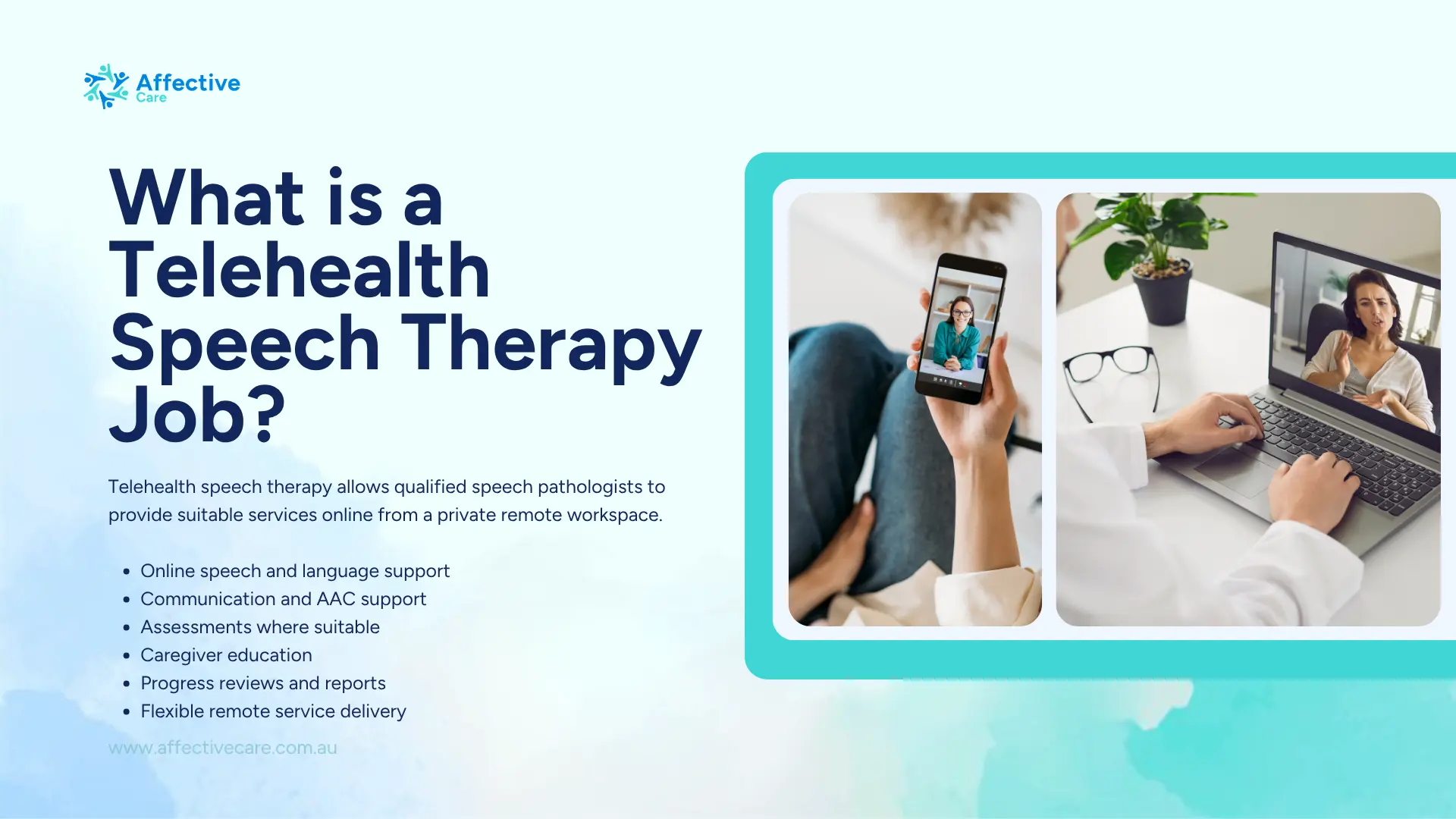
A telehealth speech therapy role allows a qualified speech pathologist to provide appropriate speech pathology services remotely using video conferencing and other digital tools.
Instead of every appointment taking place in a clinic, the speech pathologist may work from home or another approved private workspace while the participant joins from their home, school, workplace or another suitable location.
Depending on the role and participant's needs, telehealth speech therapy jobs may involve supporting areas such as:
- Speech and language development
- Receptive and expressive communication
- Social communication
- Augmentative and alternative communication
- Communication-partner training
- Functional communication
- Goal development
- Caregiver or support-worker education
- Progress reviews and reports
Telehealth is a delivery method rather than a completely different type of speech pathology.
The same focus on assessment, clinical reasoning, evidence-informed practice, consent and participant goals continues to apply.
What Does a Telehealth Speech Pathologist Do?
The responsibilities in telehealth speech pathology jobs can vary depending on the employer, participant group and type of service being delivered.
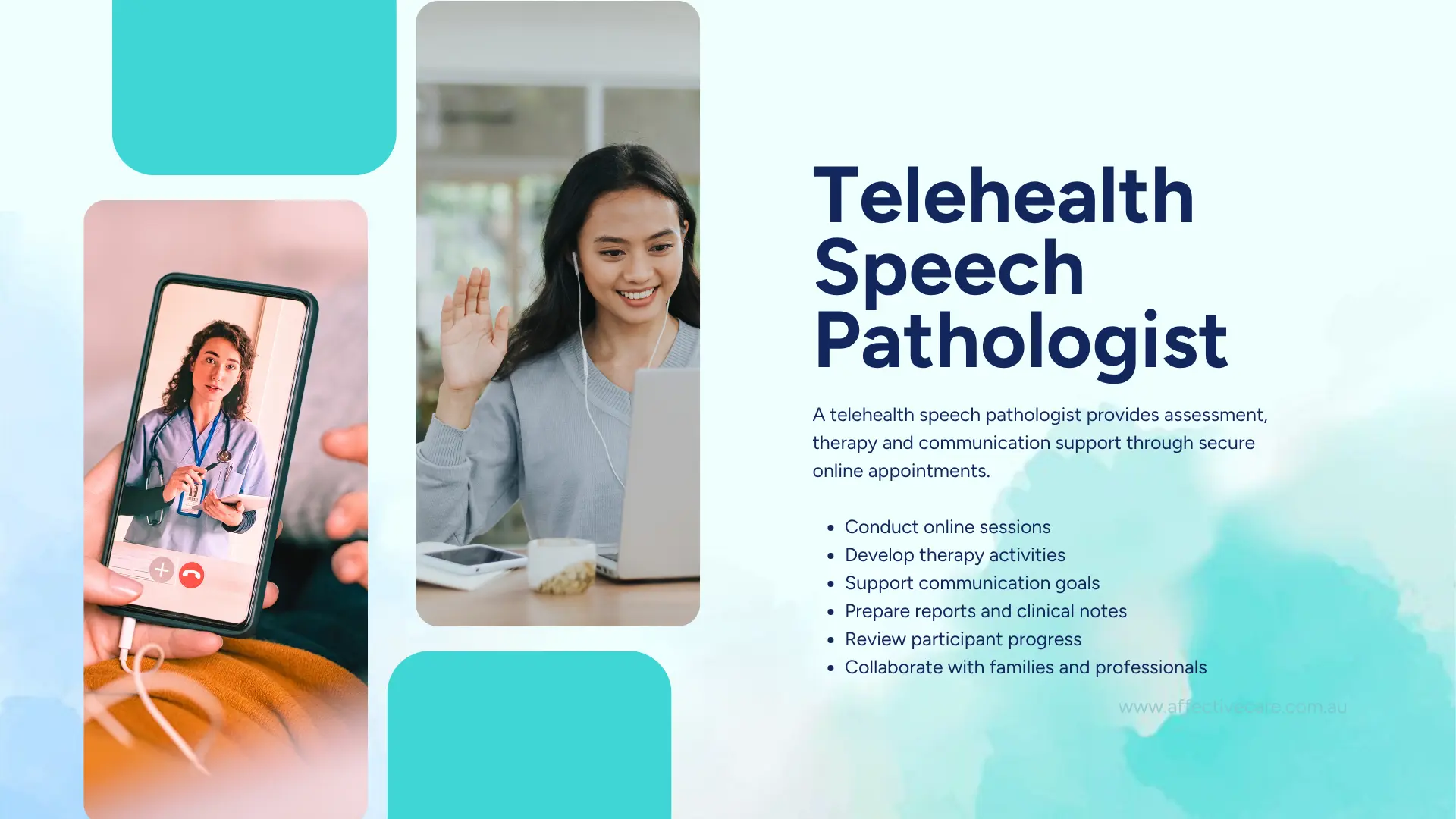
A telehealth speech pathologist may conduct online appointments, review participant goals, plan therapy activities, provide communication strategies and work with families or other members of the support team.
The role may also involve preparing reports, maintaining clinical records and communicating with other professionals involved in the participant's care.
For NDIS participants, this may include collaboration with occupational therapists, psychologists, Positive Behaviour Support practitioners, support coordinators, support workers, families and other relevant professionals where consent has been provided.
A typical day in telehealth speech therapy jobs could include several online sessions, report writing, case discussions, resource preparation and follow-up communication.
The exact mix depends on the position and caseload.
Why Consider Telehealth Speech Therapy Jobs?
One of the main reasons clinicians consider telehealth speech therapy jobs is flexibility.
Remote delivery can reduce the time spent travelling between appointments and may allow clinicians to structure parts of their working day differently from traditional community-based roles.
Potential benefits may include:
- Reduced travel between participant appointments
- Opportunities to work with participants across different locations
- Full-time, part-time or flexible employment options
- Greater use of digital therapy resources
- Multidisciplinary collaboration without always being in the same physical location
- Opportunities to develop specialised telehealth skills
However, flexibility should not be the only consideration.
Strong telehealth speech pathology jobs should also provide appropriate clinical support, manageable caseload expectations, clear systems, supervision where required and enough administration time to maintain high-quality documentation.
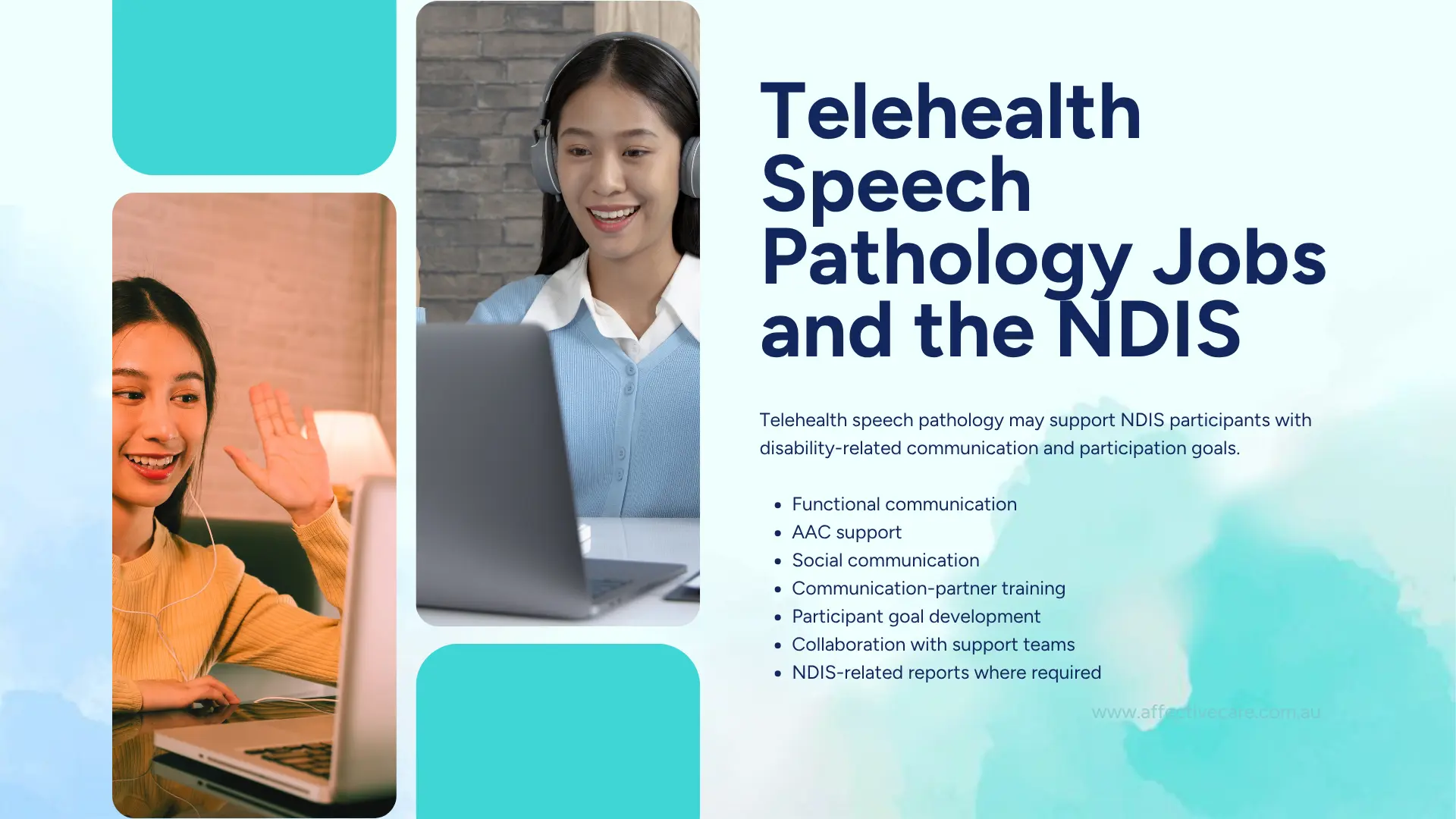
Telehealth Speech Pathology Jobs and the NDIS
Some telehealth speech pathology jobs involve working primarily or partly with NDIS participants.
Speech pathology may be relevant to an NDIS participant where communication or related functional needs are connected to their disability and the support aligns with their individual goals and plan arrangements.
The role of the clinician is not simply to conduct a video appointment.
A speech pathologist may need to understand how the participant communicates in everyday environments, what barriers affect participation and which strategies could be used by family members, carers, teachers or support workers.
For example, telehealth speech pathology may involve supporting a participant to:
- Communicate choices and needs
- Use an AAC system
- Understand information more effectively
- Participate in conversations
- Build functional communication skills
- Develop strategies for different environments
- Improve participation at home or in the community
NDIS-related telehealth speech therapy jobs may also involve writing reports that clearly connect recommendations to the participant's functional communication needs and goals.
Funding for individual services remains dependent on the participant's NDIS plan, available budget and whether the support meets relevant NDIS requirements.
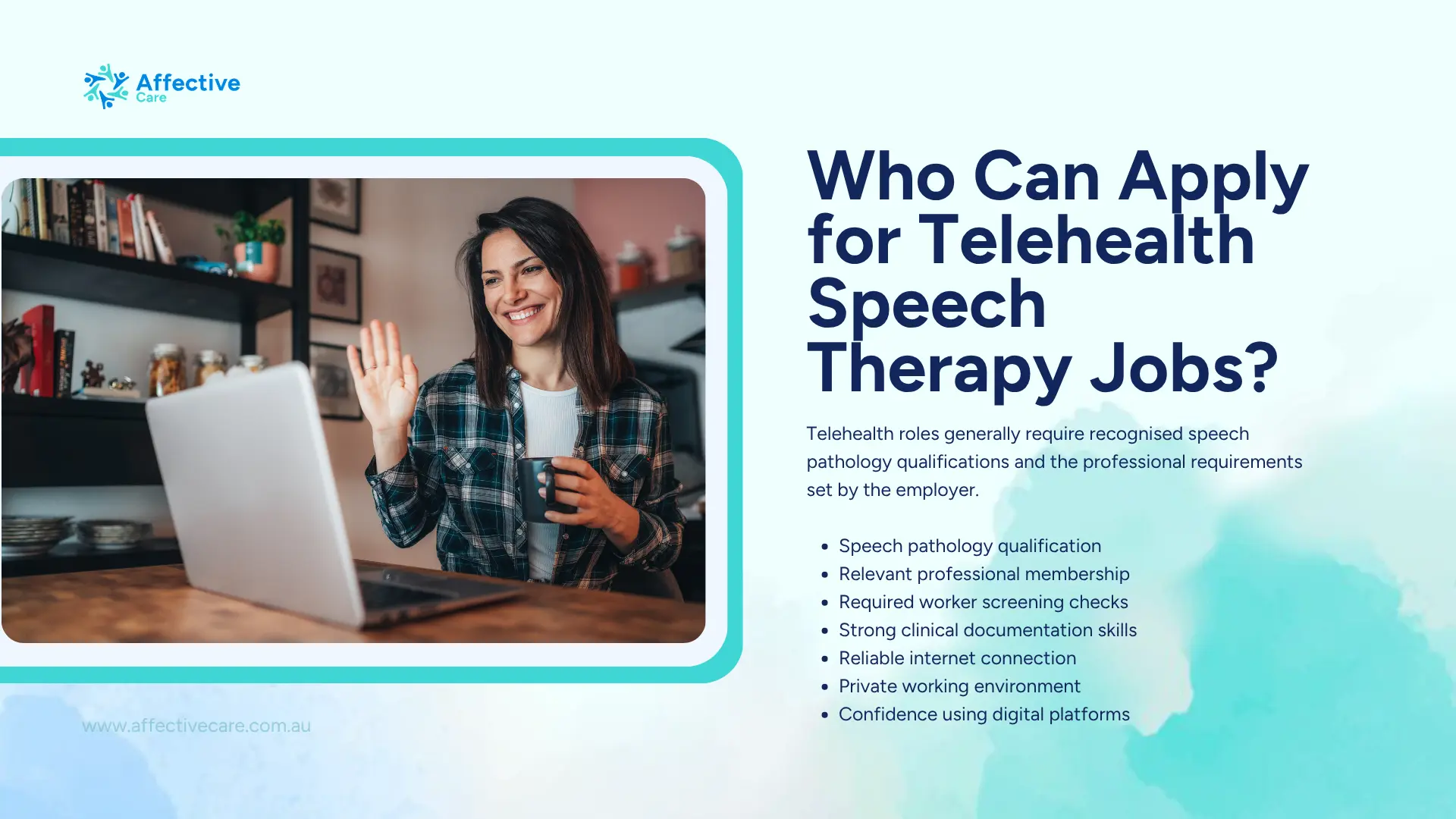
Who Can Apply for Telehealth Speech Therapy Jobs?
Requirements differ between employers, but speech pathology roles in Australia generally require an appropriate recognised qualification in speech pathology.
Employers may also require relevant professional membership or practising credentials, depending on the role.
Other requirements for telehealth speech pathology jobs may include:
- Suitable professional registration or membership requirements
- Relevant professional indemnity insurance where required
- National Police Check
- NDIS Worker Screening Check where applicable
- Working with Children Check for relevant caseloads
- Reliable internet access
- A private workspace
- Strong documentation skills
- Confidence using telehealth platforms
- Good written and verbal communication
Some organisations may consider early-career telehealth speech pathologists where appropriate supervision is available, while other remote roles may seek clinicians with previous independent practice experience.
Always check the specific requirements in the job advertisement before applying.
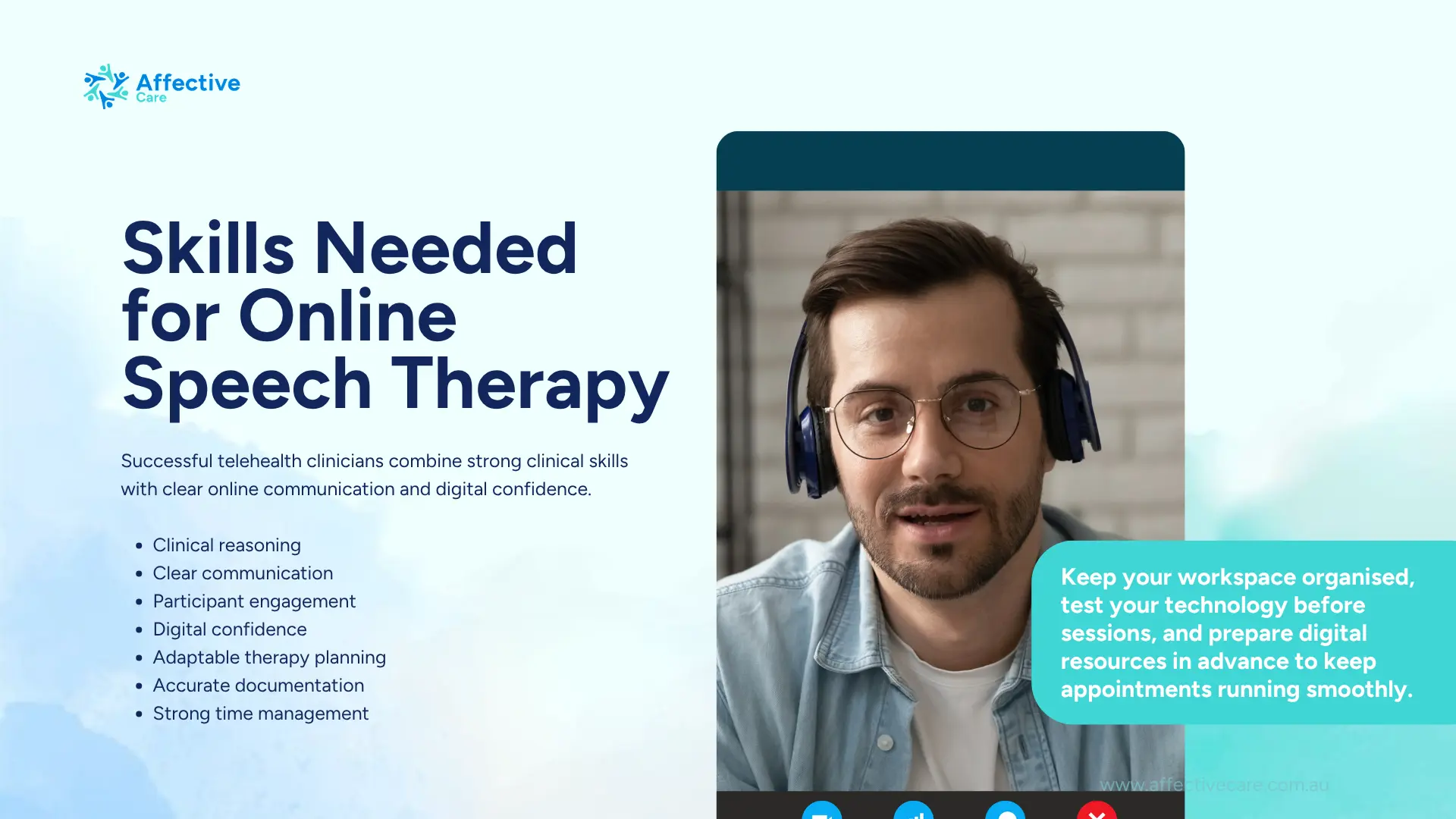
Skills Needed for Online Speech Therapy
Clinical knowledge remains essential, but telehealth speech therapy jobs also require clinicians to adapt their communication and therapy style to an online setting.
Clear Online Communication
A telehealth clinician psychologist needs to give instructions clearly and check that the participant, family member or support person understands what is being discussed.
This is especially important when demonstrating activities remotely.
Strong Clinical Reasoning
Not every assessment, therapy activity or participant situation is suitable for telehealth.
Speech pathologists need to determine when online delivery is appropriate and when another format may be more suitable.
Digital Confidence
Clinicians should feel comfortable using video platforms, screen sharing, digital resources, electronic records and online communication systems.
Engagement Skills
Keeping participants engaged through a screen may require creativity.
This can involve adapting activities, using visual supports, involving caregivers appropriately or incorporating the participant's interests.
Documentation
Remote work still requires high-quality clinical records.
Strong telehealth speech pathology jobs should allow enough time for progress notes, reports, correspondence and preparation.
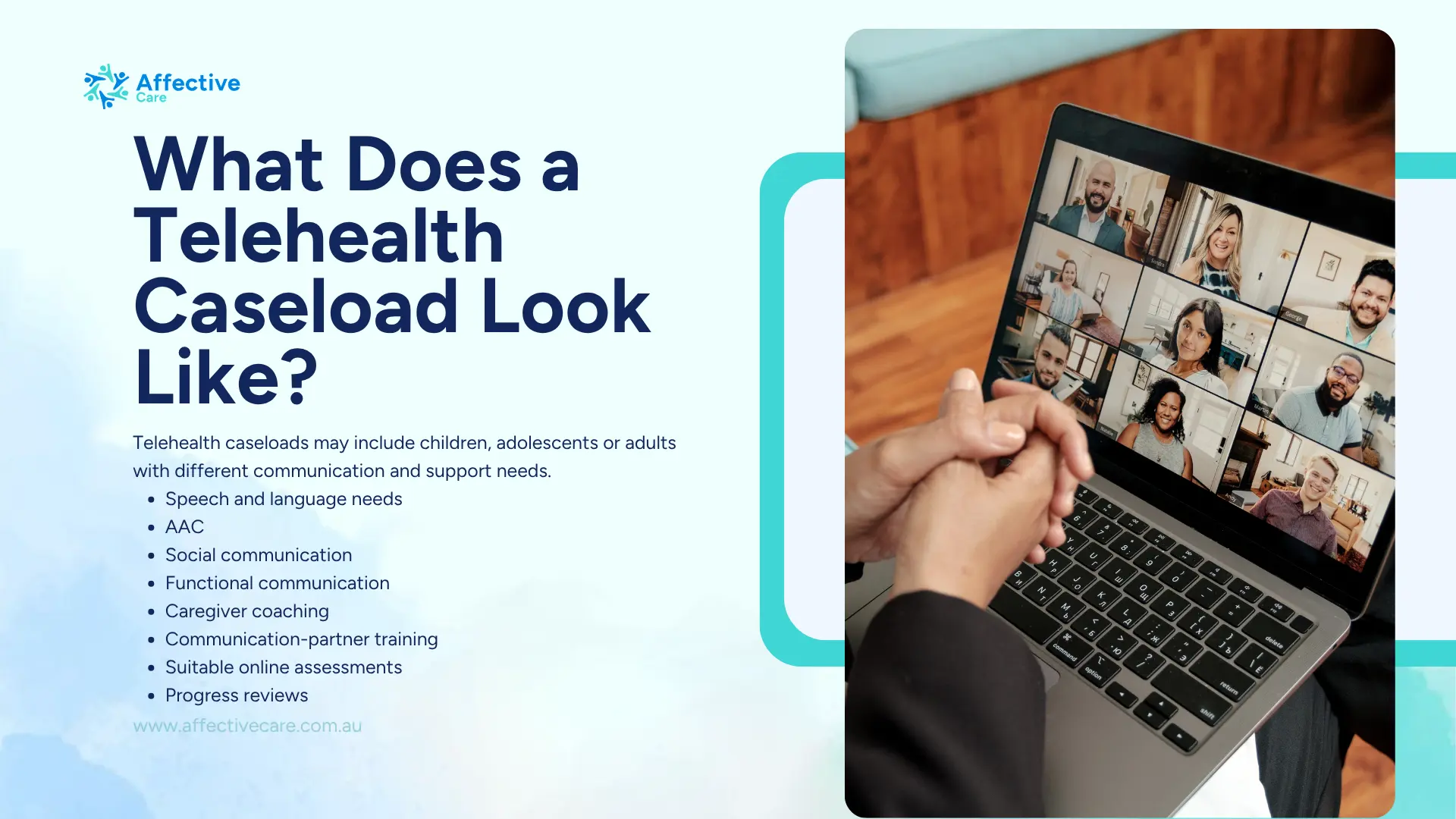
What Does a Telehealth Caseload Look Like?
Caseloads vary widely. Some telehealth speech therapy jobs focus primarily on children, while others support adolescents, adults or a mixed caseload.
Participants may have support needs related to autism, developmental disability, intellectual disability, neurological conditions, psychosocial disability or other conditions affecting communication and participation.
A telehealth caseload may include work relating to:
- Expressive and receptive language
- Speech production
- AAC
- Social communication
- Functional communication
- Caregiver coaching
- Communication-partner training
- Capacity building
- Assessments that are suitable for remote delivery
- Progress reviews
Before accepting a role, ask how caseloads are allocated.
A good employer should be able to explain the types of participants you are likely to support and whether your experience and interests can be considered when allocating work.
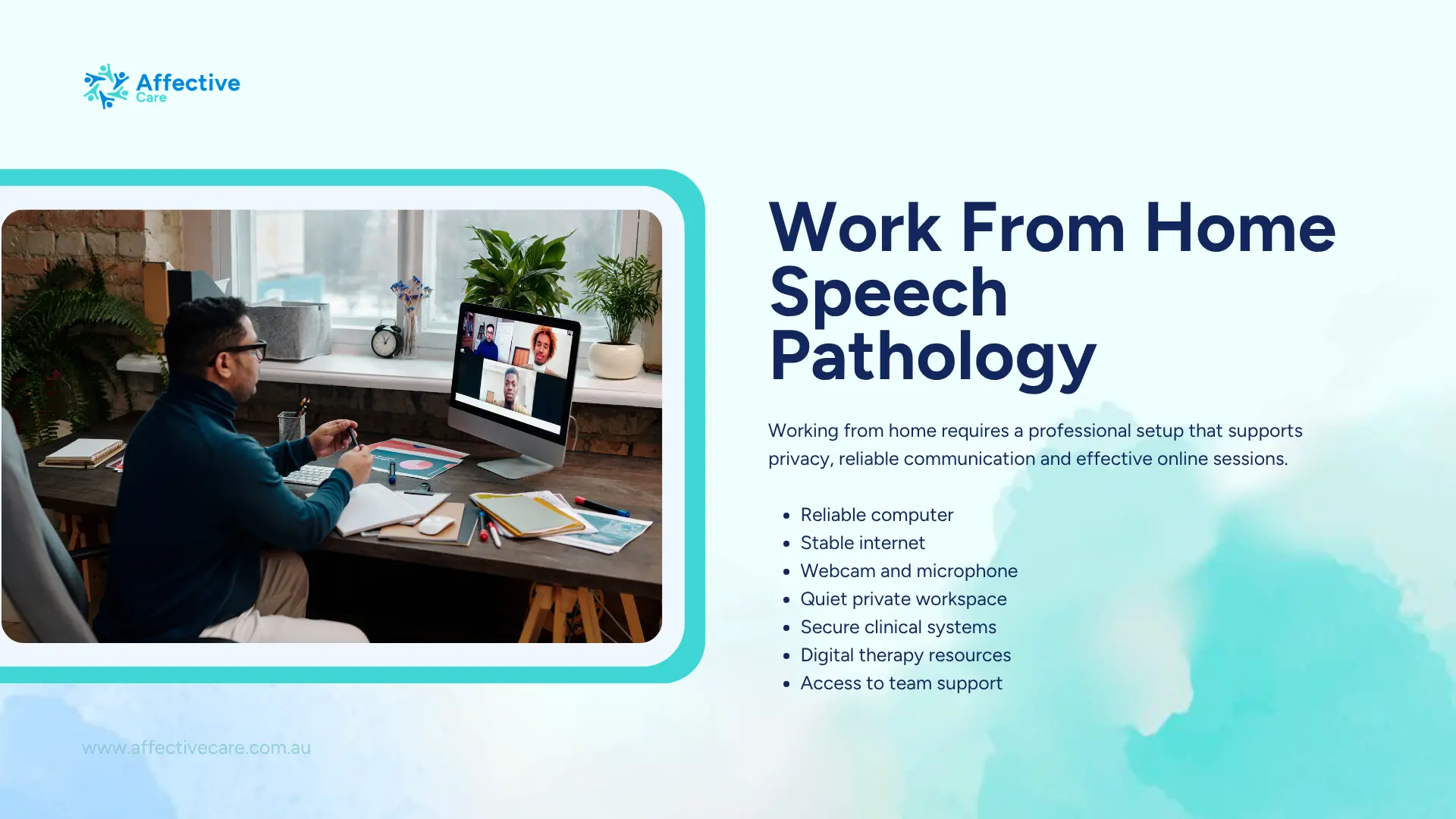
Work From Home Speech Pathology: What Do You Need?
One attraction of telehealth speech therapy jobs is the ability to work remotely, but a professional home setup is still important.
You will generally need a reliable computer, stable internet connection, suitable webcam, microphone or headset and a quiet workspace where participant privacy can be protected.
Your workspace should allow you to conduct appointments without unnecessary interruptions.
Confidential documents and participant information also need to be managed according to organisational privacy and record-keeping requirements.
Working from home does not mean working without structure.
Good remote roles should still have clear systems for:
- Booking appointments
- Accessing participant information
- Writing clinical notes
- Communicating with colleagues
- Clinical supervision
- Escalation of concerns
- IT support
These systems can make a significant difference to your experience in telehealth speech pathology jobs.
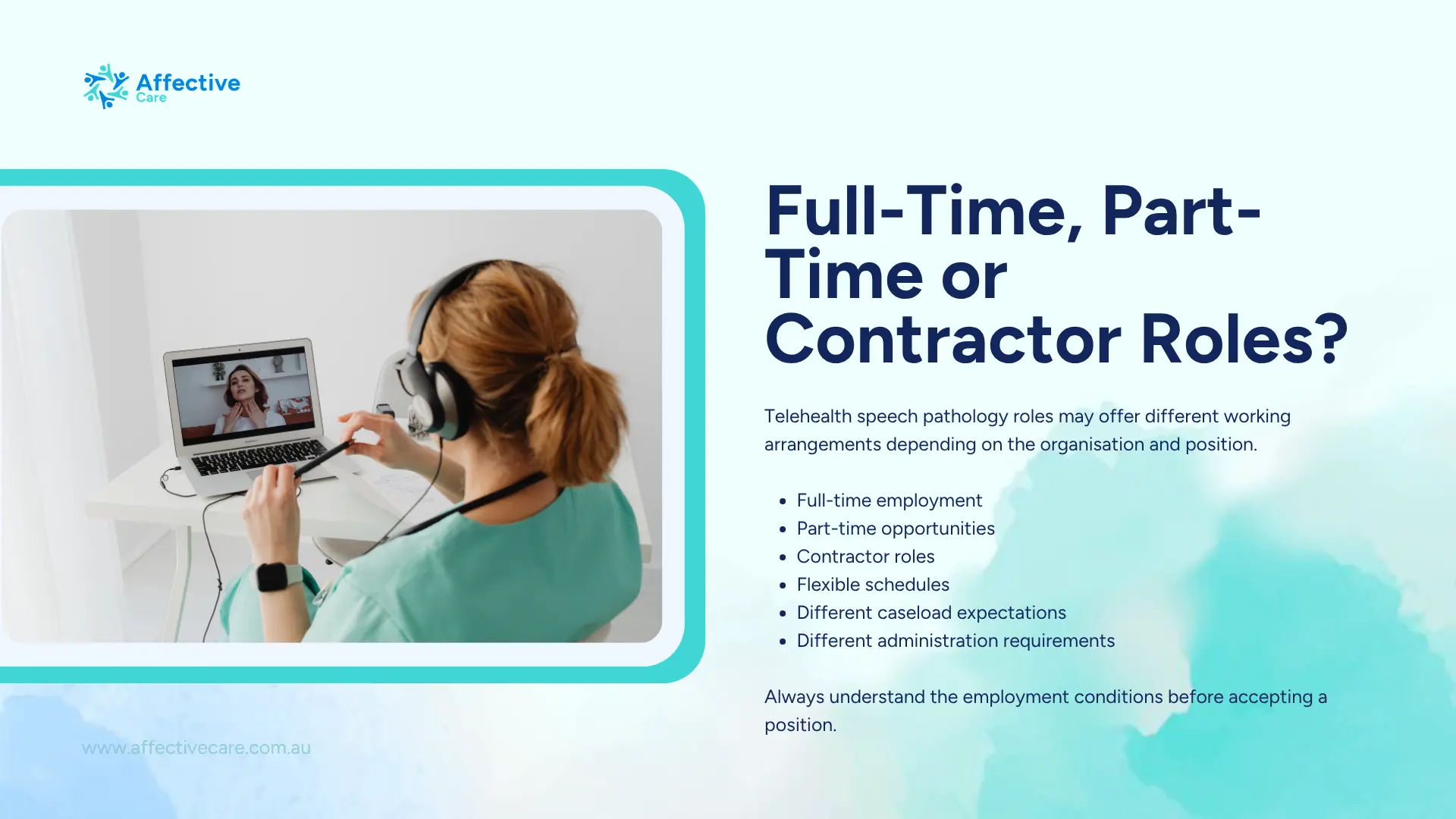
Full-Time, Part-Time or Contractor Roles?
Telehealth speech therapy jobs can be offered under different employment arrangements.
A full-time position may suit clinicians who want greater consistency, team involvement and a predictable working week.
Part-time roles may suit clinicians who want to balance speech pathology with study, parenting, another clinical role or other commitments.
Contractor arrangements can offer flexibility but may also involve additional responsibilities such as managing your own tax, insurance, superannuation arrangements and professional expenses.
Before accepting a position, understand whether you are being engaged as an employee or independent contractor.
Ask about:
- Expected caseload
- Billable targets
- Administration time
- Supervision
- Professional development
- Cancellations
- Report-writing expectations
- Leave arrangements
- Equipment
- Referral allocation
Do not judge a remote job only by the advertised hourly rate. The overall employment structure matters.
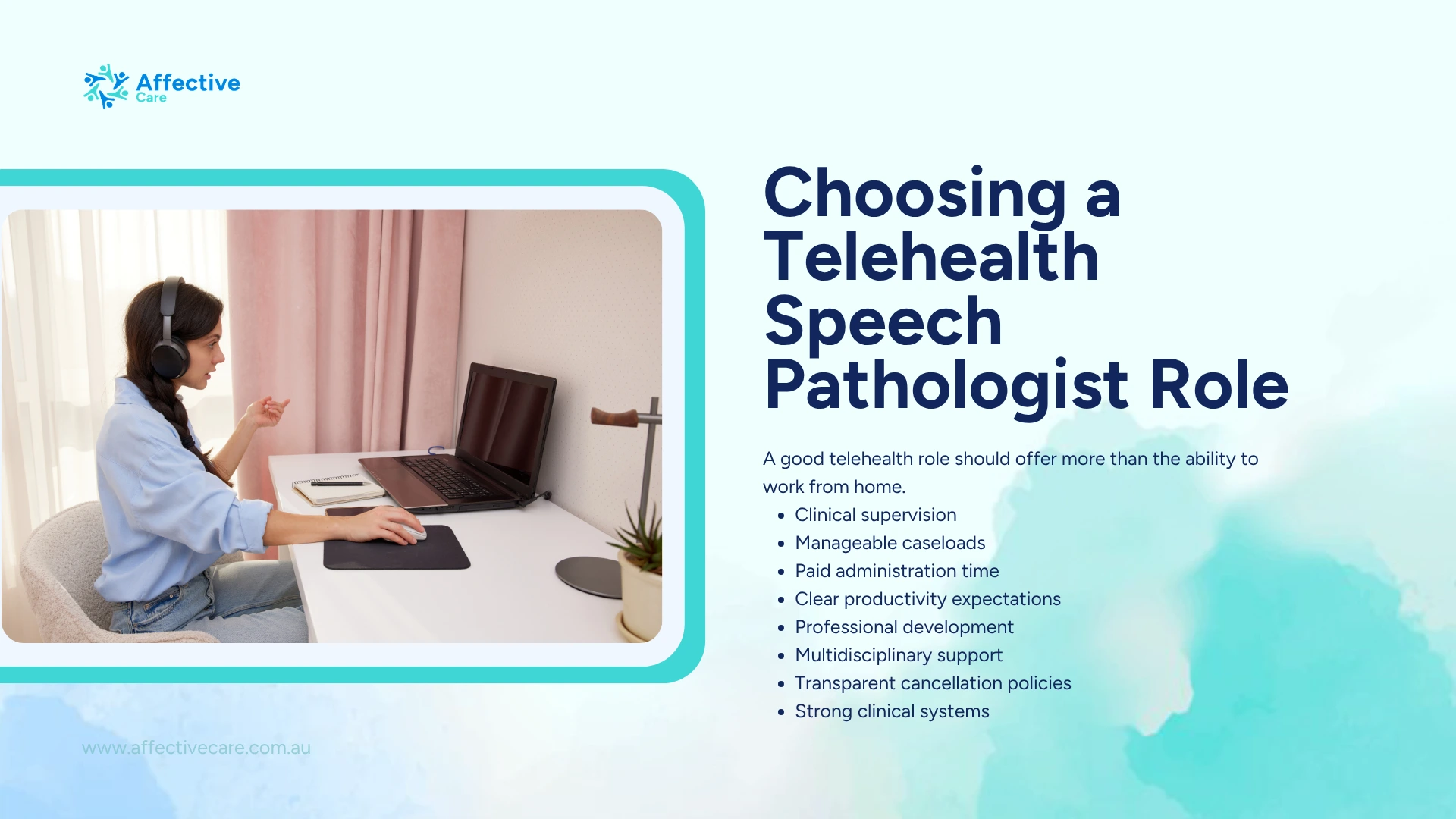
What to Look for in Telehealth Speech Pathology Jobs
Not every remote position offers the same level of support.
Before accepting telehealth speech pathology jobs, look beyond the phrase "work from home."
Consider whether the organisation provides appropriate clinical systems and whether the role allows you to practise safely and effectively.
Useful questions include:
- Who will provide clinical supervision?
- How are caseloads allocated?
- What participant groups will I support?
- How much administration time is provided?
- Are report-writing hours paid?
- How are cancellations managed?
- What productivity expectations apply?
- Is multidisciplinary collaboration available?
- What professional development is provided?
- What happens if a participant is not suitable for telehealth?
These questions can help you understand what the day-to-day role will actually look like.
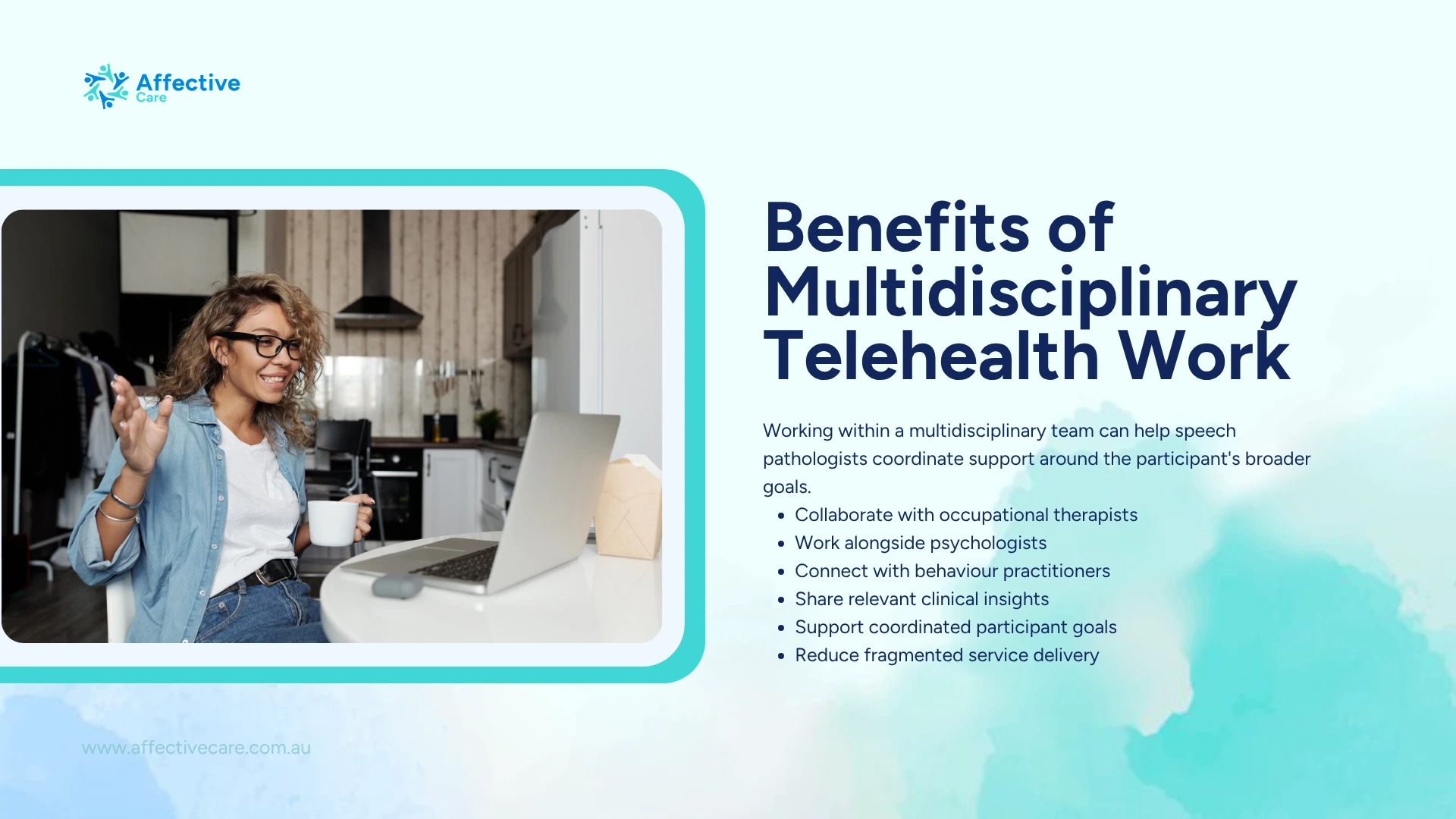
Benefits of Multidisciplinary Telehealth Work
Some telehealth speech pathology jobs operate within multidisciplinary teams rather than as isolated speech pathology positions.
This may create opportunities to collaborate with occupational therapists, psychologists, behaviour practitioners and other allied health professionals.
For participants with complex support needs, multidisciplinary communication may help different professionals understand how communication, sensory needs, behaviour, daily living and emotional regulation interact.
It may also help reduce fragmented support when professionals work towards related participant goals.
At Affective Care, our broader multidisciplinary approach includes psychology, Positive Behaviour Support, occupational therapy, speech pathology and disability supports.
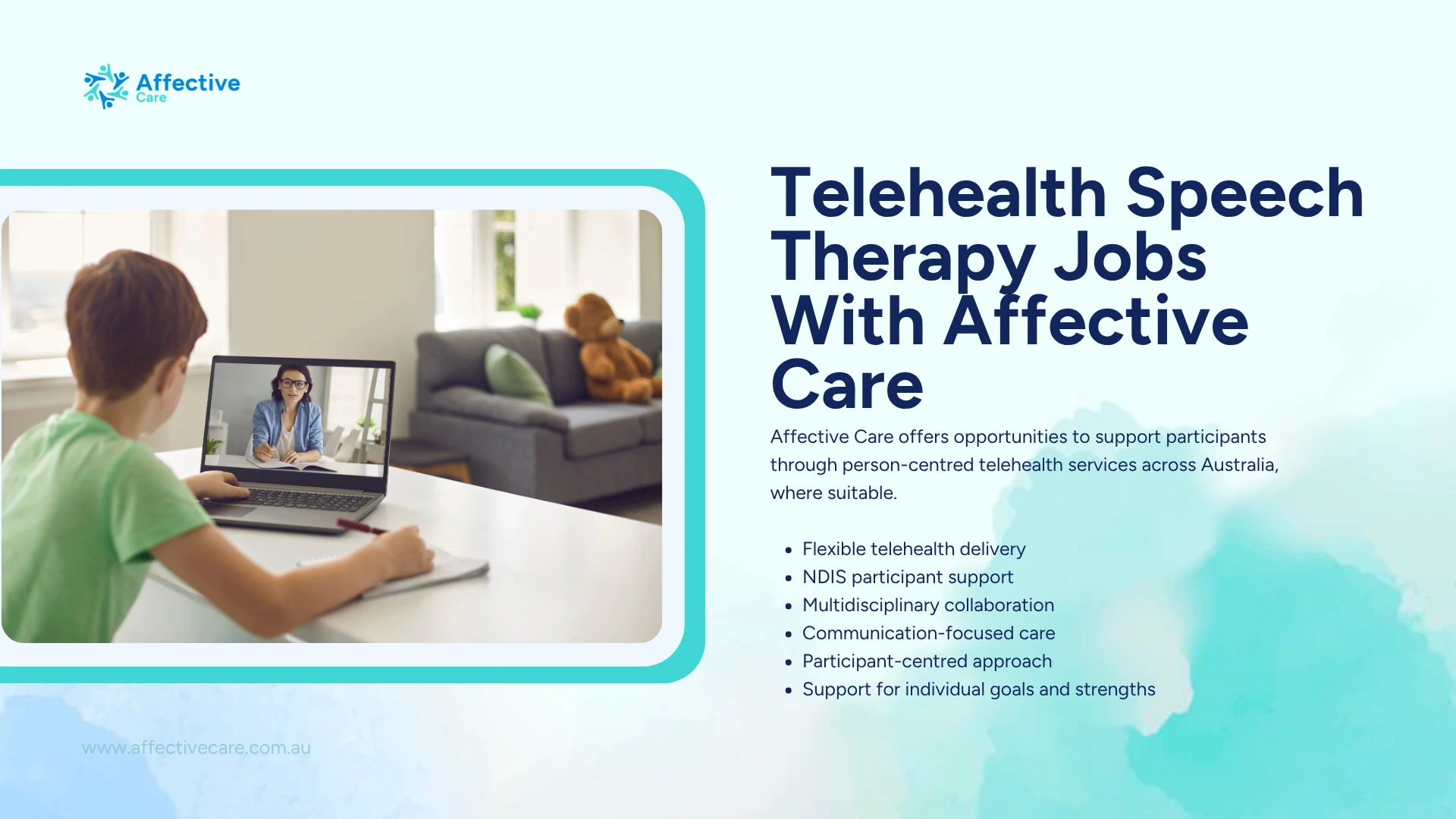
Telehealth Speech Therapy Jobs With Affective Care
Affective Care provides participant-centred disability and allied health services, including telehealth supports across Australia where suitable.
Our approach focuses on understanding the person behind the support plan, including their communication preferences, goals, strengths and individual circumstances.
For speech pathologists considering telehealth speech therapy jobs, working within an organisation such as Affective Care may provide opportunities to support NDIS participants while collaborating with professionals from different disciplines.
Depending on available positions, roles may involve working with participants requiring communication support, functional skill development, caregiver collaboration and disability-related speech pathology services.
We value clinical quality, respectful communication and supports that reflect each participant's individual needs rather than applying a one-size-fits-all approach.
Is Telehealth Speech Pathology Right for You?
Remote speech pathology can be rewarding, but it does not suit every clinician or every participant.
You may enjoy telehealth speech therapy jobs if you are comfortable working independently, communicating through digital platforms and adapting therapy activities for online delivery.
It may also suit clinicians who value flexibility while still wanting regular clinical interaction and multidisciplinary collaboration.
Before applying, consider your preferred caseload, level of clinical support, working environment and confidence with online service delivery.
The right role should support both the clinician and the people receiving services.
Start Your Telehealth Speech Pathology Career
Telehealth speech therapy jobs can provide speech pathologists with an opportunity to combine meaningful clinical work with greater location flexibility.
The strongest positions offer more than remote work. They provide appropriate clinical supervision, manageable expectations, good systems, multidisciplinary collaboration and a clear commitment to participant-centred care.
If you are exploring telehealth speech pathology jobs and want to work with an organisation supporting participants across Australia, Affective Care welcomes expressions of interest from suitably qualified speech pathologists when opportunities are available.
Interested in joining Affective Care?
Contact our team or view our current career opportunities to learn more about available speech pathology positions.