


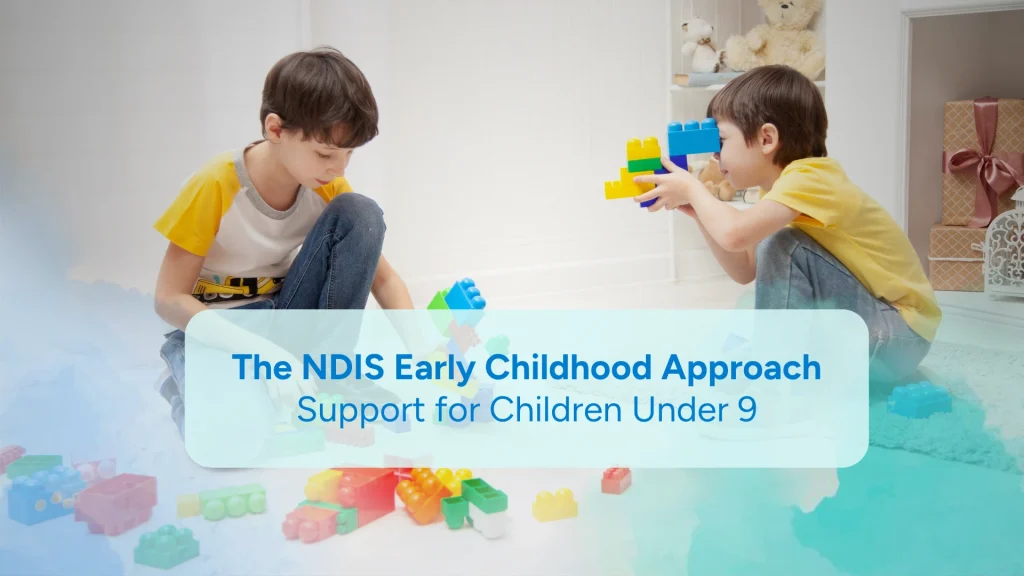
If you’re worried about your child’s development their speech, play, behaviour or connection with others, one of the most reassuring things to know is this: you don’t need a diagnosis, or even NDIS eligibility, to get help.
The NDIS Early Childhood Approach (ECA) exists for exactly this moment: children under 9 whose families have concerns and who benefit most from early support.
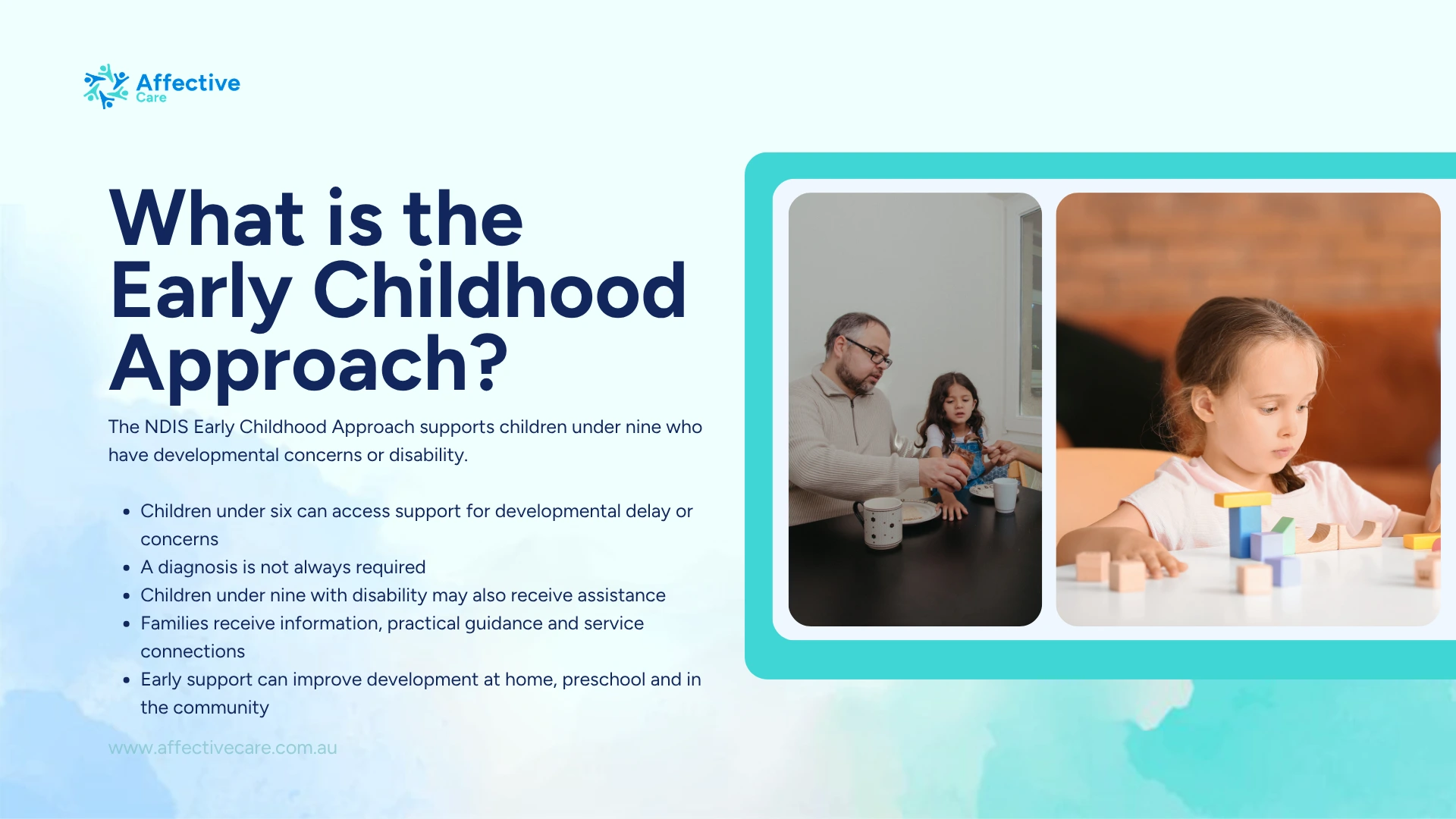
What is the Early Childhood Approach?
The ECA connects families with early childhood partners; organisations funded by the NDIS to provide information, connections and, where appropriate, early supports for:
- Children under 6 with developmental delay or developmental concerns; no diagnosis needed
- Children under 9 with disability
The principle behind it is simple and well-evidenced: support delivered early, in everyday settings like home and preschool, changes developmental trajectories.
For some children, timely early support means the NDIS is never needed at all. For others, the ECA is the pathway into an NDIS plan.
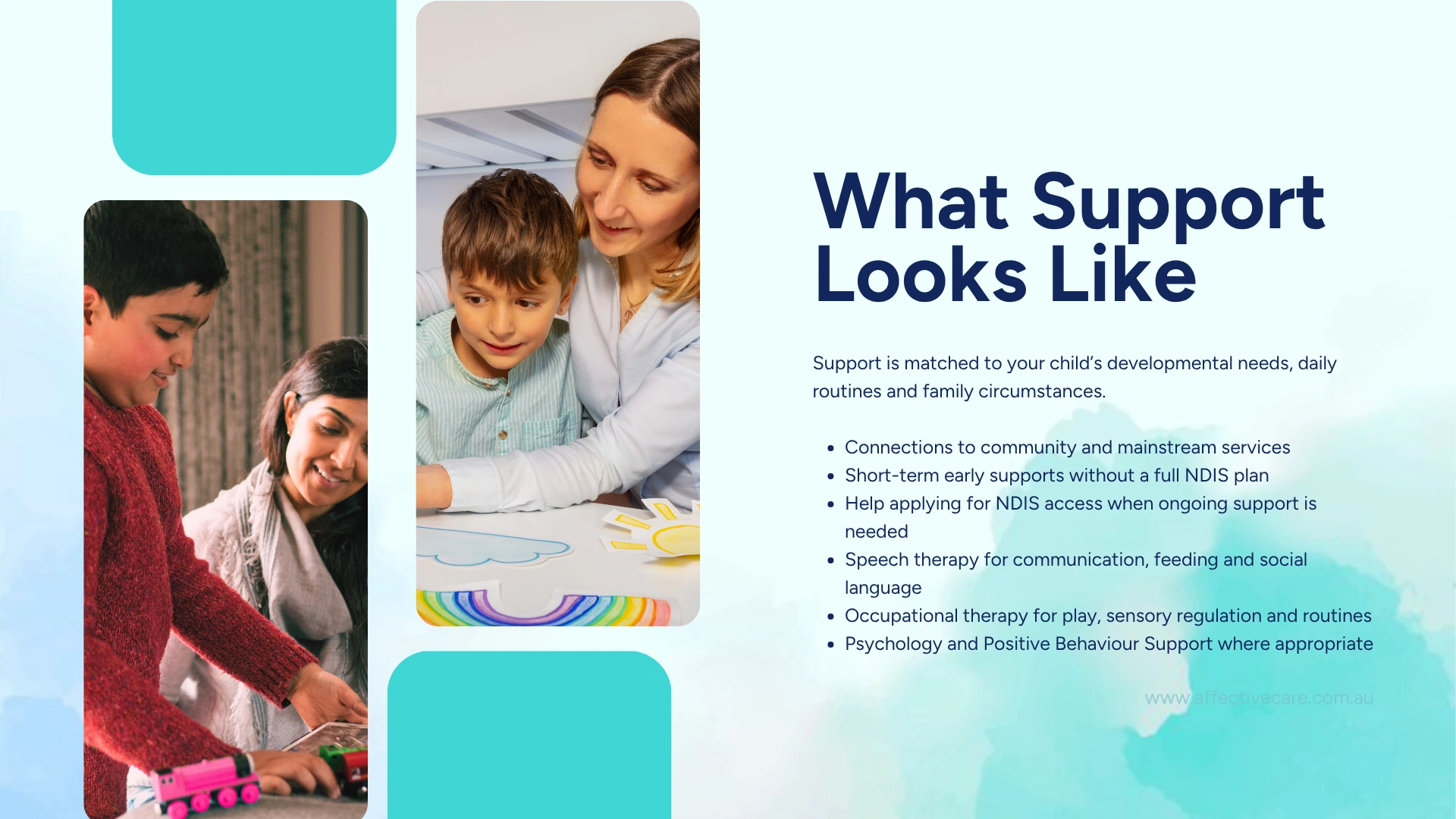
What Support Looks Like
Depending on your child’s needs, the ECA can involve:
- Information and connection to community and mainstream supports
- Early supports short-term therapy or strategies without a full NDIS plan
- Help requesting NDIS access where longer-term support is needed
Where children do move onto an NDIS plan, commonly funded early childhood supports include:
- Speech therapy; first words, communication, feeding and social language
- Occupational therapy; play skills, sensory regulation, fine motor development and daily routines
- Psychology; emotional regulation and developmental assessment
- Positive Behaviour Support; practical, family-centred strategies where behaviour is a concern
Our paediatric team delivers these in the settings that matter home, preschool and community across Sydney, with telehealth options for regional families.
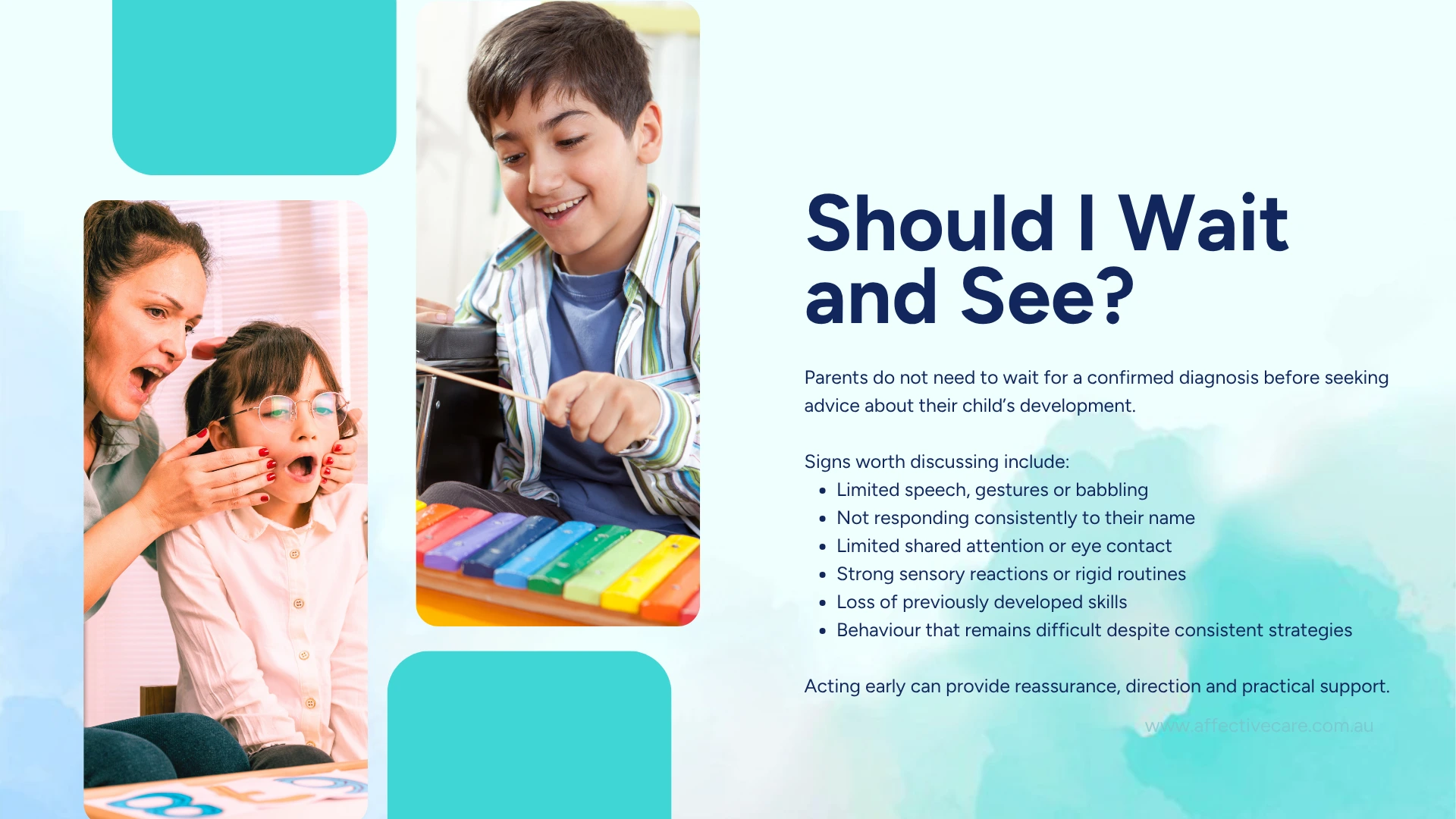
Should I Wait and See?
It’s the question every parent wrestles with. The research answer is consistent: acting early is never wasted.
Developmental concerns don’t need to be certainties before you seek advice and early childhood partners are specifically set up for “I’m not sure, but something feels different” conversations.
Signs worth acting on include:
- Limited babble, words or gestures for age
- Not responding to name, or limited eye contact and shared attention
- Very restricted play, strong routines, or intense reactions to sensory experiences
- Loss of previously acquired skills
- Behaviour that feels unmanageable despite consistent parenting strategies
If several of these feel familiar, our free Child vs Teen vs Adult Support Needs Planner helps you organise your observations before speaking to a professional and the Service Matching Quiz suggests where to start.
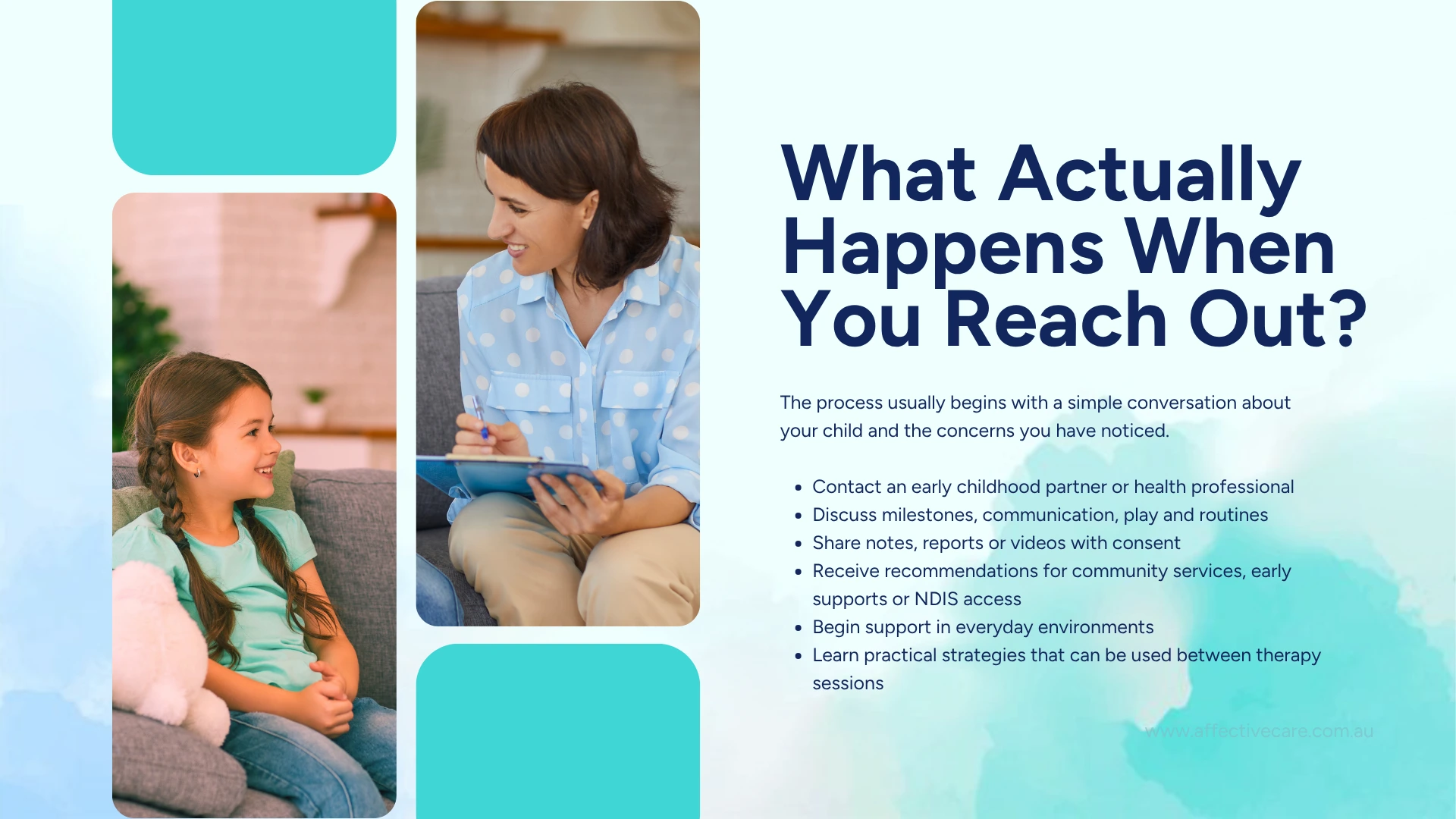
What Actually Happens When You Reach Out
Families often delay because they don’t know what they’re signing up for. Here’s the typical journey:
- First Contact: You call an early childhood partner (or your GP, child health nurse, or our team, we’ll point you to the right door). No referral, no diagnosis, no paperwork wall.
- A conversation about your concerns. Expect questions about milestones, play, communication, routines and what’s worrying you. Bring any notes, even phone videos of the behaviours you’re unsure about are genuinely useful.
- Information gathering. With your consent, the partner may seek input from your GP, childcare or preschool.
- A recommendation. This might be: connection to community supports and a review in a few months; early supports short-term, targeted help starting quickly; or support to request NDIS access where longer-term needs are clear.
- Support begins in everyday settings, with you involved throughout. Parent capacity-building isn’t a side dish in early childhood support; it’s the main course, because you deliver more “intervention hours” in a normal week than any therapist ever will.
What it looks like in practice (illustrative): Leo, 3, wasn’t using words and melted down at every transition. His parents contacted an early childhood partner “just to ask.”
Within weeks Leo had started speech therapy targeting first communication, his parents had transition strategies from an OT that halved the daily battles, and importantly nobody had asked them to prove a diagnosis first.
Twelve months later, with clearer needs documented through that work, an NDIS access request was straightforward.
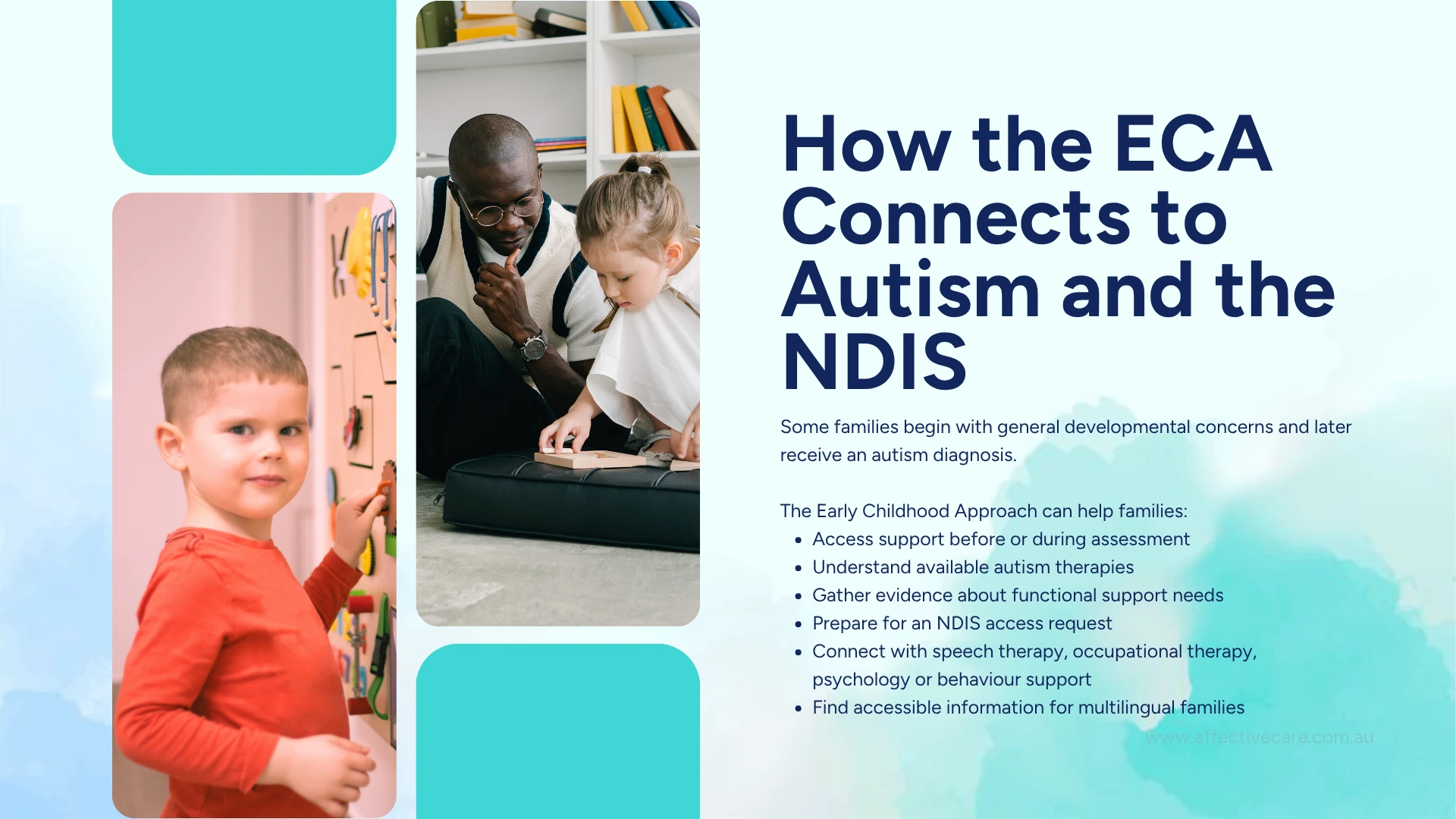
How the ECA Connects to Autism and the NDIS
Many families enter the ECA with developmental concerns and later receive an autism diagnosis. If that’s your journey, two resources will help:
- Our complete guide to autism and the NDIS, funding, therapies and supports at every age
- Autism assessments for the NDIS, what the assessment process involves and what a strong report includes
Moreover, Standard NDIS access requirements still apply. Learn more about the application process through our guides to NDIS evidence and reports and the National Disability Insurance Scheme.
And if English isn’t your family’s first language, our Multilingual NDIS Family Guide explains the essentials in community languages.