


Whether you’re applying for the NDIS, preparing for a plan review, or seeking clarity about your child’s needs, an autism assessment is often the piece of evidence that everything else depends on.
But families are frequently unsure: Who can do the assessment? What should the report say? Will the NDIS pay for it?
This guide answers those questions and explains what separates a report that supports NDIS access from one that leaves gaps.
This article focuses on autism specifically. For the broader picture, read our companion guide: Psychological Assessments for the NDIS.
Diagnostic vs Functional: Two Kinds of Assessment
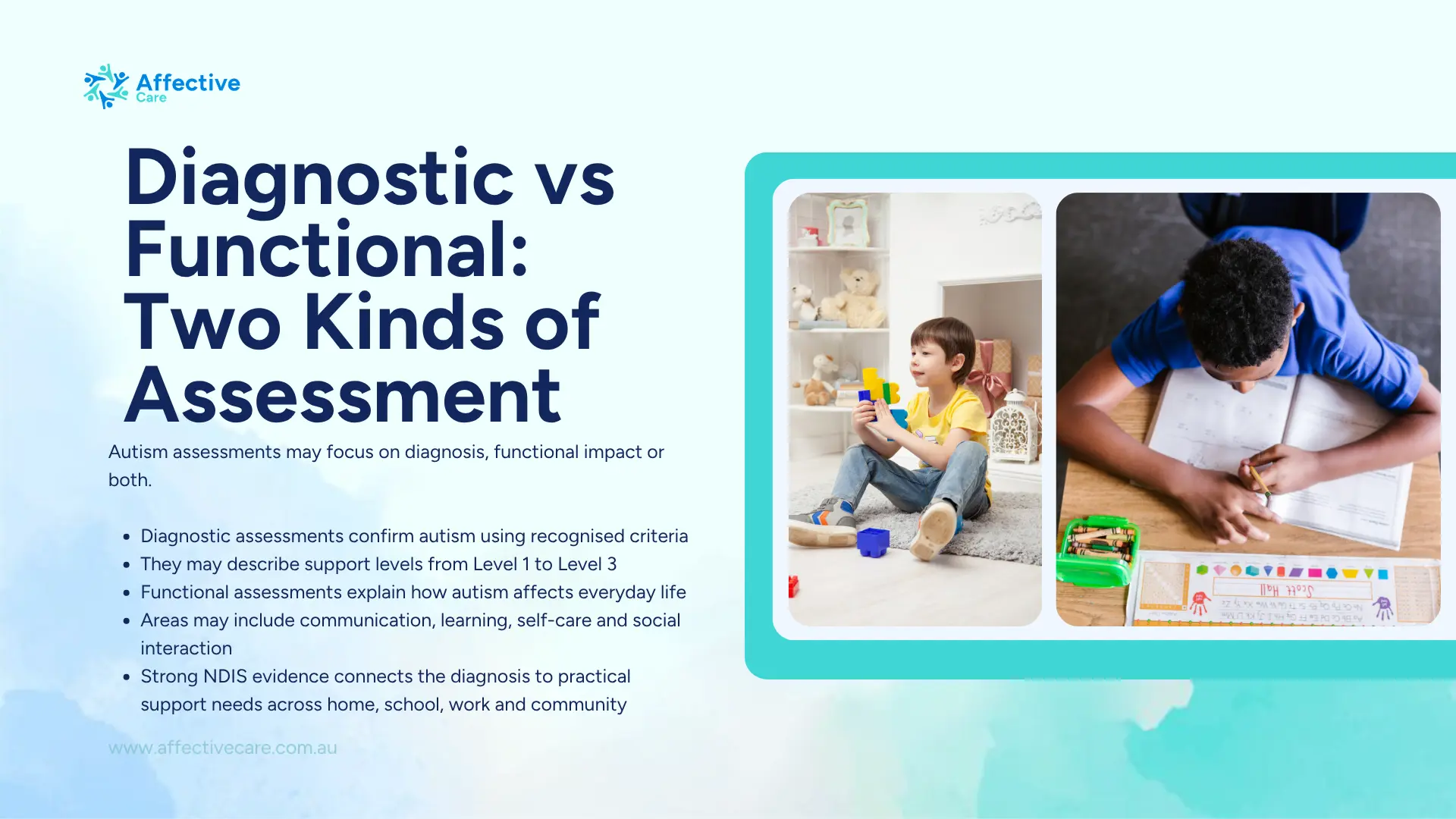
Diagnostic assessments confirm whether a person is autistic, usually against DSM-5 criteria, and describe support level (Levels 1–3).
These are typically conducted by psychologists, paediatricians or psychiatrists often as a multidisciplinary assessment.
Functional assessments describe how autism affects everyday life communication, social interaction, learning, self-care, self-management and mobility.
Under the NDIS’s 2026 direction, this functional evidence increasingly carries the most weight in access and planning decisions.
Many families arrive with a diagnosis but without strong functional evidence. That’s the most common gap we help close.
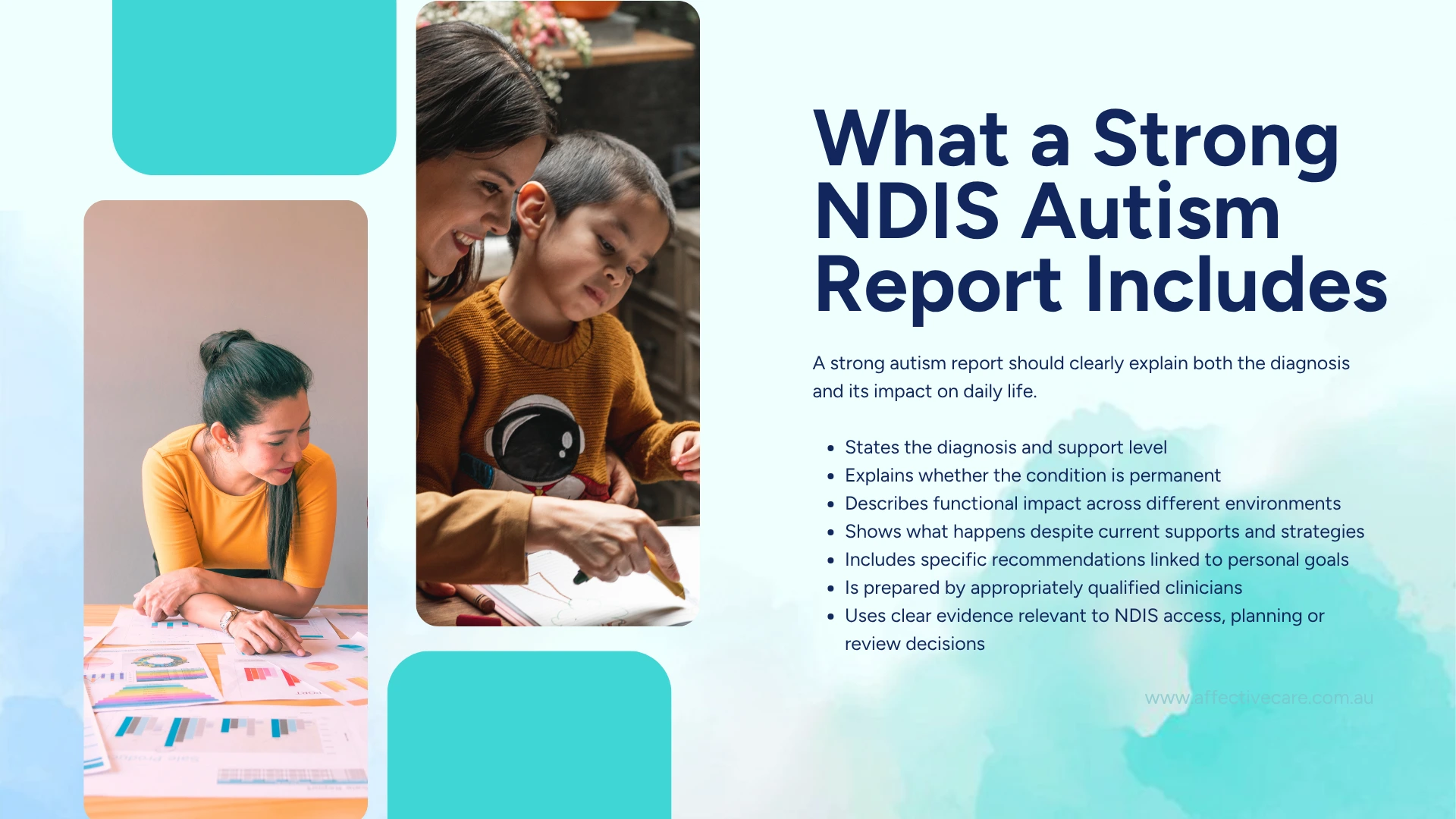
What a Strong NDIS Autism Report Includes
Reports that support access requests and plan reviews typically:
- State the diagnosis, support level and its permanence
- Describe functional impact across settings; home, school or work, and community
- Explain impact despite existing supports and strategies (this is critical)
- Make specific, goal-linked recommendations for supports and therapy
- Come from clinicians with recognised qualifications and NDIS experience
Not sure which report your situation calls for? Our free Which Report Do I Need? NDIS Reports Guide maps report types to common scenarios, and our explainer on NDIS evidence and reports covers how evidence is weighed.
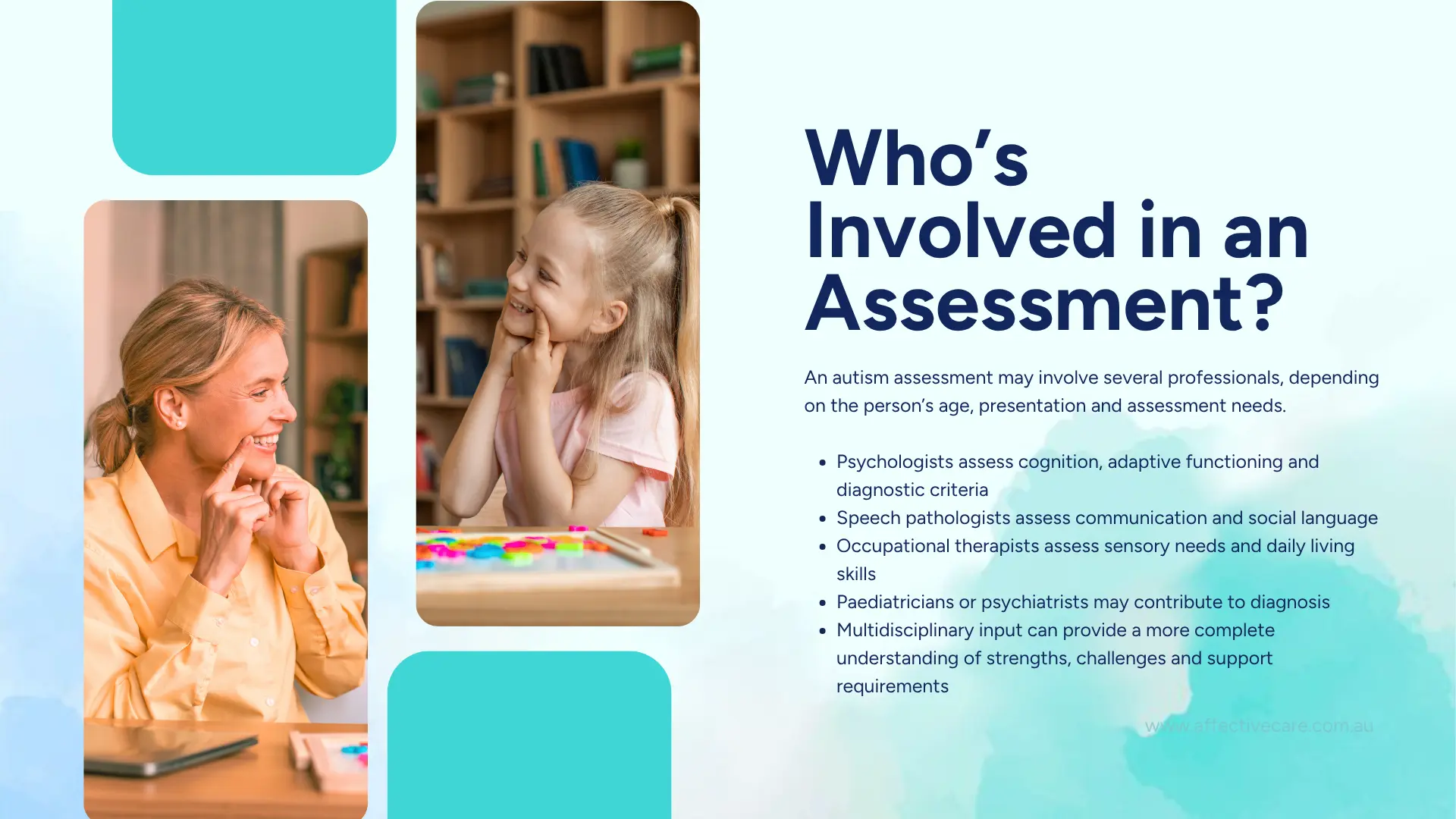
Who’s Involved in an Assessment?
Depending on age and presentation, an autism assessment may involve:
- Psychologists: Cognitive, adaptive and diagnostic assessment
- Speech pathologists: Communication and social language assessment
- Occupational therapists: Sensory profiles, daily living skills and functional capacity
At Affective Care these disciplines work under one roof, which means assessment findings translate directly into therapy; the psychologist who assesses your child can hand over to the behaviour support or OT team without you re-explaining everything.
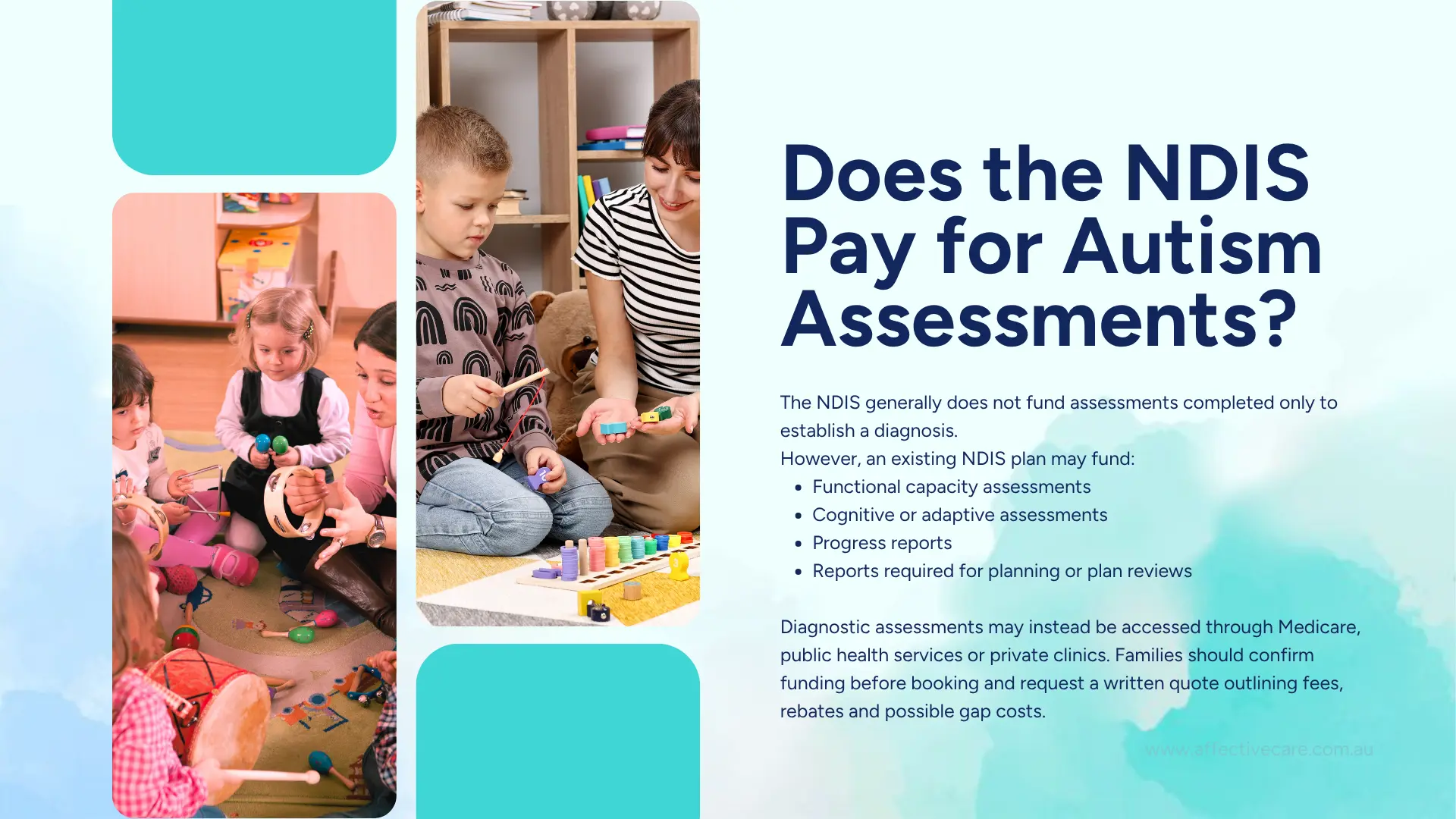
Does the NDIS Pay for Autism Assessments?
As a general rule, the NDIS expects diagnosis to be funded through the health system (Medicare, private).
However, functional assessments and reports needed for planning and reviews are commonly funded from an existing plan’s capacity building budget.
If you’re plan managed, our plan management team can confirm what your plan covers.
The funding pathways in practice:
- Medicare-rebated diagnostic assessment. With a referral from a paediatrician or psychiatrist, Medicare items exist for complex neurodevelopmental assessment, including psychologist-delivered components. Rebates cover part of the cost; gap fees vary by clinic; ask for a written quote including the expected rebate. (Current rebate amounts: [confirm against the current MBS schedule at publication].)
- Public pathways; developmental assessment services through public health exist in most regions but typically carry the longest waitlists, often many months.
- Private assessment; fastest access, full fee. For adults especially, this is often the practical route.
- Within an NDIS plan; once you’re a participant, functional assessments, cognitive assessments and progress reports are generally claimable from Improved Daily Living funding. Diagnosis itself usually isn’t.
Timeframes to plan around: from first appointment to final report is typically several weeks assessment sessions, questionnaire returns from school or family, scoring, and report writing each take time.
If you’re working toward a plan review date or an access request deadline, tell us at booking and we’ll schedule backwards from it.
If an assessment identifies Level 3 autism, you can read our Autism Level 3 NDIS funding guide to understand how diagnosis, functional impact and supporting evidence may relate to NDIS access and planning.
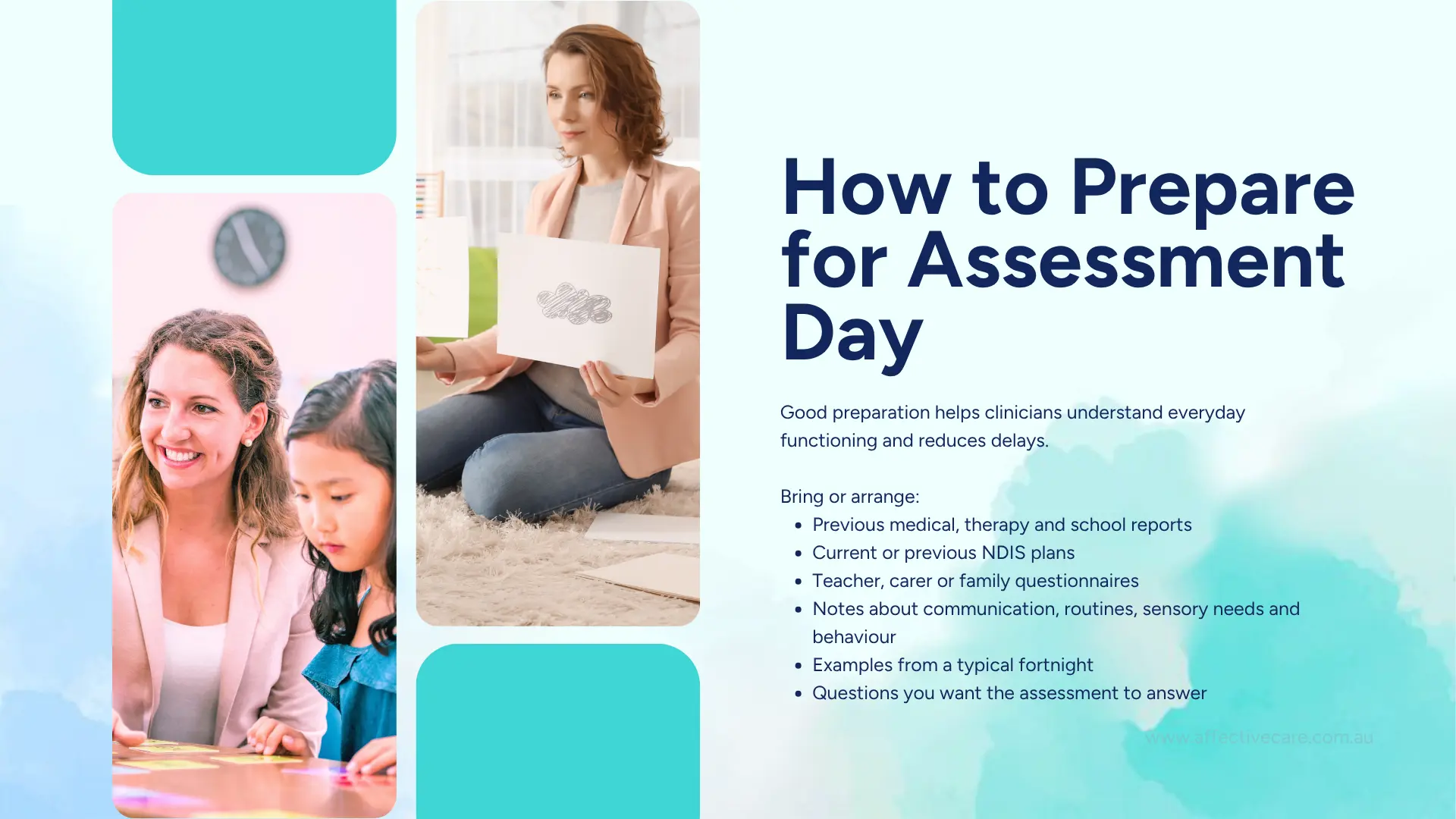
How to Prepare for Assessment Day
The best assessments are fed well. Bring or arrange:
- Previous reports: Paediatrician letters, school psychologist assessments, earlier therapy reports, NDIS plans if any
- School input: Teacher questionnaires returned before the session; chase these early, they’re the most common delay
- A “typical fortnight” picture: Notes on routines, meltdowns/shutdowns, sleep, eating, social patterns. The NDIS Record Keeping Guide has simple templates.
- Your questions: What you most want the report to answer or unlock
And one thing not to do: don’t coach your child to mask, and don’t schedule the assessment on a “good day” strategy.
Assessors need ordinary functioning, it’s what the NDIS funds against.
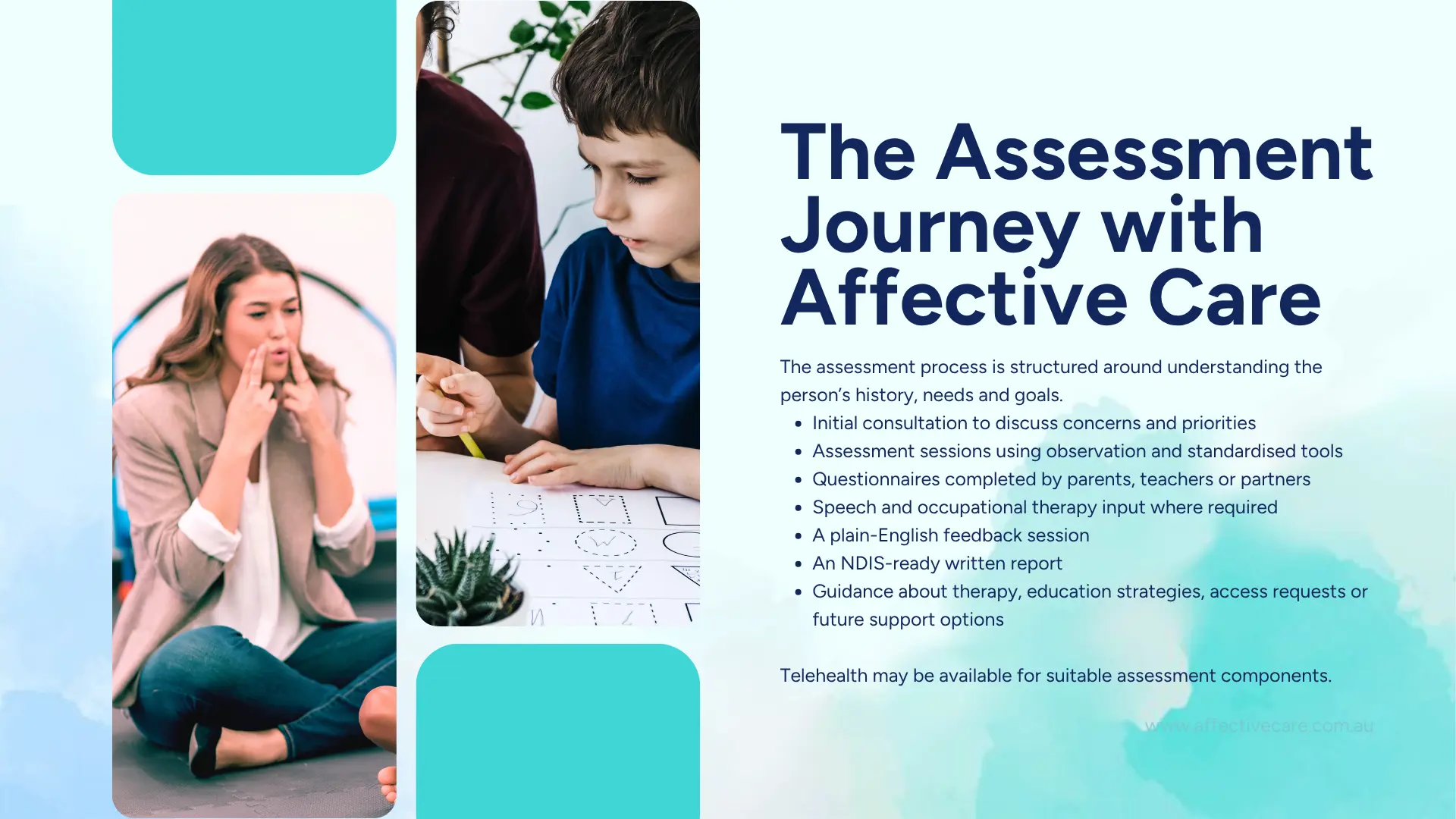
The Assessment Journey with Affective Care
- Initial consultation: We listen first: your concerns, history and goals.
- Assessment sessions: Structured observation, standardised tools, and questionnaires for parents, teachers or partners.
- Multidisciplinary input where needed speech and OT perspectives added.
- Report and feedback session: A plain-English walkthrough of findings, plus an NDIS-ready report.
- Next steps: Therapy pathways, school strategies, or support with your access request.
Regional or hard to reach us in person? Several assessment components can be delivered through our telehealth psychology service — read how telehealth psychology works.