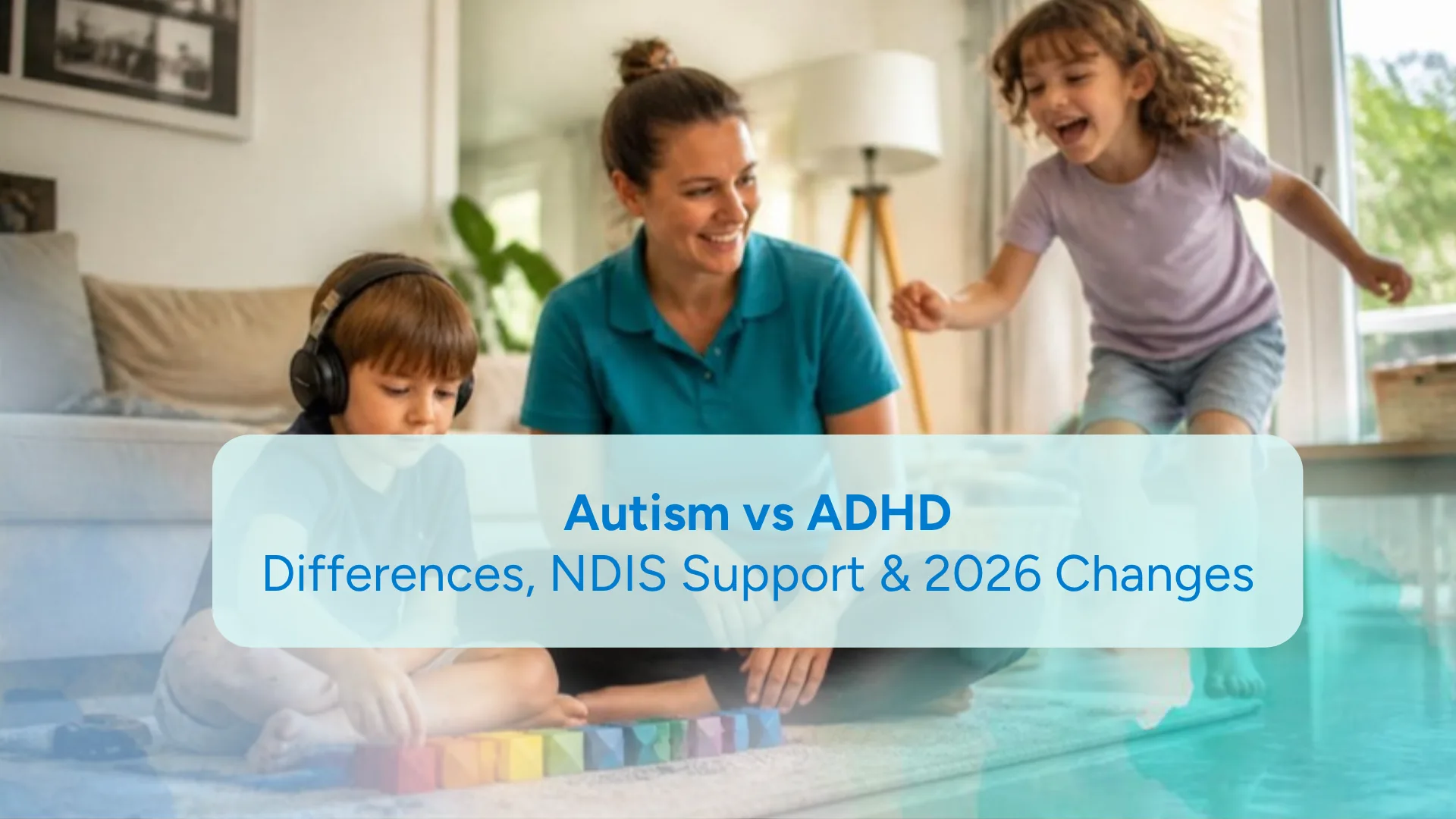
When people compare autism vs ADHD, they are comparing two different neurodevelopmental conditions. Autism mainly affects social communication and sensory processing, and often brings a strong need for routine. ADHD mainly affects attention, impulse control and activity levels. The two often occur together. Under the NDIS, autism leads to funding more readily than ADHD, and the 2026 NDIS changes affect both.
This guide explains the key differences between autism and ADHD, when the NDIS funds each one, and what the latest NDIS changes mean for you and your family.
What is the difference between autism and ADHD?
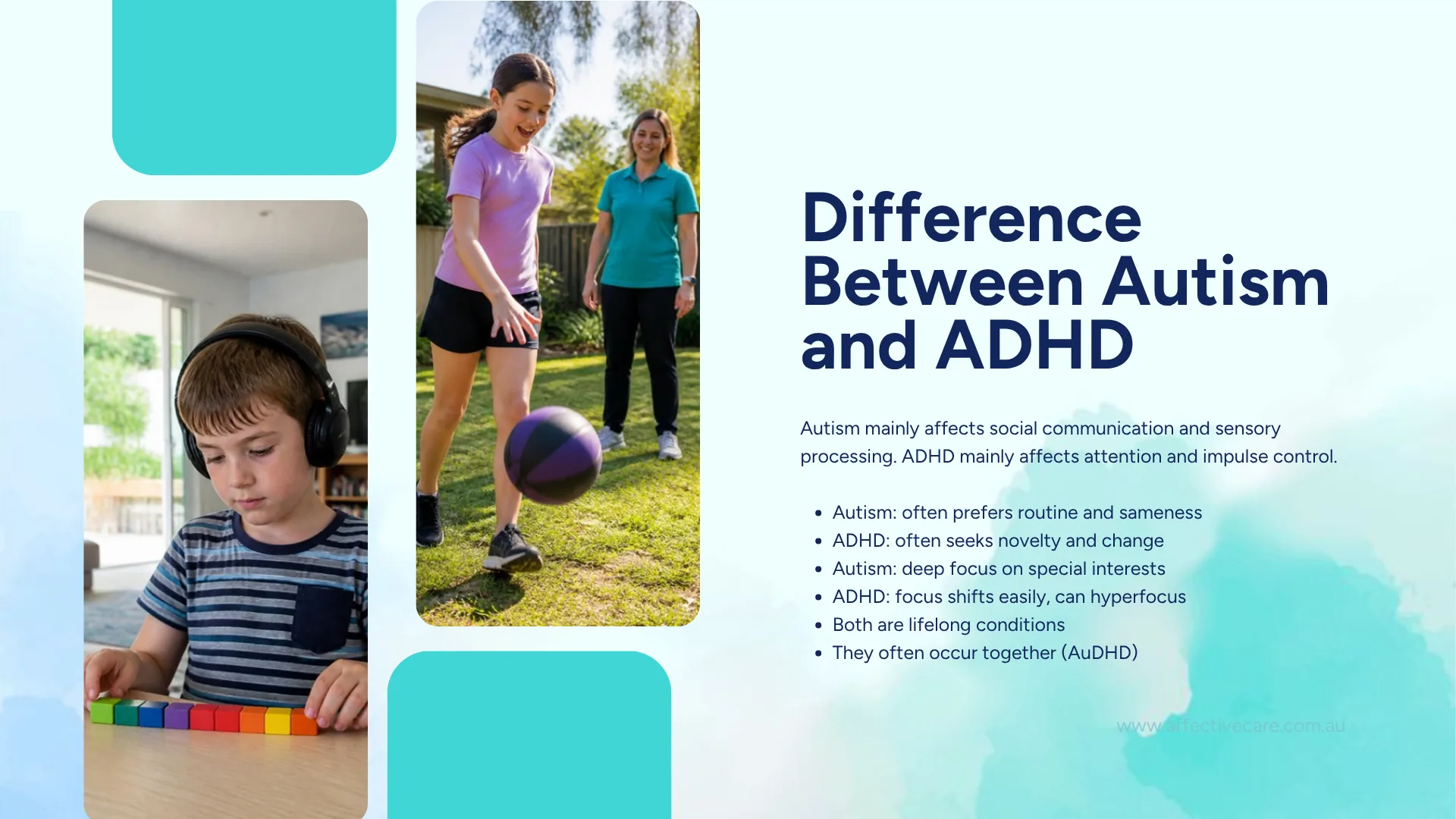
The main difference between autism and ADHD is what drives the behaviour. Autism is about how a person communicates, connects with others and processes the world around them. ADHD (attention deficit hyperactivity disorder) is about how the brain manages attention, focus and impulses.
Both conditions are lifelong, and both are diagnosed using the DSM-5, the manual clinicians use to diagnose conditions. Both can look very different from one person to the next. Here is a quick side-by-side view.
| Area | Autism | ADHD |
|---|---|---|
| Core features | Differences in social communication, plus restricted or repetitive behaviours and interests | Ongoing inattention, hyperactivity and/or impulsivity |
| Routine | Often prefers sameness; change can be distressing | Often seeks novelty; routine can feel boring |
| Focus | Deep, intense focus on special interests | Focus shifts easily, but can hyperfocus on rewarding tasks |
| Social life | May find unwritten social rules hard to read | Understands social rules but may interrupt or act on impulse |
| Sensory | Sensory sensitivities are part of the diagnosis | Sensory differences are common but not part of the diagnosis |
| Levels | Diagnosed at level 1, 2 or 3 based on support needs | Described as mild, moderate or severe |
| Treatment | No medication for autism itself; therapy and supports | Medication is often used alongside therapy and supports |
Can you have both autism and ADHD?
Yes. Since the DSM-5 was released in 2013, clinicians can diagnose autism and ADHD together. Many people call this "AuDHD". Estimates of how often the two occur together vary a lot between studies, but it is common, which is why a full assessment matters.
How are autism and ADHD diagnosed in Australia?
Autism is usually diagnosed by a paediatrician, psychiatrist or psychologist, often with a speech pathologist, using the National Guideline for the Assessment and Diagnosis of Autism. ADHD is usually diagnosed by a paediatrician or psychiatrist. Our guide to autism diagnosis in Australia explains the steps.
Does the NDIS fund autism?
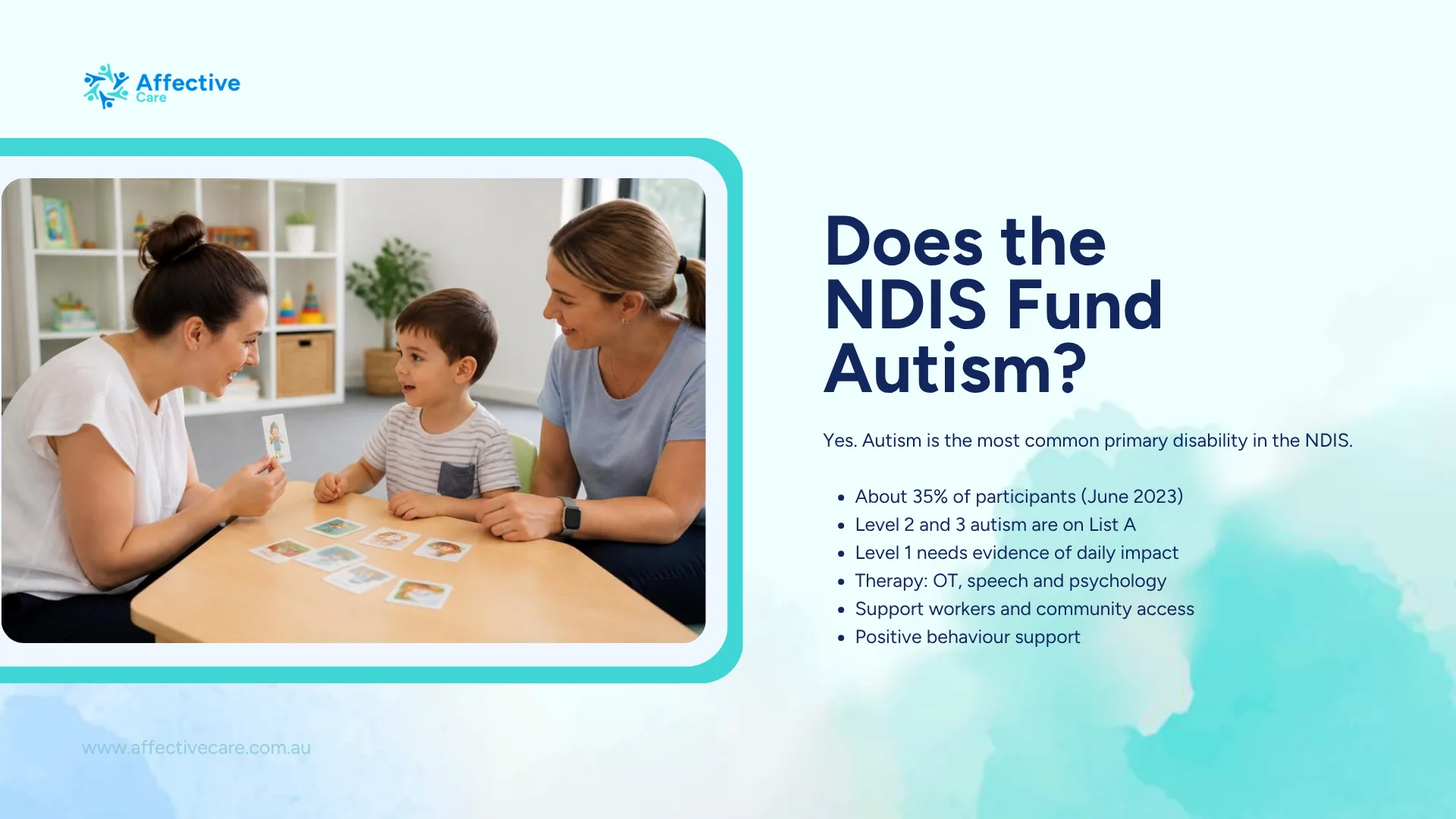
Yes. Autism is the most common primary disability in the NDIS. According to NDIS data, autism made up about 35% of participants in June 2023. But a diagnosis on its own does not guarantee access. The NDIA (National Disability Insurance Agency) looks at how much the disability affects daily life.
Autism diagnosed at level 2 or level 3 is on the NDIS "List A" of conditions that are likely to meet the disability requirements, so less evidence is needed. Level 1 autism is not on List A, so you need to show how autism affects your everyday functioning.
NDIS autism supports can include:
- Therapy such as occupational therapy, speech pathology and psychology
- Support workers for daily living and community access
- Social and community participation
- Positive behaviour support
- Support coordination to help you use your plan
Learn more in our guides to NDIS funding for autism level 1 and NDIS autism level 2.
Does the NDIS fund ADHD?
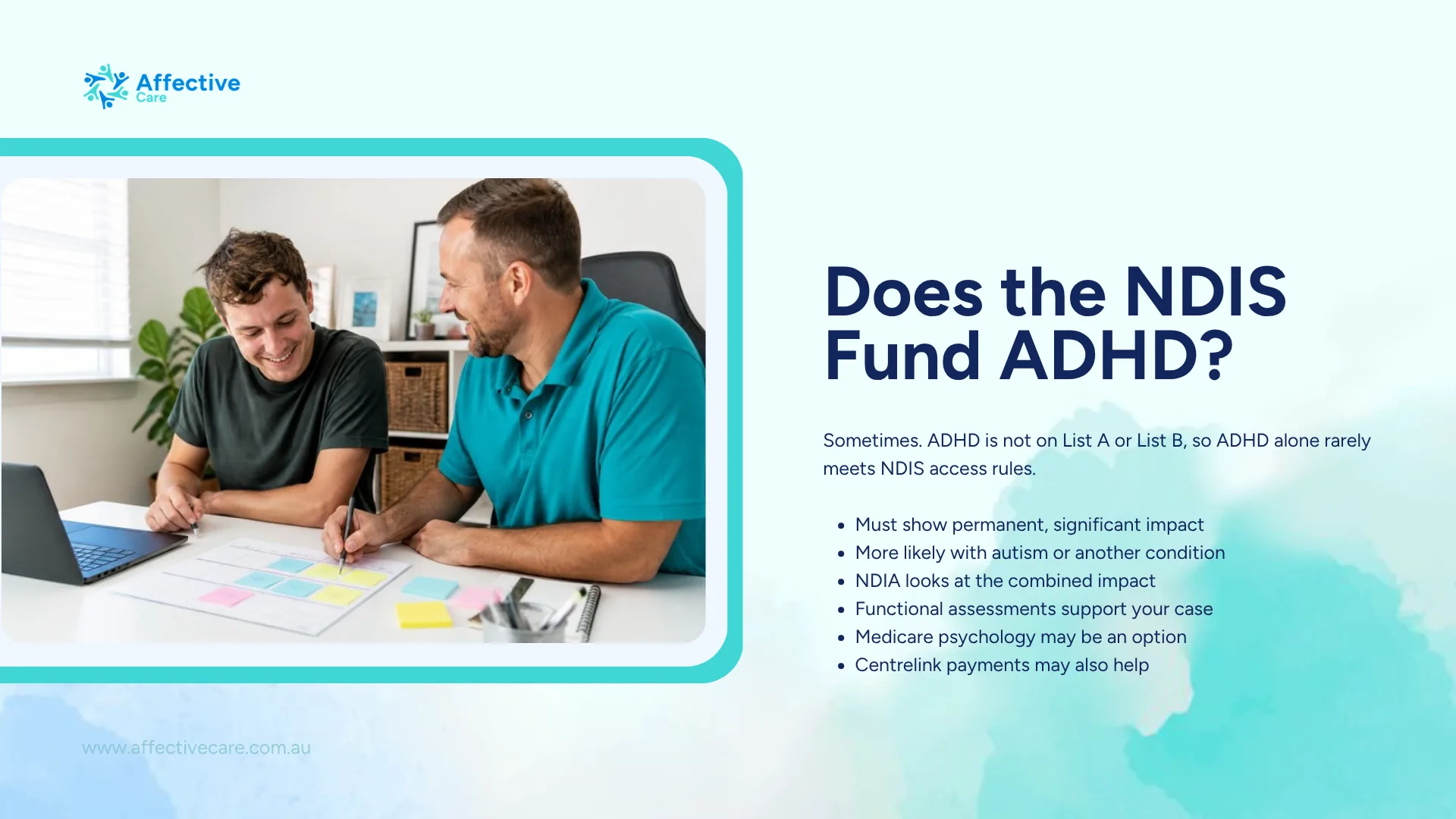
Sometimes, but it is harder. ADHD is not on the NDIS List A or List B, so ADHD on its own rarely meets the access requirements. You must show that ADHD causes a permanent and significant impact on your daily life, such as self-care, learning, social interaction or self-management.
ADHD is more likely to be part of an NDIS plan when it occurs with another condition, such as autism, intellectual disability or a psychosocial disability. In that case, the NDIS may fund supports for the combined impact of both conditions.
If you are not eligible, other help may be available, including Medicare-funded psychology sessions and Centrelink payments. See our guide to ADHD government benefits in Australia.
What NDIS changes affect autism and ADHD?
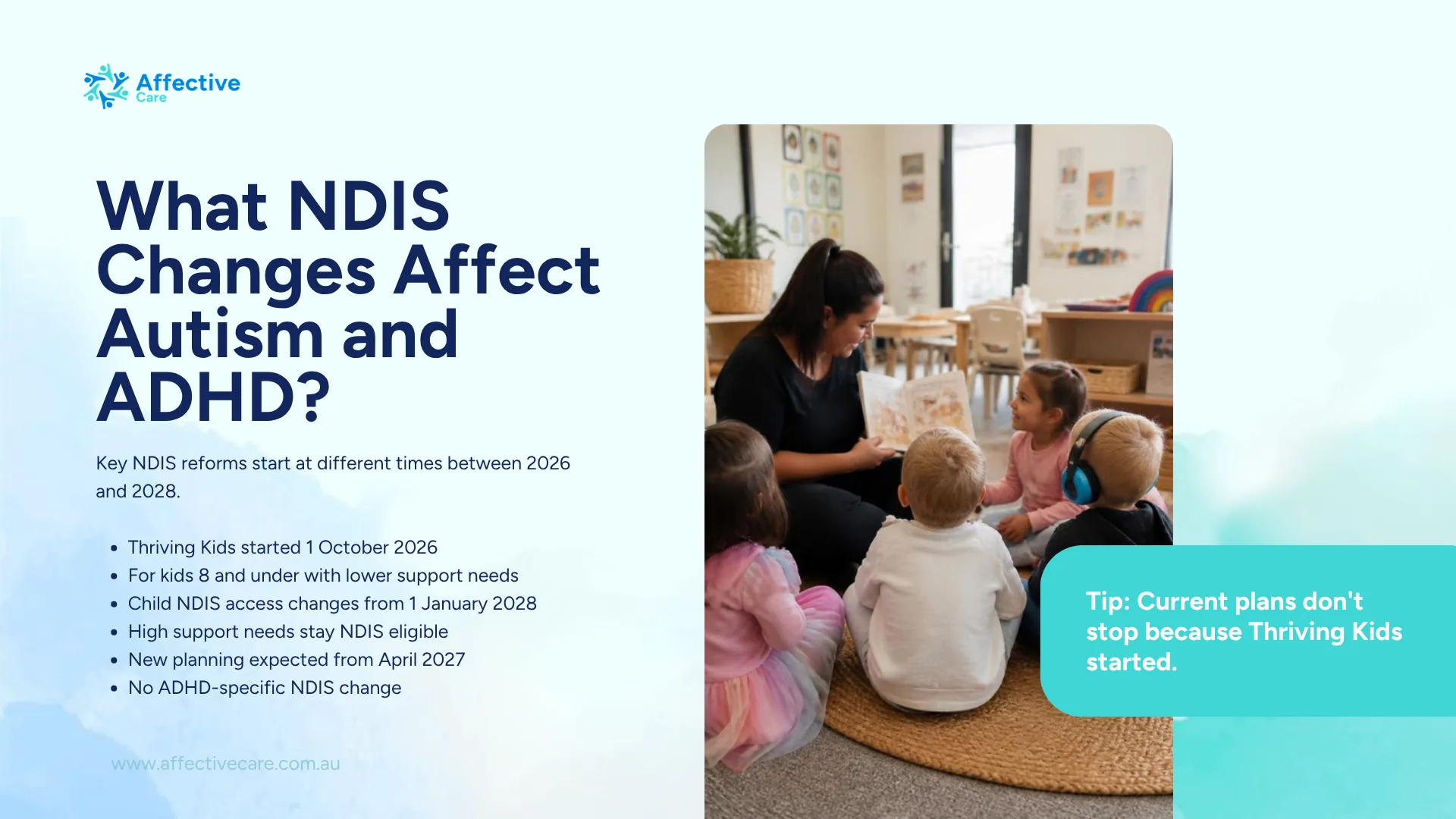
The biggest NDIS changes are the new Thriving Kids program, a new way of planning and support needs assessments. They start at different times between 2026 and 2028, so most current participants will not see an immediate change.
Thriving Kids for young autistic children
From 1 October 2026, children aged 8 and under with developmental delay and/or autism and low to moderate support needs can start getting help through Thriving Kids. The program offers "foundational supports" in places children already go, such as early childhood centres, schools and community health services.
According to the NDIS, changes to NDIS access for children do not start until 1 January 2028. Children with high support needs, including autistic children, will still be eligible for the NDIS.
New planning and support needs assessments
The NDIA says a new way of planning, including support needs assessments, is expected to start rolling out from April 2027. The assessment aims to give a more consistent picture of your disability-related support needs, which will help set your budget. Testing is happening in 2026, but it does not change anyone's current plan or funding.
What this means for ADHD
There is no ADHD-specific NDIS change. ADHD is still assessed on functional impact, like any other condition. For the full autism picture, read our guide to NDIS autism changes in 2026 and our summary of new NDIS changes in 2026.
How do you get NDIS support for autism or ADHD?
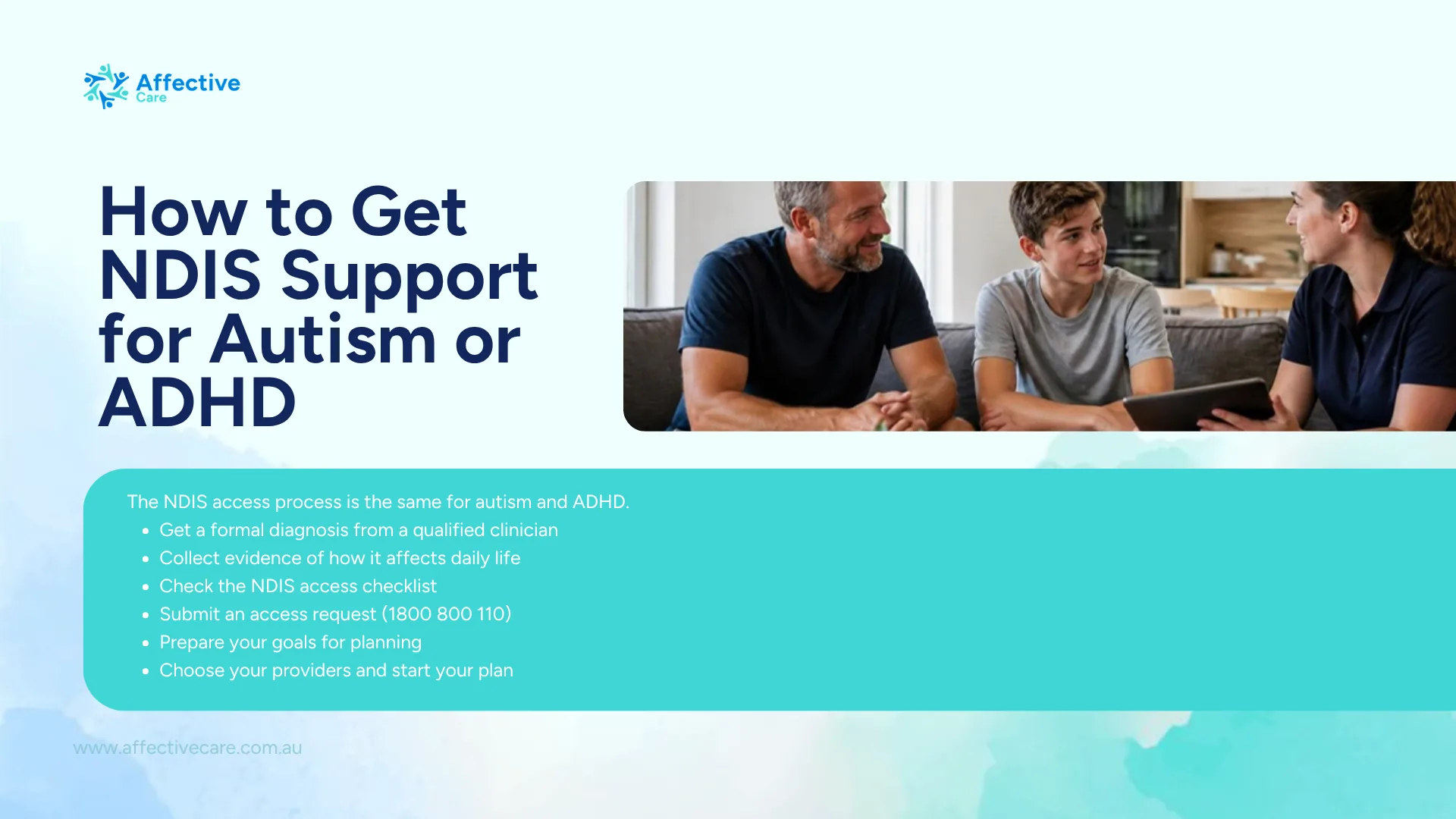
The NDIS access process is the same for autism and ADHD. Follow these steps:
- Get a formal diagnosis from a qualified clinician.
- Collect evidence of how your disability affects daily life, such as functional assessments and therapy reports.
- Check eligibility using the NDIS access checklist on the NDIS website.
- Submit an access request by calling the NDIS on 1800 800 110 or using the online form.
- Prepare for planning by writing down your goals and the supports you need.
- Choose your providers and start using your plan.
This article is general information only. Please speak with your doctor, NDIS planner or support coordinator about your situation.
Get support from Affective Care
Whether you or your child lives with autism, ADHD or both, the right support can make everyday life easier. Affective Care helps NDIS participants with support workers, support coordination and community participation. Contact our team for a friendly chat about your NDIS plan.
Frequently asked questions
Is ADHD a form of autism?
No. ADHD and autism are separate conditions with different diagnostic criteria. They share some traits, such as trouble with focus, emotional regulation and sensory sensitivity, and they often occur together. A person can be diagnosed with autism, ADHD or both.
Can I get NDIS funding for ADHD alone?
It is uncommon but possible. ADHD alone is not on the NDIS List A or List B, so you need strong evidence of a permanent and significant impact on daily life. Most people with ADHD in the NDIS also have another condition, such as autism or intellectual disability.
Will autistic children lose NDIS funding because of Thriving Kids?
Not straight away. Thriving Kids started on 1 October 2026 for children aged 8 and under with low to moderate support needs. Changes to NDIS access for children start from 1 January 2028. Autistic children with high support needs will remain eligible for the NDIS.
What level of autism qualifies for the NDIS?
Autism level 2 and level 3 are on List A, so they are likely to meet the disability requirements with less evidence. People with level 1 autism can still qualify, but they need evidence showing how autism significantly affects their daily functioning.
Can adults with autism and ADHD get NDIS support?
Yes. Adults can apply if they are under 65 when they apply, live in Australia and meet the disability requirements. Adults with both autism and ADHD often have a stronger case, because the NDIA considers the combined impact of all conditions on daily life.