The NDIS gardening rate for 2026 is a maximum of $59.01 per hour for gardening and yard work in most of Australia. It rises to $82.61 per hour in remote areas and $88.52 per hour in very remote areas.
These price limits come from the NDIS pricing schedule 2026–27, under support item 01_019_0120_1_1, House or Yard Maintenance.
What is the NDIS gardening rate for 2026?
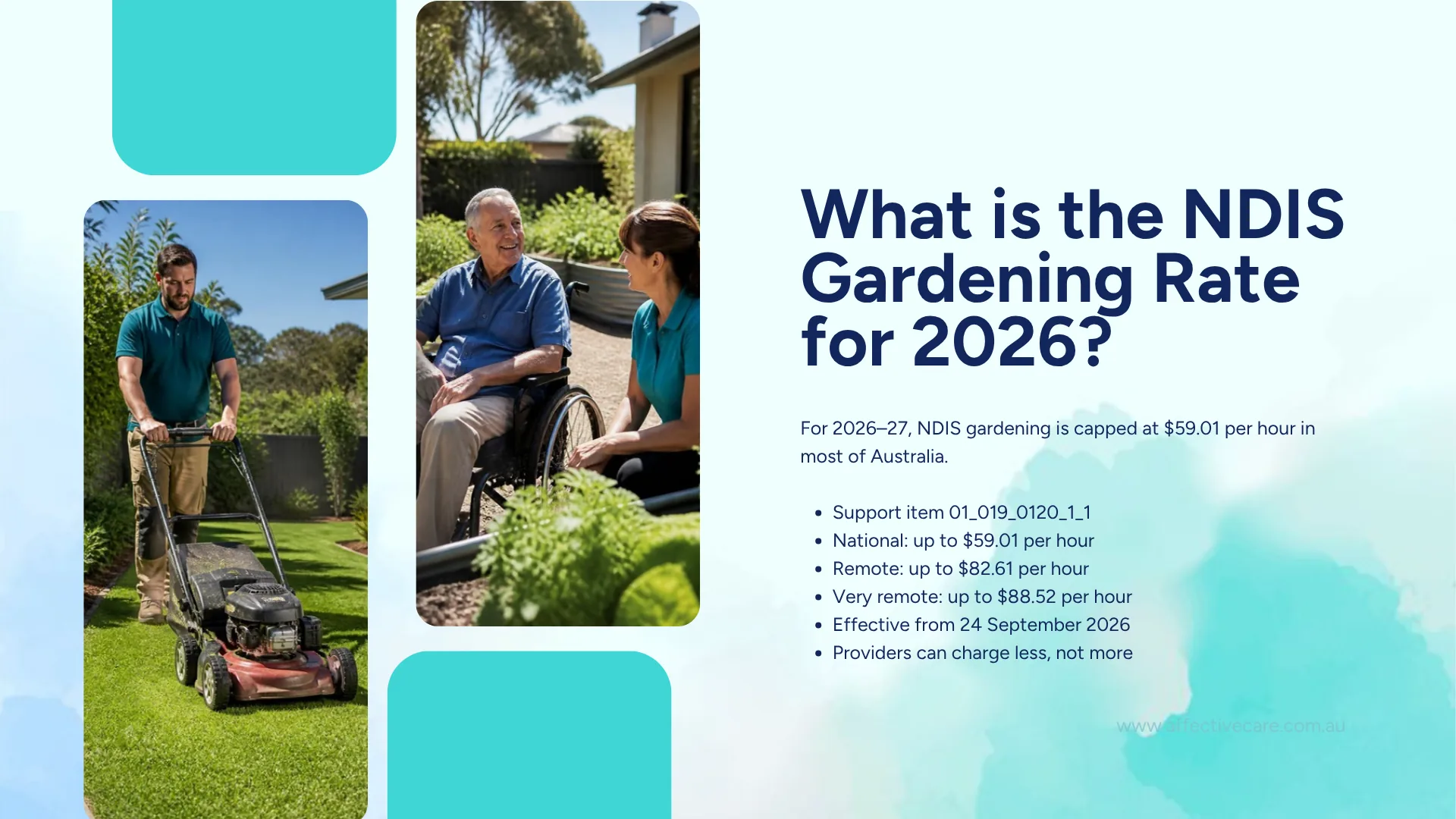
The NDIS gardening rate 2026 is the highest hourly price a provider can charge your plan for gardening and yard maintenance.
For 2026–27, the national price limit is $59.01 per hour. Providers can charge less than this, but not more, if your plan is NDIA-managed or plan-managed.
| Support item | National | Remote | Very remote |
|---|---|---|---|
| House or yard maintenance (01_019_0120_1_1) | $59.01 | $82.61 | $88.52 |
These rates are set in the NDIS pricing schedule 2026–27, which is effective from 24 September 2026. A price limit is a cap, not a set fee, so always ask your gardener what hourly rate they charge.
How has the NDIS gardening rate changed since 2025?
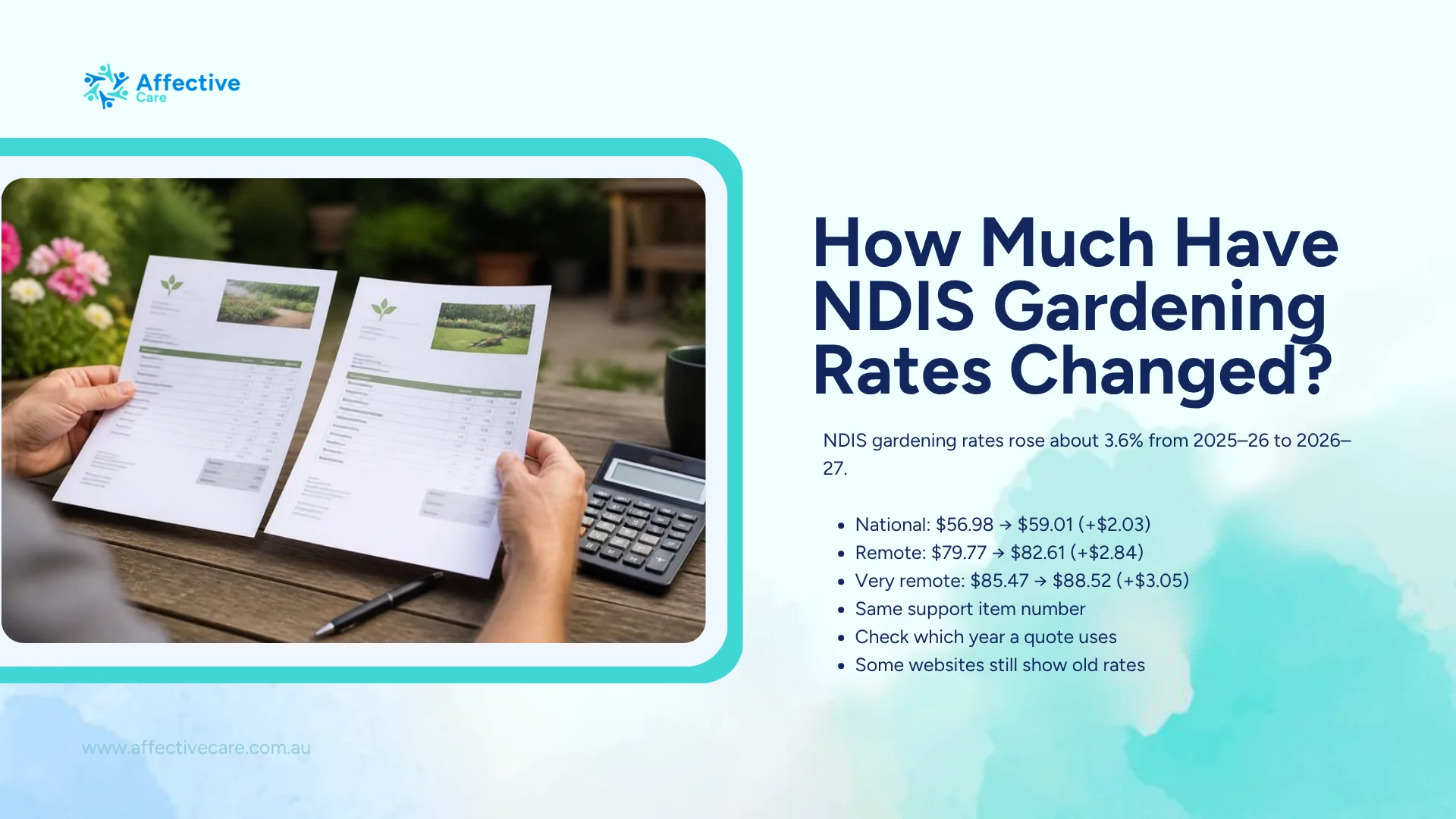
NDIS gardening rates went up by about 3.6% for 2026–27. The national rate rose from $56.98 per hour in 2025–26 to $59.01 per hour, an increase of $2.03 an hour.
| Area | 2025–26 rate | 2026–27 rate | Change |
|---|---|---|---|
| National | $56.98 | $59.01 | +$2.03 |
| Remote | $79.77 | $82.61 | +$2.84 |
| Very remote | $85.47 | $88.52 | +$3.05 |
When you compare quotes, check that the provider is using the 2026–27 NDIS gardening price guide rates. For every other support item, see our NDIS price guide rates.
Which support item is used for NDIS gardening?
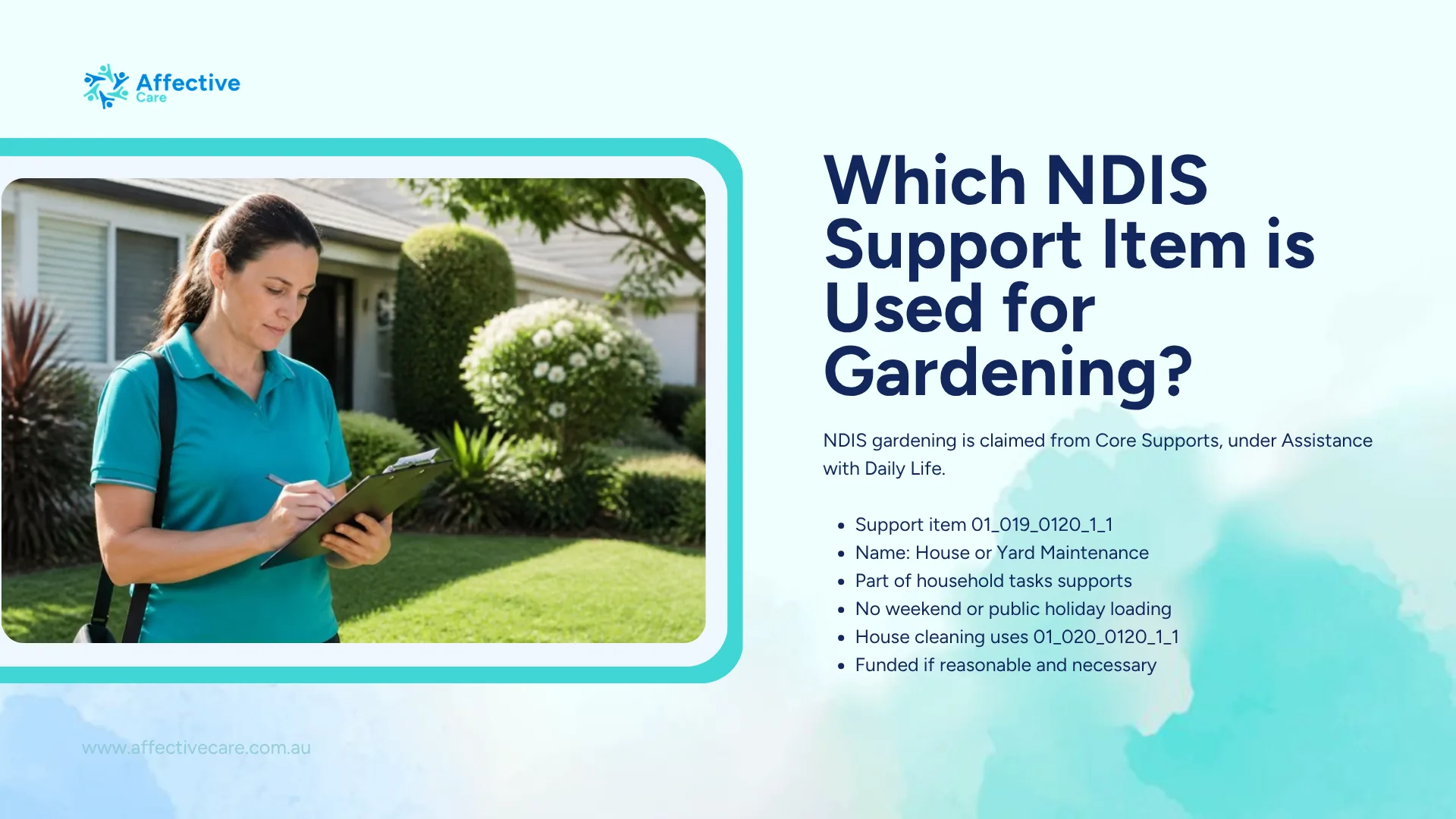
NDIS gardening is claimed under support item 01_019_0120_1_1, House or Yard Maintenance. It sits in your Core Supports budget, under Assistance with Daily Life, in the household tasks group.
This item covers essential house and yard jobs that you cannot do yourself because of your disability.
The same household tasks group also includes house cleaning (01_020_0120_1_1), which is capped at $60.10 per hour. You can compare both in our guide to NDIS cleaning rates.
Read more about how this budget works in our guide to NDIS Assistance with Daily Life.
Get started with NDIS gardening
Find out how the NDIS gardening rate 2026 works with your plan and start yard maintenance support with Affective Care.
What Gardening Tasks does the NDIS Fund?
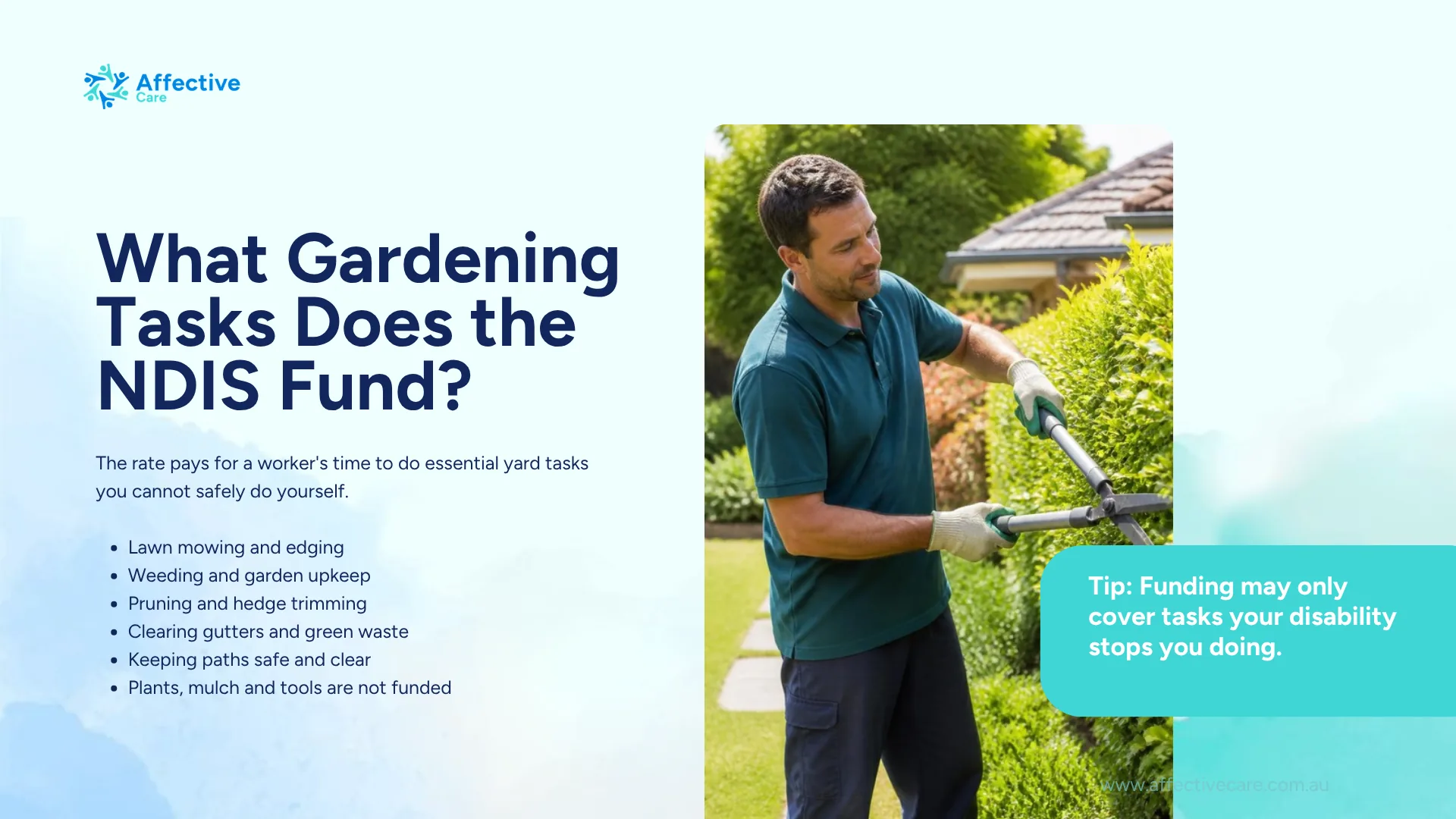
The NDIS gardening rate pays for a worker's time to do essential yard tasks that you cannot safely do yourself.
The NDIA (National Disability Insurance Agency) decides if gardening is reasonable and necessary for you, so it is not in every plan.
Tasks that are often funded include:
- Lawn mowing and edging
- Weeding and basic garden upkeep
- Pruning and trimming hedges
- Clearing gutters, leaves and green waste
- Keeping paths and entries clear and safe
The NDIS does not usually fund plants, soil, mulch, tools or landscaping.
These are everyday living costs or home improvements. If you can do some jobs, such as watering pot plants, funding may only cover the tasks your disability stops you doing.
What is the remote NDIS gardening rate 2026?
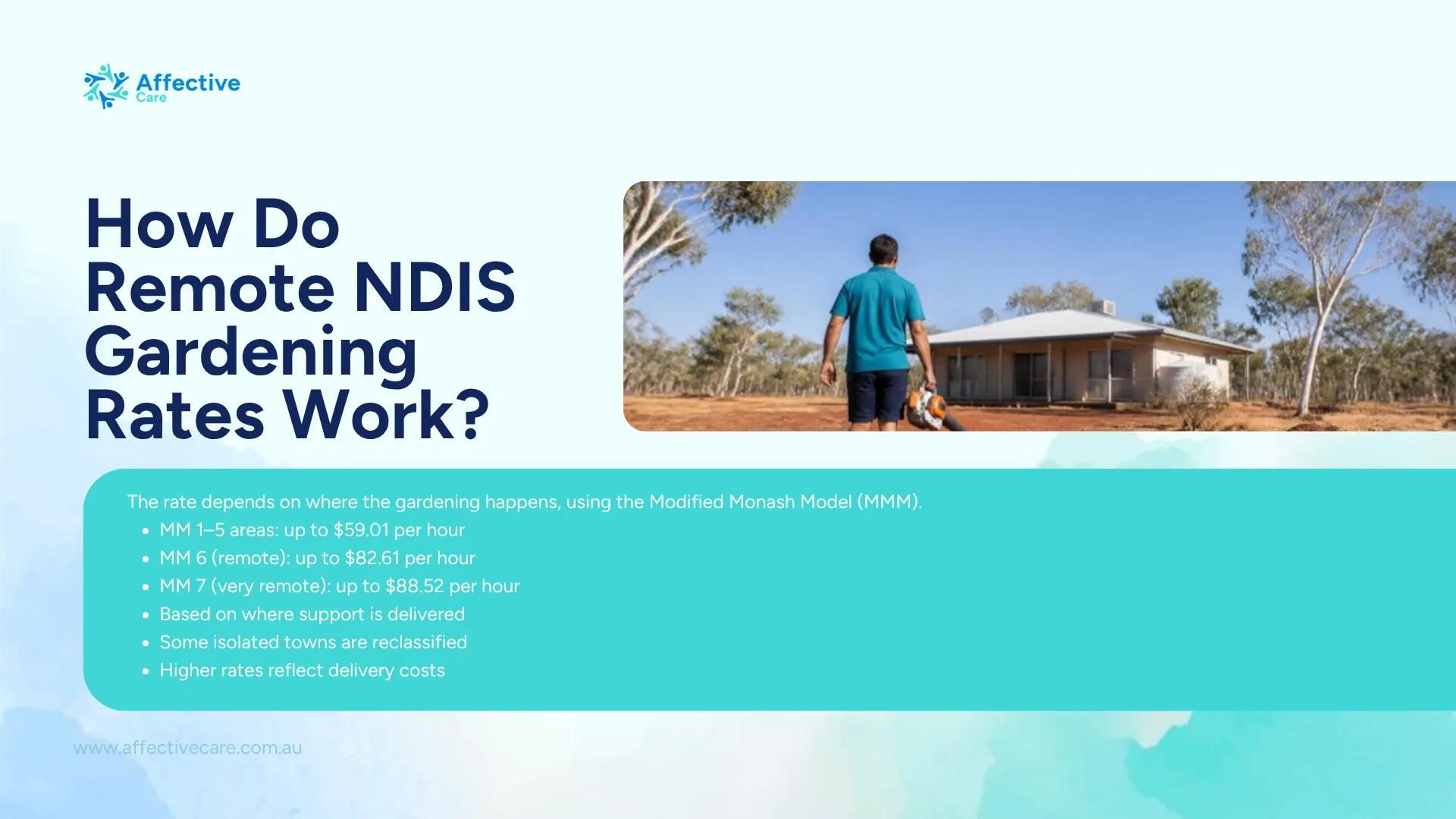
The remote NDIS gardening rate 2026 is $82.61 per hour, and the very remote rate is $88.52 per hour.
The NDIS uses the Modified Monash Model (MMM) to class locations. If gardening is done in an MM 1–5 area, the $59.01 national rate applies.
In an MM 6 (remote) area the limit is $82.61, and in an MM 7 (very remote) area it is $88.52. The rate depends on where the work happens.
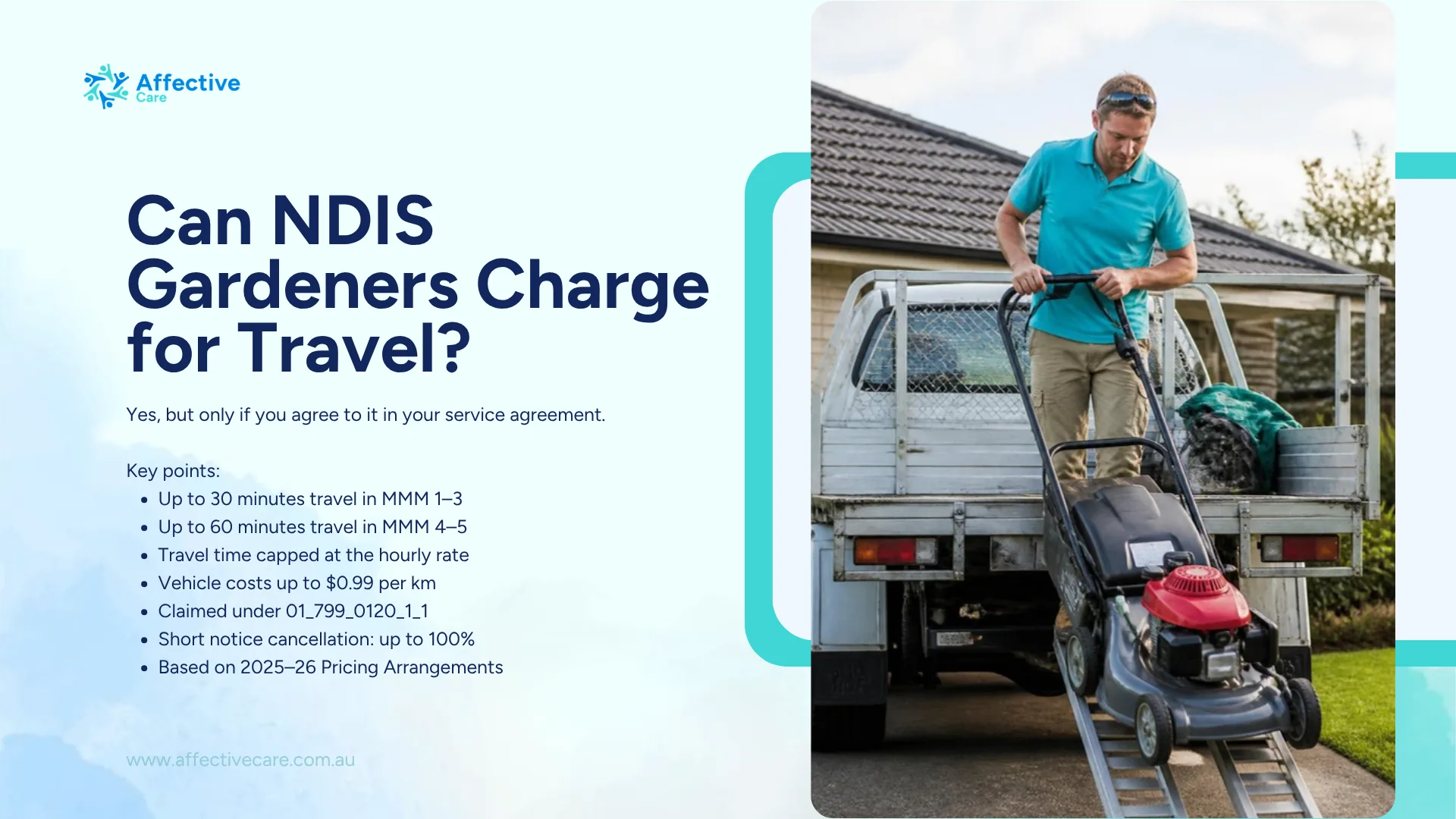
Can NDIS Gardeners Charge Travel or Cancellation Fees?
Yes, but only if you agree to it in your service agreement. Under the NDIS Pricing Arrangements and Price Limits 2025–26, household task providers can claim travel and short notice cancellations.
- Travel time: up to 30 minutes per visit in MMM 1–3 areas and up to 60 minutes in MMM 4–5 areas, at no more than the hourly rate.
- Vehicle costs: up to $0.99 per kilometre, claimed under item 01_799_0120_1_1.
- Cancellations: if you cancel with less than 2 clear business days' notice, the provider may claim up to 100% of the agreed fee.
For example, if your gardener travels 20 minutes and 12 kilometres, they could claim up to $19.67 for travel time and $11.88 for vehicle costs, but only if you agreed to this first.
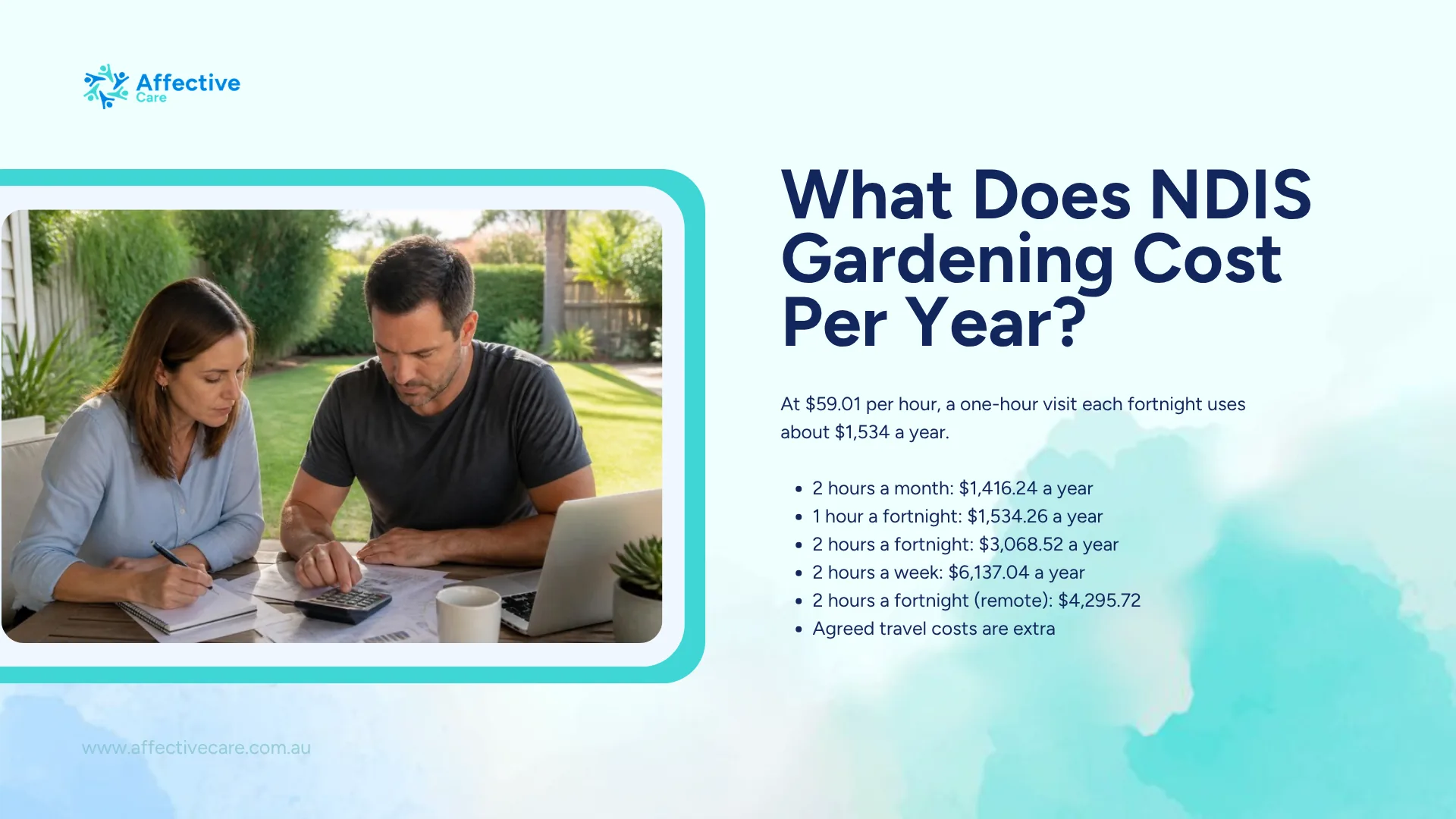
How much does NDIS gardening cost per year?
Your yearly cost depends on how often your garden is done and where you live. At the national rate of $59.01 per hour, a one-hour visit every fortnight costs about $1,534 a year from your plan, before travel.
| Gardening visits | Hours per year | Cost per year |
|---|---|---|
| 2 hours a month | 24 | $1,416.24 |
| 1 hour a fortnight | 26 | $1,534.26 |
| 2 hours a fortnight | 52 | $3,068.52 |
| 2 hours a week | 104 | $6,137.04 |
| 2 hours a fortnight (remote) | 52 | $4,295.72 |
These examples use the maximum price limit. Your real cost may be lower if your provider charges less. To plan your budget, multiply your hours by the rate for your area, add any agreed travel, then check the total against your Core Supports funding.
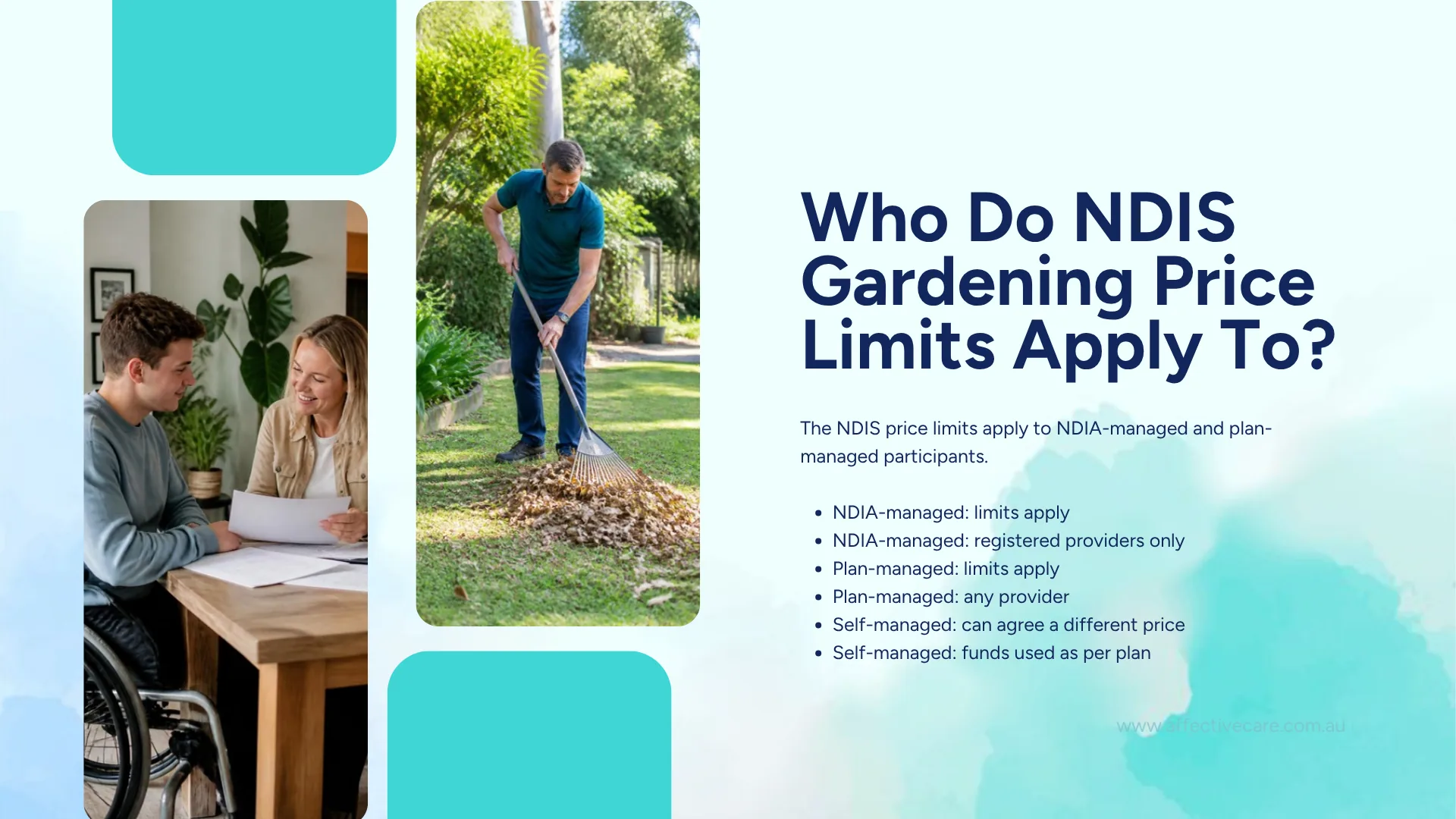
Who do the NDIS gardening price limits apply to?
The NDIS price limits apply to NDIA-managed and plan-managed participants. Self-managed participants can agree on a different price with their provider, but must still use their funding in line with their plan.
- NDIA-managed: price limits apply, and you must use registered NDIS providers.
- Plan-managed: price limits apply, and you can use registered or unregistered providers.
- Self-managed: price limits do not apply, but funds must be used as your plan says.
If you want help paying gardening invoices, see our NDIS plan management service.
Make a referral for NDIS gardening
Support coordinators, plan managers and families can refer a participant in a few minutes.
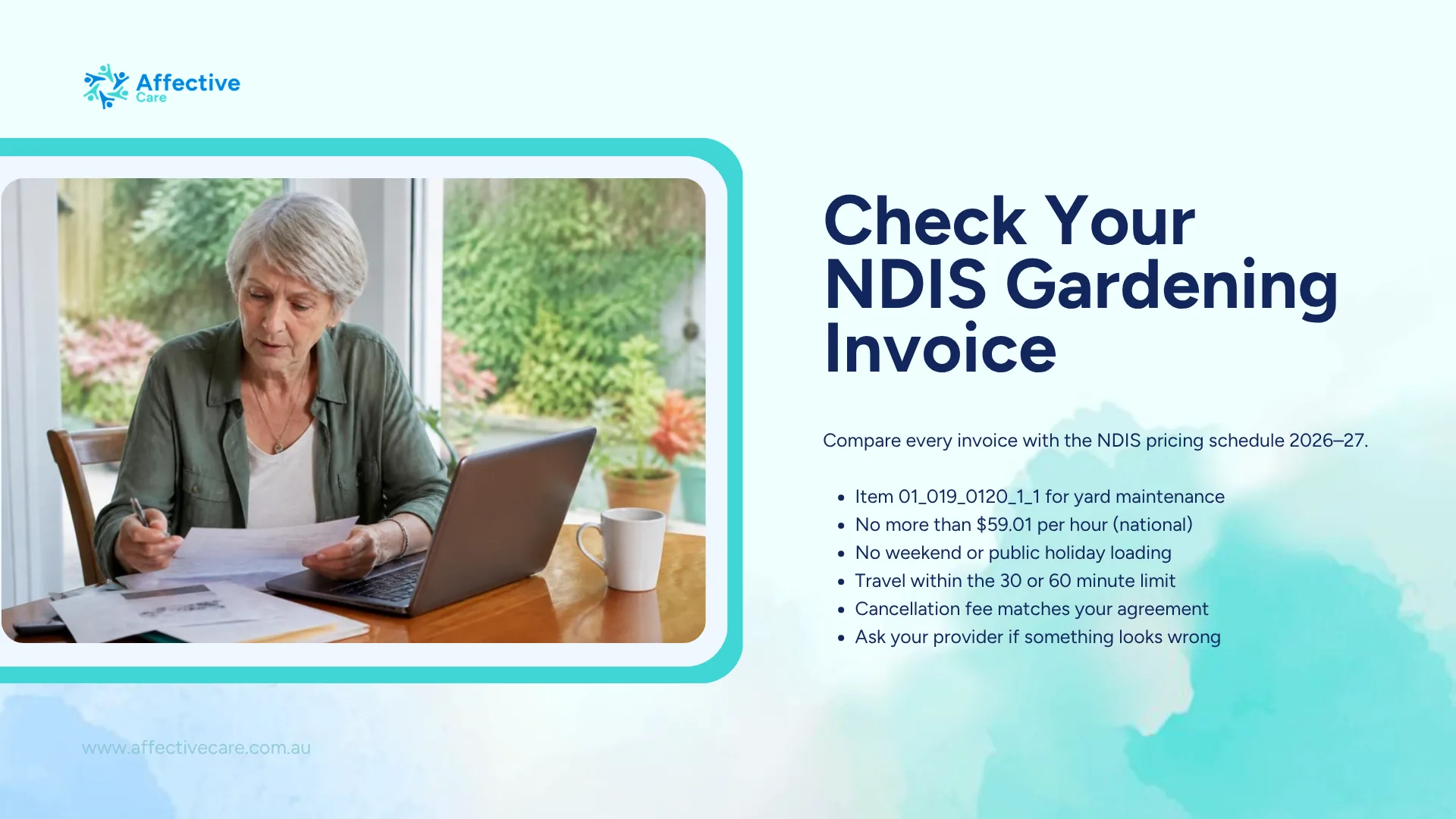
How do you check you are paying the right NDIS gardening rate?
Check each invoice against the NDIS pricing schedule 2026–27. It should show the support item number, hours, hourly rate and any travel or cancellation charges.
- The support item is 01_019_0120_1_1 for house or yard maintenance.
- The hourly rate is no more than $59.01 (or $82.61 remote, $88.52 very remote).
- There is no weekend or public holiday loading.
- Travel is within the 30 or 60 minute limit and agreed in writing.
- Any cancellation fee matches your service agreement.
If something looks wrong, ask your provider first, then speak with your plan manager or support coordinator. For all 2026–27 support rates, read our full NDIS price guide.
This article is general information only. Prices can change during the year, so check the current NDIS pricing schedule and speak with your plan manager, local area coordinator or support coordinator about your plan.
Questions about the NDIS gardening rate 2026?
Contact Affective Care to check availability in your area and talk about the support you need.
Frequently asked questions
What is the NDIS gardening rate for 2026?
The NDIS gardening rate for 2026–27 is up to $59.01 per hour in most of Australia, under support item 01_019_0120_1_1, House or Yard Maintenance. The limit is $82.61 per hour in remote areas and $88.52 per hour in very remote areas. Providers can charge less, but not more.
Do NDIS gardeners charge more on weekends?
No. House or yard maintenance has one hourly price limit in the 2026–27 NDIS pricing schedule. There is no Saturday, Sunday, evening or public holiday loading. If a gardener adds a weekend rate, ask which support item they are claiming under.
Does the NDIS pay for plants, mulch or garden tools?
No. The NDIS gardening rate pays for the worker's time only. Plants, soil, mulch, tools and landscaping are generally everyday living costs or home improvements, so they are not funded. Ask your provider if they bring their own equipment.
Can I use any gardener with my NDIS plan?
It depends on how your plan is managed. NDIA-managed participants must use registered NDIS providers. Plan-managed and self-managed participants can use registered or unregistered gardeners, as long as the support is in line with their plan.
Is gardening included in every NDIS plan?
No. Gardening is funded only when the NDIA decides it is reasonable and necessary for your disability. It usually comes from your Core Supports budget. Talk to your planner or support coordinator if you need help with yard work.