

Home is where the heart is, and your home should be a place of comfort and safety. But for those who require additional support, achieving these goals can be challenging.
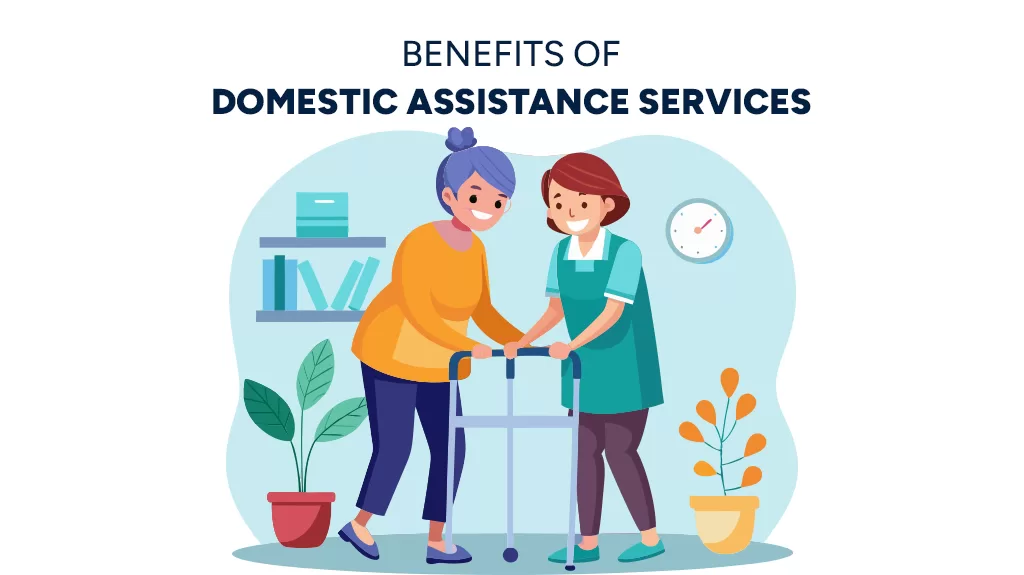
Domestic assistance services can provide a great deal of support for those who require assistance in getting the most out of their living space.
Domestic assistance is often connected with NDIS core supports, helping participants receive practical support with everyday household tasks that promote independence, safety and comfort at home.
This is especially important for individuals living with a mental health or physical disability.
In this article, we’ll explore the benefits of domestic assistance services and how they can help individuals maximize their comfort at home.
Assistance with daily tasks
Domestic assistance services offer support for a variety of daily activities such as meal preparation, laundry, and cleaning.
Those with disabilities or mental health challenges may find it difficult to manage these tasks on their own, but with the support of a domestic assistant, they can maintain a clean and comfortable living space.
Furthermore, for some participants, domestic assistance may be one part of a wider home and living support plan, especially when they are also exploring SIL accommodation for more regular daily support.
This support not only ensures that their home is maintained at the highest standard but can help alleviate stress which can have a significant impact on mental and physical health.
Some participants may also require NDIS high intensity support if their daily support needs include complex personal care or health-related tasks that require trained workers.
Increased social interaction
Domestic assistance services can be a great way to build meaningful connections. Many individuals who require domestic assistance services may feel isolated in their own homes.
Domestic assistants provide social contact and can offer companionship through interaction in day-to-day activities.
Domestic assistants can also provide a safe and non-judgmental space to share your thoughts, feelings and experiences which can help in improving mental health outcomes.
Support for self-directed care
Support for self-directed care is one of the guiding principles of the National Disability Insurance Scheme (NDIS).
Domestic assistance services support individual choice and control and help individuals remain connected to their own homes and communities.
Domestic assistants can help with identifying, assessing and setting goals, and support the development of individualized support plans.
This process allows individuals to make decisions that are meaningful for them and can help with personal growth and self-esteem.
Assistance with Maintaining a Healthy Lifestyle
NDIS Assistance with Daily life is essential for overall well-being.
Domestic assistants can play a significant role in helping individuals with attending medical appointments, engaging in physical exercise, and preparing nutritious meals.
These activities help contribute to a healthy lifestyle and can help manage many health conditions.
Domestic assistants can also provide support in managing medications and making appointments with healthcare professionals.
Helps with achieving integration and inclusion
One of the primary aims of the NDIS is to provide services that promote social inclusion and help individuals achieve integration with their local communities.
Domestic assistance services play a significant role in achieving these outcomes, by allowing individuals to live as independently as possible while still receiving the assistance they require to achieve their goals.
Domestic assistance can help integrate individuals into their communities, providing opportunities for involvement in social activities, and access community resources.
This support promotes social inclusion and helps individuals achieve a sense of belonging and connection.
Domestic assistance can create a safer and more comfortable home environment, while accessible healthcare remains essential to overall wellbeing.
Learn how breaking down barriers to health services for people with disabilities can support more equitable and coordinated care.
Conclusion
Domestic assistance services play a critical role in promoting social connections, comfort, and independence for individuals living with mental health or physical disabilities.
Domestic assistance services help individuals with daily tasks, maintain social connections, support self-directed care, maintain a healthy lifestyle, and achieve integration and inclusion.
If you or someone you know require domestic assistance services, we invite you to contact Affective Care Domestic Assistance for an initial consultation.
Affective Care Domestic Assistance is committed to providing high-quality services that promote independence and comfort at home.
Our team works alongside individuals to create tailored support plans that meet their specific needs and goals.
If you require support with daily activities, companionship, or self-directed care, Affective Care Domestic Assistance can help you maximize your comfort at home while achieving your individual goals.