
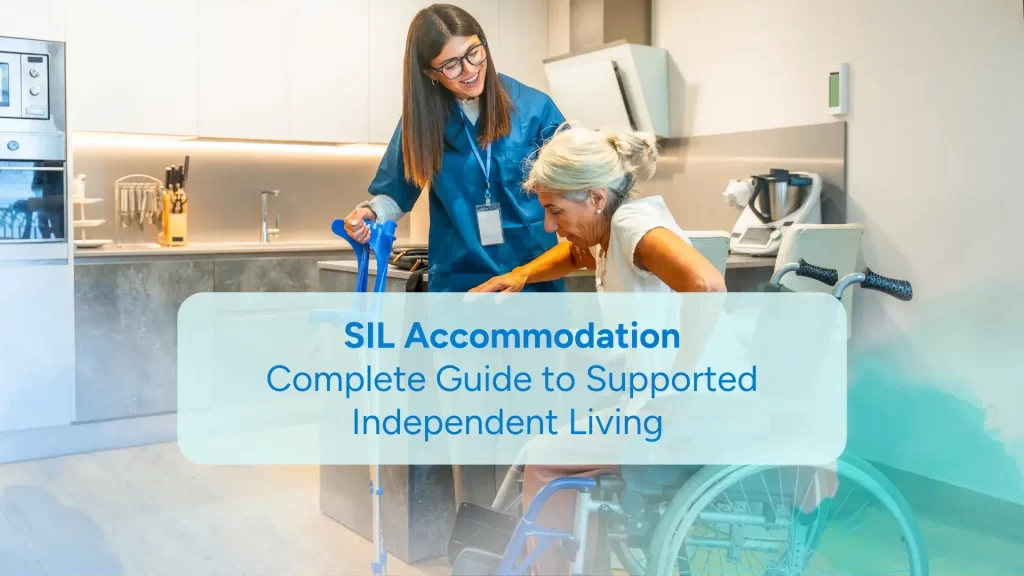
Finding the right home and daily support can be one of the biggest decisions for people living with disability and their families.
It’s not just about a place to live, it’s about feeling safe, supported, and able to live life on your own terms.
Whether you’re exploring SIL accommodation for the first time, supporting a family member, or helping someone transition into more independent living, this guide is here to walk beside you with clarity, warmth, and respect.
In this complete guide, you’ll learn what SIL accommodation is, who it’s for, what daily support looks like, how it’s funded, and how to choose the right home under the NDIS.
You’ll also find practical steps, emotional reassurance, and real-life examples to help you make decisions with confidence.
What is SIL Accommodation Under the NDIS?
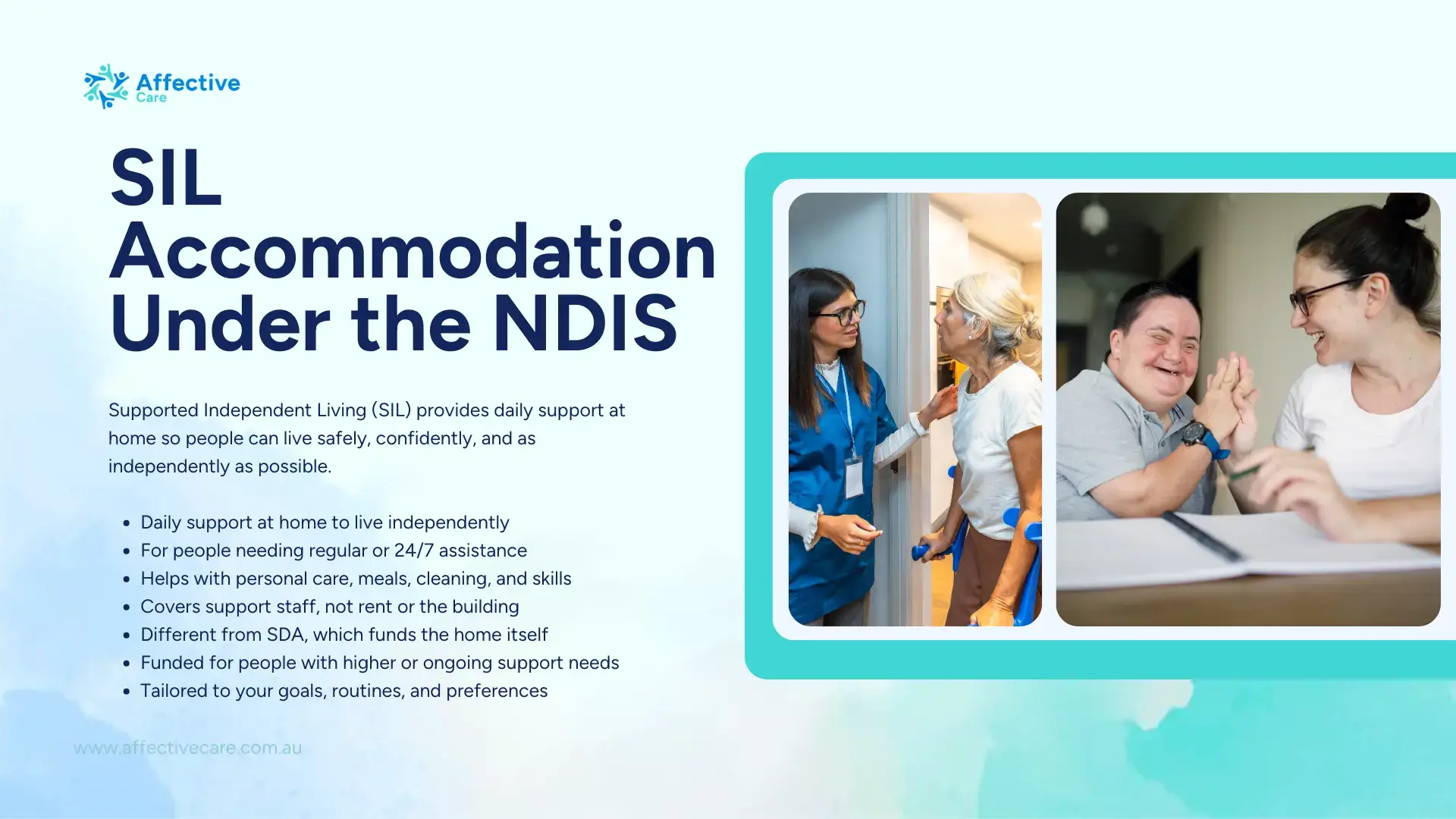
Supported Independent Living (SIL) is a form of everyday support that helps people live as independently as possible in their own or shared home.
It’s designed for people who need regular or 24/7 help with daily tasks such as personal care, cooking, cleaning, medication prompts, and building essential life skills.
However, SIL does not cover the cost of the house or rent itself; instead, it funds the staffing support needed to help someone live safely and confidently.
This makes it different from Specialist Disability Accommodation (SDA), which focuses on the physical building.
Under the NDIS, SIL is generally funded for people who have higher or ongoing support needs.
These supports are delivered at home and tailored to the person’s goals, preferences, and daily routines.
Many people use SIL to develop independence, build confidence, and enjoy a home environment that feels calm, consistent, and supportive.
Who is SIL Accommodation For?
Supported Independent Living (SIL) is designed for people living with disability who need regular, frequent, or 24/7 support at home to live safely, confidently, and as independently as possible.
Whether you’re exploring SIL accommodation for yourself or a family member, it can be helpful to think about daily support needs, safety, and the type of disability housing environment that feels right.
If you’re wondering “Who is SIL for?” or “Is SIL right for my situation?” the answer often comes down to the level of support needed each day.
Supported Independent Living is typically suitable for people with higher or ongoing support needs, including personal care, meal preparation, household tasks, medication reminders, or overnight supervision.
Many participants who access NDIS SIL may have cognitive, psychosocial, neurological, intellectual, physical, or behavioural support needs that impact everyday living.
The NDIS looks at several factors when considering whether SIL accommodation is appropriate, including:
Eligibility considerations for SIL
- Age: SIL is generally for NDIS participants aged 9 to 65
- Daily support needs: Regular, intensive, or overnight support
- Functional impact of disability: How the disability affects safety, independence, and decision-making
- Current living situation: Whether the person can live safely at home without structured support
- Goals and preferences: For example, building independence or transitioning from the family home
If you are unsure who is eligible for SIL funding, this guide explains the SIL eligibility criteria, the level of support usually required, and how the NDIS decides whether Supported Independent Living is reasonable and necessary.
It’s important to remember that Supported Independent Living is not an “all or nothing” option.
Some people thrive in shared SIL homes with housemates, while others benefit from 1:1 support in their own SIL house or private NDIS accommodation.
The best setting depends on what helps the person feel safe, calm, and empowered.
Families, clinicians, and support coordinators often work together to determine whether NDIS SIL or another type of disability housing option is the most suitable and sustainable long-term support.
Furthermore, if you are exploring supported living options closer to your community, our guide to find a SIL Provider in Sydney can help you understand how daily support, safe housing and independence-focused care may work together.
The Benefits of SIL Housing in Australia
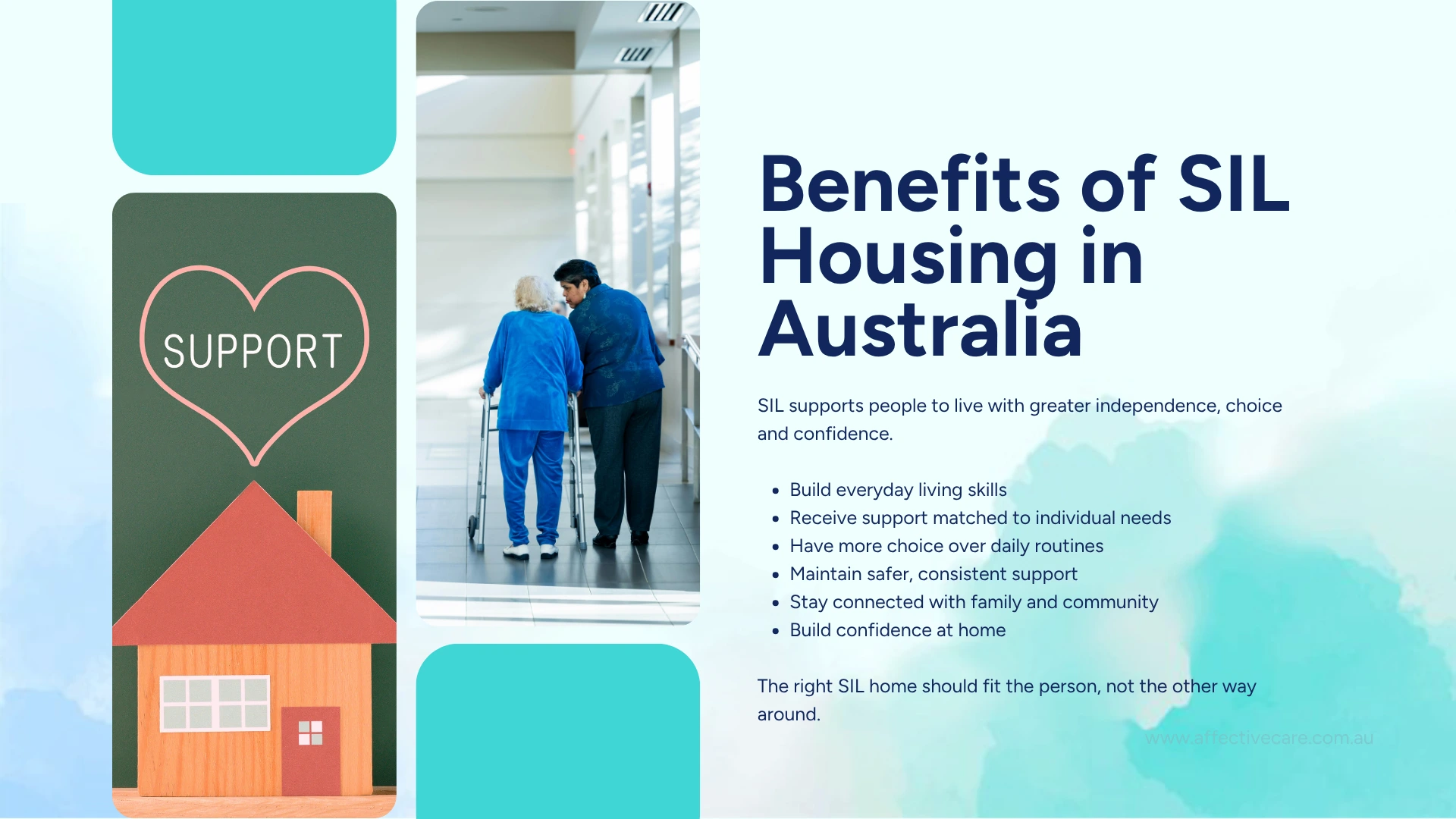
The benefits of SIL housing in Australia are centred on helping people receive the right level of daily support while having more choice, independence and control over how they live.
- Greater independence in everyday life: SIL can support participants to take a more active role in routines such as preparing meals, doing laundry, planning activities and managing household tasks.
- Support matched to individual needs: Assistance can range from shared support to more intensive 1:1 support, depending on the participant’s assessed needs. Learn more about support ratios of 1:1 and 1:3.
- More choice and control: Participants can be involved in decisions about their routines, activities, household preferences and how their support is delivered.
- Opportunities to build daily living skills: Support workers can assist participants to practise useful skills over time rather than completing every task for them.
- Consistent support and safer routines: Regular assistance can help with personal care, meals, medication routines, household responsibilities and other everyday support needs.
- Greater community participation: SIL support can help participants maintain relationships, attend activities and take part in their local community.
For example, someone who previously relied on family for most household tasks may gradually start preparing simple meals and planning their own weekly routine with support.
The right SIL accommodation should also feel suitable for the participant. Housemate compatibility, location, support arrangements and household routines should all be considered before making a longer-term decision.
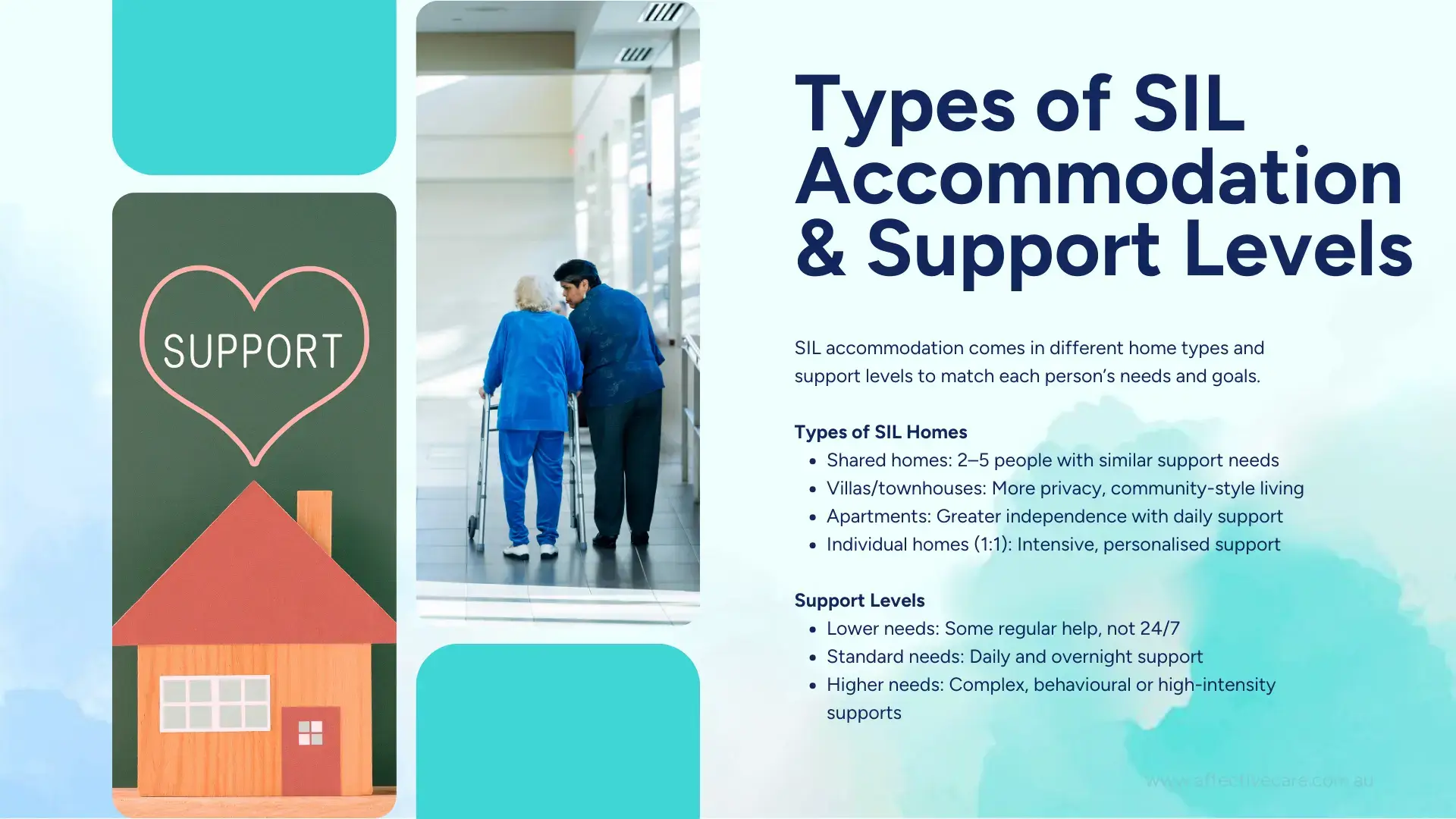
Types of SIL Accommodation and Support Levels
SIL accommodation is not one-size-fits-all. Across Australia, there are many types of SIL living arrangements and support levels designed to suit different needs.
Types of SIL Homes
- Shared homes/Group homes: Usually 2–5 people with similar support needs living together
- Villas or Townhouses: More privacy, often part of a larger SIL community
- Apartments: Ideal for those who want more independence but still need daily support
- Individual Homes (1:1 support): For people requiring intensive, personalised support
SIL Support Levels
- Lower needs: Some regular help but not 24/7
- Standard needs: Consistent daily support, including overnight assistance
- Higher needs: Complex medical, behavioural, or high-intensity supports
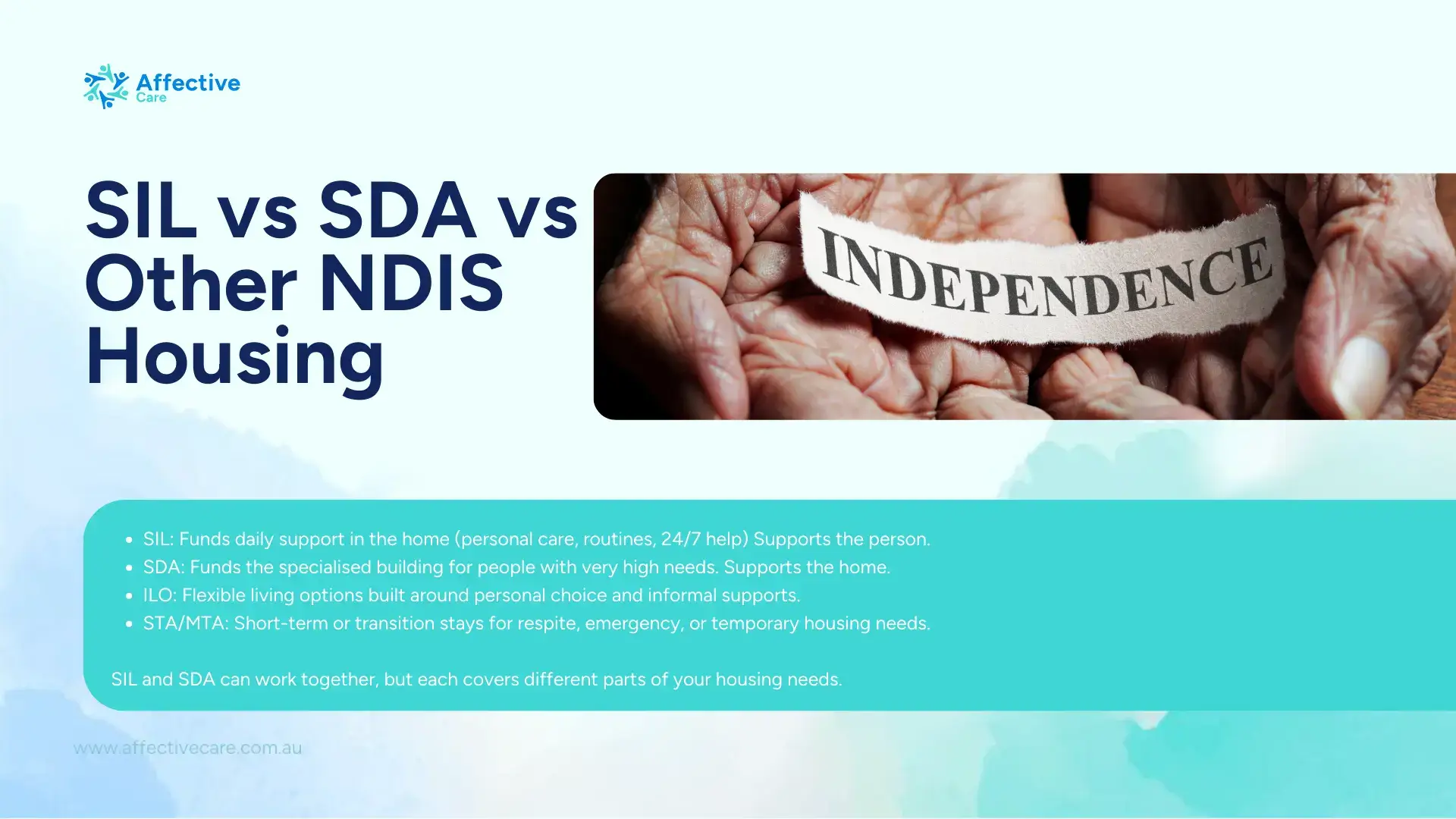
SIL vs SDA vs Other NDIS Housing Options
Choosing between NDIS housing supports can feel overwhelming, especially with similar terms. Here’s a simple comparison:
SIL (Supported Independent Living)
- Supports daily living and staffing support
- For people needing regular or 24/7 assistance
- Focuses on independence, safety, and daily routines
SDA (Specialist Disability Accommodation)
- Funding for the building or property itself
- For people with very high support needs or extreme functional impairment
- Covers home design, modifications, and accessibility features
ILO (Individualised Living Options)
- Flexible living arrangements, often built around informal supports
- Suitable for people who want alternatives to group homes
STA/MTA (Short-term/Medium-term Accommodation)
- Temporary stays, often during transitions or while waiting for long-term housing
- Useful for respite or emergencies
SIL and SDA are often funded together, but they serve different purposes.
A support coordinator or allied health team can help you determine the right match based on needs, goals, and safety considerations.
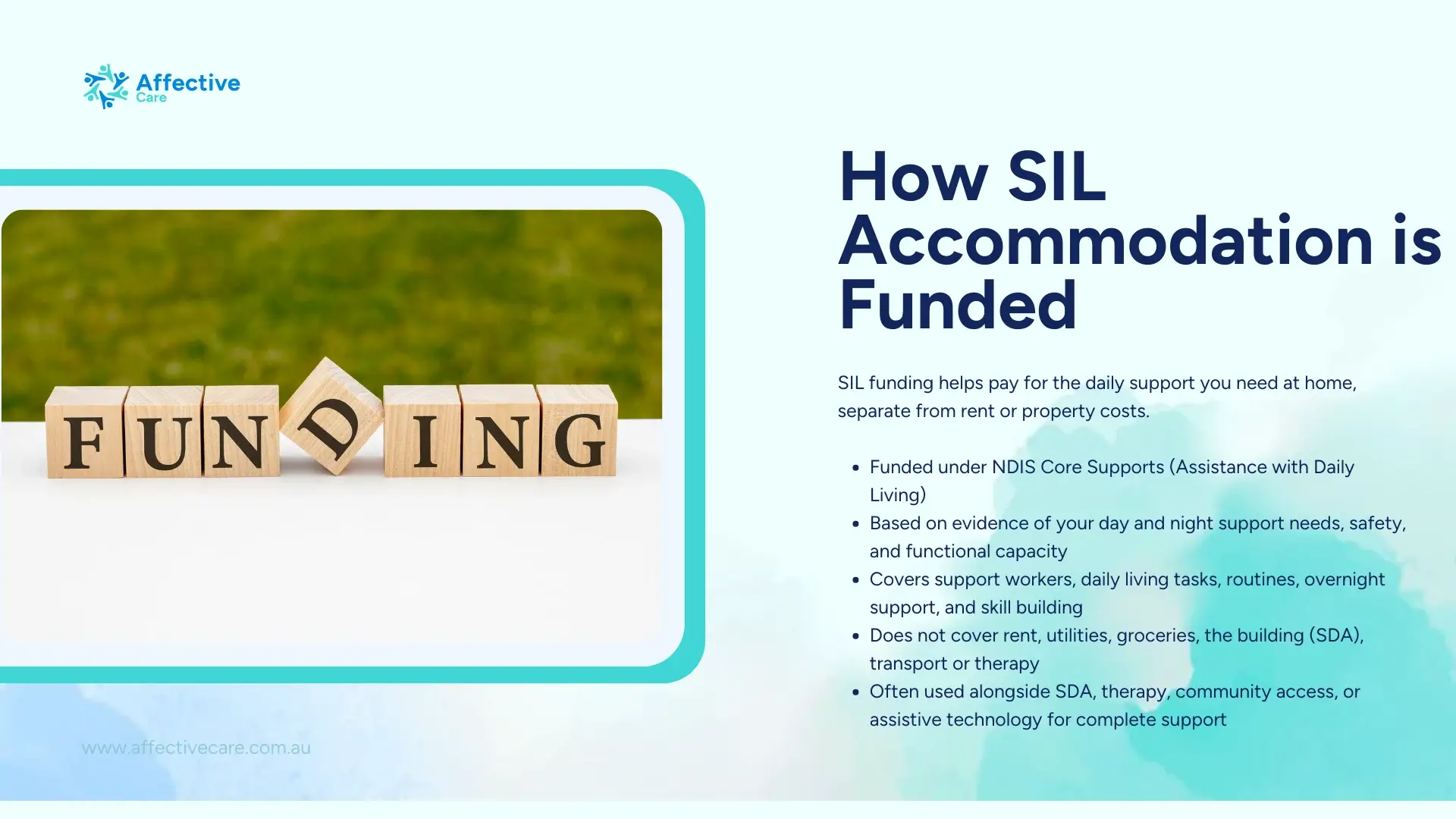
How is SIL Accommodation Funded in Your NDIS Plan?
Understanding how SIL accommodation is funded can feel confusing at first, mainly because SIL works differently from other NDIS housing supports.
While SIL is one of the most widely used supports for people with higher needs, it is also among the most carefully assessed.
Knowing how the funding works can help you feel more prepared, informed, and confident when speaking with planners, clinicians, or support coordinators.
Where SIL Funding Comes From
For eligible participants, SIL is usually funded through the Core Supports budget, specifically within the Assistance with Daily Living category.
This budget covers the staffing support a person needs each day. It is separate from any funding for the physical home or modifications (which would be SDA or home modifications).
What the NDIS Considers When Deciding SIL Funding
To determine whether SIL is the most appropriate and necessary level of support, the NDIS looks at several key factors, including:
- Clinical and functional evidence from allied health professionals
- Support needs across both day and night, including any overnight supervision or response needs
- Safety requirements, such as risks around personal care, medication, mobility, or behaviour
- Functional capacity, including decision-making, emotional regulation, communication, and daily living skills
- Informal supports, such as family or carers, and whether these supports are sustainable or appropriate long-term
- Current living arrangements and whether the person is safe where they currently live
- The person’s goals, especially around independence, daily life, relationships, and long-term housing
This assessment process ensures SIL is provided to people who require ongoing, structured, and regular support that cannot be met effectively in less intensive arrangements, such as drop-in support or ILO.
If you are also trying to understand how SIL funding works under the NDIS, our guide explains what Supported Independent Living funding may cover, who it is designed for, and how it supports daily living needs.
Furthermore, for participants and families in the ACT, our SIL Providers in Canberra & Kambah page explains how Supported Independent Living can provide structured daily support in a calm, comfortable and participant-centred home environment.
What SIL Funding Covers
The goal of this support is not only to maintain safety, but also to help each person build capacity and confidence at a pace that feels right for them.
SIL funding pays for the support workers who assist with daily living tasks inside the home. This may include:
- Daily living assistance, such as showering, dressing, meal preparation, and medication prompts
- Overnight support, whether active or passive, depending on the person’s needs
- Managing household routines such as cleaning, laundry, and maintaining a safe environment
- Skill building, including independence skills, budgeting, personal organisation, communication, or access to the community
- Help with appointments or coordination within the home environment
Before moving into SIL, it helps to understand that NDIS SIL funding covers support rather than everyday living expenses. Participants are generally responsible for costs such as rent, groceries and utilities.
Read our guide to what you pay in SIL rent for a clear breakdown of these costs.
What SIL Funding Does Not Cover
SIL is often used alongside other NDIS supports, including therapy, community participation programs, assistive technology, or SDA housing.
It’s important to understand that SIL funding is only for staffing support. SIL does not include;
- Rent or property-related fees
- Utilities such as electricity, water, or internet
- Groceries and everyday personal expenses
- The physical home itself, which is funded separately through SDA or private rental
- Transport unrelated to support delivery
- Therapeutic interventions (these belong under Capacity Building supports)
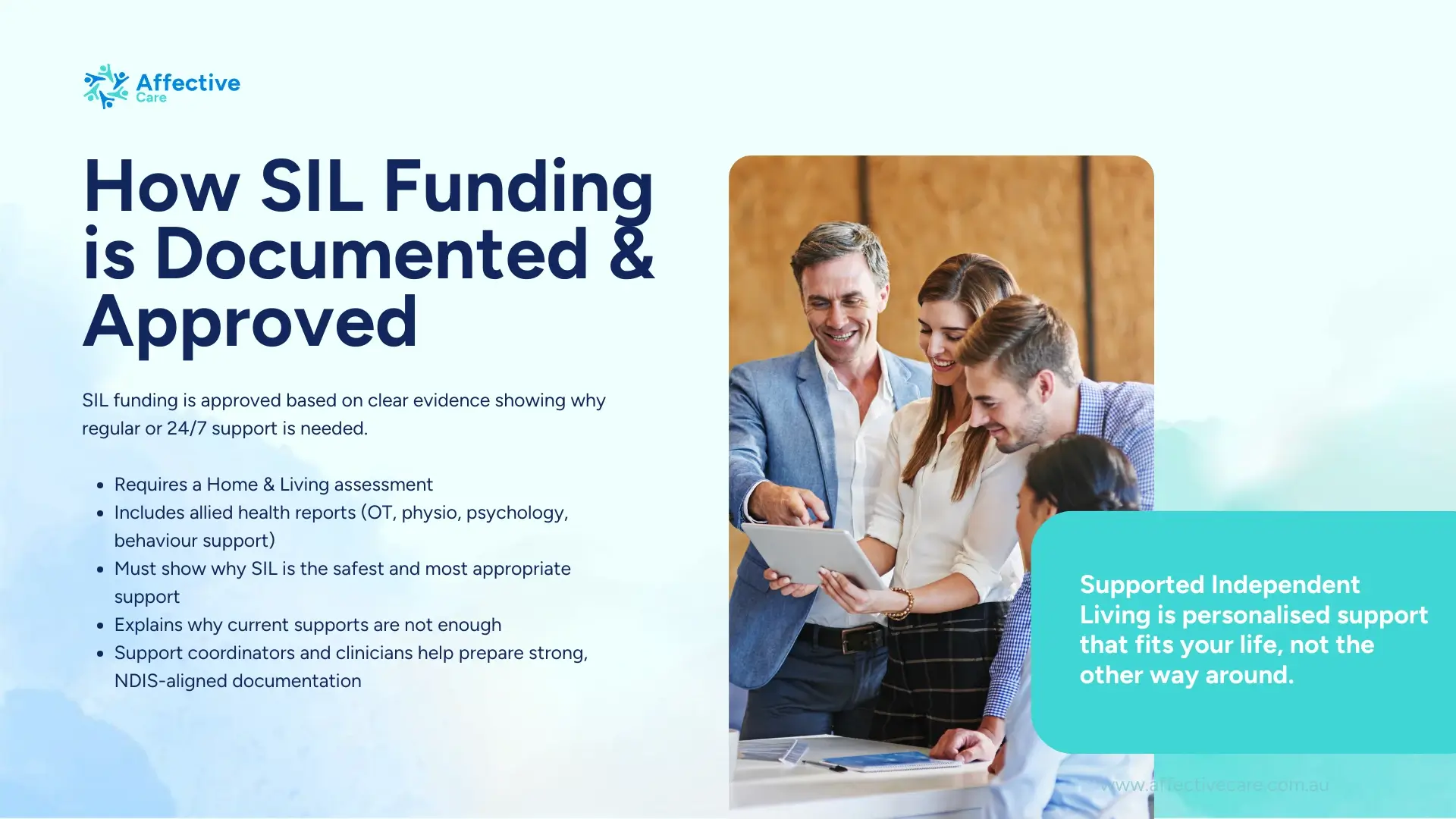
How SIL Funding is Documented and Approved
Support coordinators and clinicians play a crucial role in preparing this documentation, ensuring it is clear, detailed, and aligned with the NDIS’s Home and Living decision-making criteria.
Funding levels vary based on each person’s support needs and the evidence provided. Many participants will need:
- A Home and Living assessment
- Allied health reports (OT, physio, behaviour support, psychology, etc.)
- A clear explanation of why SIL is the safest and most appropriate support
- Information about current supports and why they are insufficient
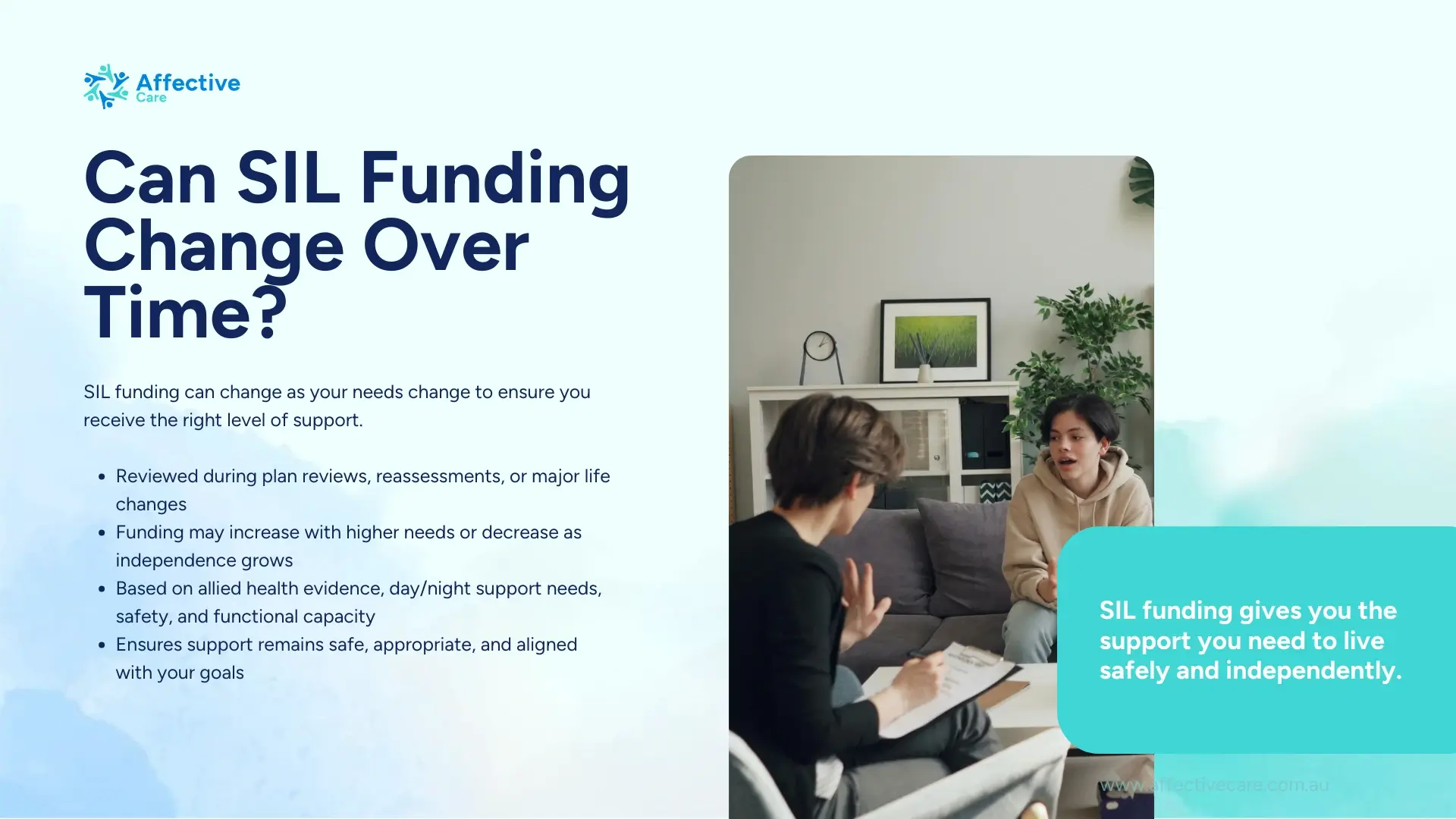
Can SIL Funding Change Over Time?
Yes, SIL funding is reviewed as needs change. A person may require more support as they age, during periods of complexity, or after medical events.
At other times, people grow in their independence and may no longer need the same level of support.
The NDIS may adjust funding after reassessments, plan reviews, or significant changes in circumstances.
Ultimately, SIL funding is designed to ensure each person receives the right level of support at the right time, prioritising safety, independence, and quality of life.
Funding for SIL typically comes from the Core Supports budget for eligible participants who have demonstrated higher or ongoing support needs. The NDIS looks at things such as:
- Evidence from allied health professionals
- Support needs across day and night
- Safety requirements
- Functional capacity
- Whether support from informal networks is appropriate or sustainable
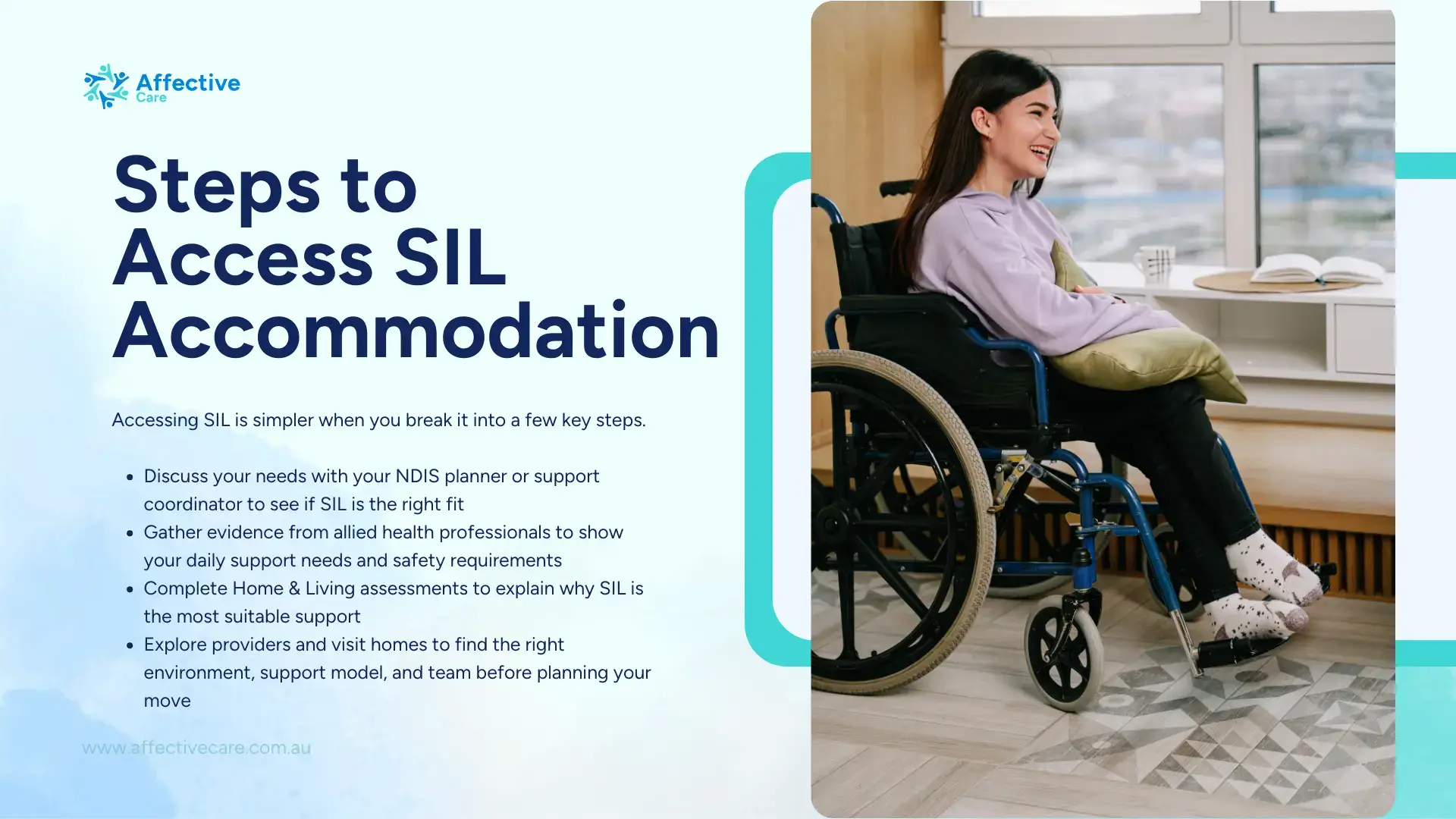
Steps to Access SIL Accommodation
Accessing Supported Independent Living (SIL) can feel like a big journey, especially when you’re balancing emotions, paperwork, and everyday life.
Breaking it down into clear steps can help you understand what to expect and move forward with more confidence. While every person’s pathway looks a little different, the general process follows these key stages.
Talk to your NDIS Planner or Support Coordinator
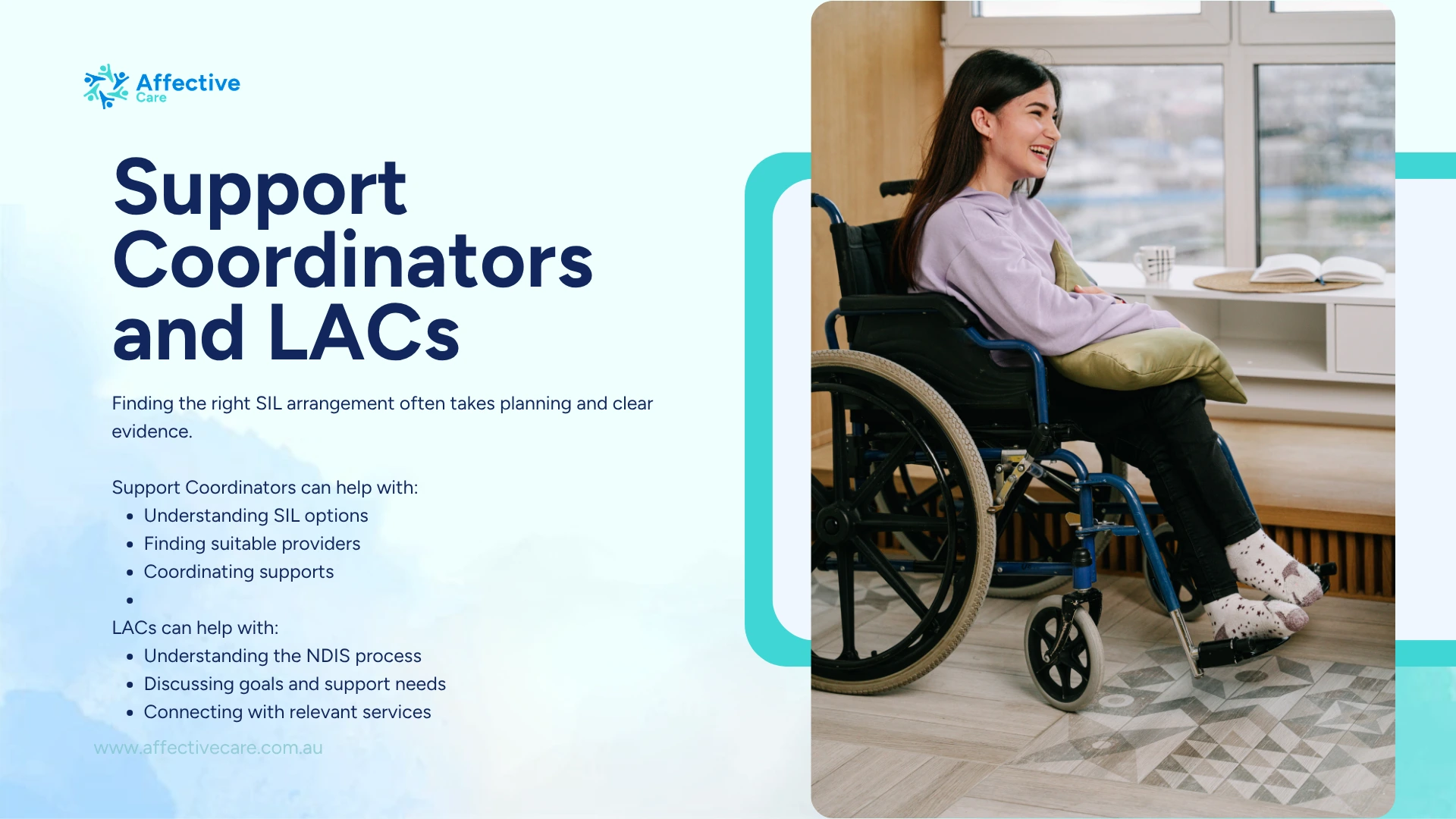
Your first step is to have an open conversation with your NDIS planner, Local Area Coordinator (LAC), or support coordinator about your daily living needs.
This step involves sharing your lived experience to help the NDIS understand what will support you to live safely and comfortably.
This discussion helps determine whether SIL might be the most appropriate support.
During this conversation, you may cover:
- Your safety at home
- How much assistance do you need day and night
- Your personal goals (e.g., independence, moving out of home, building life skills)
- Whether other supports could meet your needs
- Any challenges in your current living situation
Gather Evidence from Allied Health Professionals
Strong, clear evidence is essential for SIL funding. The NDIS relies heavily on professional reports to understand your support needs, risks, and functional capacity.
Evidence may include assessments or reports from:
- Occupational therapists (e.g., functional assessments, home safety reports)
- Behaviour support practitioners (if there are behavioural or emotional regulation needs)
- Psychologists or neuropsychologists
- Physiotherapists or speech therapists
- Medical specialists or GPs
These reports help demonstrate:
- Why you need ongoing, structured support
- What risks exist without support
- How your disability impacts daily living
- The level of support required to stay safe and independent
Home and Living Assessment
Your allied health team or support coordinator will help complete these assessments and ensure they address the NDIS’s Home and Living criteria.
Some participants will need a Home and Living Supporting Evidence Form or a specific SIL assessment. This assessment outlines:
- What supports you currently use
- Why they are no longer suitable
- What type of home environment you need
- Whether SIL is the most appropriate option
Explore Potential SIL Providers
Once you understand your support needs, you can begin exploring SIL providers.
This stage is essential because SIL is not only about the support, but also about the environment and culture of the home.
When exploring providers, consider:
- Location (proximity to family, community, work, education)
- Types of homes available (shared homes, villas, units, apartment-style SIL)
- Support model (1:1, shared supports, high-intensity supports)
- Staff training and experience
- Cultural safety and values
Visit Homes and Meet the Team
A home tour is one of the most important steps in choosing SIL. It allows you to get a feel for:
- The physical environment
- Noise levels, layout, and accessibility
- House routines and expectations
- Compatibility with existing housemates
- The warmth, communication style, and approach of the staff
Review Service Agreements, Compatibility, and Expectations
Before moving in, you’ll receive documentation explaining the support arrangement. It’s important to review:
- Service agreements
- Rosters of care (how supports will be delivered day and night)
- House rules or expectations
- How the provider communicates changes
- What happens if your needs increase or decrease
- How concerns or feedback are managed
Transition Planning and Move-In
Moving into SIL is a significant life transition, and the process should be thoughtful and paced to suit your comfort levels.
A good SIL provider will work closely with you, your family, and your support network to ensure the transition feels safe, calm, and supported.
Transition planning may include:
- Orientation visits
- Meeting housemates and staff gradually
- Trial stays or overnight visits
- Planning how personal belongings will be moved
- Adjusting routines slowly
- Setting up communication plans with your family
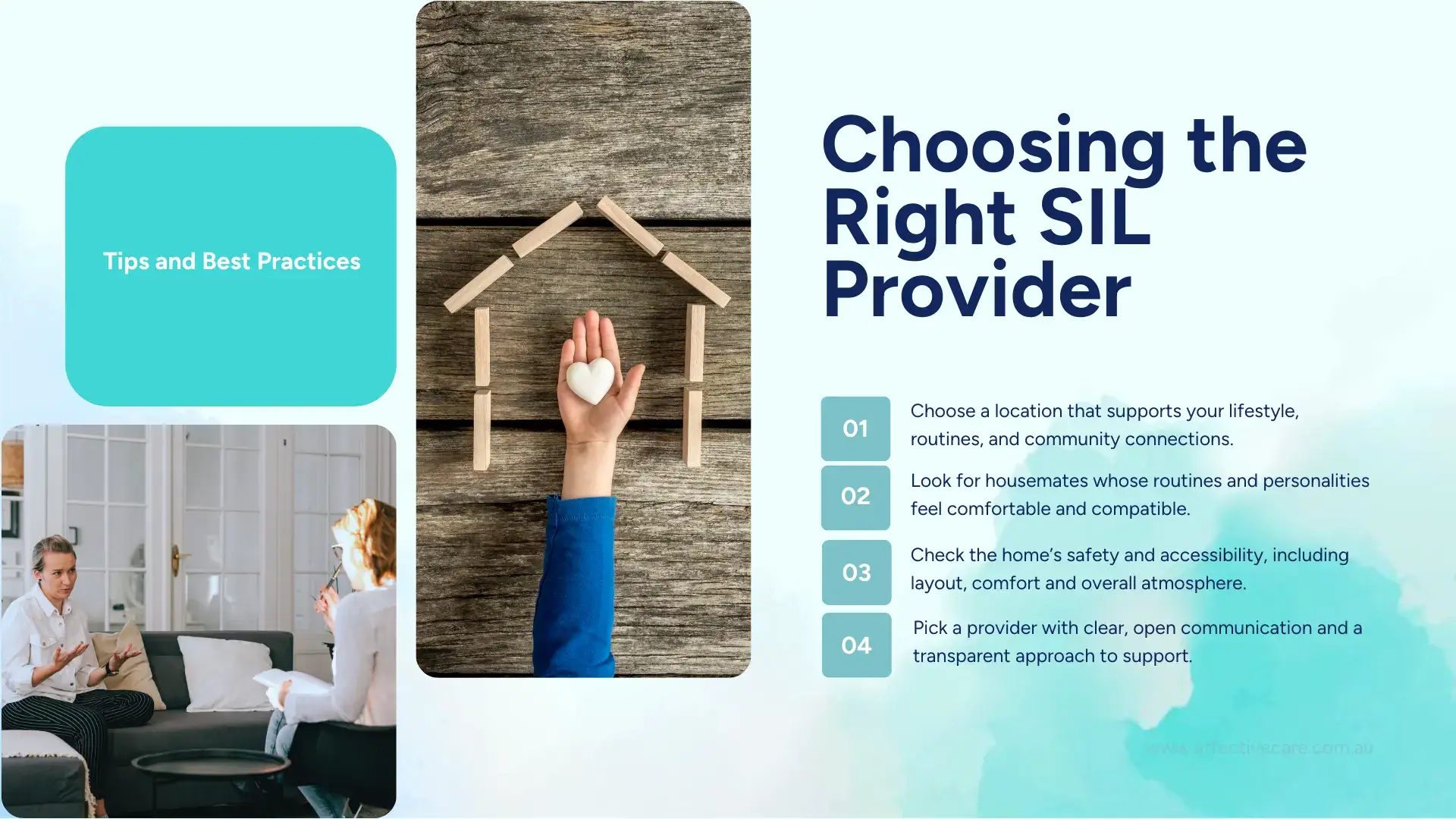
How to Choose the Right SIL Provider and Home?
Choosing a Supported Independent Living (SIL) provider is one of the most critical steps in finding quality SIL accommodation that genuinely supports long-term wellbeing.
The right environment and team can shape a person’s sense of safety, emotional confidence, daily experience, and independence.
Because SIL homes vary widely in their culture, routines, staffing, and layout, taking your time and asking the right NDIS SIL provider questions is essential.
Participants have the right to understand their options, make informed choices, and be actively involved in every step.
Below are key considerations when choosing a SIL provider that aligns with your needs, values, and goals.
Location and Lifestyle Fit
The location of a SIL home plays a major role in the quality of life. Consider proximity to family, friends, community activities, public transport, shops, and cultural or faith communities.
The area should feel safe, familiar, and supportive of the person’s goals and routines.
Housemate and Staff Compatibility
For shared SIL accommodation, compatibility with housemates matters just as much as the physical house.
Think about routines, communication styles, sensory needs, and whether the home feels calm and welcoming.
Staff approach is equally important; look for a provider whose team communicates respectfully, values cultural safety, and creates an empowering living environment.
Staff Skills, Training, and Values
Quality support depends on experienced, well-trained staff. Ask whether the team is trained in high-intensity supports, emotional regulation, communication strategies, or trauma-informed care.
A stable, consistent team rather than constant turnover supports better outcomes.
Home Safety, Accessibility, and Comfort
Assess whether the home layout supports safety and independence.
Look at accessibility features such as modified bathrooms, ramps, assistive technology, sensory-friendly spaces, and emergency procedures.
Key Questions to Ask During a Tour
Empowering questions include:
- “How will you support my goals and preferences?”
- “What happens if my needs change?”
- “How do you match staff and housemates?”
- “How do you ensure safety and quality in daily supports?”
Asking thoughtful NDIS SIL provider questions helps ensure the provider is transparent, participant-focused, and committed to delivering quality SIL accommodation that truly feels like home.
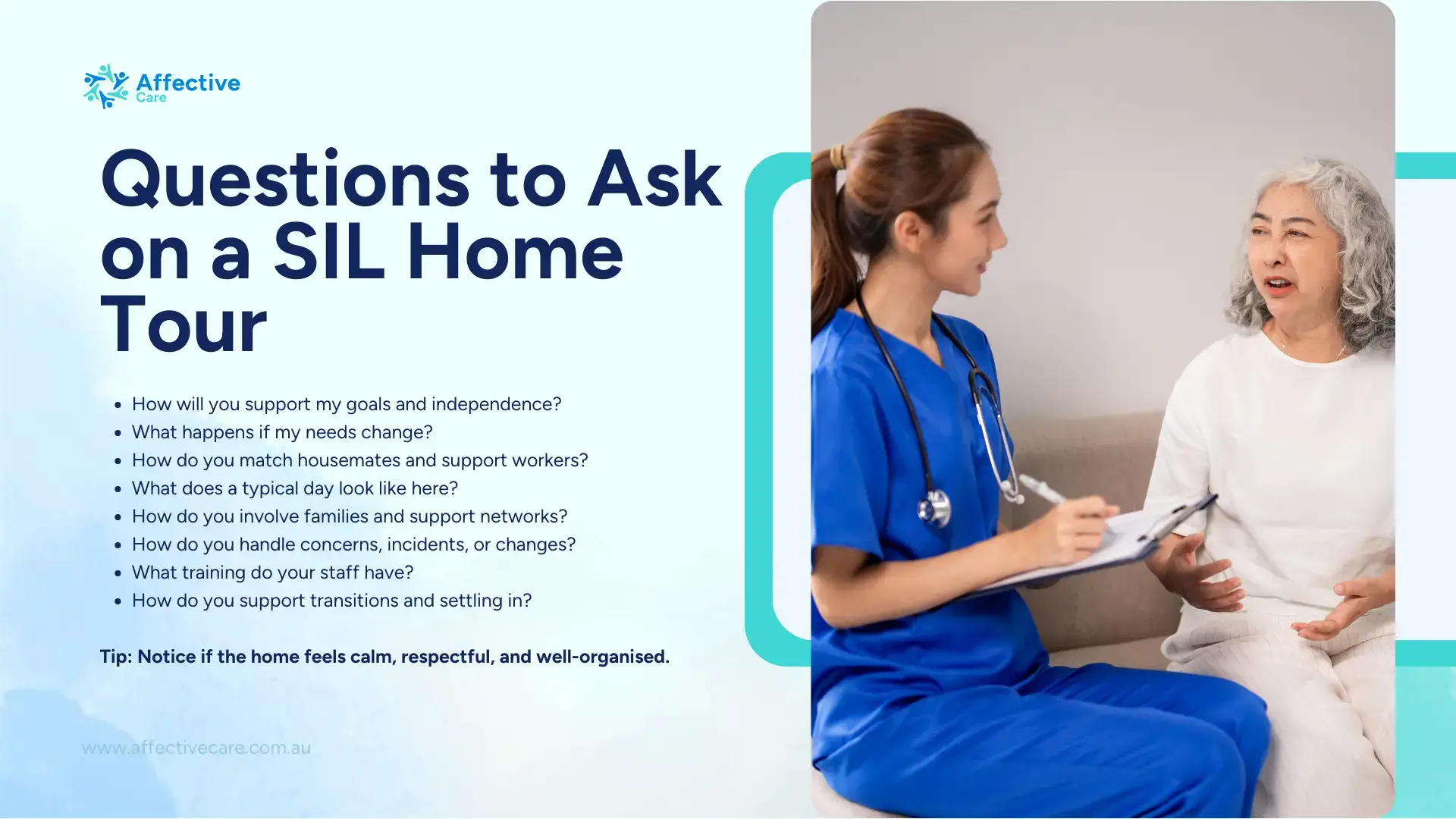
Questions to Ask SIL Providers During a Tour
Tours and conversations offer the best opportunity to see whether a provider is the right match.
During the visit, also pay attention to how the environment feels calm, respectful, organised, and participant-led homes are usually easy to recognise.
Here are essential questions to consider:
- How will you support my goals and independence?
- What happens if my needs change or increase?
- How do you match housemates and support workers?
- What does a typical day look like in this home?
- How do you involve families and support networks?
- How do you communicate concerns, incidents, or changes?
- What is your approach to emotional well-being and behaviour support?
- What are your staff qualifications, training processes, and supervision procedures?
- How do you support transitions and settling in?
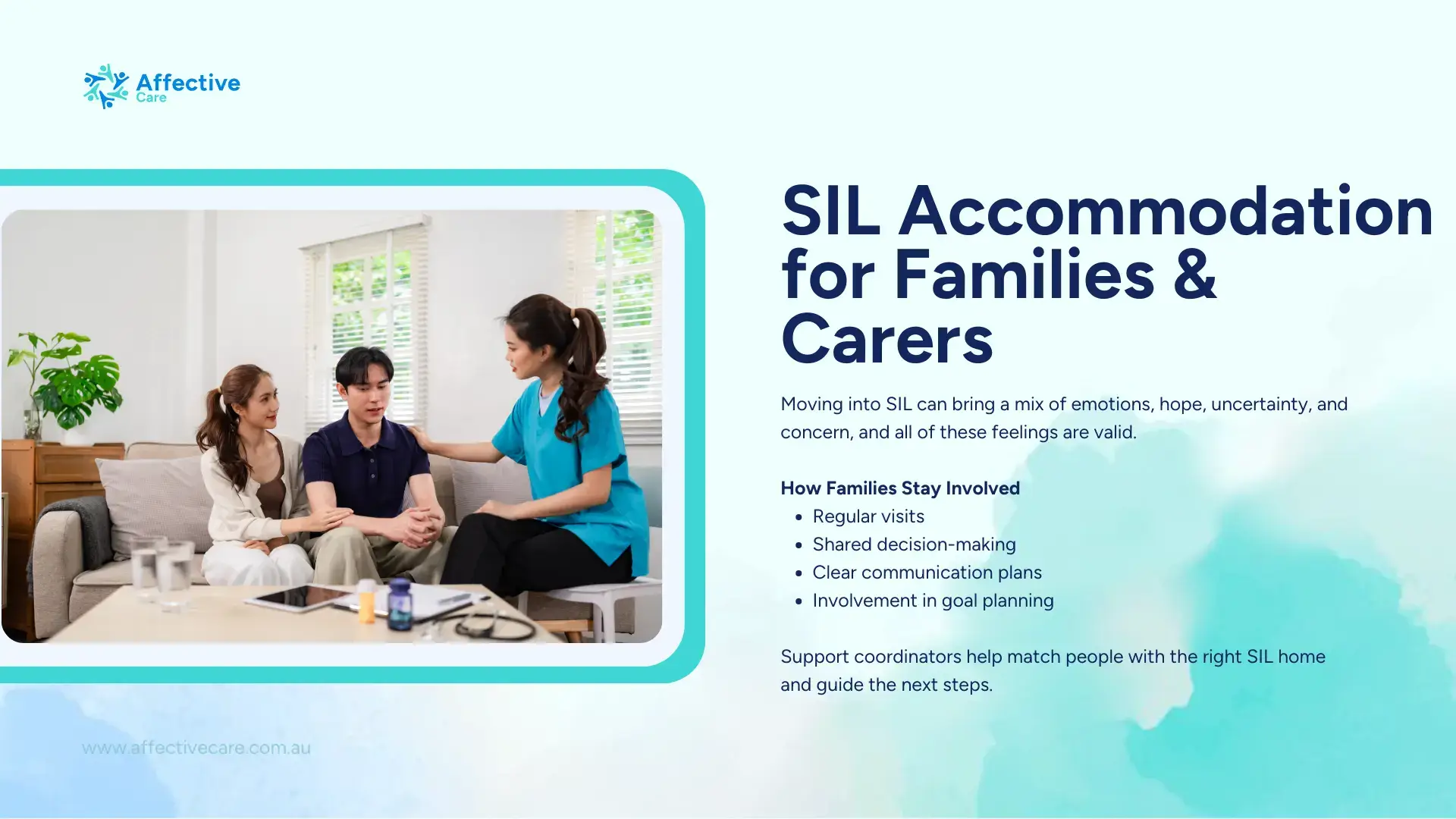
SIL Accommodation for Families, Carers and Support Coordinators
For many families and carers, the idea of someone moving into SIL can bring mixed emotions: hope, uncertainty, relief, or guilt. These feelings are valid.
Common concerns include:
- Will they be safe?
- How involved can we be?
- Will they adjust to a new routine?
- How do we know this is the right choice?
How Families can Stay Involved
- Regular visits
- Shared decision-making
- Communication plans
- Participation in goal planning
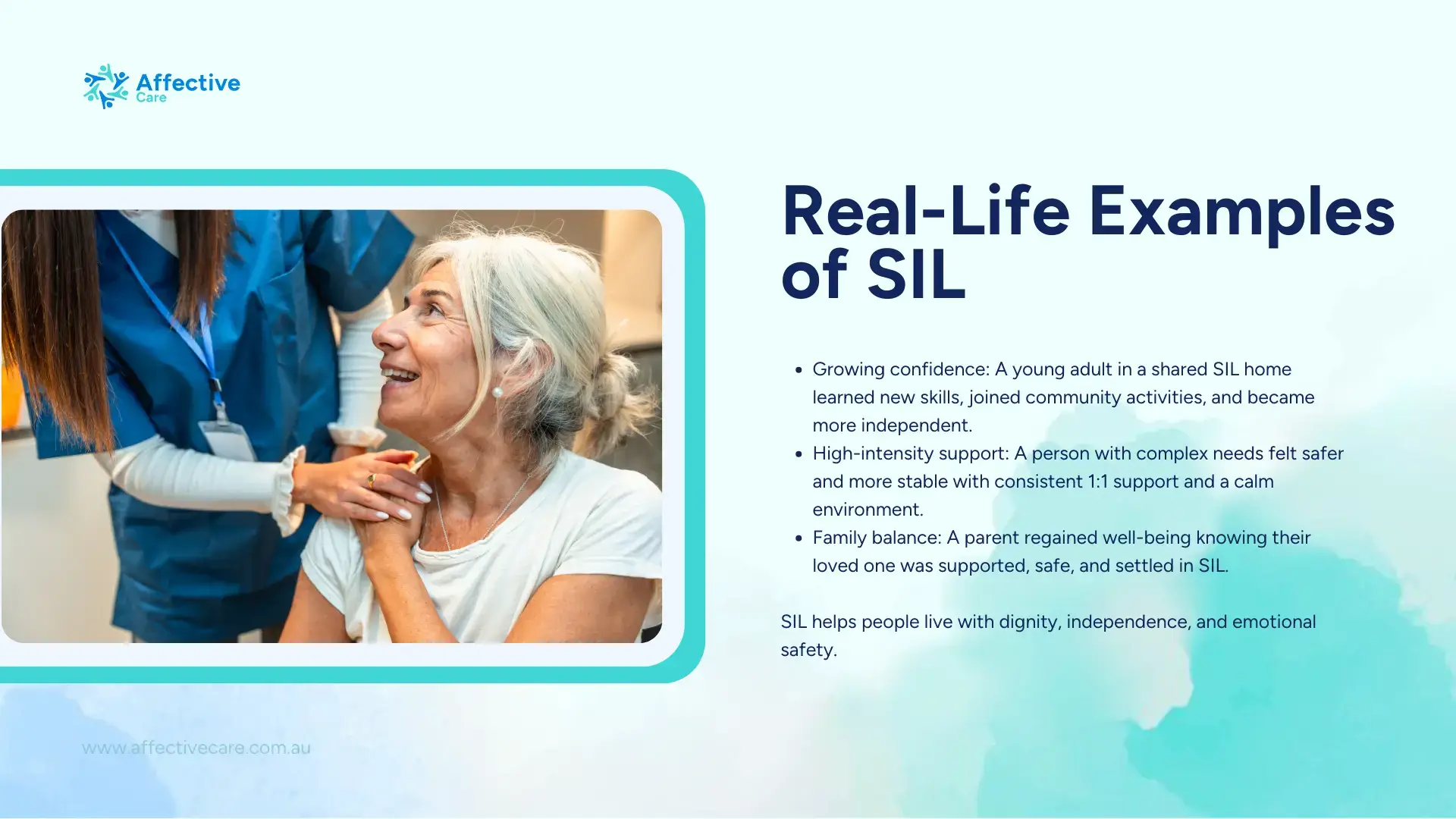
Real-Life Examples: What Life in a SIL Home can Look Like
A Young Adult Gaining Confidence
After living with family for years, a 23-year-old moved into a shared SIL home.
Over time, they learned how to plan meals, use public transport, and participate more in their local community milestones that were celebrated together.
A Person Needing High-Intensity Support
Someone with complex medical needs transitioned into a 1:1 SIL arrangement.
With consistent care and a calm environment, they gained stability and a sense of comfort in their daily routines.
A Parent Finding Balance
A family supporting an adult child found that SIL gave them space to reconnect with their own wellbeing, knowing their loved one was supported and safe.
These examples highlight the heart of SIL: supporting people to live their lives with dignity, independence, and emotional safety.
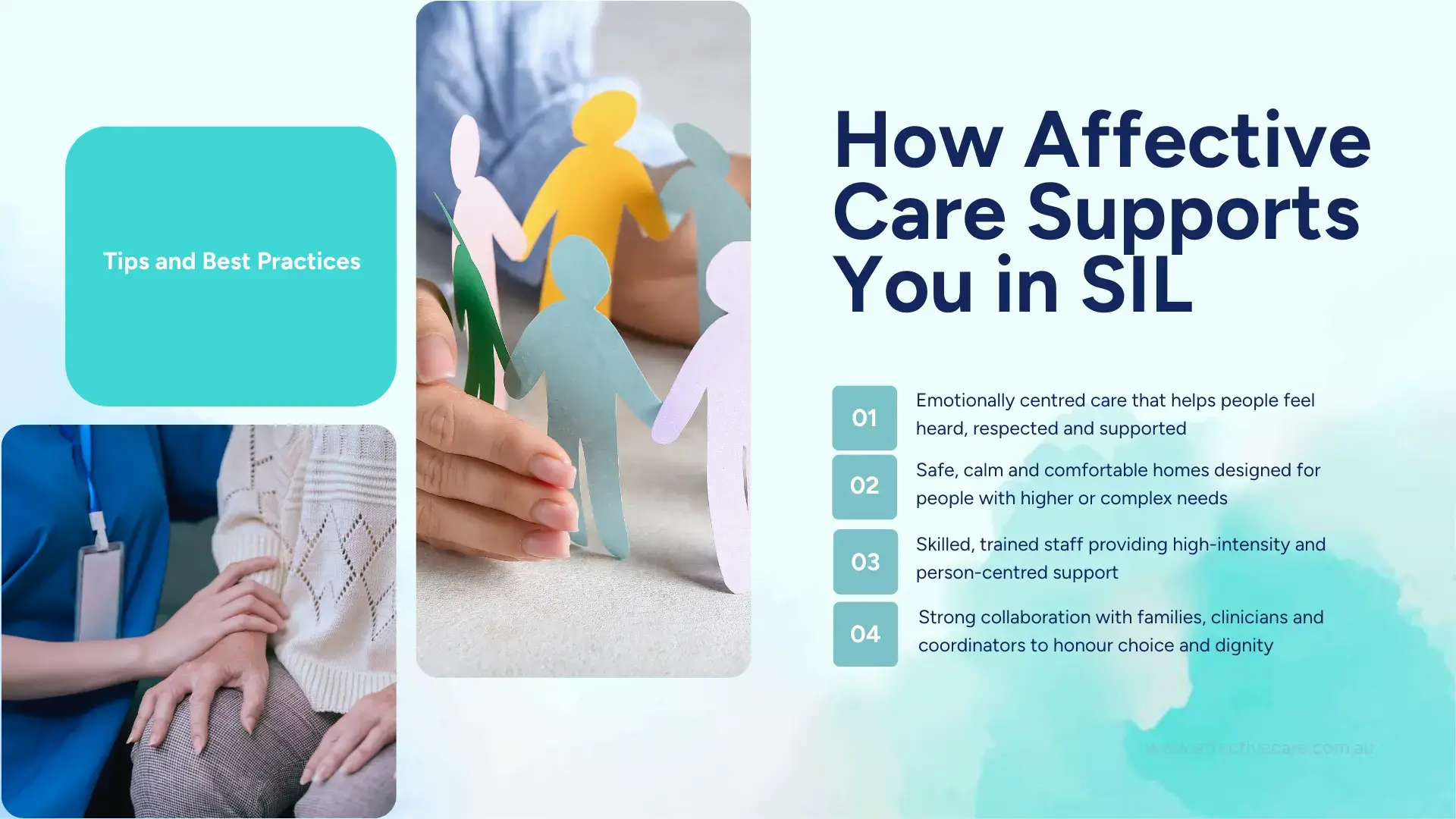
How Affective Care supports people in SIL accommodation
At Affective Care, we take an emotionally centred approach to SIL.
That means we focus not just on practical support, but on creating a home where people feel heard, respected, and genuinely cared for.
Our SIL approach includes:
- Support for people with complex or higher needs
- Homes designed for calm, safety, and comfort
- Staff trained in high-intensity and person-centred support
- Collaboration with families, clinicians, and support coordinators
- A commitment to dignity, emotional safety, and participant choice
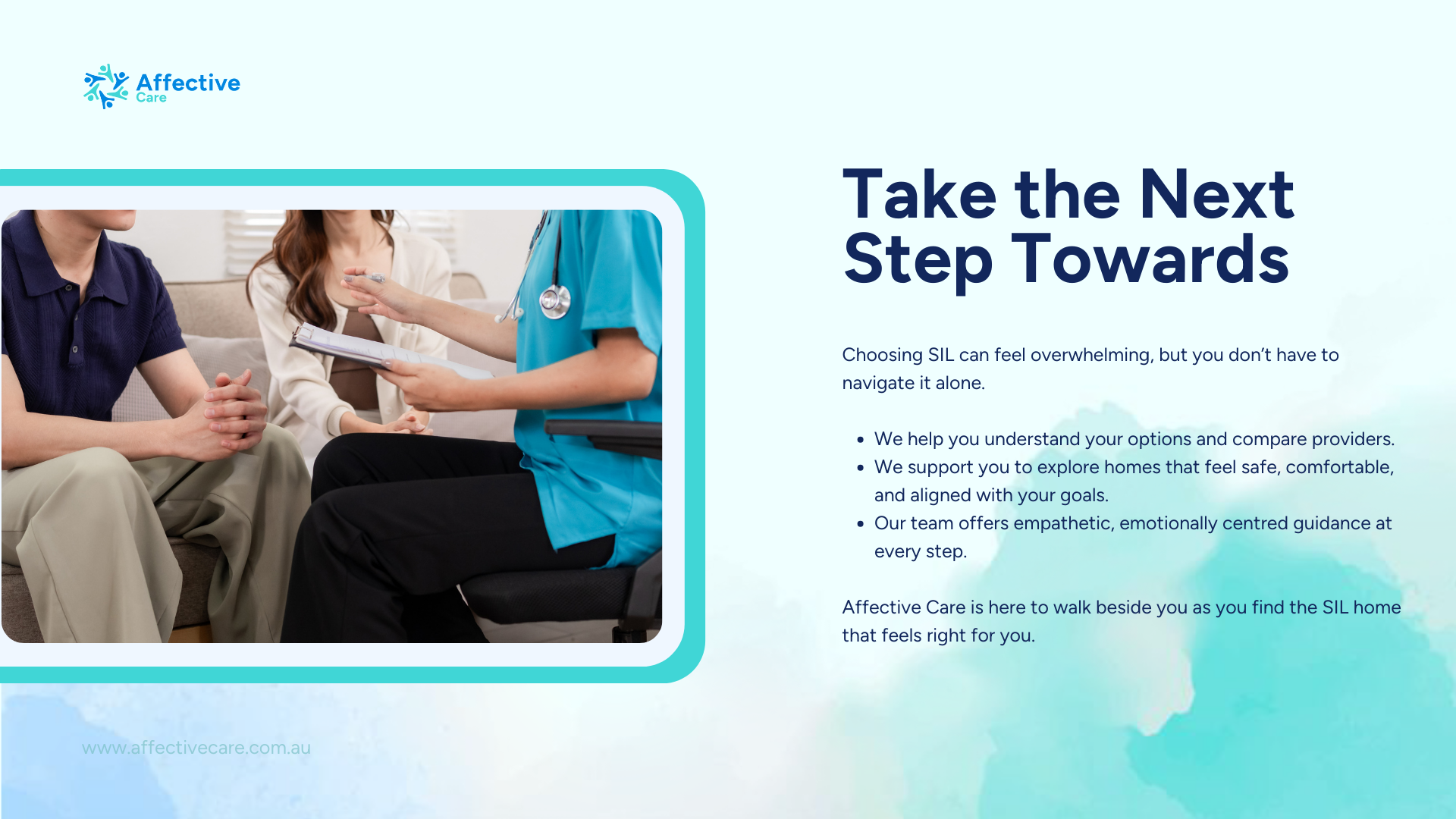
Take the Next Step Towards the Right SIL Accommodation
Choosing SIL is a personal journey, and it’s completely normal to feel a mix of excitement, uncertainty, or even overwhelm along the way.
You don’t have to make these decisions on your own. Whether you’re exploring SIL for yourself, supporting a family member, or guiding someone as part of their care team, we’re here to offer clarity, reassurance, and guidance at every step.
Suppose you’d like help understanding your options, comparing providers, exploring available homes, or simply talking through what feels right for your situation.
In that case, our team is ready to support you with empathy and respect.
At Affective Care, we provide compassionate, emotionally centred support that honours your goals, preferences, and lived experience.
We’re here to walk beside you as you take the next step toward a home that feels safe, comfortable, and truly yours.