The NDIS draft rules are proposed legal instruments that will set out how new framework plans work: how your support needs are assessed, how your budget is calculated, and how you can spend it. They follow the 2026–27 Federal Budget, which aims to slow NDIS cost growth. New framework planning is now due to start on 1 April 2027.
This briefing explains what the rules say, how they link to the Budget and how to prepare.
What are the NDIS draft rules?
The NDIS draft rules are legal instruments made under the NDIS Act 2013. They fill in the detail of the new planning framework that Parliament created in 2024.
The Getting the NDIS Back on Track No. 1 Act 2024 introduced "new framework plans". The rules explain how the National Disability Insurance Agency (NDIA) must make decisions day to day. The Department of Health, Disability and Ageing has released the drafts for public consultation on new framework planning.
Which draft rules have been released?
The main draft rules cover:
- Support needs assessment: how the NDIA assesses what support you need.
- Budget method: how your total funding amount is calculated.
- Plan spending: funding periods, restrictions and requirements for using funding.
- Transition: who moves to a new framework plan, and when.
Exposure drafts of all eight new framework planning rules will be shared for more feedback before they are finalised.
How does the 2026–27 Budget connect to the NDIS draft rules?
The Budget sets the savings target, and the NDIS draft rules are a main tool for meeting it. Budgets built with a set method aim to make funding more consistent and slow spending growth.
Key NDIS figures from the 2026–27 Budget
The Federal Budget was handed down on 12 May 2026. According to Budget analysis from disability organisations and legal firms:
| Budget measure | What was announced |
|---|---|
| Reduced spending growth | $37.8 billion over four years from 2026–27, compared with the NDIS Actuary's projections |
| Estimated NDIS spending in 2026–27 | $56.5 billion, which is higher than the previous year's estimate |
| Cost growth target | About 2% a year on average over four years, then back to around 5% |
| Participant numbers | The government aims to reduce numbers from about 760,000 to around 600,000 by 2030 |
| Provider registration | $182.6 million over four years for mandatory registration of high-risk providers |
The $37.8 billion is a reduction in growth, not a cut to today's scheme, as the Queenslanders with Disability Network explains. To see which supports may be affected, read our guide to NDIS funding cuts in 2026.
The law that followed the Budget
The reforms became law as the Securing the NDIS for Future Generations Act 2026 on 20 August 2026. The Department says there will be no changes to NDIS access until 1 January 2028. See how the NDIS bill passed for the timeline.

When does new framework planning start?
New framework planning is now due to start on 1 April 2027. The government delayed the rollout from mid-2026 after the first round of consultation.
The draft transition rule splits participants into two groups:
- Group 1: participants aged 16 or older move first, because the core needs assessment tool is only used with people 16 and over.
- Group 2: participants under 16 move later, giving the NDIA time to build an assessment for children and bring in foundational supports such as Thriving Kids.
Every participant must receive a transition notice by 2 October 2029. The draft's start dates were written before the April 2027 delay, so they may change.
Until you receive a notice, your current plan and rules keep applying.
How will your NDIS budget work under the draft rules?
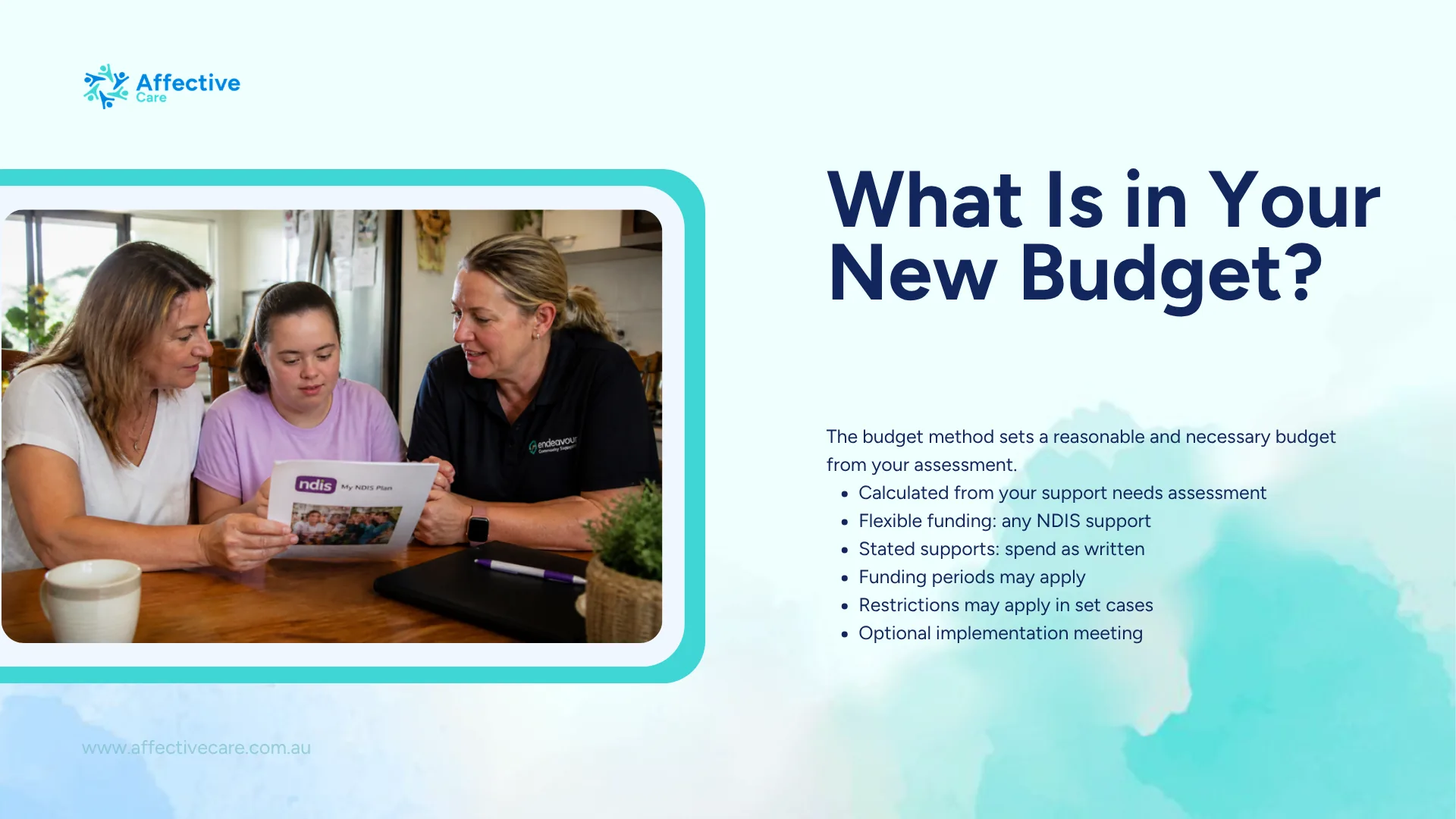
Your new framework plan will contain a reasonable and necessary budget. That budget is made up of flexible funding, funding for stated supports, or both.
According to the consultation material, there are four steps: preparing for your support needs assessment, the assessment itself, building your plan (where the budget method creates your total funding amount), and using your plan.
Flexible funding vs stated supports
Flexible funding can be spent on any NDIS support that suits your needs, subject to any restrictions. Stated supports must be bought exactly as described in your plan. Examples include assistive technology and home modifications.
This can give more choice than today's category-based budgets, but the budget method matters a great deal because it sets your starting total.
What are NDIS funding periods?
A funding period is a set block of time, such as three or 12 months, with a set amount of your budget released for that block. Funding periods help you avoid running out of money before your plan ends.
The draft New Framework Plan Spending Rules explanatory document says funding periods matter more now because plans can last up to five years. When setting funding periods, the NDIA must consider:
- your own preferences
- any risk of physical, mental or financial harm
- any risk of fraud or financial exploitation
- whether past plans were used in line with the NDIS Act
- whether your support needs change over the year.
Funding periods will not apply to some stated supports, including assistive technology assets, home modifications, medium-term accommodation, private vehicle transport, residential aged care and in-kind supports. These are usually one-off purchases or already paid on a fixed schedule.
Can the NDIA restrict how you spend your budget?
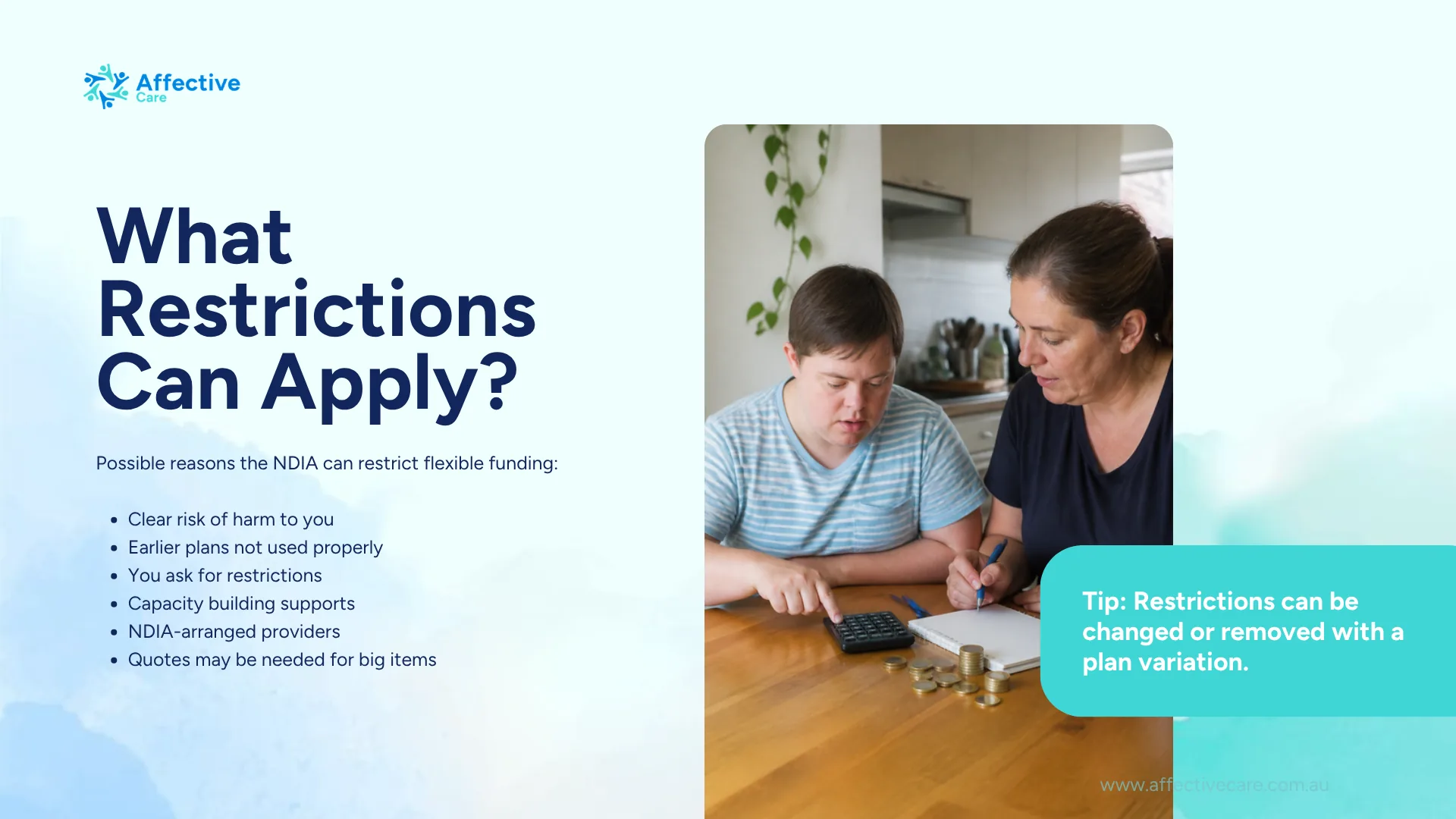
Yes, but only in set circumstances. Flexibility is meant to be the standard approach, and restrictions are the exception.
The NDIS Act already allows restrictions if you are at risk of harm, or if earlier plans were not used properly. The draft spending rules add three more situations:
- You ask for it to help manage your plan.
- Capacity building: funding is kept for therapy that builds skills and reduces future needs.
- Arranged providers: the NDIA has set up a provider for specific participants.
The rules also allow requirements, such as getting a set number of quotes for home modifications or major assistive technology.
What concerns have been raised about the NDIS draft rules?
Most feedback supported the direction of the reforms but asked for more detail. In its summary of the first round, the Department said people wanted clearer information about the support needs assessment and the budget method rules.
Other concerns include:
- whether budgets will be enough. The budget method is under independent review, according to Health Services Daily
- calls from People with Disability Australia to test the rules across many disability types and locations before they are finalised.
The spending rules are "category A" NDIS rules. That means the Commonwealth and every state and territory must agree before they can be made.
How can participants prepare for the new rules?
You do not need to act until the NDIA contacts you, but getting organised now can make your first new plan easier.
- Check your plan end date and reassessment date.
- Keep records and invoices showing how you use your funding.
- Collect recent reports from your therapists and doctors about your daily support needs.
- Reply to NDIA letters promptly, especially a notice about moving to a new framework plan.
- Ask your NDIS support coordinator how the changes may apply to you.
For every confirmed date across the scheme, see our guide to NDIS changes in 2026. Coordinators can read our guide to NDIS changes for support coordinators, and our page on the NDIA vs the NDIS explains who does what.
Frequently asked questions
What are the NDIS draft rules?
The NDIS draft rules are proposed legal instruments under the NDIS Act 2013. They explain how new framework plans will work, including the support needs assessment, the budget method, funding periods and spending restrictions. They are still drafts and may change after consultation.
When do the NDIS draft rules start?
New framework planning is due to start on 1 April 2027, after a delay from mid-2026. Participants aged 16 and over move across first. Until the NDIA sends you a notice, your current plan and current rules keep applying.
Is the NDIS budget being cut by $37.8 billion?
No. The 2026–27 Budget expects the reforms to reduce growth in NDIS spending by $37.8 billion over four years, compared with the NDIS Actuary's projections. Total spending is still estimated to rise, to about $56.5 billion in 2026–27.
Will my current NDIS plan stop working?
No. Your current plan keeps working until you receive a notice that you will move to a new framework plan. The draft transition rule says everyone should receive that notice by 2 October 2029. Speak with your planner or support coordinator about your timing.
This article is general information only, not legal, financial or medical advice. Funding decisions are made by the NDIA, and the draft rules may change. Please speak with your NDIS planner, support coordinator or doctor about your situation.