



For most families, this decision has been years in the making. Perhaps it began as a quiet worry, what happens when we can’t do this anymore?
Perhaps it’s your son or daughter who raised it first: I want my own place.
Either way, moving out of the family home is one of the biggest transitions in any NDIS journey, and it deserves better than a rushed decision or a vague plan.
This guide walks through the journey practical steps, funding, and the emotional part nobody warns you about.

Start With the Honest Conversation
Before rosters and funding, there’s a family conversation to have ideally more than one:
- What does the participant actually want? More independence? Friends to live with? Their own space?
- What are parents and carers worried about? Safety? Loneliness? Losing the daily connection?
- What’s driving the timing; readiness, carer sustainability, or both?
There are no wrong answers, and mixed feelings are universal.
Writing things down helps: our free Goals, Supports & Next Steps Workbook gives families a structure for exactly this conversation into a concrete list.
Understand What You’re Moving To
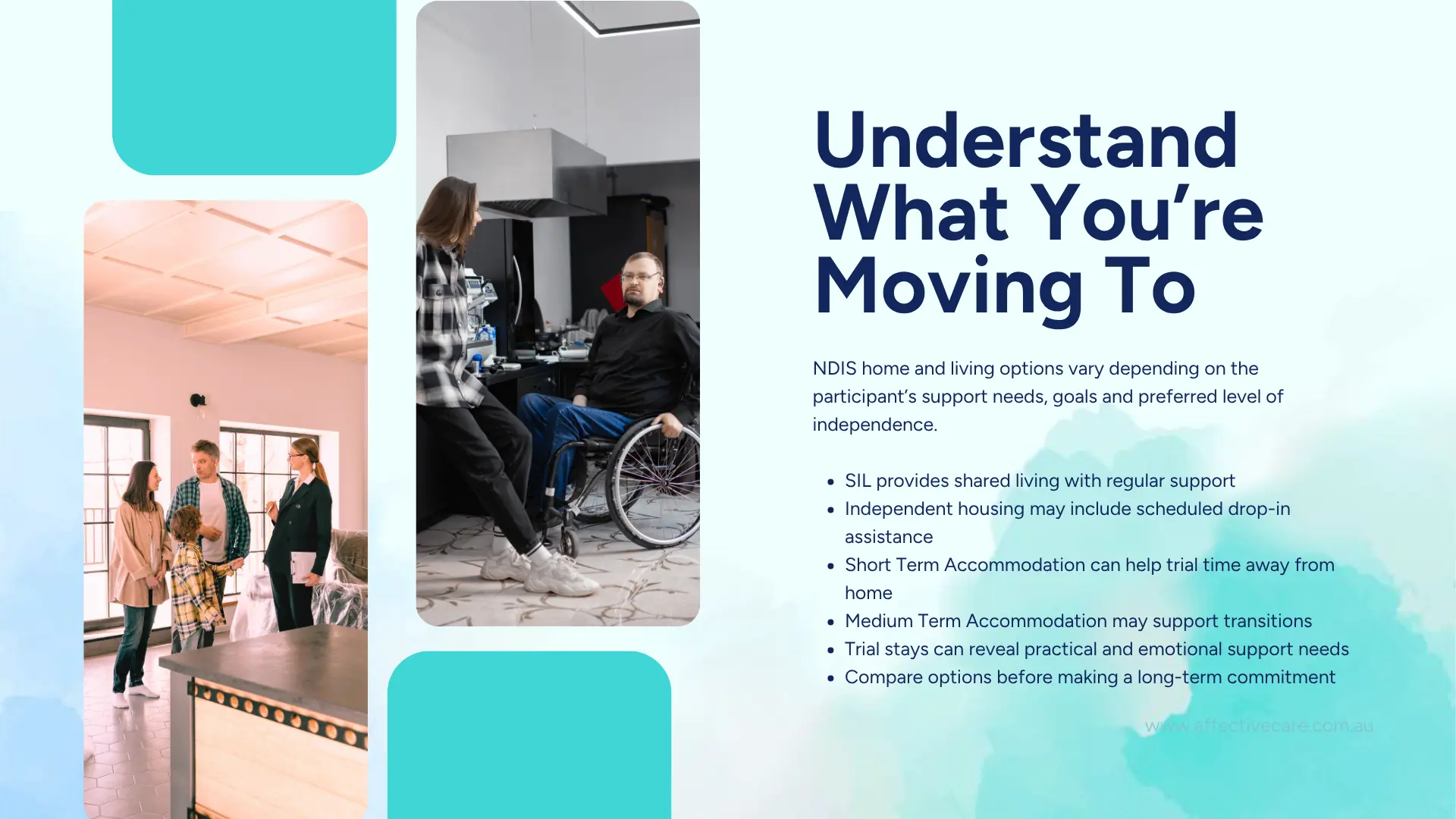
“Moving out” under the NDIS isn’t one thing. The main pathways:
- Supported Independent Living (SIL): A shared home with support up to 24/7. The most common destination for participants with significant daily support needs. (New to the terminology? Read SIL vs SDA explained.)
- Living independently with drop-in supports: Your own place, with personal care and domestic assistance visiting on a schedule.
- Stepping stones: Short term accommodation and respite stays or medium term accommodation as a way to trial living away from home before committing.
That last option is underused. A few respite stays in a supported setting answer questions no amount of planning can: How do they settle at night? How do they respond to new support workers? What does homesickness look like and does it pass?
The Step-By-Step Journey
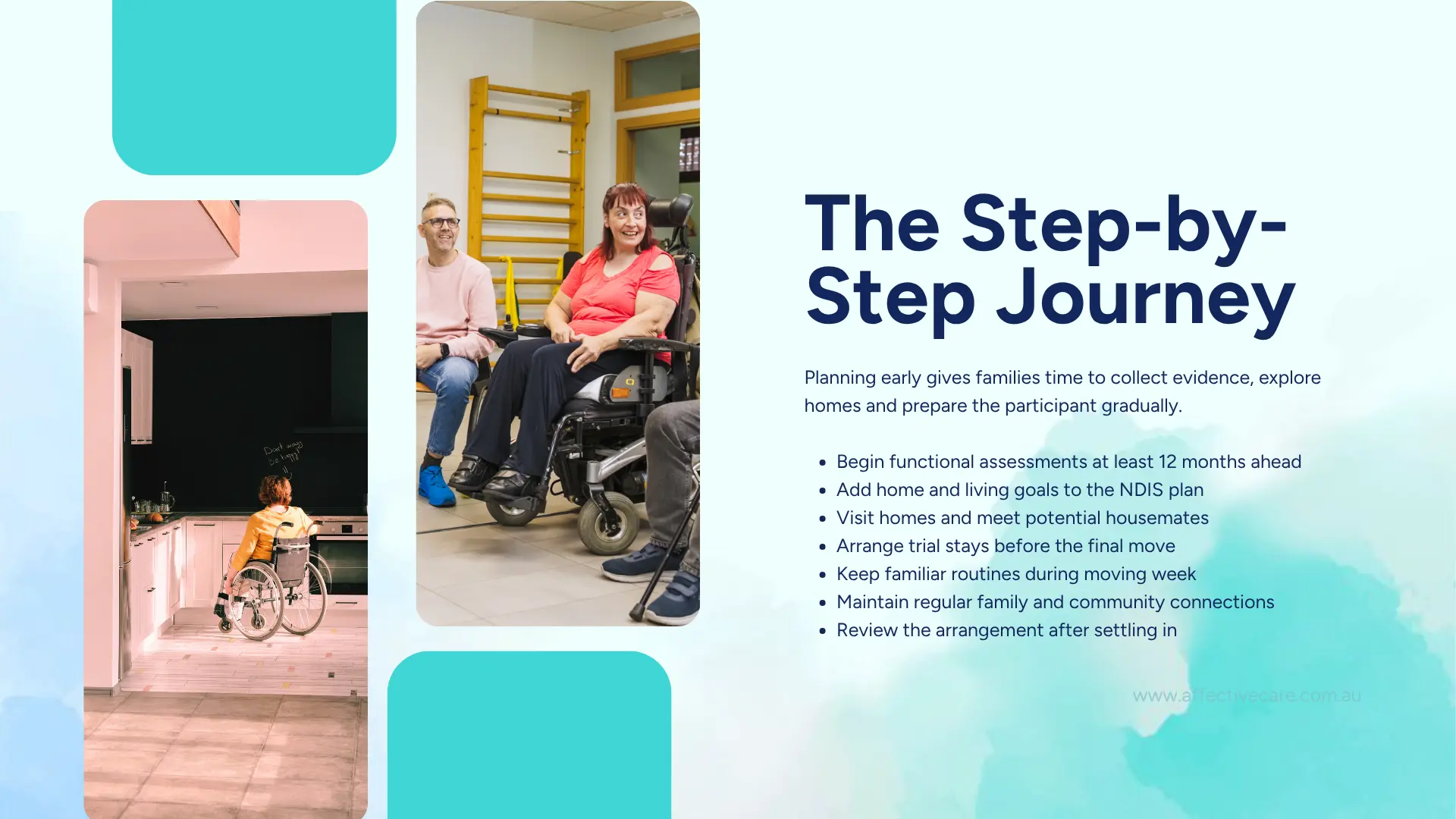
- 12+ months out — build the evidence. SIL funding rests on functional assessments. Start with occupational therapy and, where relevant, psychology and behaviour support input. Our guide to SIL eligibility covers exactly what the NDIS needs to see.
- 9–12 months out — raise it in your plan. Home-and-living goals go into your plan review; funding follows goals. The NDIS Housing Support Application Guide walks through the request.
- 6 months out, visit homes, meet housemates. Fit matters more than floorplans. Visit at different times of day. Meet potential housemates more than once. Browse our homes in Sydney, Croydon Park, the Central Coast, Canberra and the Gold Coast.
- 3 months out trial stays. Weekend stays, then a full week. Debrief honestly after each one.
- Moving month, keep routines portable. Same morning routine, same photos on the wall, familiar meals in week one. Consistency is the bridge.
- After the move, plan the connection, not just the care. Regular family dinners, community activities, and scheduled reviews with the support team. Moving out should mean more connection to community, not less.
Building Skills Before the Move: The 12-Month Runway
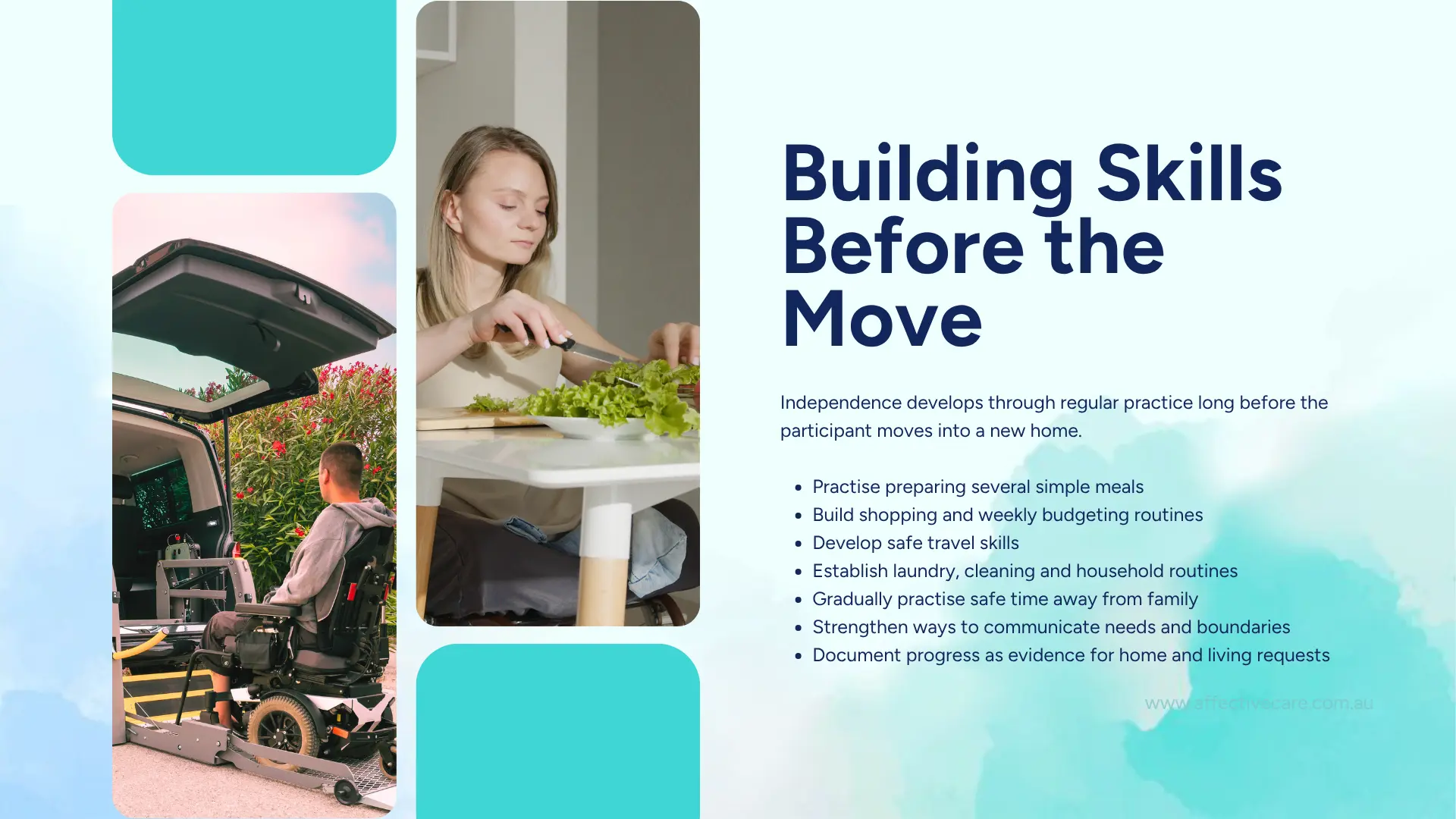
The most successful moves we see share one feature: the skill-building started long before the removal truck. Independence isn’t switched on at the front door of a new home; it’s rehearsed in the old one.
Worth building deliberately in the year before:
- Kitchen Confidence: Not gourmet cooking; three or four meals the participant can genuinely own, practised weekly. OT-led daily living work can turn this into funded, structured goals.
- Money routines: A weekly budget conversation, supported shopping and understanding what things cost. If you’re exploring SIL options, you can also View SIL Vacancies.
- Travel training: The route to the day program, the shops, the bus home, practised to independence or to a clearly defined level of support.
- Household rhythm: Laundry day, bin night, a cleaning routine. Boring on purpose; boredom is what independence is made of.
- Time alone: Graduated, safe periods of being home without a parent in the next room. For many families this is the hardest and most important rehearsal of all.
- Communication tools — whoever the new support team is, the participant needs reliable ways to say I need help, I don’t like this, and leave me alone for a bit. Speech therapy and behaviour support both contribute here.
One family’s version (illustrative): the Nguyens started eighteen months out. Their daughter Lan, 20, cooked Sunday dinner every week for a year (two dishes, then four), did a fortnightly respite stay for six months, and had an OT quietly convert each skill into documented functional evidence.
By the time her SIL request went in, the evidence didn’t just describe her needs, it demonstrated a trajectory.
The move, when it came, was the least dramatic step in the whole process. That’s the goal.
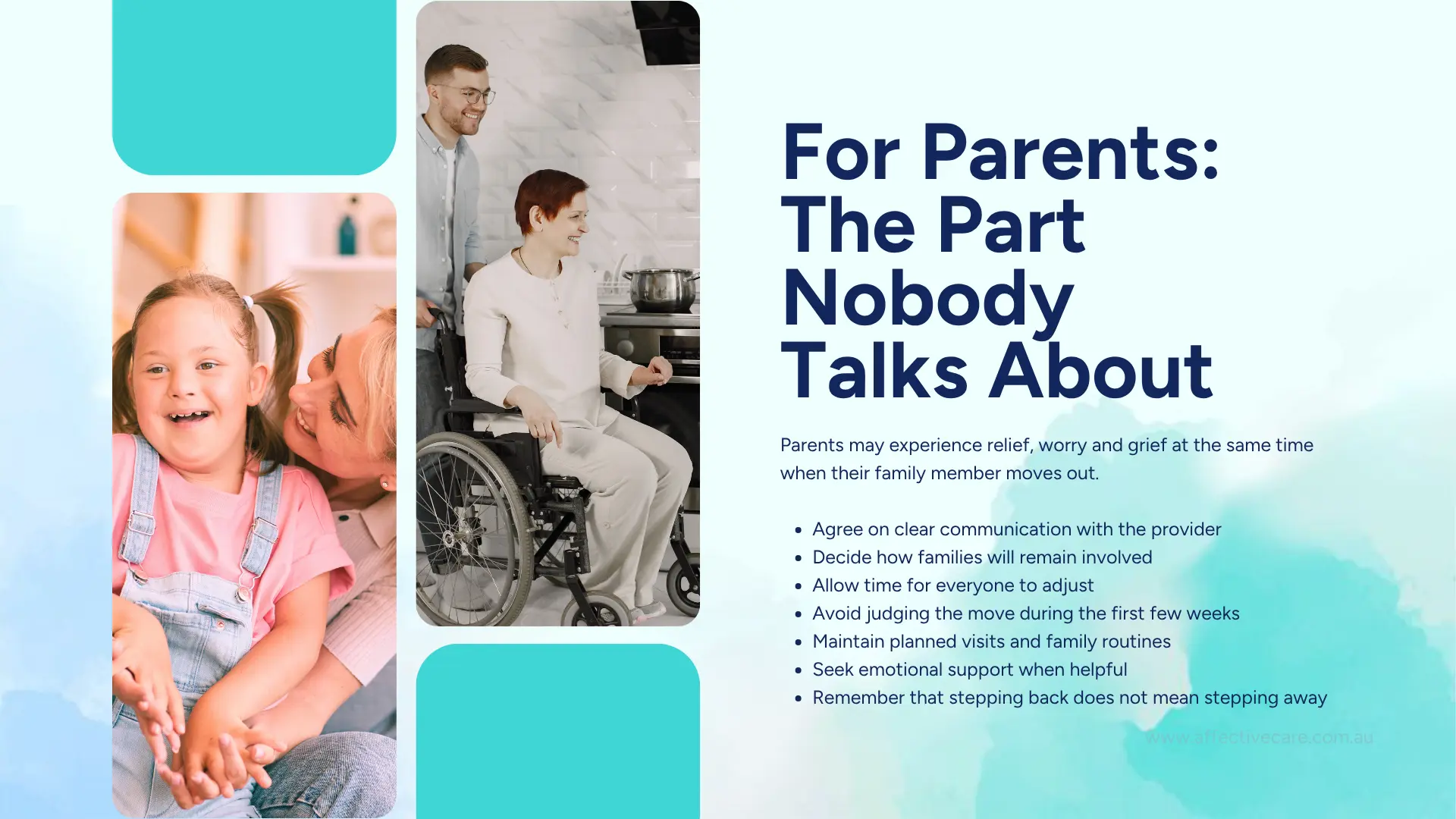
For Parents: The Part Nobody Talks About
Almost every parent we work with describes the same contradiction: relief and grief arriving together.
You’ve spent decades being the safety net, and stepping back, even into a well-planned arrangement feels like free-fall.
Three things help. First, stay involved in a defined way: agree with the provider on how you’ll communicate, how often, and about what. Second, judge the move at three months, not three weeks; early wobbles are normal on both sides.
Third, look after your own adjustment, this is a genuine life transition for you too, and support like counselling isn’t an admission of failure. It’s maintenance for the long game.
Ready to start the conversation, even if the move is a year away?
Book a free consultation and tour one of our homes. No pressure, no obligation just an honest conversation about readiness. Call 1300 615 193.