


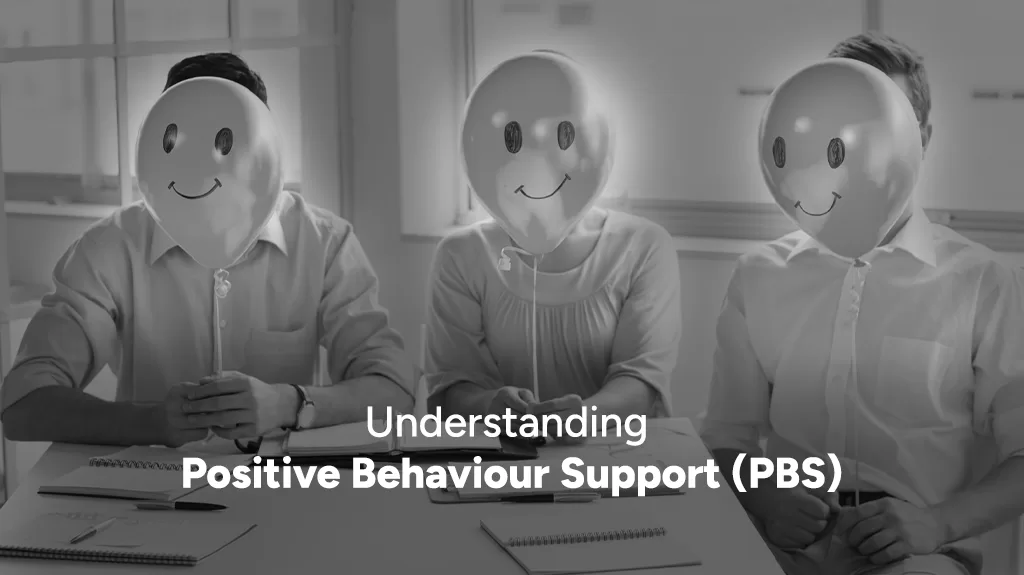
Positive Behaviour Support (PBS) is more than just a method for managing challenging behaviours; it is a holistic approach that focuses on enhancing the quality of life for individuals by fostering positive change.
PBS is grounded in a deep understanding of why certain behaviours occur and uses this understanding to create strategies that encourage positive behaviours while reducing negative ones.
This blog will explore what PBS is, its core principles, and how it benefits individuals and their families.
What is Positive Behaviour Support?
PBS is an evidence-based, person-centred framework that aims to improve an individual’s quality of life by identifying the root causes of challenging behaviours and addressing them through positive, proactive strategies.
Understanding PBS is easier when it is connected to Positive Behaviour Support planning, where strategies are shaped around the participant’s needs, goals and daily routines.
Rather than using punishment or negative reinforcement, PBS emphasises positive reinforcement and skill-building to encourage desirable behaviours.
PBS emerged in the late 20th century as a response to the limitations of traditional behavioural management techniques, which often relied on punishment.
It was developed from the principles of applied behaviour analysis (ABA) but incorporates a broader, more holistic perspective that includes emotional, social, and environmental factors.
Core Principles of PBS:
Person-Centred Approach: Every PBS plan is tailored to the individual’s unique needs, preferences, and circumstances.
Proactive Strategies:
PBS focuses on preventing challenging behaviours before they occur by addressing the underlying causes.
Positive Reinforcement:
Desirable behaviours are encouraged through rewards and recognition, promoting long-term behavioural change.
Collaboration: Successful PBS requires the active involvement of families, carers, and a multidisciplinary team of professionals.
Focus on Quality of Life:
The ultimate goal of PBS is to improve the individual’s overall well-being, including their emotional, social, and physical health.
For younger children, NDIS for children and young people may help families understand early intervention, developmental support and practical strategies in everyday settings.
The Process of Implementing PBS
Step 1
Assessment and Understanding The first step in PBS is conducting a thorough assessment to understand the individual’s needs, strengths, and the factors contributing to challenging behaviours.
This typically involves a Functional Behaviour Assessment (FBA), which will be discussed in more detail in a subsequent blog.
The assessment phase is crucial as it provides the foundation for creating an effective PBS plan.
Step 2
Developing a Personalised PBS Plan Once the assessment is complete, a personalised PBS plan is developed.
This plan includes specific goals, strategies for achieving those goals, and methods for monitoring progress.
The plan should be flexible, allowing for adjustments as the individual’s needs change over time.
Step 3
Implementation of the Plan The PBS plan is then implemented across all settings in the individual’s life, including home, school, and community environments.
This requires collaboration between family members, carers, educators, and other professionals to ensure consistency and effectiveness.
Step 4
Monitoring and Evaluation Regular monitoring and evaluation are essential to the success of a PBS plan.
This involves tracking the individual’s progress towards their goals, making adjustments to the plan as needed, and ensuring that the strategies being used are effective in promoting positive change.
Benefits of Positive Behaviour Support
PBS offers a wide range of benefits that significantly enhance the lives of individuals and their families. These benefits include:
Improved Communication Skills
PBS places a strong emphasis on communication, helping individuals develop both verbal and non-verbal communication skills.
This is particularly important for individuals who struggle to express their needs and emotions, as effective communication can greatly reduce frustration and improve relationships.
Reduction in Challenging Behaviours
By understanding the root causes of challenging behaviours and addressing them proactively, PBS can lead to a significant reduction in these behaviours.
This not only improves the individual’s quality of life but also reduces stress and strain on families and carers.
Enhanced Emotional Well-being
Positive Behaviour Support in Sydney promotes positive emotional experiences by encouraging desirable behaviours and reducing negative ones.
This can lead to improved self-esteem, greater independence, and a more positive outlook on life.
Increased Independence
One of the key goals of PBS is to empower individuals to manage their behaviours and interactions, leading to increased independence in daily activities.
Over time, this can result in greater self-confidence and the ability to engage more fully in community life.
Strengthened Family Relationships
By involving families in the PBS process, relationships within the family are often strengthened.
Families learn to understand and support their loved one more effectively, leading to a more harmonious home environment.
Case Studies: PBS in Action
Case Study 1
A Child with Autism Spectrum Disorder (ASD) John, a 7-year-old boy with ASD, exhibited challenging behaviours such as frequent tantrums and aggression towards his peers.
Through a PBS plan that focused on improving his communication skills and understanding the triggers of his behaviour, John’s tantrums were significantly reduced, and he began to engage more positively with his peers.
Case Study 2
An Adult with Intellectual Disabilities Sarah, a 25-year-old woman with intellectual disabilities, struggled with social interactions and often felt isolated.
A PBS plan was implemented that included social skills training and positive reinforcement for engaging in social activities.
Over time, Sarah became more confident and started participating in community events, greatly improving her quality of life.
Understanding Positive Behaviour Support helps participants, families and support teams recognise how person-centred strategies can improve daily life, including enhancing communication skills through Positive Behaviour Support to support clearer choices, needs and emotions.
Challenges and Considerations in PBS
Consistency Across Environments
One of the challenges of PBS is ensuring that the strategies are consistently applied across all environments where the individual spends time.
This requires effective communication and collaboration between everyone involved in the individual’s care.
Adapting to Changing Needs
As the individual grows and their circumstances change, the PBS plan must be adapted to continue meeting their needs effectively.
This requires ongoing assessment and flexibility from all parties involved.
For participants needing practical behaviour support, positive behaviour therapy can help build safer routines, improve communication and support positive daily participation.
Training and Support for Families and Carers
Families and carers play a critical role in the success of PBS, but they often need training and support to implement the strategies effectively.
Providing this support is essential to ensuring the long-term success of the PBS plan.
“Positive Behaviour Support is not just about managing behaviour; it’s about empowering individuals to lead fulfilling lives.” – Affective Care