
It’s one of the most common questions families ask us: “My child has ADHD, can we get NDIS funding?”
The honest answer is: rarely on its own, but often in combination. Understanding why makes all the difference between a frustrating application and a successful one.
This guide explains how the NDIS treats ADHD in 2026, when funding is realistic, and what to do if ADHD is only part of the picture.
The Short Answer: Is ADHD Covered by the NDIS?
ADHD is not on the NDIS access lists that fast-track eligibility.
That doesn’t mean people with ADHD are excluded, it means eligibility is assessed against the standard disability requirements: a permanent impairment that substantially reduces your capacity in areas like communication, social interaction, learning, self-care or self-management.
For most people whose ADHD is well managed with treatment, those criteria won’t be met. For people with severe ADHD, or ADHD alongside other conditions, they often can be.
When ADHD Can Open the Door to NDIS Support
ADHD most commonly supports a successful application when it co-occurs with another condition, such as:
- Autism: The most common pairing. If autism is the primary diagnosis, ADHD strengthens the picture of functional impact. Start with our full guide to autism and the NDIS.
- Intellectual disability or global developmental delay
- Learning disability
- Significant psychosocial disability where mental health conditions substantially and persistently affect daily functioning. Our psychosocial recovery coaching team works with participants in exactly this situation.
The NDIS assesses the combined functional impact of all conditions together, not each label in isolation.
The 2026 reform direction reinforces this: eligibility is increasingly about functional capacity, not which list a diagnosis appears on.
How the NDIS Weighs ADHD: Permanence, Treatment and Function
Three tests decide most ADHD-related applications, and it helps to understand each honestly:
Permanence
The impairment must be permanent, or likely to be. ADHD itself is lifelong, but the NDIS asks a sharper question: is the functional impairment permanent, or does treatment substantially resolve it?
This is where most ADHD-only applications founder.
Despite Treatment
The NDIS expects applicants to have pursued available, evidence-based treatment.
Functional impairment that persists despite appropriate medication and therapy is a very different application from one where treatment hasn’t been tried.
Your evidence should say so explicitly, “symptoms remain functionally significant despite optimised treatment” is a sentence assessors look for.
Substantially reduced functional capacity
Not “finds things harder”, substantially reduced, in at least one core domain (communication, social interaction, learning, mobility, self-care, self-management), to the point of usually requiring support from others.
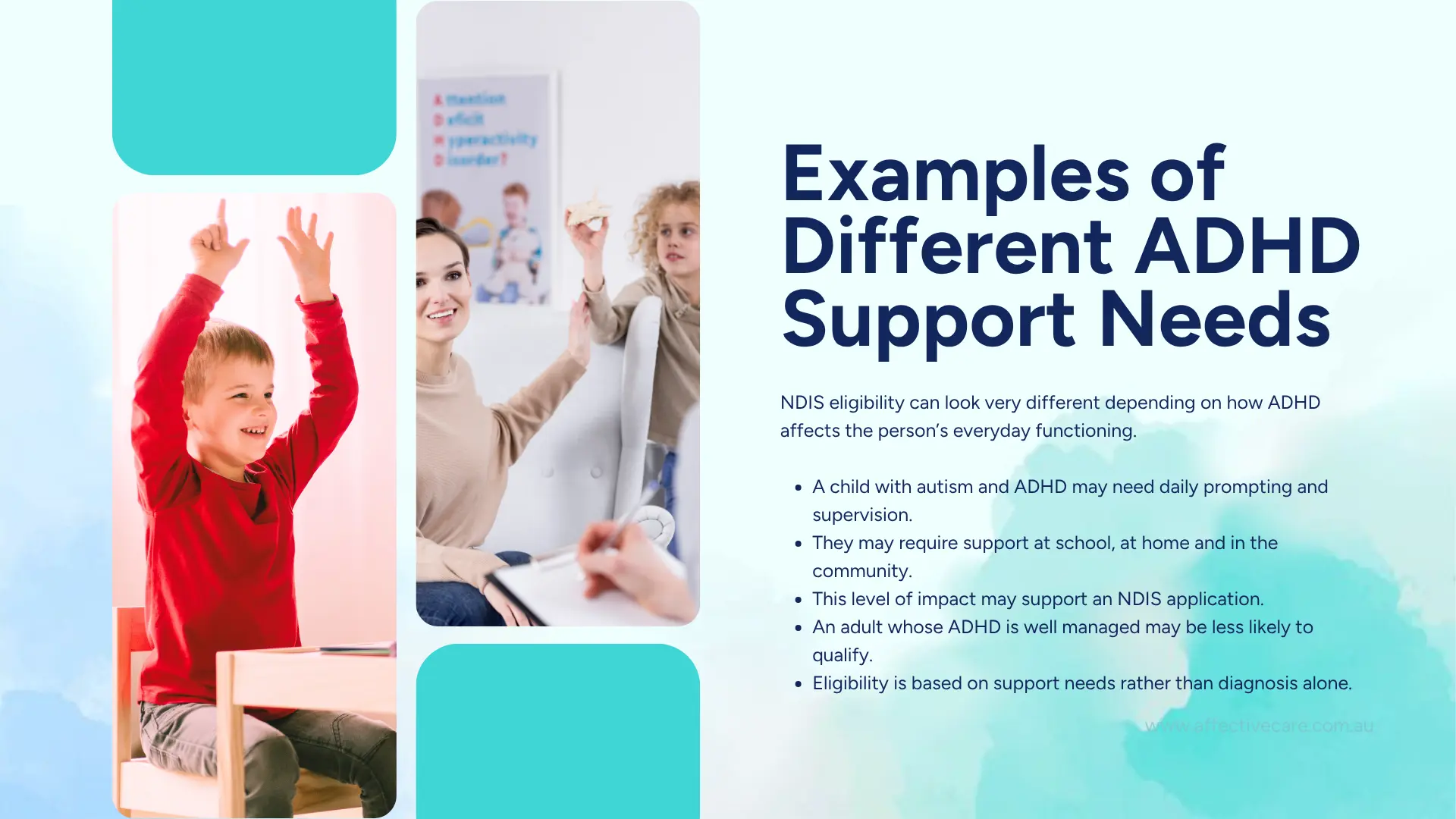
Two Illustrative Composites Show Where The Line Tends to Fall
Jack, 9 has autism (Level 2) with co-occurring ADHD. He needs prompting and hands-on help through every morning routine, can’t yet safely be in the community unsupervised, and his school day depends on adult support.
Combined functional impact across self-care, social interaction and learning is substantial and well documented. Realistic NDIS pathway.
Sarah, 34 has ADHD diagnosed in adulthood. Medication has been genuinely transformative; she works full-time and lives independently, though executive functioning at home takes real effort.
Her impairment is real, but not “substantial” in NDIS terms, and treatment is effective.
NDIS unlikely; better served through Medicare mental health supports, workplace adjustments and private coaching.
Most real situations sit between these poles, which is exactly why honest, well-framed functional evidence matters more than optimism or pessimism about your chances.
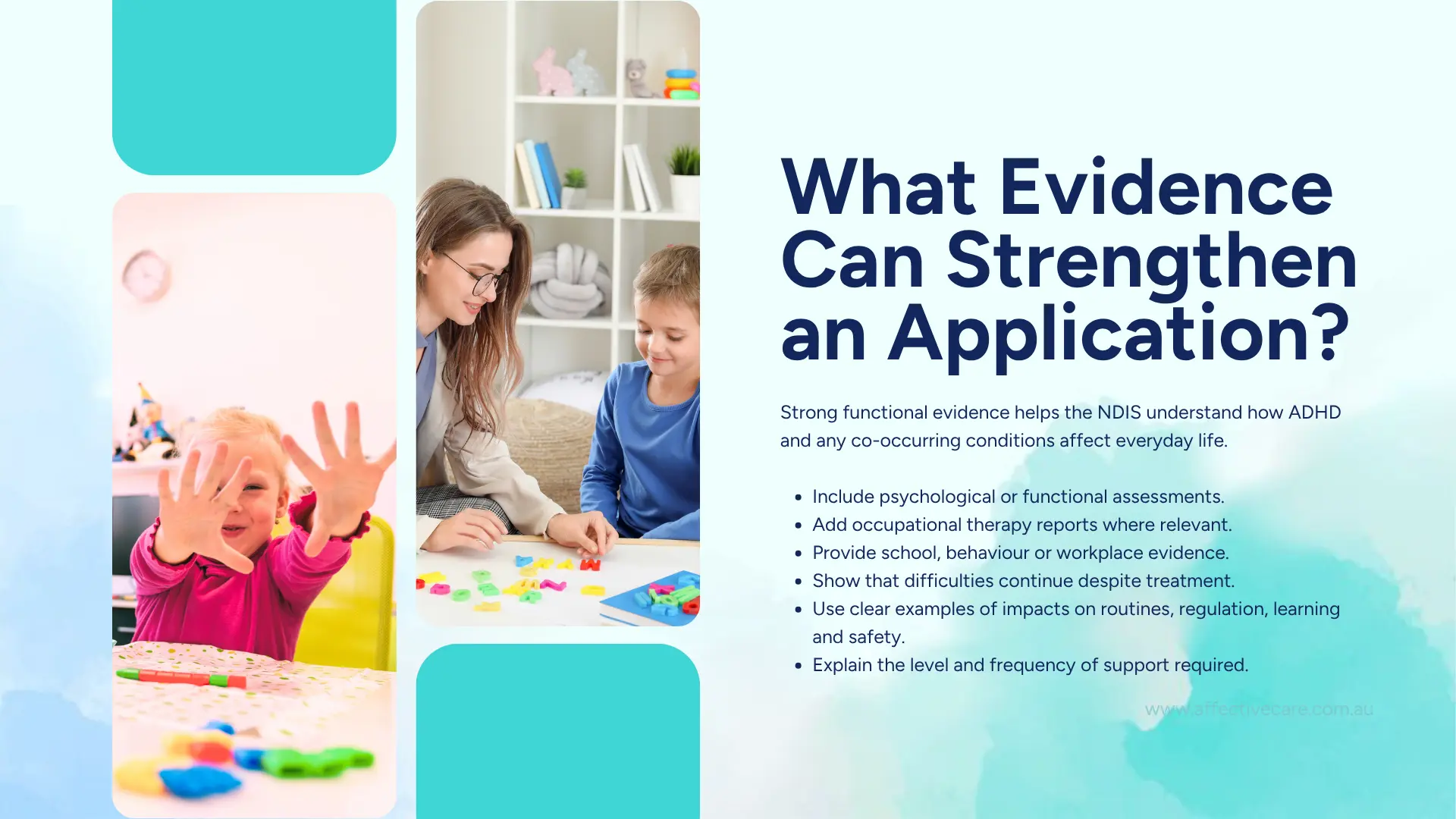
What Evidence Makes The Difference
A diagnosis letter alone is not enough. Access decisions rely on functional evidence, reports that clearly describe how ADHD (and any co-occurring conditions) affect everyday life despite treatment. Strong applications typically include:
- A psychological assessment describing cognitive and functional impact, see what NDIS psychological assessments include
- Reports from occupational therapists or other allied health professionals describing daily living impact
- Evidence that impairment persists despite medication or other treatment
- School reports, behaviour records, or workplace evidence where relevant
Our plain-English explainer on NDIS evidence and reports covers what assessors look for, and the free Which Report Do I Need? guide helps you work out which assessments to organise first.
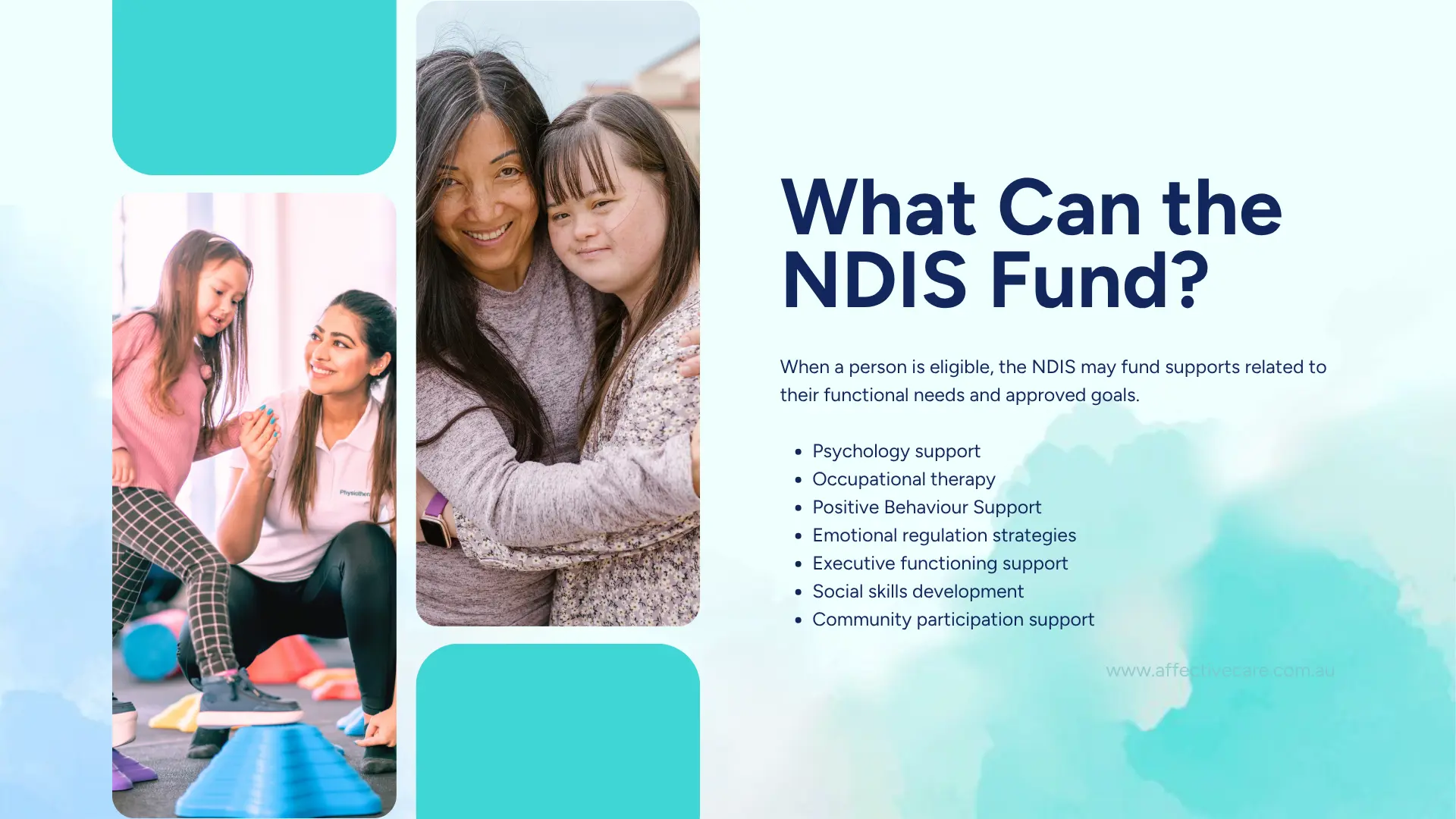
What the NDIS can Fund if You’re Eligible
Where ADHD contributes to NDIS eligibility, funded supports are tailored to goals and may include:
- Capacity building supports; social skills, emotional regulation, planning and self-management
- Psychology services; including telehealth psychology across Australia for busy families or regional participants
- Positive Behaviour Support, practical, person-centred strategies for emotional dysregulation and behaviours of concern at home and school
- Occupational therapy; executive functioning, routines, sensory strategies and daily living skills
- Social and community participation support
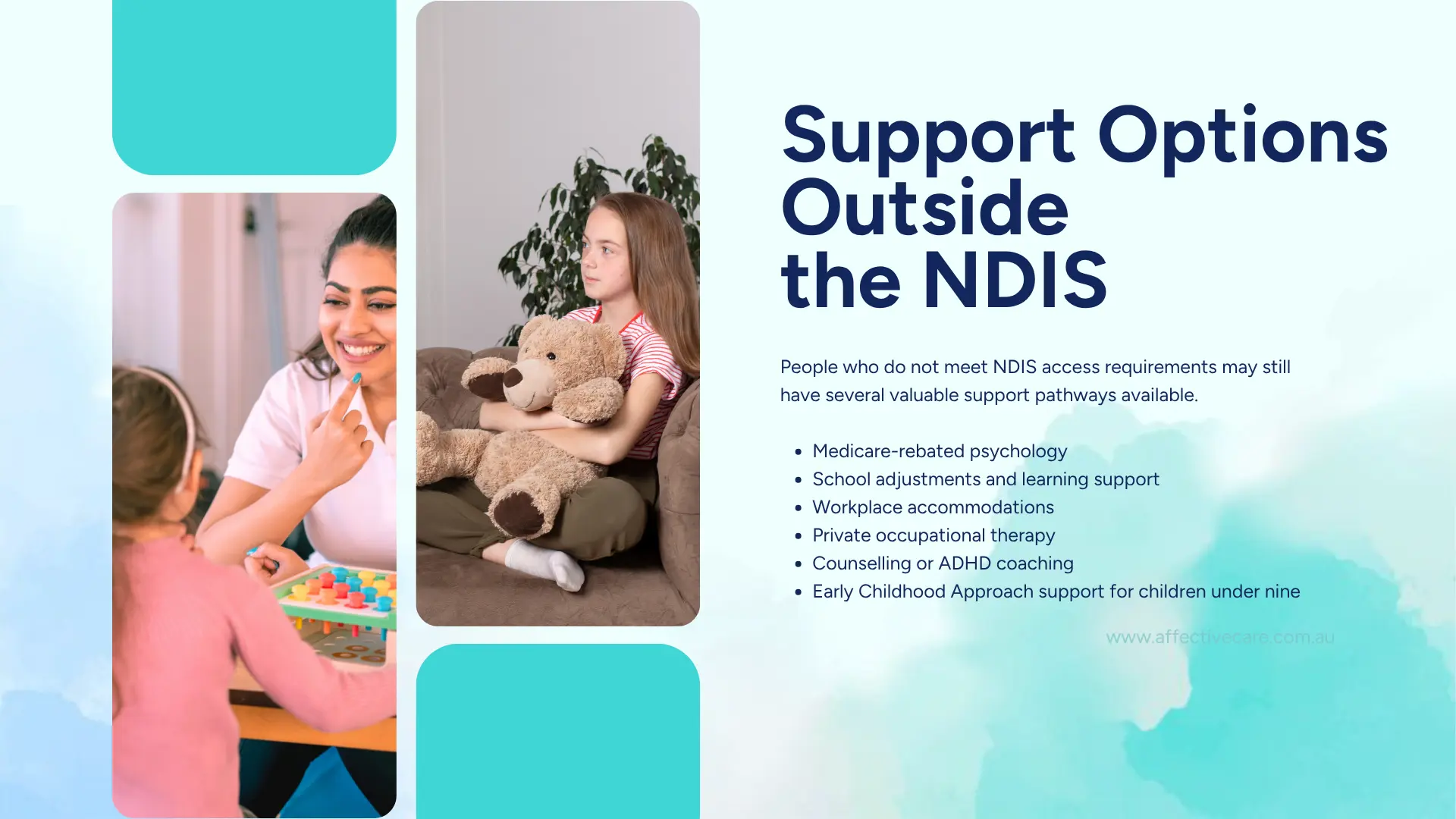
If You’re Not Eligible: Your Options
Many people with ADHD are best supported outside the NDIS and “outside the NDIS” doesn’t mean “without support”:
- GP mental health treatment plans provide Medicare-rebated psychology sessions each year
- Schools must provide reasonable adjustments under disability standards, behaviour plans, learning support, exam provisions regardless of NDIS status
- Workplaces can be asked for reasonable adjustments for diagnosed ADHD
- Private therapy psychology, OT and coaching remains available; our telehealth counselling service works with many non-NDIS clients
And for children under 9, the NDIS Early Childhood Approach can provide support without a formal access decision or even a diagnosis, often the most sensible first step when ADHD is suspected but the picture isn’t yet clear.
Moreover, ADHD is not specifically included on the NDIS access lists.
You can review the conditions outlined under NDIS List A and NDIS List B, while keeping in mind that the 2026 reforms place greater emphasis on functional impact and assessment evidence rather than diagnosis lists alone.
If you’re unsure which path fits, our Service Matching Quiz takes two minutes, or you can talk to our team about what’s realistic for your situation.