




Three budgets, unfamiliar category names, different flexibility rules and real money that only helps if you know how to use it.
Here’s the plain-English version. (Completely new to the scheme? Start with our guide to the NDIS first.)
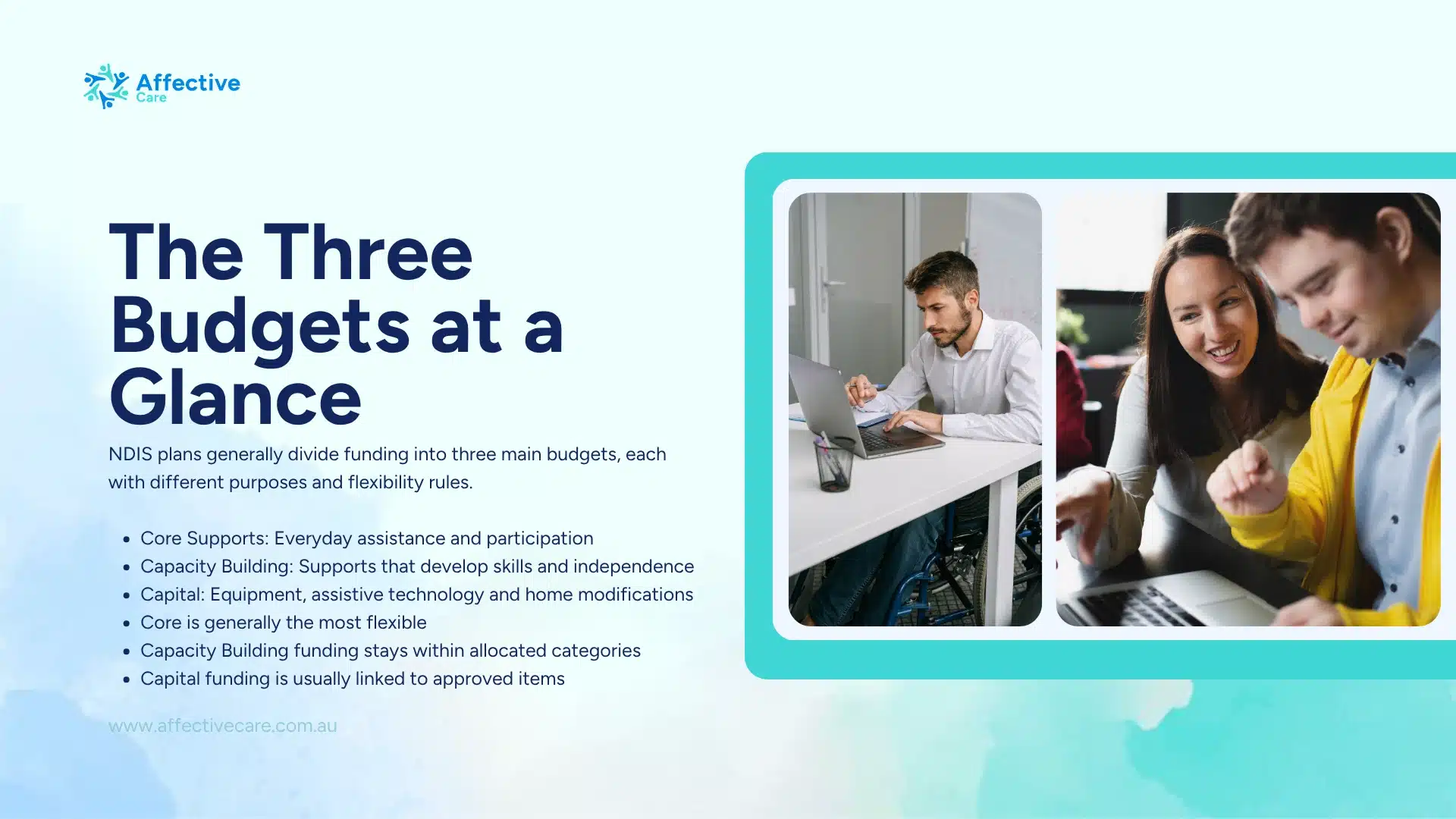
The Three Budgets at a Glance
| Budget | What it’s for | Flexibility |
|---|---|---|
| Core Supports | Everyday assistance and participation | Most flexible; funds generally move between Core categories |
| Capacity Building | Building skills and independence | Fixed to categories can’t move between them |
| Capital | Equipment, technology and home modifications | Least flexible; tied to specific approved items |
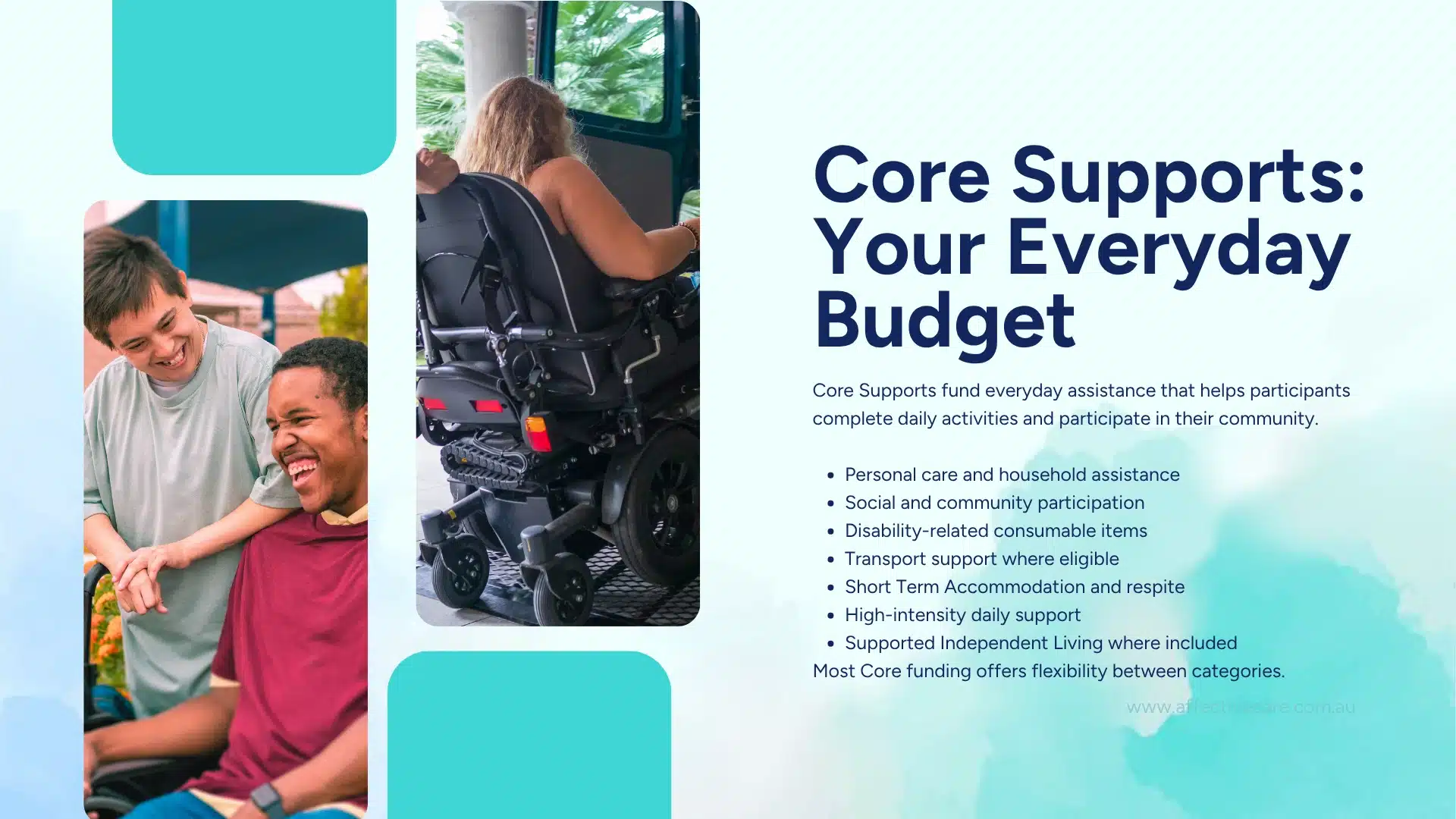
Core Supports: Your Everyday Budget
Core funds day-to-day support:
- Assistance with daily life; Personal care, cleaning and domestic assistance, and Supported Independent Living for those with 24/7 support needs
- Assistance with social and community participation; supported outings, groups and community access
- Consumables; everyday disability-related items
- Transport; where disability limits your use of public transport
It is deliberately flexible: within most plans, funds can shift between Core categories as life changes. It’s also where respite and short term accommodation and high intensity supports live.
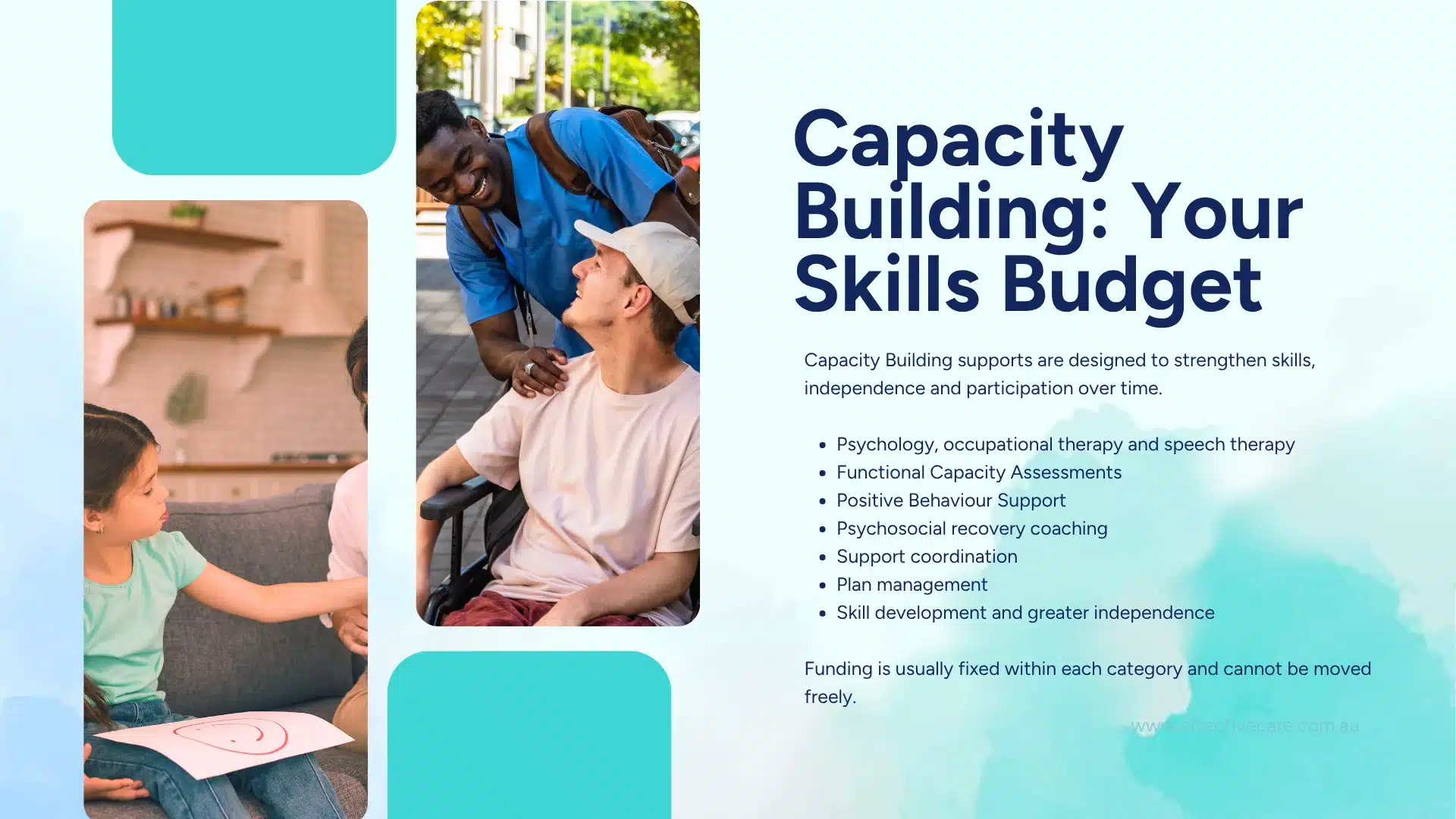
Capacity Building: Your Skills Budget
Capacity Building is the investment budget supports that build independence so needs reduce over time. Key categories include:
- Improved daily living most therapy sits here: psychology, occupational therapy, speech therapy, and assessments like FCAs
- Improved relationships Positive behaviour support, including behaviour support plans
- Improved health and wellbeing / Improved mental health including psychosocial recovery coaching
- Support coordination help navigating and implementing your plan (changing under the 2026 reforms; see what’s changing for support coordinators)
- Improved life choices; plan management, which lets you use both registered and unregistered providers without doing the bookkeeping yourself
Unlike Core, Capacity Building funds are locked to their categories; psychology money can’t become behaviour support money.
That’s why getting the right categories funded at planning time matters so much; our Goals, Supports & Next Steps Workbook helps you connect goals to the right categories before your meeting.
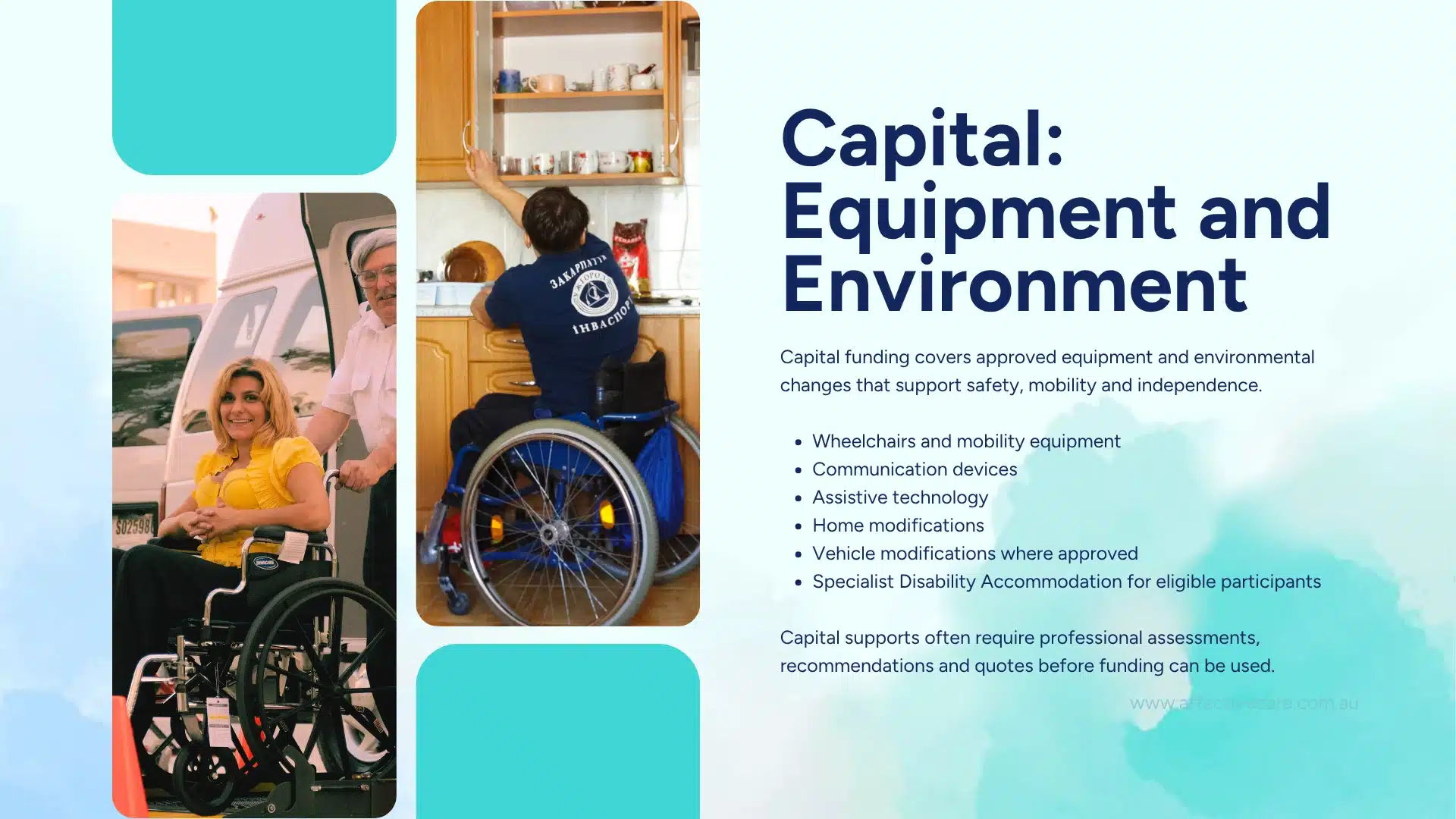
Capital: Equipment and Environment
Capital covers assistive technology (wheelchairs, communication devices), home modifications, and for the small eligible group; Specialist Disability Accommodation (SIL vs SDA explained).
The Capital items generally need quotes and assessments usually an OT report and funds can’t be spent on anything else.
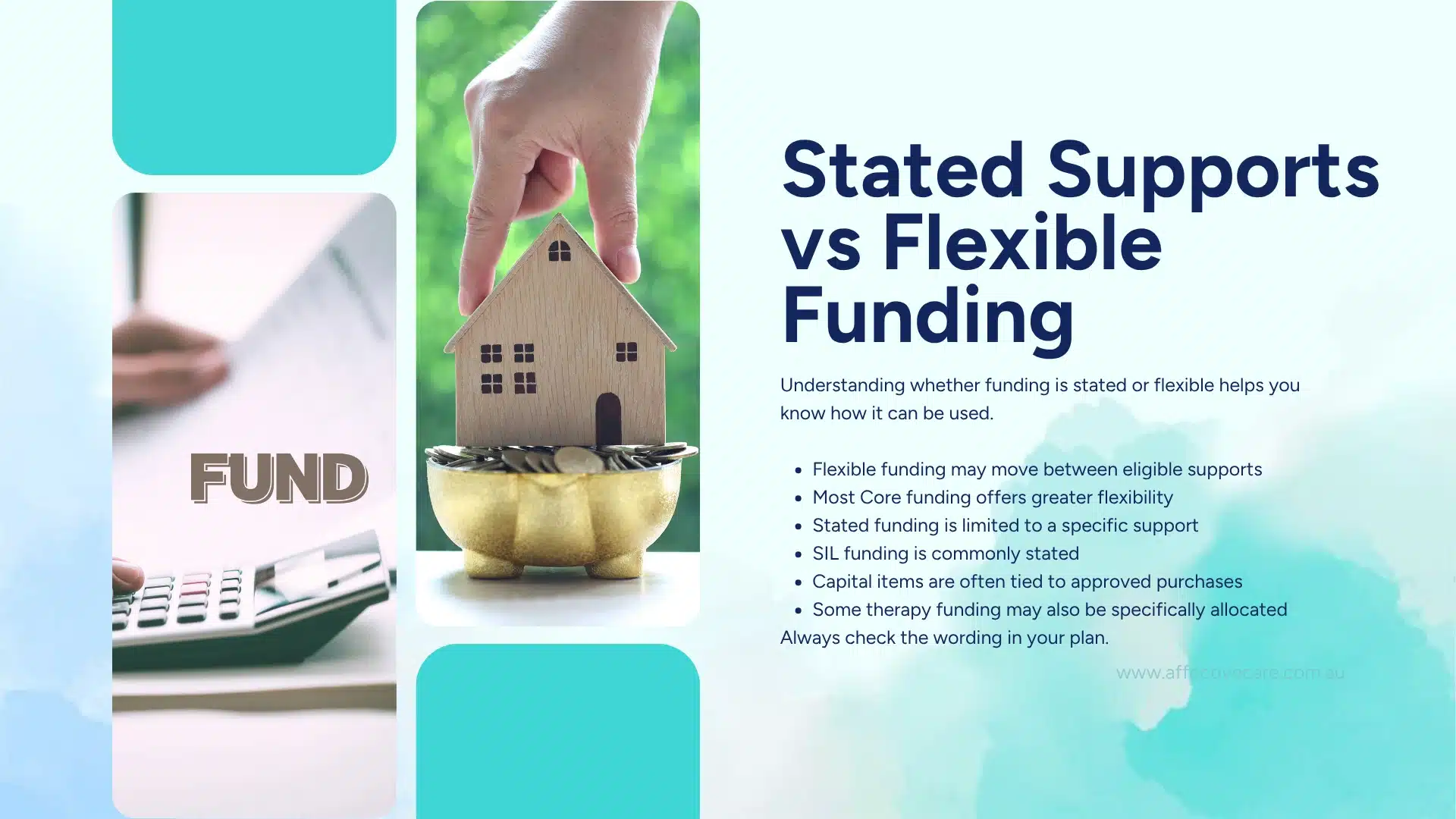
Stated Supports vs Flexible Funding
One more distinction that trips people up, within the budgets:
- Flexible funding can be used across supports in its budget as your needs shift, most of Core works this way.
- Stated supports are locked to a specific purpose, provider type or item, and can’t be redirected. Supported Independent Living funding is a classic stated support; so are many Capital items and some therapy allocations.
Why it matters: two plans can contain identical totals and behave completely differently.
Before you build a support schedule around a number, check how it’s described in the plan flexible or stated because that word determines your room to move.
If reading your plan feels like decoding, this is precisely the translation work a plan manager or (for now) support coordinator does and it’s a fair thing to ask your planner to walk you through at the meeting itself.

Reading Your New Plan in Ten Minutes
When a plan lands, resist the urge to jump straight to the total. Read it in this order:
- Goals first. Everything else hangs off these and if a goal you discussed is missing, flag it immediately, because spending against unlisted goals is where audit problems start.
- Budget by budget. For each: what’s funded, is it flexible or stated, and does anything obvious appear missing against what was discussed?
- Match against your current supports. Will existing therapy schedules fit the funded amounts? Any category that funded less than you currently use needs a conversation now, not at month nine.
- Diarise two dates: a mid-plan self-check (“are we on spending track?”) and an evidence-gathering start date about four months before reassessment the Plan Review Evidence Checklist makes that second one painless.
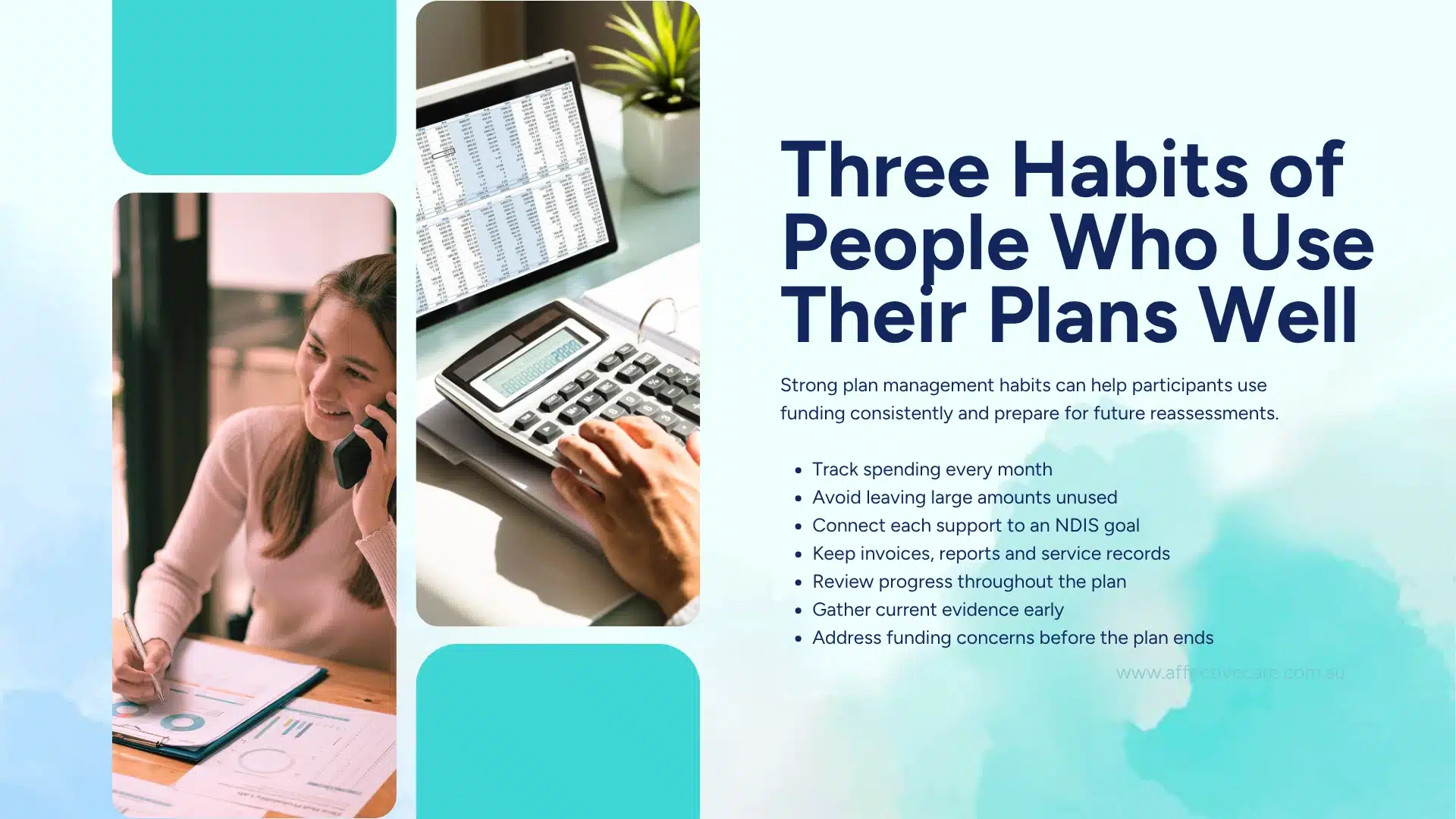
Three Habits of People Who Use Their Plans Well
- They spend steadily. Underspending is the silent plan-killer — unused funds are the strongest argument for a smaller plan next time. Track monthly, not annually; a plan manager makes this automatic.
- They match spending to goals. Every claim should trace to a plan goal. Keep the paper trail with the NDIS Record Keeping Guide.
- They prepare for reviews early. Current evidence, organised the Plan Review Evidence Checklist is the 15-minute version of a good habit.