

What is NDIS Housing Support?
Everyone deserves a home where they feel safe, comfortable, and supported.
For people living with disability, having the right living setup can make a huge difference. It is not just about physical space, but also about emotional wellbeing.
NDIS housing support can mean help with finding a place to live, getting support in your home, or making changes so your space works better for you.
It is not a one-size-fits-all approach but about finding what suits you best.
In this guide, we will gently walk you through what types of support are available, who they are for, and how you can get started.
Whether you are figuring things out for yourself or supporting someone you care about, we hope this helps you feel confident about your options.
Am I Eligible for NDIS Housing Support?
NDIS housing support is only available to eligible NDIS participants. Basic eligibility criteria include:
- Being a participant of the NDIS
- Having housing goals listed in your plan
- Needing support related to your disability to live independently
You Might be Eligible if
- Your disability impacts your ability to live safely and independently
- Your current housing is unsuitable or unsafe
- You need daily support or home modifications
What Doesn’t Qualify
- General rental assistance
- Buying a house
- Support unrelated to your disability
It is important to note that the initial assessment process can take several weeks, depending on the completeness of your application and the demand in your chosen area.
Understanding how NDIS housing funding works can help clarify what the NDIS may fund, what costs remain your responsibility, and how housing supports are assessed as reasonable and necessary.
It’s crucial to provide all required documentation promptly to avoid delays.
Types of NDIS Housing Support Available
The NDIS housing and accommodation-related supports tailored to different levels of need. These include:
- Specialist Disability Accommodation (SDA): For people with high support needs who require purpose-built homes.
- Supported Independent Living (SIL): Daily support to help participants live as independently as possible.
- Individual Living Options (ILO): Customised support for people wanting greater control over their living setup.
- Home Modifications: Changes to improve safety and accessibility at home.
- Short and Medium-Term Accommodation: Temporary housing options during transitions or respite.
Each support type is designed to meet different goals. Your eligibility and goals will shape which option best fits your plan.
If you are exploring different home and support options, our guide to SIL houses and how these homes support daily living, safety, and independence can help you understand the next step.
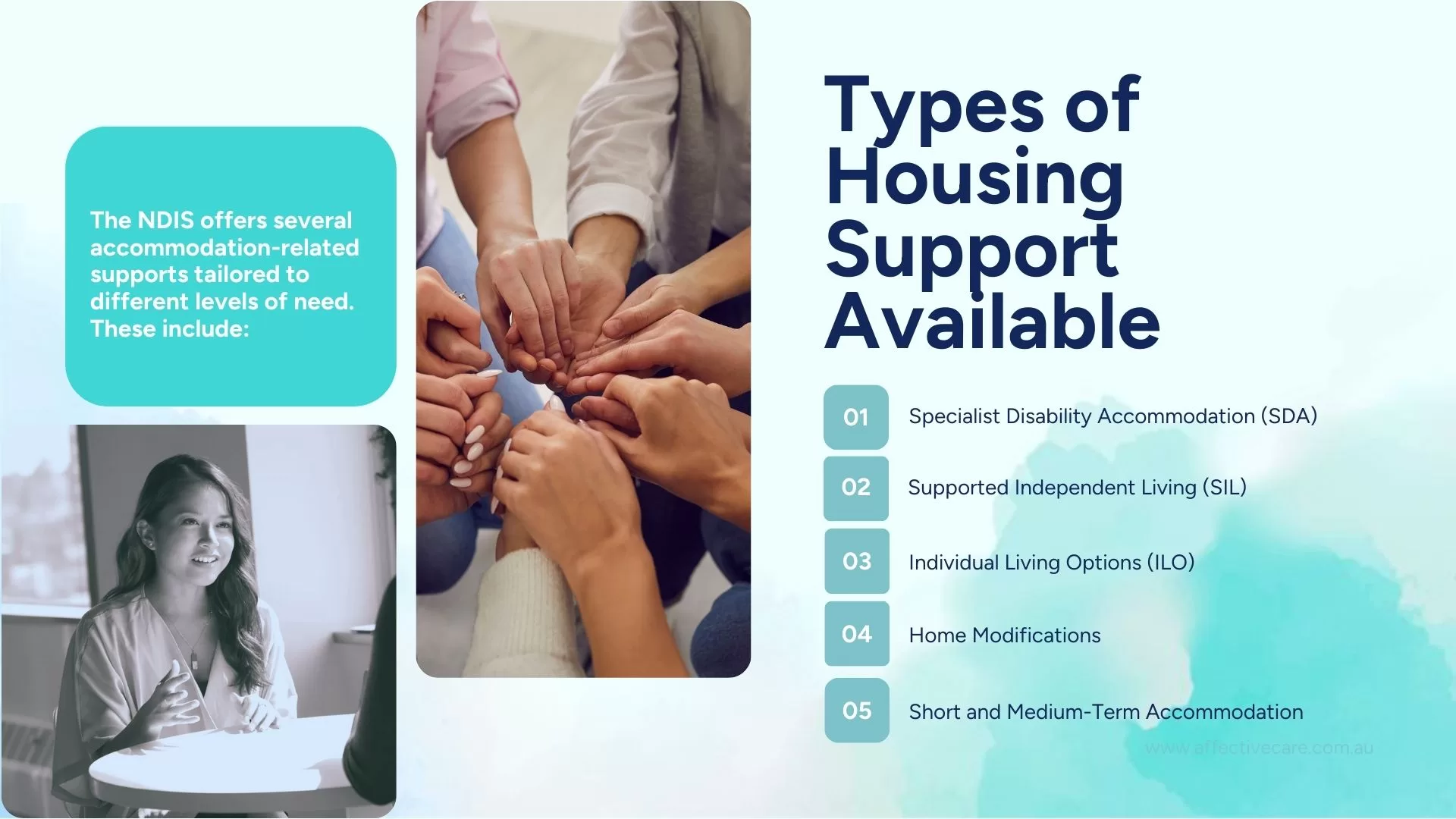
Specialist Disability Accommodation (SDA)
For participants with higher support needs, understanding SDA under the NDIS can provide clarity around how specialist housing works, who may be eligible, and what SDA funding does and does not cover.
Having clear information can help you decide whether SDA is the right option for your safety, independence, and long-term wellbeing.
SDA is designed for people with extreme functional impairment or very high support needs. It provides housing that is specially designed to support independence, safety, and community participation.
Specialist Disability Accommodations include villas, townhouses, apartments or houses that are designed to support mobility, behaviour support, or complex care.
Who Qualifies for SDA?
To be eligible for SDA, you must:
- Have an extreme functional impairment or very high support needs
- Be assessed by the NDIA as requiring SDA
- Have SDA written into your NDIS plan
How SDA Funding Works
SDA funding helps pay for the cost of the home itself, including the building and its specialised features. It does not include support services such as daily personal care or help with getting out into the community.
These supports are funded separately through other parts of your NDIS plan.
The funding is paid directly to the housing provider who owns or manages the property. As a participant, you are asked to pay a reasonable rent contribution.
This is usually 25 percent of your Disability Support Pension along with any Commonwealth Rent Assistance you receive. You are not required to pay a bond, and you do not need to cover maintenance or repair costs.
How to Apply for SDA
Applying for SDA involves more than just filling out a form. It requires clear documentation showing how your current housing does not meet your support needs.
Your support coordinator will help guide you through the steps.
Together, you will:
- Discuss your housing goals and current living situation
- Gather reports from professionals such as occupational therapists or psychologists
- Complete the Home and Living Supports Request form
- Submit your application to the NDIA for assessment
Supported Independent Living (SIL)
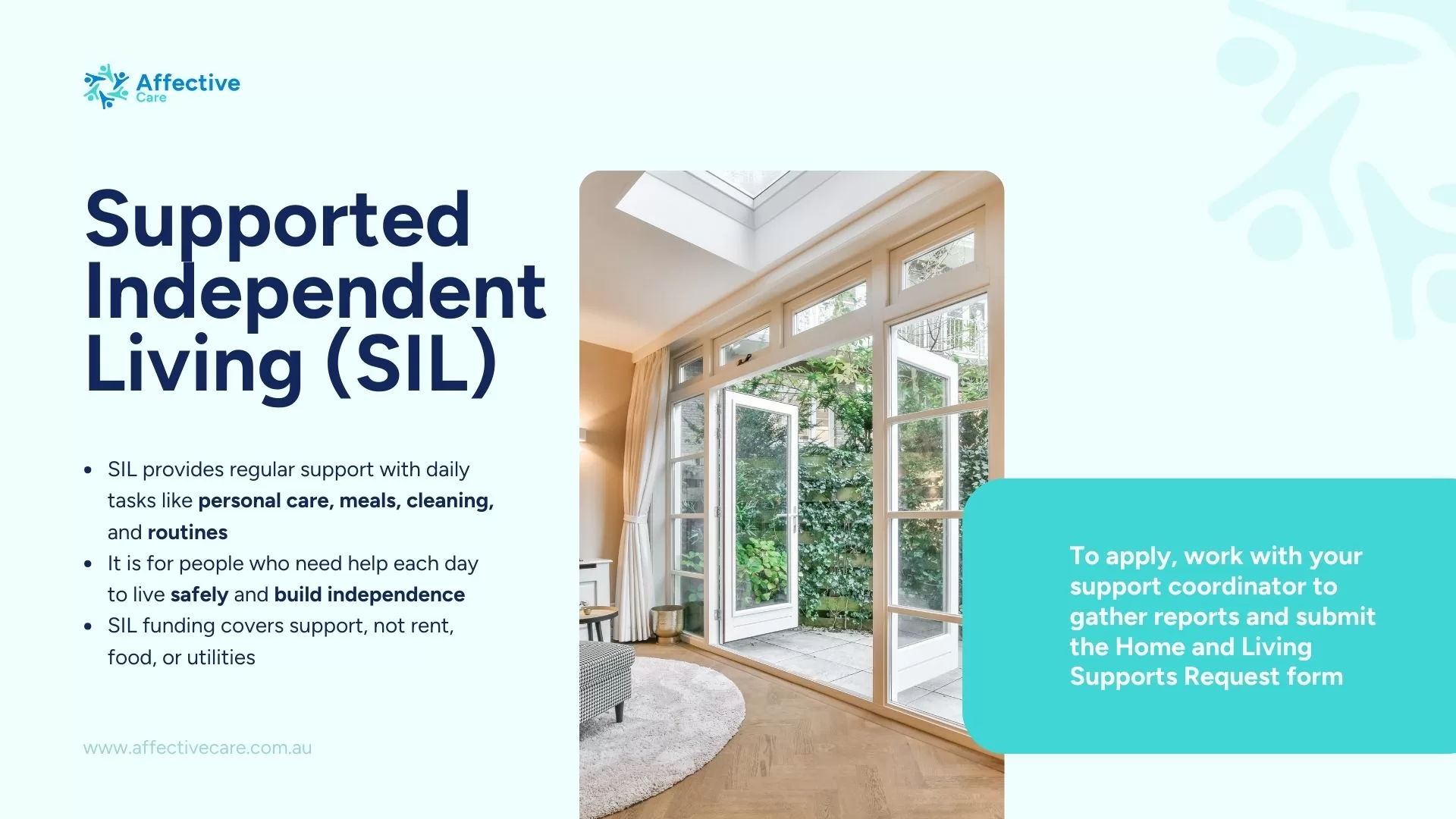
Supported Independent Living, or SIL, is a type of help the NDIS provides for people who need regular support to manage daily life.
It is one of the most common forms of housing support under the scheme and is designed to help participants live as independently as they can while still receiving the assistance they need.
The range of SIL accommodation options includes shared homes and individual living arrangements designed to support independence with daily assistance.
Supported Independent Living housing may involve shared living with other participants or individual support in a home of your choice.
A SIL accomodation in Sydney can offer a supportive living environment with daily assistance, helping people living with disability build independence while feeling safe and settled at home.
SIL includes support with everyday tasks like:
- Cooking and preparing meals
- Personal care such as showering and dressing
- Cleaning and keeping the home tidy
- Taking medication and following routines
- Learning and practising independent living skills
Who is SIL Designed For?
Participants who:
- Require help throughout the day
- Live in SDA or private housing
- Need consistent support for daily activities
SIL does not include rent, food or utilities, but covers support worker hours and planning.
Many participants and families have questions about housing costs, which is why NDIS SIL rent is an important topic when considering Supported Independent Living.
While SIL funding covers daily support, rent and household expenses are usually paid separately, and understanding these responsibilities can help you plan with confidence.
How to Apply for SIL
Similarly to when applying for an SDA, Supported Independent Living under NDIS requires strong evidence to show how daily support helps you live safely and build your independence.
Moreover, for participants considering location-based housing support, SIL in Canberra and Kambah may offer a calm and practical setting for Supported Independent Living, depending on the person’s goals, support needs and preferences.
Your support coordinator will help you through the process from start to finish.
Together, you will:
- Talk through your current living situation and goals for independence
- Collect supporting documents from professionals such as occupational therapists or psychologists
- Complete the Home and Living Supports Request form
- Submit the application and supporting evidence to the NDIA
Differences Between SIL Vs. SDA
Understanding the difference between SIL and SDA can help clarify whether you need daily living support, specialised housing, or a combination of both under your NDIS plan.
While Supported Independent Living focuses on the support provided in the home, Specialist Disability Accommodation refers to the purpose-built housing designed for people with higher support needs.
Key Differences Between SIL and SDA
-
What it is
SIL (Supported Independent Living) is funding for daily support provided in the home.
SDA (Specialist Disability Accommodation) is funding for the physical housing designed for people with higher support needs. -
What the funding covers
SIL covers support worker assistance with daily tasks such as personal care, meals, and routines.
SDA covers the cost of the specialised building and its features, not daily support. -
Who it is for
SIL suits people who need regular or ongoing support to live safely and independently.
SDA is for people with extreme functional impairment or very high support needs. -
Housing type
SIL can be provided in shared homes or individual living arrangements.
SDA includes purpose-built apartments, villas, or houses with accessibility or behavioural design features. -
Costs to the participant
SIL does not include rent, utilities, or food.
SDA requires a reasonable rent contribution, usually linked to the Disability Support Pension. -
Can they be used together?
Yes, many participants live in SDA housing while receiving SIL support for daily living needs.
Individual Living Options (ILO)
Individual Living Options, or ILO, is a type of support that gives people more choice over how and where they live.
Instead of moving into a fixed model like group housing, Individual Living Options allow you to design a living arrangement that reflects your lifestyle, goals, and the people around you.
It is especially helpful for people who want more independence while still having some support in place.
ILO can involve living alone, with a friend, or with a host. The supports are flexible and designed to help you live safely, confidently, and in a way that feels right for you.
ILO can support with
- Setting up your chosen living arrangement
- Regular check-ins or visiting support
- Building skills for daily life
- Strengthening natural support networks
Who is ILO Designed for?
ILO does not include rent, mortgage costs, or 24/7 support, but focuses on building a support plan that suits your needs.
Individual Learning Options are best for participants who:
- Want more independence and choice in how they live
- Do not need full-time or overnight support
- Have a strong informal support network, such as family or friends
How to Apply for Individual Living Options
Just like SIL and SDA, applying for ILO involves creating a clear plan that shows how your chosen living arrangement will work and why it is the right fit for you.
Your support coordinator will help you throughout the process.
Together, you will:
- Talk about your ideal living situation and support needs
- Work with providers to create an ILO Service Proposal that outlines your goals and supports
- Gather reports or letters from allied health professionals
- Submit your proposal along with a Home and Living Supports Request to the NDIA
A strong ILO application helps demonstrate how the support will promote your wellbeing, independence, and community connection.
If you are comparing shared living and individual support options, our guide to SIL accommodation explains how these arrangements work under the NDIS.
Home Modifications and Assistive Technology
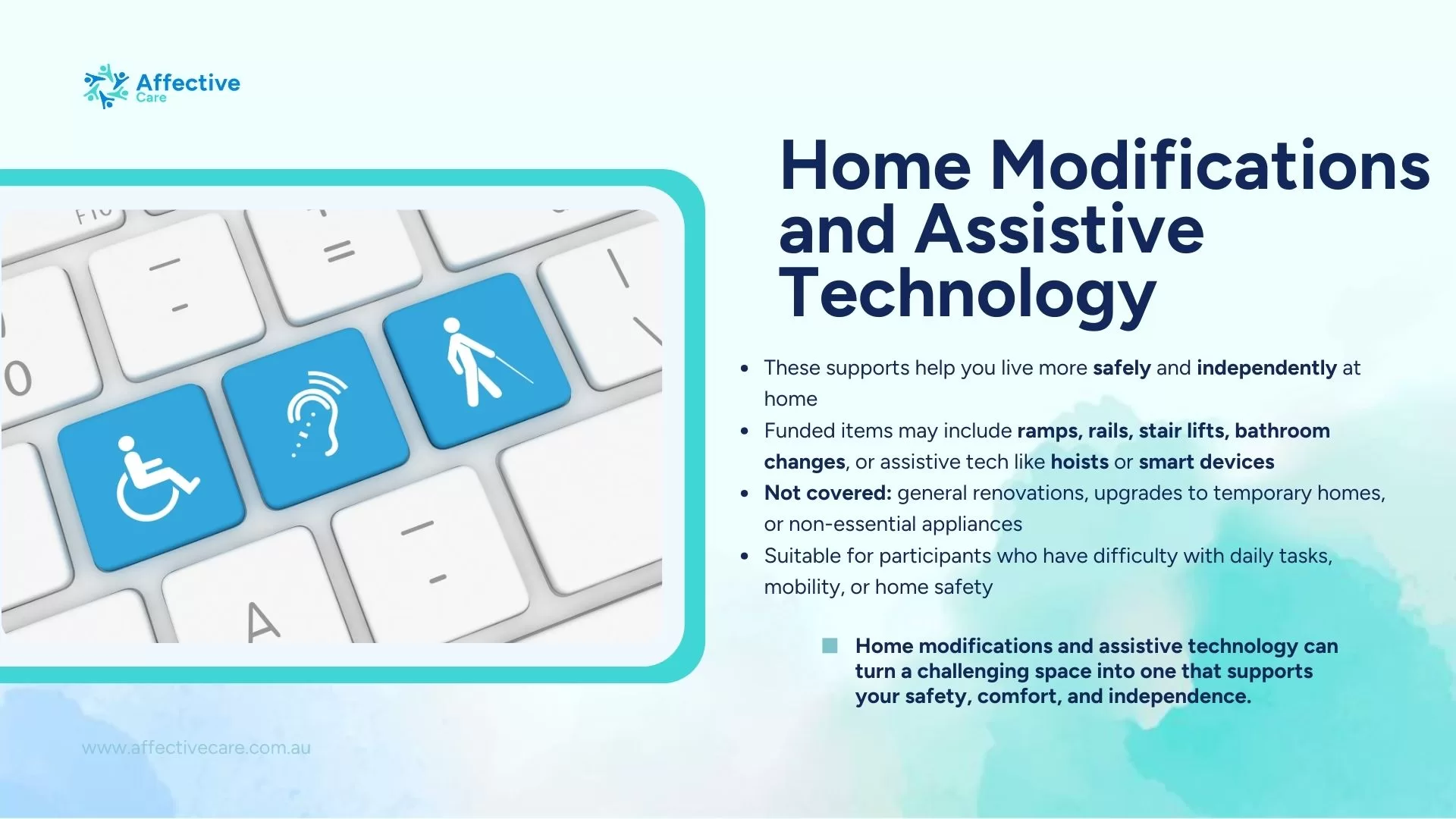
Home modifications and assistive technology are practical supports that can help you live more safely and independently in your own home.
These supports are especially helpful if your current living space makes daily activities difficult or unsafe.
The NDIS can fund changes to your home as well as equipment that supports your mobility, communication, or independence.
What Might be Included
- Installing ramps, grab rails, or stair lifts
- Widening doorways for mobility aids
- Bathroom redesigns for safety and ease of use
- Assistive technologies such as hoists, smart home devices, or voice-activated controls
What is Not Included
- General home renovations that are not related to your disability
- Modifications to homes you plan to leave soon
- Basic household appliances not related to support needs
Who are These Supports For
These supports are intended to help you stay in a home that suits you, for as long as possible.
Home modifications and assistive technology may be available for participants who:
- Have difficulty moving around their home safely
- Need help with daily tasks due to their disability
- Plan to stay in their current home long-term
How to Apply for Home Modifications or Assistive Technology
Applying for these supports involves showing that the changes are necessary for your health, safety, and independence.
A qualified assessor will need to complete an assessment of your home and recommend what modifications or devices are needed.
Together with your support coordinator, you will:
- Discuss the issues you are experiencing in your home
- Arrange an assessment with an occupational therapist or relevant professional
- Collect reports and quotes from builders, suppliers, or equipment providers
- Submit the documentation and request to the NDIA
Short and Medium-Term Accommodation
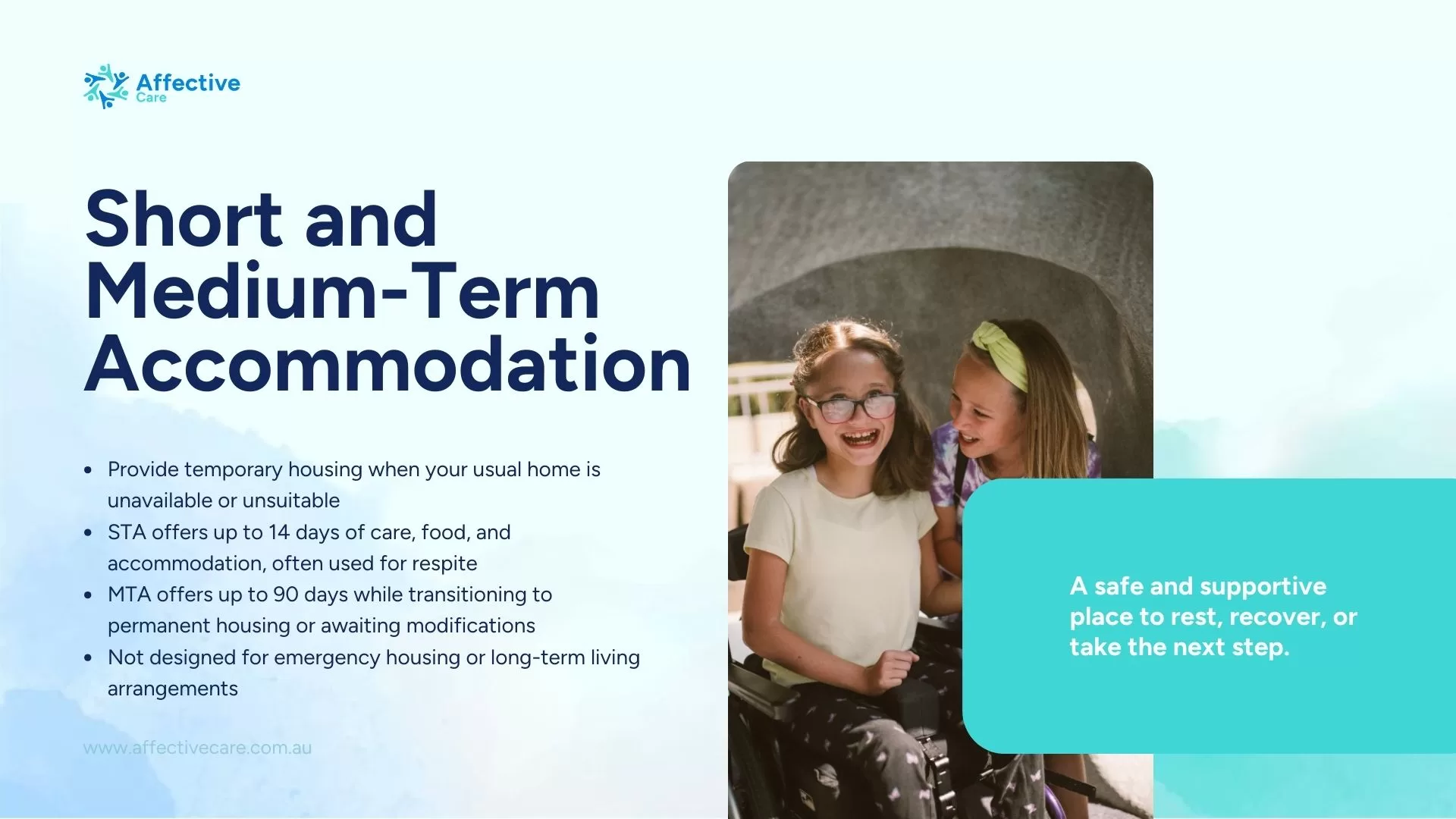
Short and Medium-Term Accommodation (STA and MTA) offer temporary housing solutions when you need a safe place to stay for a short period.
These supports are available through the NDIS when your regular home is not suitable for a time or when you need time away from your usual environment.
They are especially helpful in situations where carers are taking a break, there are transitions between housing or after a hospital stay.
Short-Term Accommodation (STA)
- Covers stays up to 14 days
- Includes personal care, food, and accommodation
- Often used for respite or short breaks
Medium-Term Accommodation (MTA)
- Covers stays up to 90 days
- Helps while waiting for longer-term housing or home modifications
- Must be part of a plan to transition to a permanent living situation
What is Not Included
- Long-term accommodation arrangements
- Emergency housing (this is not a crisis accommodation program)
- Non-disability-related temporary housing
Who are These Supports for
These supports are generally for participants who:
- Are waiting for home modifications, SDA, or permanent housing to be finalised
- Need respite to give informal supports a break
- Are in urgent need of safe and supported housing due to a change in circumstances
How to Apply for Short or Medium Term Accommodation
Applying for temporary accommodation supports involves explaining why you need temporary housing and how it will support your health and transition goals.
Your support coordinator will help guide this process.
Together, you will:
- Identify why temporary accommodation is necessary at this time
- Discuss the goals this support will help you work toward
- Gather any relevant evidence (for example, hospital discharge letters or transition plans
- Submit the request to the NDIA for approval through your plan review or a change of circumstances request
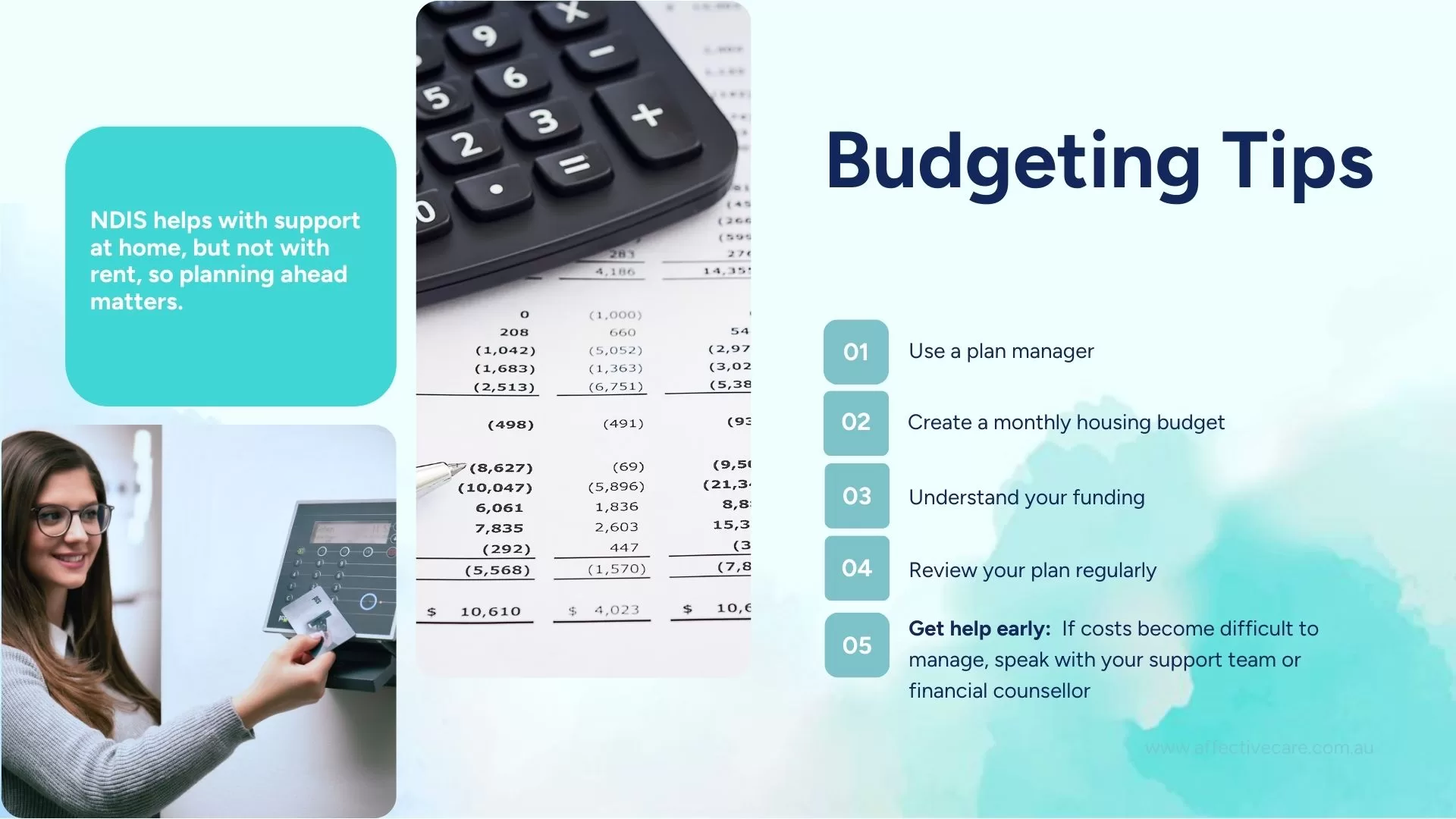
Budgeting Tips
NDIS housing support doesn’t usually cover rent or mortgages. Instead, it funds the daily supports required for safe, suitable living (Supported Independent Living, Individual Living Options), specialist housing (Specialist Disability Accommodation) and accessibility modifications.
Managing your NDIS housing supports also means managing your finances carefully. While the NDIS may fund various types of support, there are still costs you may need to cover on your own.
Understanding your responsibilities and planning ahead can help reduce financial stress and support long-term independence.
Budgeting tips:
- Use a plan manager: They can help you track spending, monitor invoices, and stay within your funding limits.
- Create a monthly housing budget: Include rent, bills, groceries, and other essentials to see where your money is going.
- Understand your funding: Ask your support coordinator or plan manager to explain what is and isn’t covered under your plan.
- Review your plan regularly: Circumstances change. Make sure your supports and budgets still meet your needs.
- Get help early: If costs become difficult to manage, speak with your support coordinator or a financial counsellor.
Common Challenges and Solutions
While NDIS housing support can bring life-changing opportunities, the process can come with a few bumps along the way. Understanding common hurdles can help you prepare with confidence moving forward.
Long Wait Times for SDA Approval
It can take months to hear back from the NDIA, especially if your application needs more evidence.
- Start early and give yourself time to prepare.
- Gather assessments, reports, and letters that explain why housing support is essential.
Not Enough Housing Options Nearby
In some areas, there just aren’t many suitable homes available.
- Consider short-term alternatives like SIL or ILO while you wait.
- Ask your coordinator about nearby or upcoming housing opportunities.
Too Much Paperwork
It’s not always clear what documents you need or who should write them.
- Support coordinators can help you collect the right documents and explain what’s required.
- Occupational therapy or psychosocial assessments can strengthen your application.
Next Steps
NDIS housing support offers a pathway to greater independence, stability, and wellbeing for people living with disability.
From SDA to ILO, and from minor modifications to full-time support, there are many options to suit different needs and goals.
Feeling unsure where to start? You are not alone. At Affective Care, we believe that support should be personal, empowering, and grounded in real connection.
If the housing process feels overwhelming, we are here to walk alongside you.
Let us help you take the next step with clarity and care.
Every person’s housing journey is different, but the right support can make the process feel less overwhelming. With the right team and clear steps, you can take each stage with more confidence.
It may take time, but stable, suitable housing is possible when your needs and goals are properly supported.