




Recent fuel-related pressure across Australia may be adding extra stress for some participants, carers, and families, especially when travel is an important part of everyday support, appointments, work, school, and routines.
At the moment, there are no fuel restrictions in place. However, higher fuel costs, added planning, and uncertainty around travel may still be making daily life feel more difficult for many people.
When transport feels harder, even small changes to routine can create added pressure.
This can be especially important for people who rely on regular appointments, steady schedules, and predictable support.
At Affective Care, we understand that when travel becomes more difficult, support should still feel accessible, reliable, and person-centred.
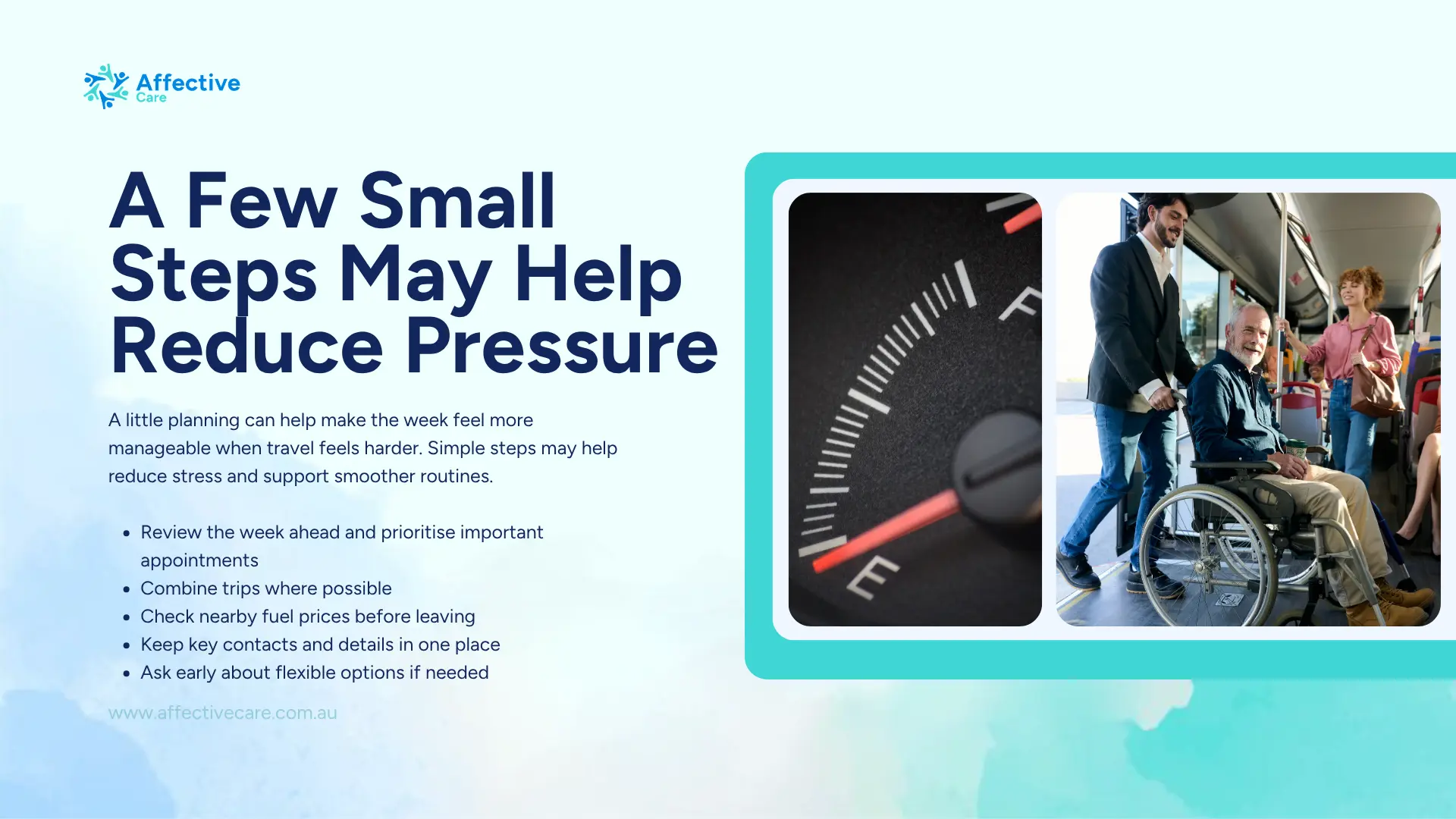
A Few Small Steps May Help Reduce Pressure
During times like this, a little planning can help make the week feel more manageable.
When travel becomes more expensive or less predictable, simple adjustments can help reduce last-minute stress and make daily routines feel steadier.
Some helpful steps may include:
- Reviewing the week ahead and identifying which appointments or outings are most important
- Combining trips where possible to reduce time on the road
- Checking nearby fuel prices before leaving
- Keeping key contacts, appointment details, and support information in one place
- Asking early about flexible options if travel, timing, or costs are becoming more difficult
It may also help to plan one or two days ahead rather than trying to organise everything at once.
Leaving a little extra time for travel and keeping routines as steady as possible can also make the week feel less rushed, especially for children, carers, and people who rely on predictability.
These small steps may not remove every challenge, but they can help reduce stress, support smoother planning, and make things feel a little easier to manage.
During periods of rising transport or fuel costs, it can help to understand the NDIS Price Guide in 2026 and how transport-related supports, pricing limits and claiming rules may apply.
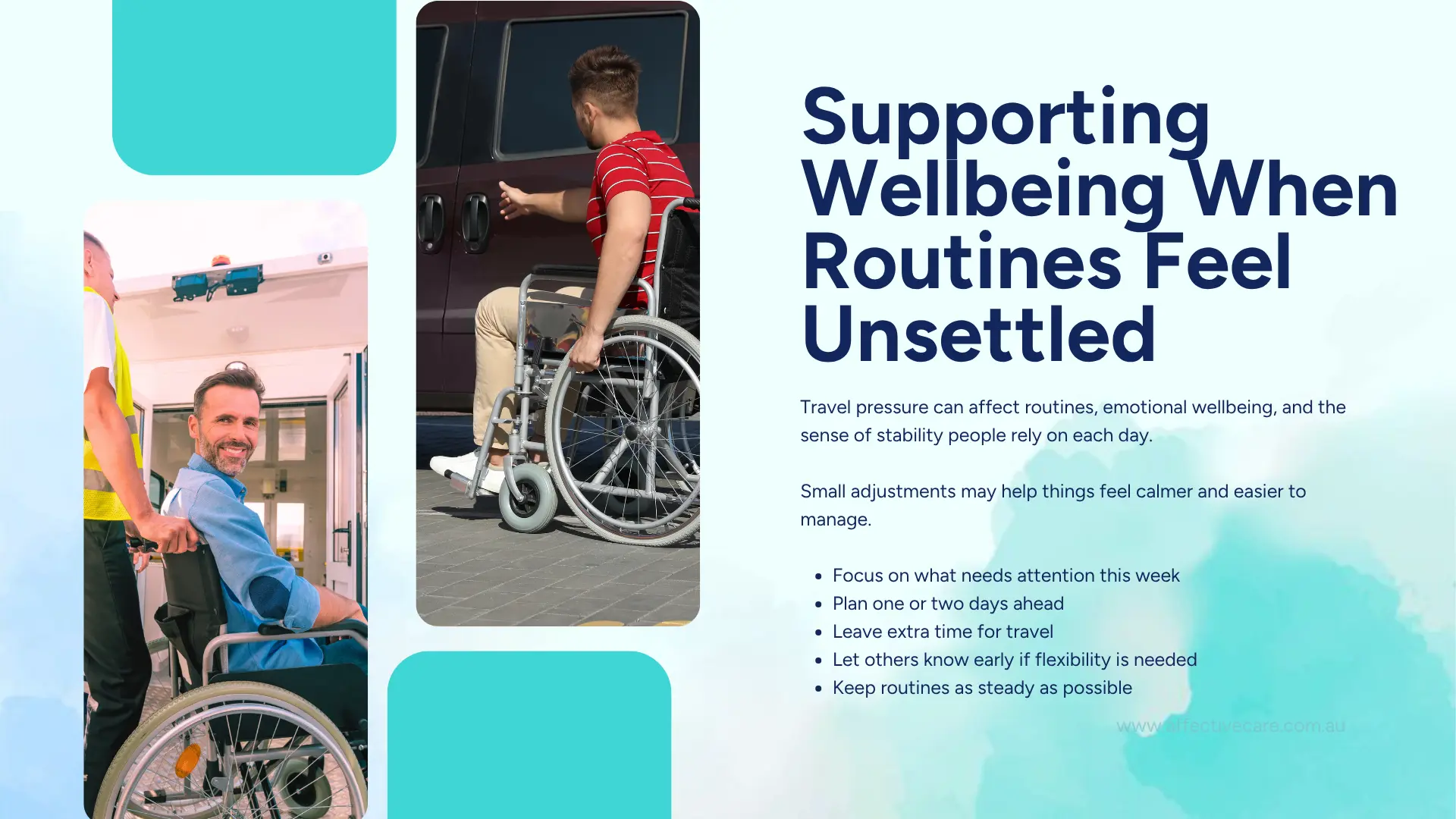
Supporting Wellbeing When Routines Feel Unsettled
Travel pressure can affect more than transport. It can also affect emotional wellbeing, routines, energy levels, and the sense of stability people rely on each day.
When plans feel less certain, even small disruptions can create added stress for participants, carers, and families.
A few simple ways to reduce stress during this time may include:
- Focusing on what needs attention this week rather than trying to solve everything at once
- Planning one or two days ahead
- Leaving extra time for travel so the day feels less rushed
- Letting your support team, employer, school, or family know early if flexibility may be needed
- Keeping routines as steady as possible, especially for children, carers, and people who rely on predictability
Moreover, keeping support accessible during a fuel crisis is easier when you understand how NDIS funding works, including how plan budgets may connect with transport, community access and daily support needs.
It can also help to keep expectations gentle during busy or uncertain periods.
Small routines such as preparing the night before, writing down key tasks, or allowing extra time between commitments may help the day feel calmer and more manageable.
For many families and participants, maintaining a sense of consistency, reassurance, and open communication can make a meaningful difference.
Moreover, for participants affected by travel or transport barriers, choosing an NDIS provider near Campsie and surrounding suburbs may help make regular support easier to access.

How Affective Care is Responding
Affective Care remains committed to providing supports as agreed and continuing care in a way that feels safe, reliable, and person-centred.
We understand that fuel-related pressure may be creating added stress for some participants, carers, and families, especially when travel is a regular part of appointments, routines, work, school, or day-to-day support.
When transport feels harder, even small disruptions can affect planning, consistency, and peace of mind.
Where appropriate, our team may look at practical ways to help reduce pressure and maintain continuity of support.
This may include grouping appointments where suitable, reducing unnecessary travel, reviewing scheduling options, and using phone or telehealth options for selected services and sessions.
For some participants and families, telehealth may be an option depending on individual needs, goals, and the type of support required. Telehealth may be suitable for selected:
- Psychology sessions
- Family or carer support sessions
- Check-ins and review appointments
- Support coordination or planning conversations
- Some allied health follow-ups, where appropriate
Telehealth can help reduce travel demands for some people while still supporting connection, continuity, and access to care.
At the same time, we know that not every service or session is suitable for telehealth, and in-person support remains important for many participants.
If travel-related changes may affect your supports, our team will speak with you directly about suitable options.
Any changes will be carefully considered, with the aim of reducing disruption while continuing to provide consistent, practical care aligned with your needs.
Our focus remains the same: to support participants and families with understanding, flexibility, and dependable care during times of added pressure.
Moreover, if you are new to disability support funding, our guide to understanding the NDIS gives a simple overview of the scheme, who it supports and how participants may use their plans.
We are Here to Help
When outside pressures make everyday life feel heavier, support should remain grounded in understanding, flexibility, and care.
If travel feels harder right now and you are unsure about your options, we encourage you to speak with our team.
Moreover, for questions about transport payments, invoices or financial responsibilities, our guide to NDIS Taxation in 2026 explains key points participants, families and providers may need to understand.
We can talk through what may be suitable for your situation and whether telehealth may be an option for your next session.
At Affective Care, we are here to help make support feel more accessible, practical, and person-centred during uncertain times.