


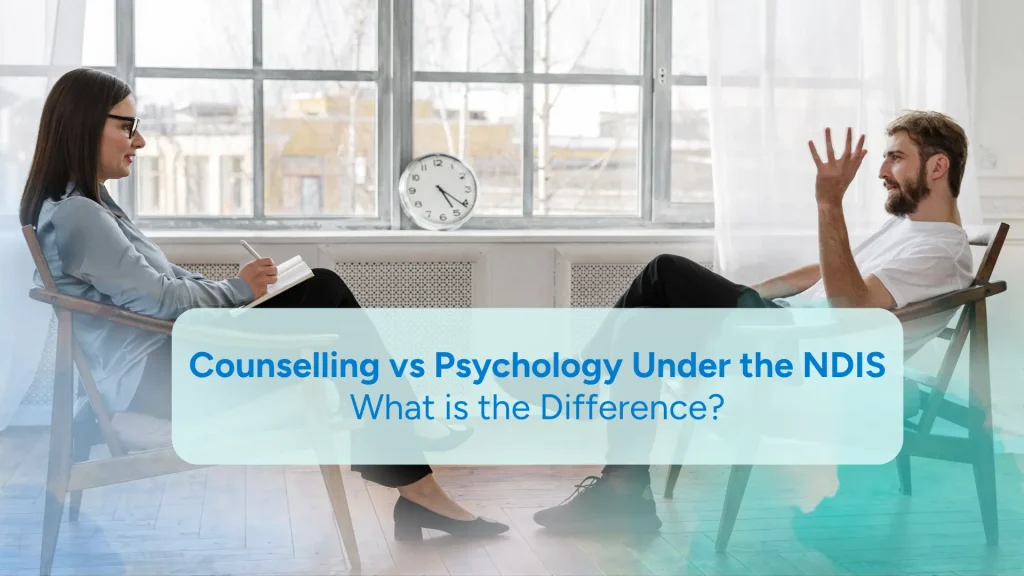
Counselling and psychology can both help people living with disability develop coping strategies, strengthen emotional regulation and work towards greater independence.
However, the qualifications, professional responsibilities, assessment capabilities and therapeutic approaches associated with these services can differ.
Understanding counselling vs psychology under the NDIS can help participants, families and support coordinators choose a provider whose experience and scope of practice match the participant’s individual needs.
Counsellors commonly provide therapeutic conversations, emotional support and practical coping strategies, while psychologists may also conduct assessments, deliver evidence-based interventions and prepare formal psychological reports.
Neither option is automatically better for every participant. Counselling may be suitable when someone wants support with relationships, communication, confidence, adjustment or emotional coping.
Psychology may be more appropriate when a participant needs psychological assessment, structured intervention for more complex needs or formal clinical documentation.
The NDIS identifies both counselling and psychology as examples of therapy supports that may be funded.
However, the support must meet current NDIS funding criteria, relate to the participant’s disability and produce appropriate functional outcomes.
Funding is based on the person’s circumstances and plan rather than the professional title alone.
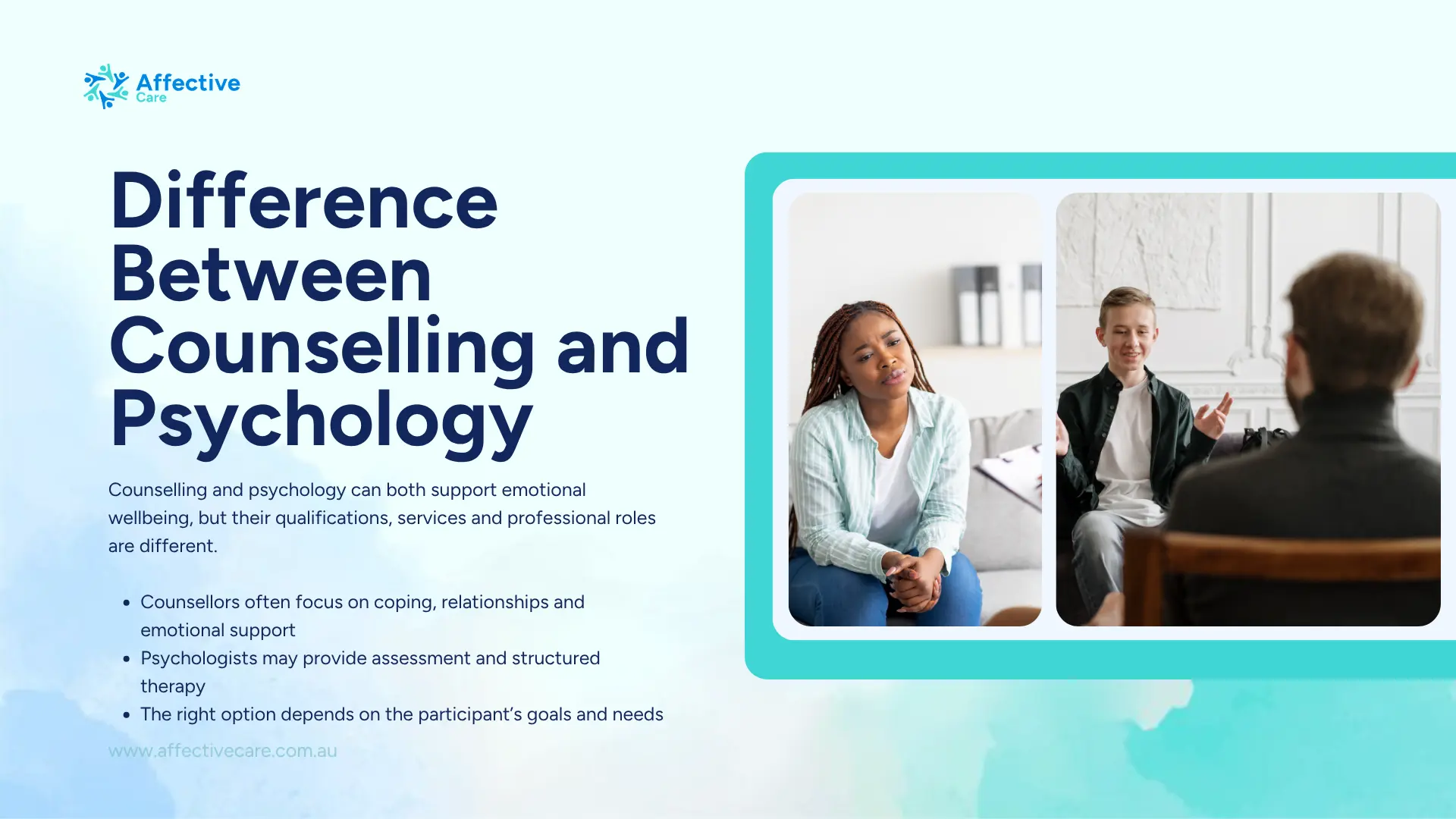
What is the Difference Between Counselling and Psychology Under the NDIS?
The difference between counselling and psychology services under the NDIS usually relates to professional regulation, education, assessment capabilities, therapy methods and the complexity of support being provided.
Counsellors often help participants understand emotions, respond to difficult experiences and develop practical strategies for everyday situations.
Their work may support communication, social participation, relationships, self-confidence and adjustment to disability-related changes.
Psychologists may provide similar therapeutic support, but they are registered health practitioners with specific professional obligations.
Depending on their training and area of competence, psychologists may also conduct psychological assessments, develop a clinical understanding of a participant’s needs and prepare formal reports.
Comparison Table: Counselling Vs Telehealth Psychology under NDIS
|
Area |
Counsellor |
Psychologist |
|
Primary focus |
Counselling commonly focuses on emotional support, coping, relationships, adjustment and practical strategies for everyday challenges. |
Psychology may focus on psychological functioning, assessment, evidence-based intervention, behaviour and the relationship between mental health and daily functioning. |
|
Professional regulation |
Counselling is generally a self-regulated profession. Counsellors may be accredited by a recognised professional association or peak body. |
Psychology is a regulated health profession. A person using the protected title “psychologist” must hold appropriate registration. |
|
Psychological diagnosis |
Counsellors do not generally provide formal psychological diagnosis unless they hold another relevant qualification and are authorised to work within that scope. |
A psychologist may assess and diagnose certain conditions when this falls within their training, competence and professional scope. |
|
Formal assessments |
Counselling usually does not include standardised psychological assessment. |
Psychologists may use interviews, observations and standardised assessment tools where appropriate. |
|
NDIS reports |
A counsellor may provide progress information and recommendations that remain within their professional scope. |
A psychologist may provide progress reports, psychological assessments and functional information within their scope of practice. |
|
Common goals |
Counselling may support coping, emotional expression, confidence, self-advocacy, relationships and life adjustment. |
Psychology may support emotional regulation, behaviour, complex psychological needs, functional participation, assessment and structured therapy. |
|
Delivery format |
Counselling may be provided face to face or through online appointments. |
Psychology may also be provided face to face or through Telehealth when clinically appropriate. |
These distinctions are general rather than absolute.
Some highly experienced counsellors work with participants who have complex support needs, while some psychologists focus mainly on counselling and therapeutic intervention rather than formal assessments.
Participants should therefore consider the provider’s qualifications, experience, therapeutic approach and ability to support the outcomes identified in the participant’s NDIS plan.
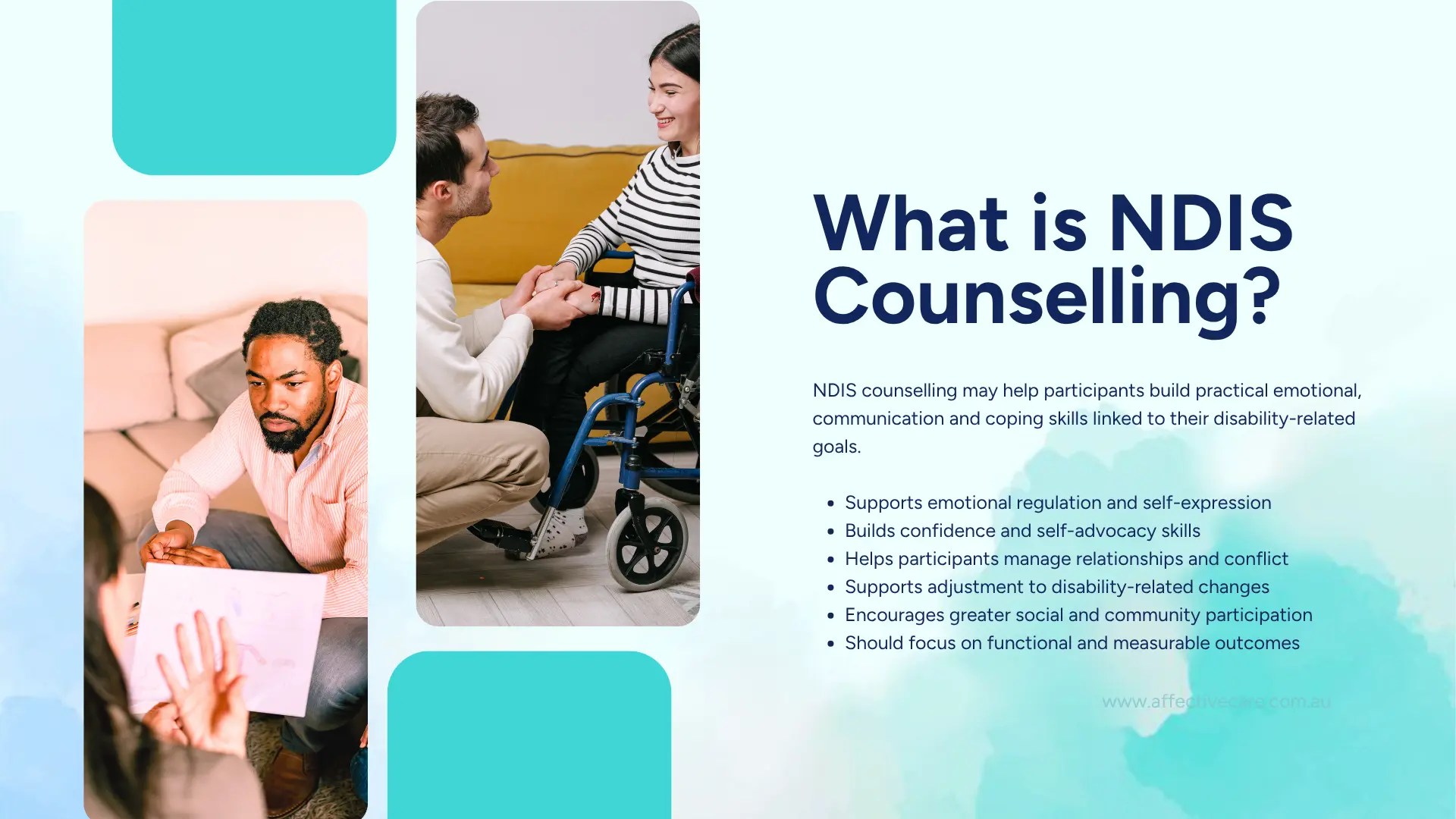
What is NDIS Counselling?
NDIS counselling generally refers to counselling delivered as a disability-related therapy support.
It may help a participant develop skills, manage emotional experiences and respond more effectively to situations that affect everyday functioning.
Counselling under the NDIS should have a clear connection to the person’s disability-related needs and goals. It is not simply general emotional support without measurable outcomes.
The work should help the participant build or maintain skills that influence daily living, relationships, communication, decision-making or community participation.
For example, an NDIS counsellor may support a participant who finds it difficult to express frustration without withdrawing from other people.
Counselling could help the participant recognise early signs of distress, communicate what they need and practise strategies for responding to conflict.
Another participant may work with a counsellor after moving into a new supported living arrangement.
The sessions could focus on adjusting to unfamiliar routines, developing confidence when communicating with housemates and learning ways to ask support workers for assistance.
Depending on the participant’s needs, NDIS counselling may address:
Emotional regulation and coping
Counselling can help a participant understand emotional responses, identify common triggers and practise strategies that can be used at home or in the community.
Relationships and communication
A counsellor may help someone communicate their needs, set boundaries, respond to conflict and build healthier personal relationships.
Adjustment to disability-related changes
Participants may need support when adapting to a new diagnosis, reduced functional capacity, a change in living arrangements or increasing reliance on formal supports.
Confidence and self-advocacy
Counselling may help participants express preferences, take part in planning conversations and make decisions with greater confidence.
Social and community participation
A participant may develop coping strategies that make it easier to attend activities, meet new people or take part in community settings.
The NDIS describes therapy supports as services that can help improve or maintain skills and independence in areas such as communication, interpersonal interactions, problem-solving, decision-making and psychosocial functioning.
It also states that therapy supports must be evidence-based and directed towards appropriate functional outcomes.
For this reason, an NDIS counselling service should be able to explain what outcomes are being addressed, how progress will be reviewed and how the sessions relate to the participant’s disability and plan goals.
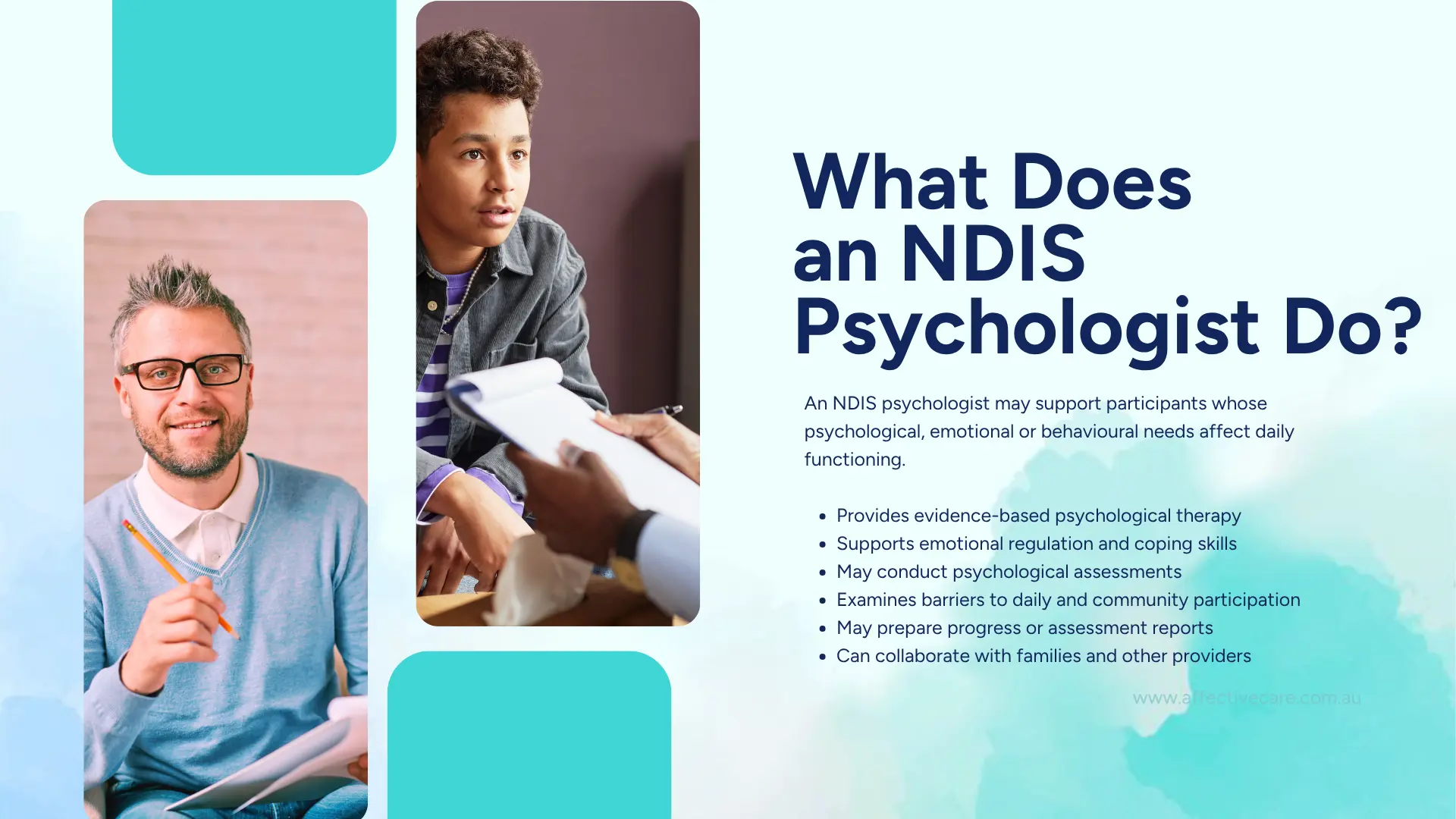
What Does an NDIS Psychologist Do?
An NDIS psychologist may help a participant understand how psychological, emotional, cognitive or behavioural factors affect everyday functioning.
Psychology under the NDIS is generally directed towards disability-related capacity, independence and participation rather than the treatment of an unrelated health condition.
The exact service depends on the psychologist’s competencies, the participant’s needs and the purpose of the referral.
Participants who want a broader understanding of available therapy, assessment and appointment options can explore our guide to psychology services in Australia.
Therapeutic intervention
A psychologist may provide evidence-based therapy to help a participant develop emotional regulation, coping, problem-solving, communication or social skills.
For example, a participant may experience intense anxiety when using public transport.
The psychologist could help identify the thoughts, physical reactions and environmental factors that contribute to the anxiety.
Therapy may then focus on gradual skill development, emotional regulation and practical strategies that support safer community participation.
Psychologists may use different therapeutic methods depending on their training and the participant’s communication needs.
The approach should be explained in understandable language and adjusted where necessary to support accessibility.
Psychological assessment
Some psychologists conduct psychological assessments to better understand cognitive, emotional, behavioural or adaptive functioning.
An assessment may involve interviews, observation, background information and standardised tools.
The type of assessment depends on the referral question and the psychologist’s professional competence.
Not every psychologist conducts every kind of assessment. Participants should ask whether the psychologist has experience with the particular assessment being requested and whether the resulting report will address the intended purpose.
Our guide to psychological assessments for the NDIS explains common assessment purposes, what may be involved and how reports can support understanding of functional needs.
Understanding functional impact
An NDIS psychologist may examine how psychological factors affect areas such as:
- Managing routines and daily responsibilities
- Communicating needs and making decisions
- Developing and maintaining relationships
- Attending work, education or community activities
- Responding to changes, uncertainty or sensory demands
- Regulating emotions during stressful situations
- Developing greater independence.
This functional focus is important because NDIS therapy supports are expected to help improve or maintain skills and independence in everyday activities.
Reports and collaboration
Within their scope of practice, psychologists may prepare progress reports, assessment reports or recommendations for the participant’s support team.
They may also collaborate with family members, support coordinators, occupational therapists, speech pathologists, behaviour support practitioners and other professionals when the participant provides consent.
Effective collaboration should clarify each provider’s role.
This reduces duplication and helps the participant receive coordinated support rather than several professionals working towards unrelated outcomes.

Counsellor vs Psychologist Qualifications in Australia
Qualifications are one of the most important differences when comparing an NDIS counsellor and psychologist.
Psychologist qualifications and registration
Psychology is a regulated health profession in Australia. Psychologists must meet registration standards and hold current registration through the national practitioner regulation system.
The Psychology Board of Australia establishes registration requirements, professional standards, codes and guidelines for psychologists.
Members of the public can also use the Australian Health Practitioner Regulation Agency register to check whether a practitioner holds current registration.
Registration does not mean that every psychologist provides the same services. Psychologists may have different areas of experience, further training and professional interests.
A psychologist who mainly works with adults experiencing workplace stress may not have the same disability experience as one who regularly supports NDIS participants.
Participants should therefore confirm both registration and relevant experience.
Counsellor qualifications and accreditation
Counselling is generally described as a self-regulated profession in Australia. This means counsellors are not regulated through AHPRA in the same way as psychologists.
Counsellors may complete different levels of education and may hold membership or accreditation through a recognised counselling association or professional peak body.
When choosing an NDIS counsellor, participants should ask about:
- The counsellor’s relevant qualifications and professional accreditation
- Experience supporting people living with disability
- Experience with the participant’s specific communication or support needs
- Clinical supervision and continuing professional development
- Professional indemnity insurance
- The way progress and outcomes are recorded
- The limits of the counsellor’s professional scope
The NDIS states that therapy supports must be delivered by qualified professionals who are either registered through AHPRA or accredited through a relevant peak body for a self-regulated profession.
Qualifications should be considered together with therapeutic fit.
A highly qualified provider may still be unsuitable when their communication style, experience or therapy method does not meet the participant’s needs.
Does the NDIS Fund Counselling and Psychology?
The NDIS may fund counselling or psychology when the support meets current funding requirements and is included appropriately in the participant’s plan.
For a broader explanation of therapy funding, functional outcomes and psychology supports, read our complete guide to psychology and the NDIS.
Counselling and psychology are both listed by the NDIS as examples of therapy supports that it can fund.
However, this does not mean that every counselling or psychology service is automatically claimable.
For NDIS funding, a support must relate to disability needs, support the participant’s goals, be effective, offer value for money and complement other supports.
A counselling or psychology service may therefore be more likely to fit the purpose of NDIS therapy when it:
- Addresses a functional impact connected to the participant’s disability
- Supports an identifiable goal in the participant’s plan
- Uses an evidence-based therapeutic approach
- Is delivered by a suitably qualified professional
- Is likely to improve or maintain skills, independence or participation
- Includes clear outcomes and a way to review progress
- Does not duplicate a support that should be provided by another service system
Disability-Related Therapy and Mainstream Mental Health Care
An important part of understanding NDIS counselling vs psychology is recognising the difference between disability-related support and treatment that is primarily the responsibility of the mainstream health system.
The NDIS may consider therapy that helps a participant manage the functional effects of disability.
This could include building emotional regulation, improving communication, increasing community participation or maintaining decision-making skills.
However, treatment of an acute mental health condition, crisis intervention, hospital care, medication management and other general clinical health services may be the responsibility of Medicare, state or territory health services, hospitals or other mainstream systems.
Moreover, if psychology is being accessed through the mainstream health system, our guide to Medicare rebates for psychology explains common rebate pathways, costs and eligibility considerations.
The distinction depends on the purpose of the support rather than the diagnosis alone.
For example, a participant living with psychosocial disability may receive psychology focused on developing routines and strategies that improve daily functioning.
A separate health service may remain responsible for medical treatment, medication and acute mental health care.
Participants should review their plan and speak with their my NDIS contact or support team when they are uncertain about whether a proposed service can be claimed.
Which NDIS Budget May Cover Counselling or Psychology?
Counselling or psychology may appear as a therapy support within the participant’s plan.
The exact budget wording and flexibility depend on the individual plan and current NDIS arrangements.
Current NDIS guidance states that therapy supports are funded as stated supports.
A stated support is funding allocated for a specific support or service and cannot simply be exchanged for something unrelated.
Participants should not assume that the presence of a broad capacity-building budget automatically means any therapy service can be purchased.
Before starting ongoing appointments, it is important to check:
- How the therapy support is described in the plan
- Whether the funding is stated for a particular support
- Whether sufficient funding is available
- Whether the support relates to the participant’s goals
- Whether the provider meets relevant qualification requirements
- Whether reports, travel or non-face-to-face activities are included in the agreed fees
Moreover, once you have decided whether counselling or psychology better fits your needs, you may also want to compare telehealth and in-person psychology appointments to choose a delivery format that feels practical and comfortable.
The participant’s method of plan management may also affect which providers can be used and how claims are processed.
These administrative arrangements do not change the requirement for the support itself to be an appropriate NDIS support.

When Might Counselling Be More Suitable?
Counselling may be suitable when the participant mainly needs structured emotional support, practical coping strategies or assistance with relationships and adjustment.
It may be considered when the participant wants to:
- Understand and express emotions more clearly
- Build confidence when making decisions
- Communicate personal boundaries or support needs
- Cope with disability-related changes
- Strengthen relationships with family members, housemates or support workers
- Develop strategies for grief, loss or major life transitions
- Improve self-advocacy
- Participate more confidently in social and community activities.
Consider a participant who has recently moved away from their family home.
They are finding it difficult to communicate with new support workers and often agree to routines they do not actually prefer.
A counsellor could help the participant identify their preferences, practise expressing choices and develop ways to respond when they feel uncomfortable.
The focus would not simply be talking about feelings. It would involve building communication and self-advocacy skills that can be used in everyday life.
Counselling can also be helpful for participants who value a supportive, relationship-based approach and do not currently require formal psychological assessment or complex clinical reporting.
The provider must still have suitable qualifications, disability experience and a clear understanding of the participant’s goals.
When Might Psychology Be More Suitable?
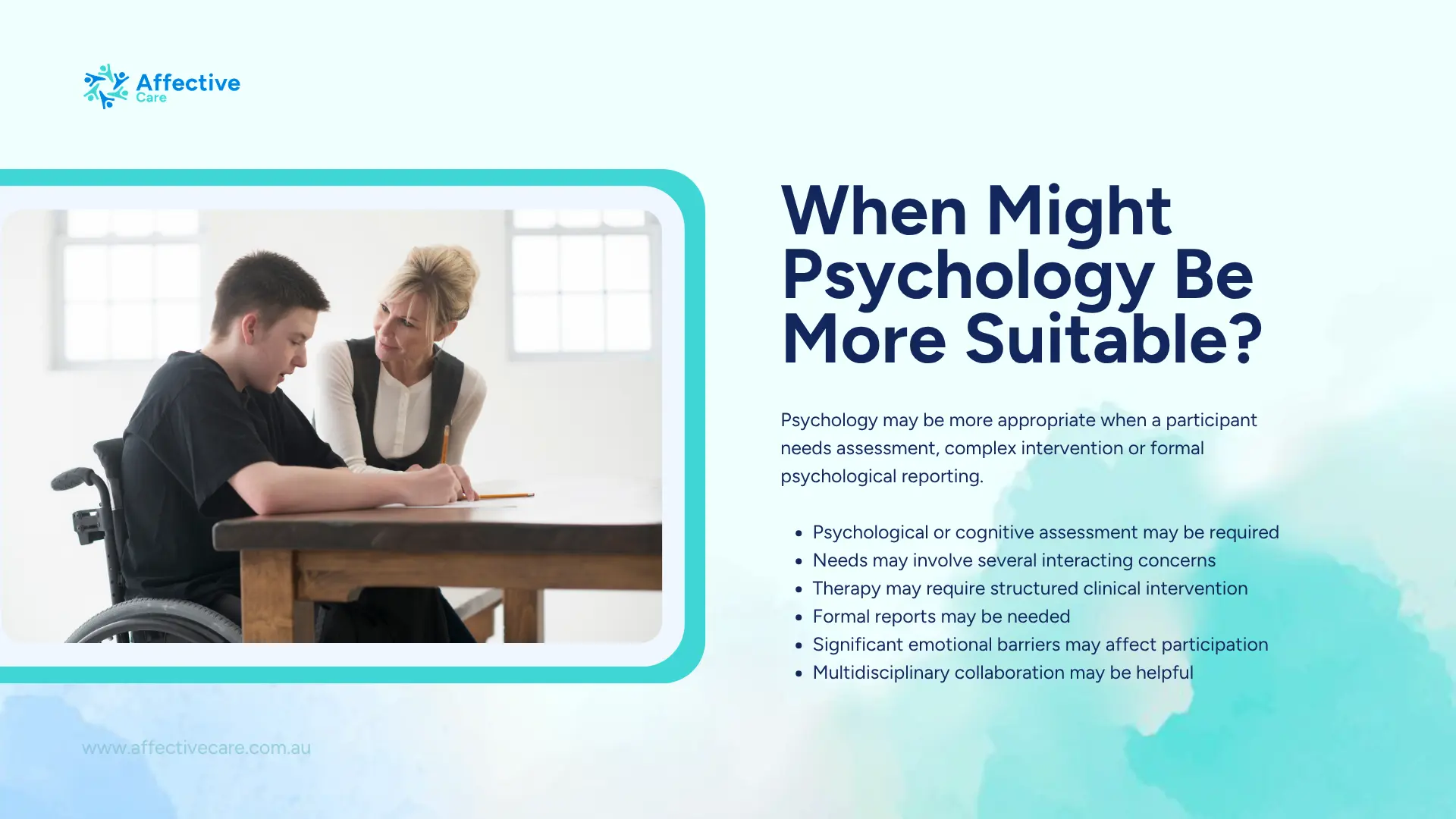
Psychology may be more suitable when the participant needs psychological assessment, structured intervention for complex needs or formal psychological information.
A participant may consider seeing a psychologist when they require:
- An assessment of psychological, cognitive or adaptive functioning
- A more detailed understanding of factors affecting behaviour and participation
- Evidence-based intervention for significant emotional or psychological barriers
- Formal documentation that must be prepared by a psychologist
- Support requiring psychological formulation and clinical judgement
- Therapy that accounts for several interacting diagnoses or support needs
- Coordinated input as part of a multidisciplinary team.
For example, a participant may experience intense anxiety, rigid routines and difficulty adapting to unexpected changes.
These concerns may substantially affect personal care, appointments and community participation.
A psychologist could assess the patterns contributing to these difficulties and develop a structured intervention plan.
Therapy may include emotional regulation, gradual exposure to change, problem-solving and strategies for the participant’s wider support team.
A psychologist may also be more suitable when the referral specifically requires psychological assessment.
However, participants should confirm that the psychologist has the appropriate training and experience for that assessment.
Seeing a psychologist does not automatically mean that an assessment or diagnosis will be provided.
The service must be discussed and agreed upon before appointments begin.
Counselling vs Psychology for Different Support Needs
The most appropriate service depends on the participant’s intended outcome rather than a simple assumption that one profession is better than the other.
|
Participant need |
How counselling may help |
How psychology may help |
|
Emotional support |
Counselling may provide a structured space to understand emotions and develop practical coping strategies. |
Psychology may also support emotional regulation using evidence-based psychological intervention. |
|
Relationships and communication |
A counsellor may help the participant set boundaries, express needs and respond to conflict. |
A psychologist may address communication difficulties when they are influenced by complex cognitive, behavioural or psychological factors. |
|
Adjustment to disability |
Counselling may support grief, identity, confidence and adaptation to changing circumstances. |
Psychology may examine how adjustment difficulties interact with psychological functioning and daily participation. |
|
Social confidence |
Counselling may help the participant practise communication and manage fears about social situations. |
Psychology may provide structured intervention where significant anxiety or other psychological barriers restrict participation. |
|
Psychological assessment |
Counsellors do not generally conduct formal psychological assessments. |
Psychologists may conduct assessments when they have the required training and competence. |
|
Diagnosis |
Counselling does not generally include formal diagnosis. |
A psychologist may provide diagnosis where it is appropriate and within scope. |
|
Formal psychological reporting |
A counsellor may document goals and progress within the limits of their role. |
A psychologist may provide detailed psychological reports and recommendations within their professional scope. |
|
Complex psychological needs |
Suitability depends on the counsellor’s training, experience and the nature of the participant’s needs. |
A psychologist may be suitable when support requires psychological assessment, formulation or complex intervention. |
|
Functional skill development |
Counselling may help build coping, communication, relationship and self-advocacy skills. |
Psychology may address functional skills affected by emotional, cognitive, behavioural or psychological factors. |
The therapeutic relationship also matters. Participants are more likely to engage when they feel respected, understood and able to communicate in their preferred way.
A provider should be willing to explain their role, make reasonable adjustments and involve family or other supporters where the participant wants this.
Can Counselling and Psychology Be Used Together?
A participant may receive counselling and psychology at the same time when the services address clearly different needs and do not unnecessarily duplicate each other.
For example, a psychologist may conduct an assessment and provide targeted intervention for significant anxiety.
A counsellor may separately help the participant adjust to a change in living arrangements, strengthen relationships and practise self-advocacy.
The roles should be documented clearly so that the participant understands:
- What each professional is responsible for
- Which goals each service addresses
- How the providers will communicate
- How progress will be measured
- How duplicated services and costs will be avoided.
Receiving two services simply because both are available is not a strong clinical or funding reason.
Each service should have a clear purpose and should contribute to the participant’s functional outcomes.
Consent is also important. Providers should not exchange personal or clinical information without appropriate permission, except where disclosure is required or permitted by law.
How to Choose Between an NDIS Counsellor and Psychologist
Choosing between an NDIS counsellor and psychologist begins with defining what the participant wants to change.
Start with the functional goal
Instead of beginning with “Which provider should I book?”, identify the everyday difficulty first.
Questions may include:
- What activity is currently difficult?
- What skill does the participant want to build?
- What situations regularly create distress?
- How does this affect independence or participation?
- What would meaningful progress look like?
A goal such as “improve mental health” may be too broad to guide provider selection.
A more specific goal may be:
The participant wants to communicate when they need a break so they can remain involved in community activities for longer.
This provides a clearer basis for discussing whether counselling, psychology or another therapeutic support is appropriate.
Decide whether assessment is required
When a formal psychological assessment, diagnostic opinion or detailed psychological report is required, a psychologist with relevant competence may be the more appropriate professional.
When the participant mainly wants help with coping, relationships, communication or emotional adjustment, a suitably qualified counsellor may be appropriate.
Review the NDIS plan
Before entering a service agreement, check the participant’s plan for:
- Relevant therapy funding
- Stated supports
- Available funding
- Plan goals
- Plan management arrangements
- Any conditions affecting how the funding can be used.
The provider should not guarantee that a service can be claimed without first understanding the participant’s plan and the purpose of the support.
Check the provider’s qualifications
Ask the provider to explain their:
- Professional qualifications
- Registration or accreditation
- Disability-sector experience
- Experience with the participant’s support needs
- Therapy methods
- Reporting capabilities
- Supervision arrangements
- Professional scope.
A participant choosing a psychologist can check current registration through the public AHPRA register.
Moreover, participants who need earlier access can also explore their options for same-day psychology appointments and understand what availability may look like.
Consider communication and therapeutic fit
Provider fit involves more than qualifications.
The participant may need someone who:
- Uses plain language and checks understanding
- Allows additional processing time
- Provides visual information
- Includes trusted supporters with consent
- Understands cultural and family context
- Respects the participant’s preferred communication method
- Offers face-to-face or Telehealth appointments
- Adapts sessions around sensory, cognitive or accessibility needs.
It is reasonable to ask how the provider will make sessions accessible before agreeing to ongoing therapy.
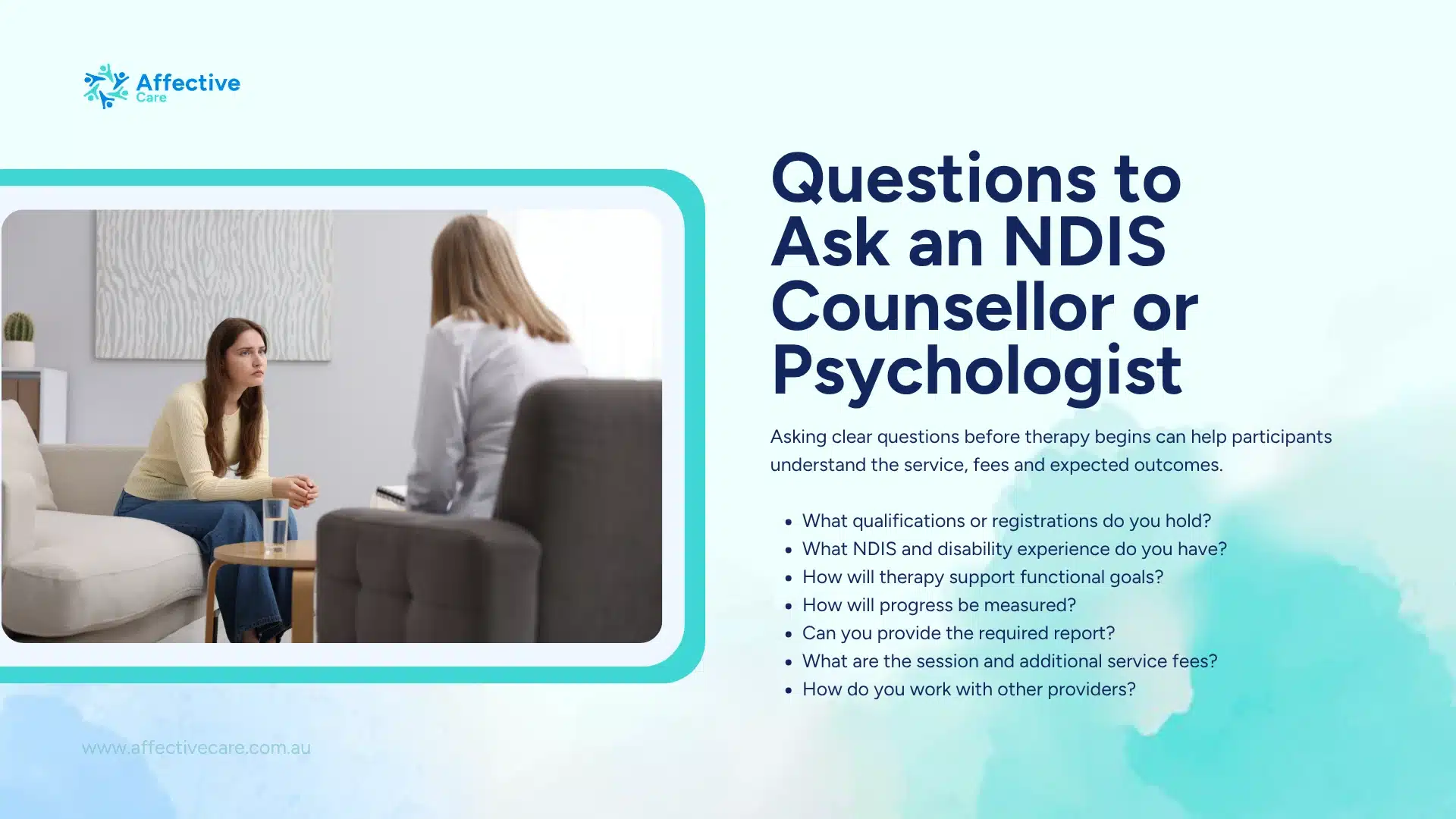
Questions to Ask an NDIS Counsellor or Psychologist
A clear first conversation can prevent misunderstandings about the service, its cost and the expected outcomes.
Participants, families and support coordinators may ask:
- What qualifications, registration or accreditation do you hold? The provider should be able to explain their professional status clearly and identify the organisation responsible for their registration or accreditation.
- What experience do you have with people living with disability? General counselling or psychology experience does not always include knowledge of NDIS goals, functional reporting or accessible communication.
- How will the sessions relate to the participant’s disability and goals? The provider should be able to connect therapy with practical outcomes rather than relying on broad descriptions of emotional wellbeing.
- What therapeutic approach will you use? A good explanation should describe the method in plain language and show why it may suit the participant.
- How will progress be measured? Progress may be reviewed through goal tracking, participant feedback, observations, functional changes or appropriate clinical measures.
- Can you provide the type of report we need? Ask this before therapy begins because not every provider prepares formal reports or has the required scope.
- What will be charged? Clarify session fees, reports, travel, cancellations, meetings and other non-face-to-face work.
- How will you work with other providers? Collaboration should support the participant’s goals without creating duplicated services or unnecessary meetings.
- What happens when therapy is no longer needed? Therapy should include review points and a plan for reducing, changing or ending support when appropriate.
For a more detailed provider-selection checklist, see our practical guide to questions to ask an NDIS psychologist before beginning therapy.

What to Expect at the First Appointment
The first appointment is usually an opportunity to understand the participant’s needs, explain the service and decide whether the provider is a suitable fit.
The provider may ask about:
- The participant’s disability and current support needs
- Daily activities that are difficult
- Emotional, communication or behavioural concerns
- Previous therapy experiences
- Personal strengths and interests
- NDIS goals
- Communication and accessibility preferences
- Family or supporter involvement
- Relevant risks and safety needs
- What the participant hopes will change
The provider should also explain privacy, consent, fees, cancellation arrangements and the limits of confidentiality.
Participants do not need to explain everything perfectly in the first appointment. Bringing notes, relevant reports or a list of questions can make the discussion easier.
Reviewing a first appointment preparation checklist for NDIS therapy can also help participants decide what information they want to share.
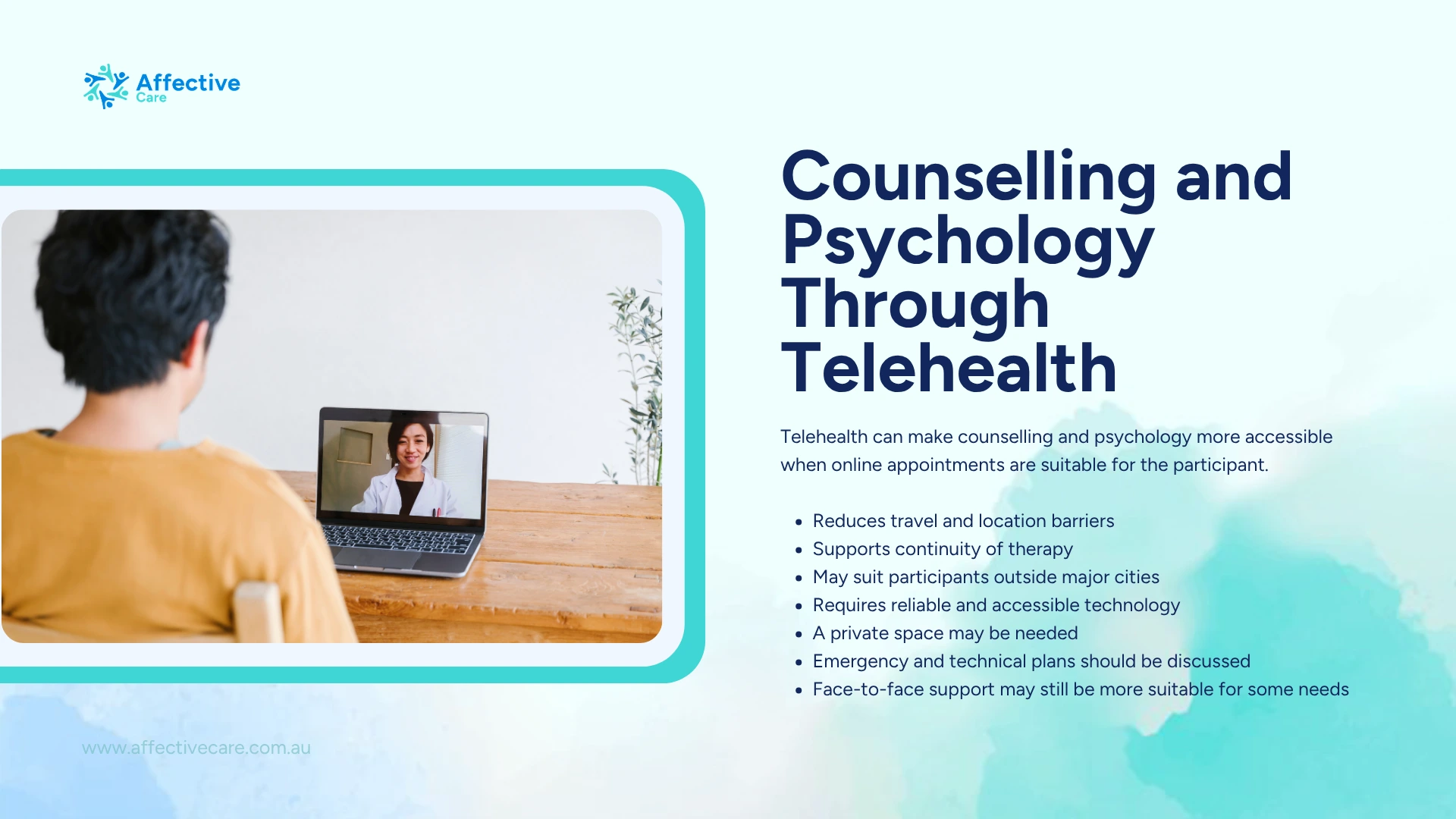
Counselling and Psychology Through Telehealth
Counselling and psychology can sometimes be provided through Telehealth when remote appointments are clinically suitable and acceptable to the participant.
Telehealth may help people who have difficulty travelling, live outside major cities or prefer to attend sessions from a familiar environment.
It can also support continuity when a participant moves, travels or has fluctuating mobility.
However, online therapy is not automatically suitable for everyone.
Before beginning Telehealth counselling or psychology, the provider should consider:
- Whether the participant has a private and comfortable place for appointments
- Whether the technology is accessible
- Whether the participant can communicate effectively online
- Whether a support person needs to be available
- How emergencies or technical problems will be managed
- Whether face-to-face assessment is required.
The decision should be based on clinical suitability, accessibility and participant preference rather than convenience alone.
Participants considering remote therapy can learn more about accessing Telehealth psychologists in Australia and when online appointments may be suitable.
Counselling vs Psychology Under the NDIS: Which Should You Choose?
Counselling may be a suitable choice when the participant mainly wants support with emotional coping, relationships, communication, self-confidence or adjustment to disability-related changes.
Psychology may be more suitable when the participant requires psychological assessment, structured intervention for complex needs, psychological formulation or formal reporting that falls within a psychologist’s scope.
The choice should not be based solely on cost, availability or professional title.
A suitable provider should have:
- Qualifications that match the service
- Experience relevant to the participant
- A clear and evidence-based approach
- An understanding of functional NDIS outcomes
- Accessible communication practices
- A respectful working relationship with the participant.
The participant’s preference remains central.
Therapy is more likely to be useful when the participant understands its purpose, feels comfortable with the provider and has an active role in setting goals.
Speak With Affective Care About Psychology Support
Choosing between counselling and psychology under the NDIS depends on the participant’s goals, functional needs and the type of professional input required.
Counselling may support coping, communication, adjustment and relationships. Psychology may be more appropriate when the participant needs psychological assessment, complex intervention or formal psychological reporting.
Affective Care provides psychology support for children and adults, including face-to-face appointments in Sydney and Telehealth appointments across Australia where suitable.
Speak with our therapy team to discuss the participant’s needs, preferred appointment format and whether psychology may align with their NDIS goals.
Information reviewed: July 2026. NDIS rules, support descriptions and pricing arrangements may change.
This article provides general information and does not guarantee that counselling or psychology will be included or claimable under an individual NDIS plan. Participants should review their current plan and official NDIS guidance.