


Empower Lives with Heart

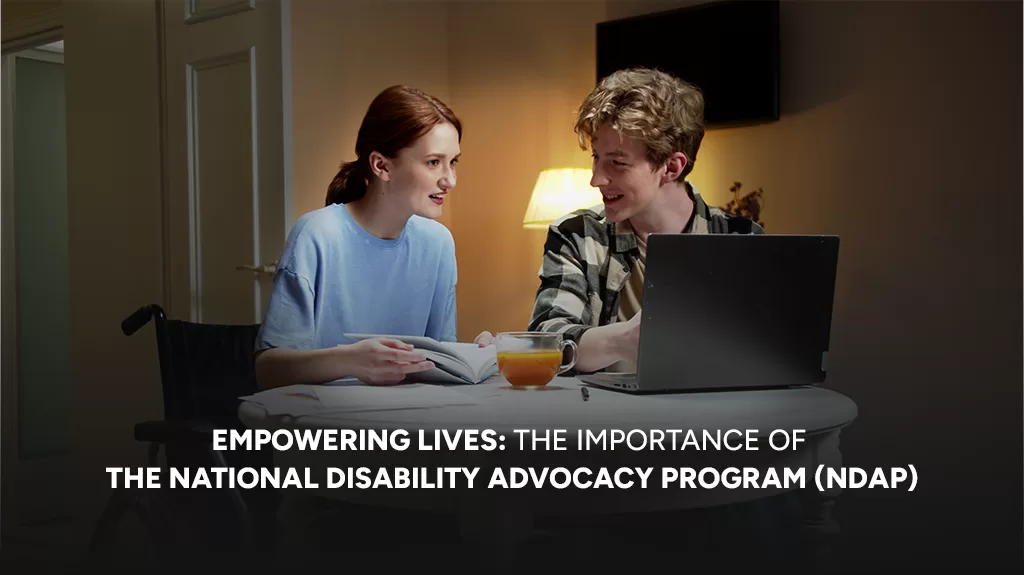
Empowering Lives: The Importance of the National Disability Advocacy Program (NDAP) 

Start your care
journey with someone
who understands.

Table of Contents

JOIN OUR NEWSLETTER & GET FREE UPDATES

Core Essentials

Affective Care Instrument
Affective Care New Branded Post
Affective Care AED
The Importance of the National Disability Advocacy

The National Disability Advocacy Program (NDAP) plays a pivotal role in supporting individuals with disabilities in Australia.

This program is designed to help people with disabilities understand and exercise their rights, self-advocate, and access essential services.

By providing crucial advocacy and support, NDAP assists those facing complex challenges, ensuring they receive the necessary assistance to lead empowered and independent lives.

This article delves into the significance of NDAP, highlighting its impact on disability advocacy and support services.

Empowering Lives: The Importance of the National Disability Advocacy Program (NDAP) 

The National Disability Advocacy Program (NDAP) is a government-funded initiative aimed at promoting and protecting the rights of people with disabilities.

The program provides advocacy services that are essential for individuals who may face barriers in accessing services, understanding their rights, or navigating complex systems.

Here are some key roles of NDAP:

Understanding and Exercising Rights

NDAP helps individuals with disabilities to understand their rights under various laws and regulations.

This includes the Disability Discrimination Act 1992 and the National Disability Insurance Scheme (NDIS).

By educating individuals about their rights, NDAP empowers them to advocate for themselves in various situations, whether it be in the workplace, educational institutions, or within the community.

Self-Advocacy

One of the core objectives of NDAP is to foster self-advocacy among people with disabilities.

Self-advocacy involves individuals speaking up for themselves, making their own decisions, and taking control of their lives.

NDAP provides training and resources to help individuals develop these skills, ensuring they can effectively communicate their needs and preferences.

Accessing Necessary Services

Navigating the myriad of services available to people with disabilities can be daunting.

NDAP assists individuals in accessing the services they need, whether it be healthcare, education, employment, or social services.

Advocates work closely with individuals to identify their needs and connect them with appropriate service providers.

To understand how disability support costs are structured, our guide to NDIS pricing and support costs explains how service rates may apply across different support types.

Addressing Complex Challenges

Many people with disabilities face complex challenges that require specialised support.

NDAP advocates are trained to handle a wide range of issues, from legal matters to social and emotional support.

Empowerment begins with informed choice, and these questions to ask before choosing an NDIS psychologist can help participants and families feel more confident.

They provide personalised assistance, ensuring that individuals receive the comprehensive support they need to overcome obstacles and achieve their goals.

New to the NDIS?
Our free “Where Do I Start?” Starter Pack walks you through your very first steps in plain language.

Impact of NDAP 

The impact of NDAP on the lives of people with disabilities is profound. By providing advocacy and support, the program helps individuals to:

  • Gain confidence and independence
  • Access essential services and support
  • Navigate complex systems and processes
  • Protect and exercise their rights
  • Improve their overall quality of life


If you want to learn how participants may use their plan budgets alongside advocacy and support services, our guide on NDIS funding categories explains the main funding areas in simple terms.

Conclusion 

The National Disability Advocacy Program (NDAP) is a vital resource for people with disabilities in Australia.

By providing essential advocacy and support services, NDAP empowers individuals to understand and exercise their rights, self-advocate, and access necessary services.

Moreover, you may also find our guide on NDIS tax considerations helpful for understanding financial responsibilities connected with disability supports and services.

The program’s impact on the lives of people with disabilities is significant, helping them to overcome challenges and lead empowered, independent lives.


Start your care
journey with someone
who understands.

FAQ

The National Disability Advocacy Program (NDAP) is a government-funded initiative in Australia that provides advocacy services to people with disabilities. The program aims to promote and protect the rights of individuals with disabilities, helping them to understand and exercise their rights, self-advocate, and access necessary services. 

NDAP helps people with disabilities by providing advocacy services that assist them in understanding their rights, developing self-advocacy skills, and accessing essential services. The program also addresses complex challenges faced by individuals, offering personalised support to help them overcome obstacles and achieve their goals. 

NDAP is important because it empowers people with disabilities to lead independent and fulfilling lives. By providing crucial advocacy and support, the program ensures that individuals can navigate complex systems, access necessary services, and protect their rights. This leads to improved confidence, independence, and overall quality of life for people with disabilities. 

NDAP services are available to all people with disabilities in Australia. The program is designed to support individuals who may face barriers in accessing services, understanding their rights, or navigating complex systems. NDAP advocates work with individuals to provide personalised assistance based on their specific needs and circumstances. 

Individuals can access NDAP services by contacting an NDAP-funded advocacy organisation. These organisations are located across Australia and provide a range of advocacy services. Information about NDAP and a list of funded organisations can be found on the Australian Government's Department of Social Services website. 

JOIN OUR NEWSLETTER & GET FREE UPDATES

Core Essentials

Affective Care Instrument
Affective Care New Branded Post
Affective Care AED

Why Affective Care?

Trusted Partner in Your Life Journey

Affective Care Why To Choose Us Image

Care with
Heart

Affective Care offers more than services. We bring genuine compassion and empathy to your NDIS and aged care journey, supporting your goals with kindness, respect and personalised care everyday.

Why Choose Us Affective Care BG

Empowering Your Journey

Your goals matter. Affective Care partners with you to build confidence, independence, and joy in your daily life through tailored NDIS and aged care support, always delivered with heart.

Affective Care Why To Choose Us

Support with
Trust

Trust matters in care. That's why our experienced, compassionate team puts your wellbeing first. Delivering reliable, personalised NDIS and aged care support that makes a real difference every day.

Affective Care Why To Choose Us

Together We
Thrive

At Affective Care, we walk beside ypour goals anmd live life ypour way. Our care empowers people living with disability and older Australians to thrive with confidence.

You May Like

Specialist Support Coordination Level 3

Navigating the NDIS can feel demanding at the best of times. When life becomes unstable, unsafe, or overwhelming, that complexity can quickly escalate into crisis.   Many people living with disabilities, and the families who support them, reach a point where standard supports are no longer enough to hold everything together.  Moreover, you might be dealing […]

......
Does the NDIS Cover Telehealth Psychology

It may, when the psychology support relates to a participant’s disability, builds or maintains functional capacity, connects with their NDIS goals and is consistent with the funding available in their plan.  Telehealth is simply a way of delivering psychology support. An online appointment does not automatically become eligible for NDIS funding just because it is delivered by […]

......
Autism level 3 NDIS Funding

A person with Autism Level 3 may qualify for the NDIS when their autism-related impairments are permanent and substantially affect everyday activities such as communication, social interaction, learning, self-care or self-management.  However, an Autism Level 3 diagnosis does not automatically guarantee NDIS access, a particular service or a fixed funding package. The NDIA considers the person’s functional capacity, support needs, goals, […]

......
Telehealth vs face to face psychology

Choosing between Telehealth vs face-to-face psychology depends on therapy goals, communication preferences, accessibility needs, location and clinical circumstances. Telehealth psychology is delivered remotely, usually through secure video or, where appropriate, by telephone. Face-to-face psychology involves attending a clinic or suitable service location and meeting the psychologist in person. Understanding Telehealth vs face-to-face psychology can help […]

......

JOIN OUR NEWSLETTER & GET FREE UPDATES