


Living alongside behaviours of concern can feel emotionally heavy and exhausting, whether you’re a parent, an autistic adult, or a carer supporting someone day to day.
Many families find themselves wanting safety and calm, while also wanting dignity and understanding for the person at the centre of it all.
This is where Positive Behaviour Therapy, known under the NDIS as Positive Behaviour Support (PBS), can help.
PBS is an evidence-based, person-centred approach that focuses on understanding why behaviours occur and supporting communication, emotional safety, and skill-building.
This guide explains how PBS works for autistic people under the NDIS and how it can support everyday life.
Above all, behaviours of concern are not a failure; they are a form of communication, and meaningful change is possible with the right support.
What is Positive Behaviour Therapy / Positive Behaviour Support?
Positive behaviour therapy is most accurately understood in the Australian NDIS context as Positive Behaviour Support (PBS).
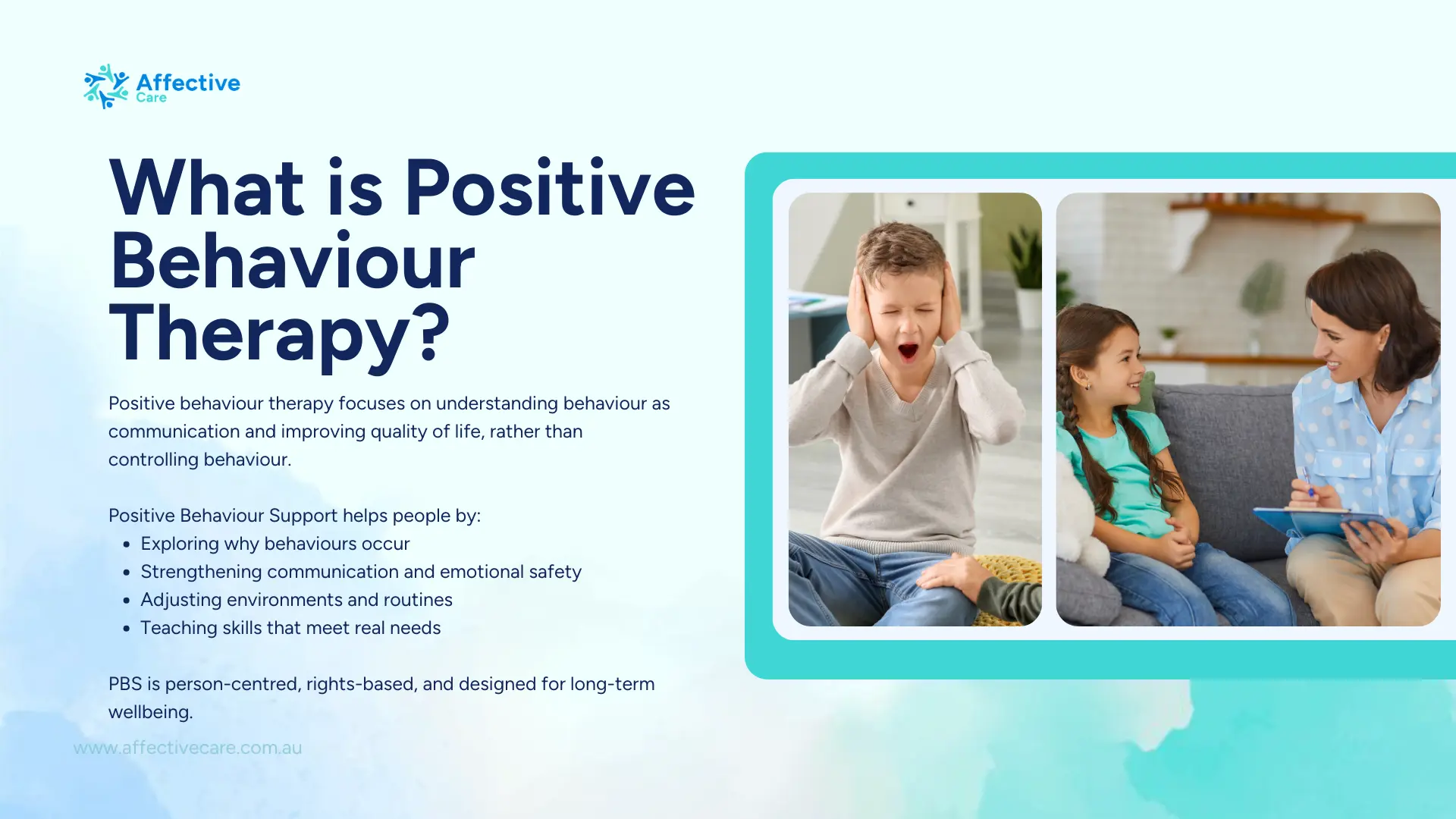
Positive Behaviour Support is a person-centred, evidence-based approach designed to reduce behaviours of concern while improving quality of life for people living with disability, including people living with autism.
Under the NDIS, PBS is the preferred, rights-based framework for behaviour support.
At its core, PBS shifts the focus away from asking “How do we stop this behaviour?” and instead asks more compassionate, effective questions such as:
- What is the person communicating through this behaviour?
- What need is not being met right now?
- How can the environment, supports, or routines be adjusted to help?
- What new skills would support the person to meet their needs safely?
PBS recognises that behaviours of concern often arise in response to communication barriers, sensory overload, anxiety, trauma, unmet needs, or a lack of choice and control.
Rather than relying on punishment, consequences, or control, PBS focuses on understanding, prevention, and skill-building.
In practice, Positive Behaviour Support involves the person, their family, carers, educators, and support workers working together to design proactive strategies that support safety, dignity, and participation.
It is collaborative by design and grounded in human rights principles.
You may hear terms like positive behaviour therapy, behaviour therapy, and Positive Behaviour Support used interchangeably.
Under the NDIS, Positive Behaviour Support is the preferred term, as it reflects a model that prioritises dignity, least-restrictive approaches, and long-term wellbeing.
Moreover, families supporting autistic participants may also need to understand how restrictive practices are managed in NDIS Positive Behaviour Support, especially when safety, behaviour plans and provider responsibilities are involved.
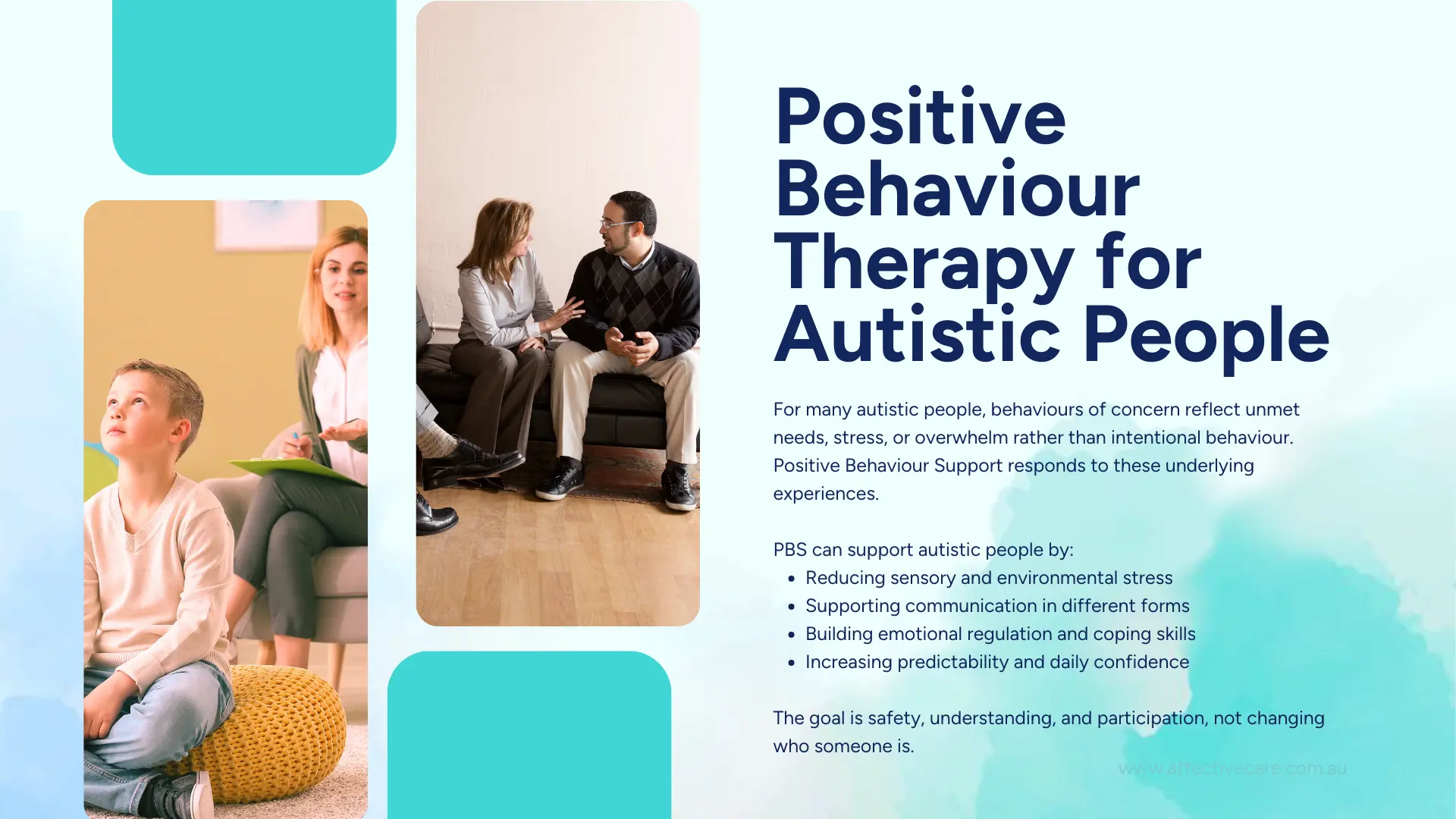
How does Positive Behaviour Therapy Support Autistic People?
For many autistic people, behaviours of concern are not intentional or “challenging”; they are often a response to environments, expectations, or situations that feel overwhelming, confusing, or unsafe.
Positive Behaviour Support helps by recognising that behaviours may be linked to:
- Difficulties with communication or being understood
- Sensory sensitivities or overload
- Anxiety, uncertainty, or changes in routine
- Limited access to choice, control, or preferred activities
- Emotional regulation challenges
Through PBS, supports are designed to respond to these underlying needs rather than reacting only to behaviour when it occurs.
Positive behaviour therapy for autism can support people to:
- Build emotional regulation and coping strategies
- Develop functional communication skills, including non-verbal or alternative communication
- Improve predictability and structure in daily routines
- Increase independence in everyday activities
- Strengthen relationships with family members, carers, and support workers
PBS can be tailored for autistic children, teenagers, and adults, and adapted to suit different communication styles, sensory profiles, and life stages.
Importantly, PBS does not aim to change who a person is. Instead, it supports autistic people to feel safer, more understood, and better supported within their environments.
A neurodiversity-informed PBS approach respects individual differences and prioritises wellbeing, autonomy, and participation over compliance.
If you are still trying to understand the assessment pathway, our guide to autism diagnosis in Australia explains how autism assessments work, who may be involved and how diagnostic reports can help clarify support needs.
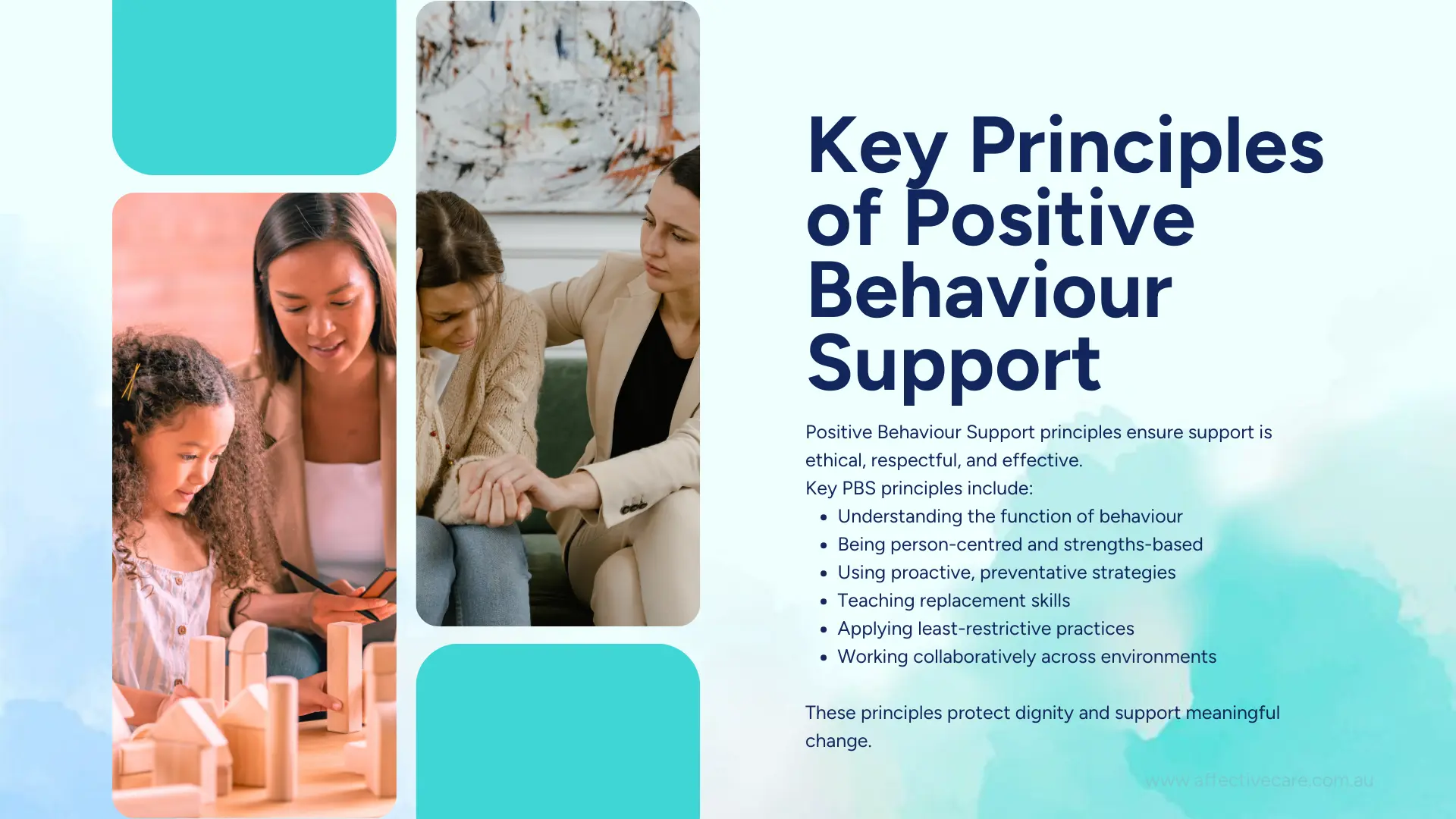
Key Principles of Positive Behaviour Support
Positive Behaviour Support is guided by a set of principles that align closely with the NDIS Code of Conduct and human rights frameworks.
- Understanding the Function of Behaviour: PBS begins by understanding why a behaviour occurs. Tools such as Functional Behaviour Assessments help identify what the behaviour is communicating or achieving for the person.
- Person-Centred and Strengths-Based: Support is built around the person’s goals, preferences, culture, communication style, and strengths. Behaviour is never viewed in isolation from lived experience.
- Proactive, Not Reactive: PBS prioritises prevention through environmental adjustments, predictable routines, communication supports, and skill-building, reducing the need for crisis responses.
- Skill-building focus: Rather than suppressing behaviour, PBS teaches safe, functional replacement skills that meet the same underlying need.
- Least restrictive approach: Restrictive practices are avoided wherever possible and used only as a last resort, with clear reduction and elimination strategies.
- Collaborative and consistent: PBS works best when families, carers, schools, and support teams use consistent strategies across all settings.
Positive Behaviour Therapy Vs Other Behavioural Therapies (Including ABA)
Families often ask whether Positive Behaviour Support (PBS) is the same as other behavioural therapies, particularly Applied Behaviour Analysis (ABA).
Applied Behaviour Analysis (ABA)
- A broad behavioural approach based on learning theory and reinforcement
- Focuses on building skills and reducing behaviours of concern
- Uses observation, data collection, and structured teaching
- Modern ABA practices may emphasise positive reinforcement and functional communication
- In Australia, some ABA principles may be used within PBS-informed practice
Positive Behaviour Support (PBS)
- A recognised and regulated behaviour support model under the NDIS
- Strong focus on human rights, dignity, and least-restrictive practice
- Views behaviour as communication, not a problem to eliminate
- Emphasises environmental changes rather than behaviour change alone
- Prioritises collaboration, consent, and the person’s voice
- Aims to improve overall quality of life, not just reduce behaviours
While both approaches may share behavioural principles, the intent, safeguards, and lived experience for the person can differ significantly depending on how support is delivered.
Under the NDIS, Positive Behaviour Support Planning is the recognised framework for behaviour support and must meet strict ethical and safeguarding standards.
Rather than asking which approach is “best,” it is more helpful to consider:
- The person’s goals, needs, and preferences
- Whether the support feels respectful and person-centred
- Alignment with family values and cultural considerations
- Whether the approach leads to meaningful improvements in daily life
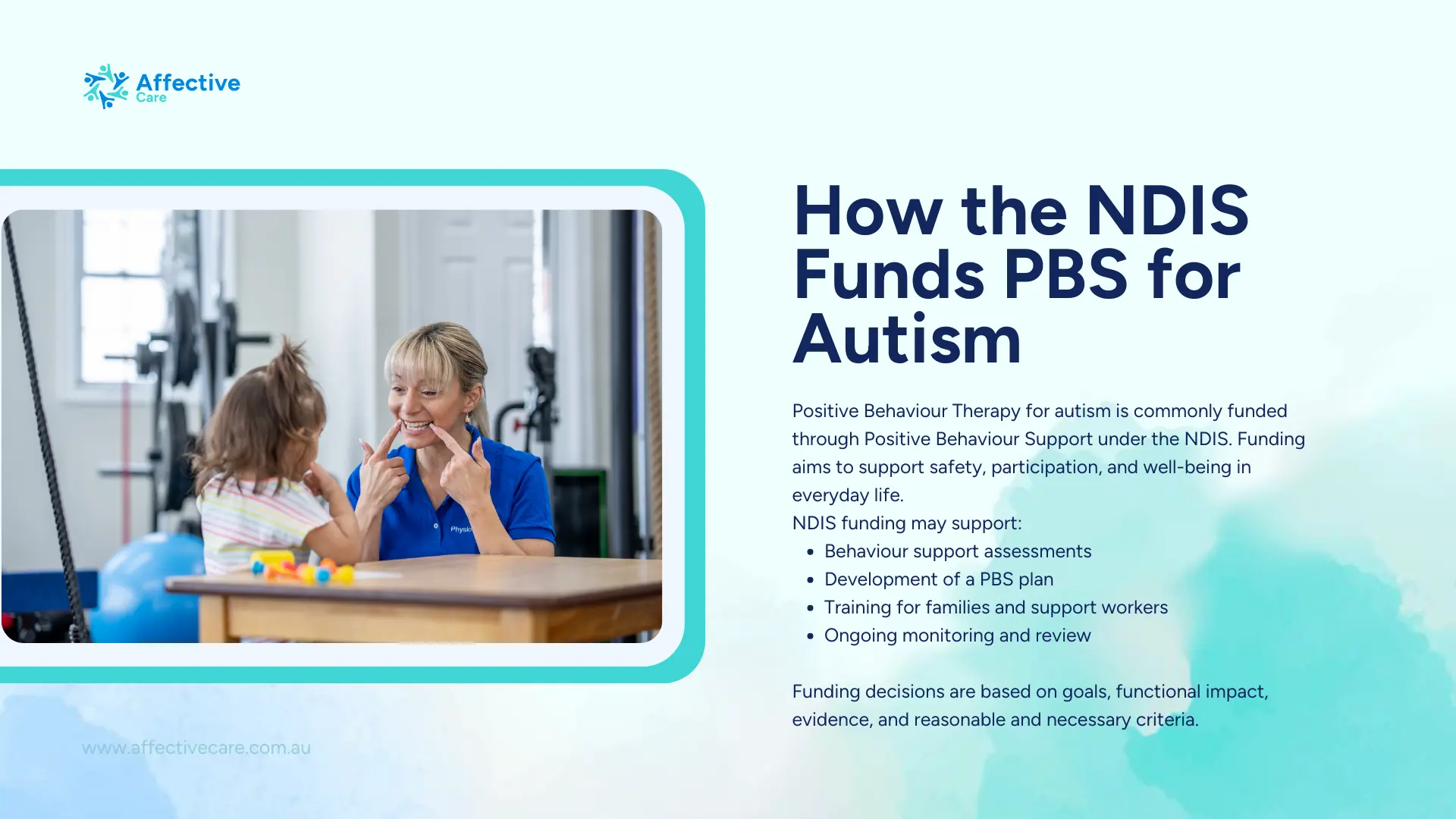
How the NDIS Funds Positive Behaviour Therapy for Autism
For people living with autism, Positive Behaviour Therapy is commonly delivered within a Positive Behaviour Support (PBS) framework under the NDIS.
PBS funding is designed to support people living with disabilities to reduce behaviours of concern, strengthen relationships, and improve safety, participation, and overall wellbeing in everyday life.
Where Positive Behaviour Therapy is Funded Under the NDIS
NDIS funding for Positive Behaviour Therapy for autism is most often provided through Capacity Building – Improved Relationships.
This category focuses on building skills, understanding behaviour, and creating supportive environments rather than using punishment or control.
In some cases, related therapeutic work may also be supported under Capacity Building – Improved Daily Living, depending on the goals outlined in the plan.
Funding may be included in an NDIS plan when behaviour:
- Impacts safety or wellbeing
- Affects daily participation at home, school, or in the community
- Creates ongoing stress for the person or their support network
What NDIS Behaviour Support Funding can Cover
When approved, NDIS funding for Positive Behaviour Therapy may include:
- Behaviour support assessments, such as Functional Behaviour Assessments, to understand the purpose of behaviour
- Development of a Positive Behaviour Support Plan, tailored to the person’s strengths, needs, and environment
- Training and coaching for families, carers, teachers, and support workers, to ensure consistent and safe responses
- Ongoing implementation, monitoring, and regular review, so strategies remain effective and respectful over time
How Funding Decisions are Made
Support coordinators or Local Area Coordinators (LACs) can help families understand current funding, request changes at plan reviews, and gather appropriate supporting documentation.
NDIS behaviour support funding decisions are based on:
- The individual’s goals and priorities
- The functional impact of behaviours of concern
- Evidence provided by allied health professionals
- Whether the support is considered reasonable and necessary
Getting the Right Guidance Early
If you’re unsure whether your NDIS plan includes behaviour support funding, or how to request Positive Behaviour Therapy for autism, early guidance can make a meaningful difference.
Understanding options early can reduce stress and help ensure support is in place before challenges escalate.
Seeking support is about building a safer, calmer, and more supportive everyday life for people living with autism and those who care for them.
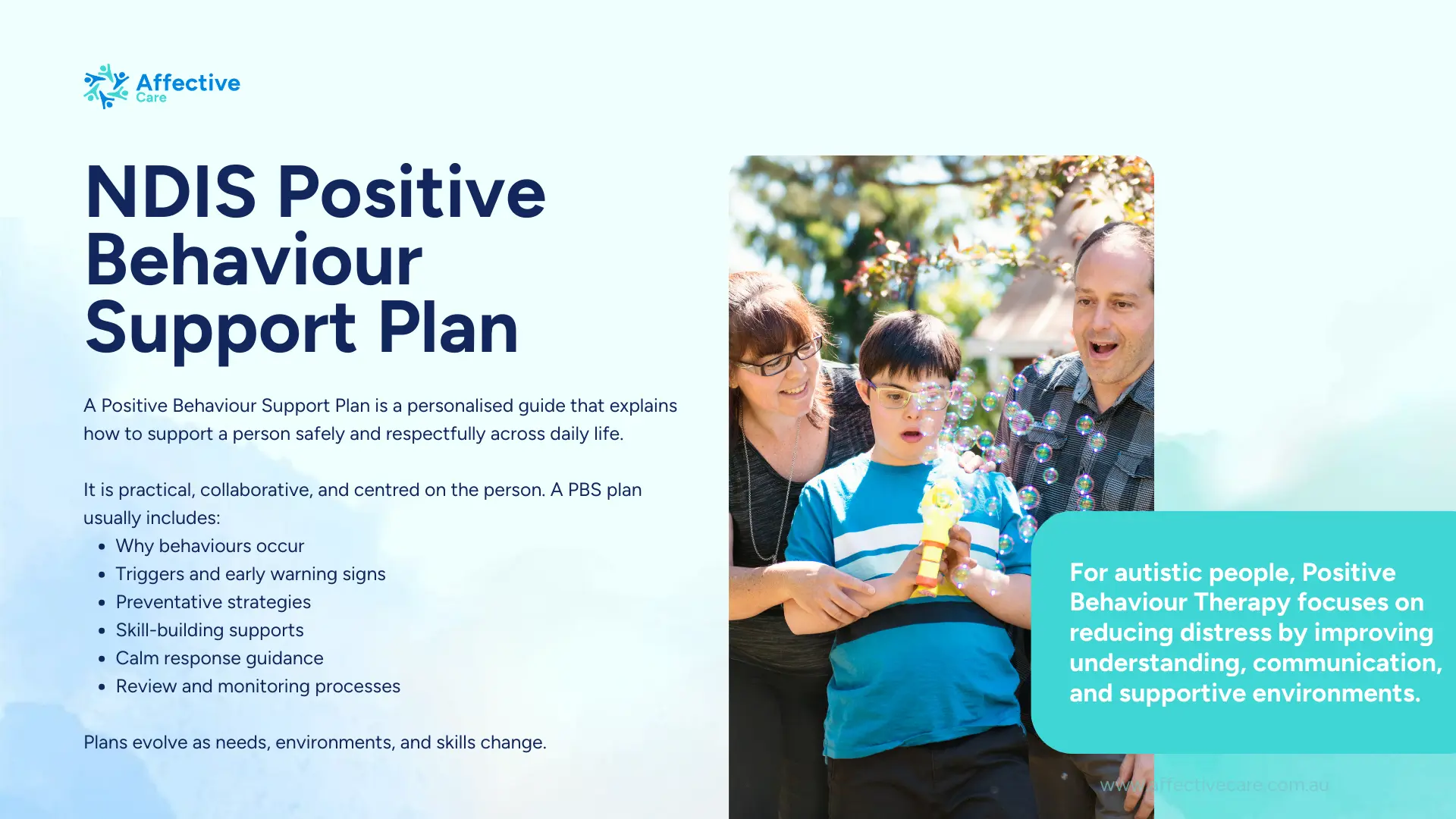
NDIS Positive Behaviour Support Plan
A Positive Behaviour Support (PBS) Plan is the practical outcome of Positive Behaviour Support planning under the NDIS.
It is a written, individualised guide that explains how to support a person living with disability in ways that are safe, respectful, and aligned with their goals, preferences, and everyday life.
Rather than focusing on stopping behaviour, a PBS plan is designed to understand why behaviours of concern occur and to outline proactive strategies that reduce stress, improve communication, and build skills over time.
The plan provides clear guidance so families, carers, educators, and support workers can respond consistently and confidently across different environments.
A high-quality PBS plan typically includes:
- Assessment findings, including the function or purpose of behaviours of concern
- Clear descriptions of behaviours, along with triggers and early warning signs
- Proactive strategies that focus on prevention, such as environmental adjustments, predictable routines, and communication supports
- Teaching strategies that build new skills, including emotional regulation, coping strategies, and functional communication
- Replacement behaviours, offering safer and more effective ways for the person to meet the same underlying needs
- Reactive strategies, outlining calm, safe responses during moments of escalation
- Monitoring and review processes, including how progress will be tracked and when the plan will be formally reviewed
PBS plans are developed collaboratively with the autistic person and their support network, ensuring the person’s voice, rights, and lived experience remain central. Plans are not static documents.
They are designed to evolve as the person’s skills grow, environments change, and new supports are introduced.
Moreover, Positive behaviour therapy may also support people with Level 1 autism when behaviour, anxiety, routines or sensory needs affect daily life.
Our article on NDIS Funding for Autism Level 1 explains how these support needs may be considered under the NDIS.
When used well, a Positive Behaviour Support Plan helps create more predictable, supportive environments, strengthens relationships, and supports long-term wellbeing for both the person and those supporting them.
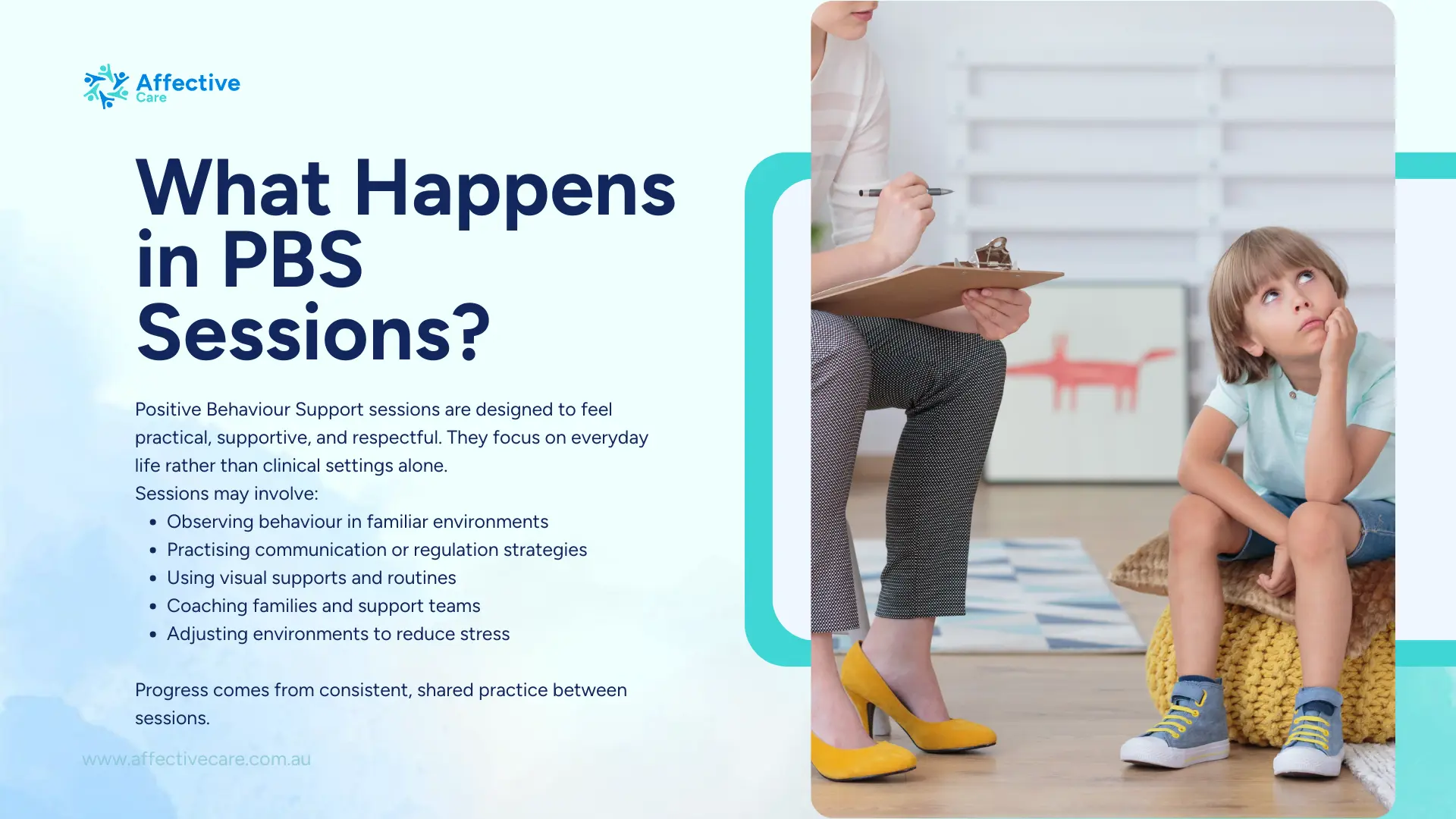
What Happens in Positive Behaviour Therapy Sessions?
Positive Behaviour Support sessions are designed to feel supportive, respectful, and practical, not overwhelming or clinical.
They are collaborative by nature and tailored to what matters most to the person living with disability and the people who support them day to day.
Rather than focusing on “fixing” behaviour, sessions aim to understand what is happening beneath the surface and to build strategies that fit naturally into everyday life. Sessions may involve:
- Observing behaviour in familiar settings such as home, school, or the community
- Practising communication, emotional regulation, or coping strategies in real-life situations
- Using visual supports, routines, or tools that increase predictability and reduce stress
- Coaching parents, carers, educators, or support workers to build confidence and consistency
- Making small, thoughtful changes to environments to support emotional safety
Importantly, PBS does not rely on sessions alone. Much of its impact comes from gentle, consistent practice between sessions, supported by families and support teams.
Positive behaviour therapy often works best when it is guided by clear assessment information and practical NDIS goals.
You may also find our guide on NDIS Funding for Autism Level 2 helpful for understanding evidence, support needs and funded therapy pathways.
Over time, these small, shared efforts can lead to calmer routines, stronger relationships, and a greater sense of safety and understanding for everyone involved.
Choosing an NDIS Behaviour Support Practitioner
Choosing a behaviour support practitioner is an important step, and it’s okay if it feels uncertain at first.
The right practitioner should feel like a partner, someone who listens, respects your values, and works alongside you to support meaningful, sustainable change.
Here are a few things to consider while choosing an NDIS Behaviour Support Practitioner;
Understanding the Whole Person
The right behaviour support provider takes time to understand the person beyond the behaviour.
This includes learning about daily routines, communication styles, sensory needs, environments, and what a good quality of life looks like for the individual and their family.
Behaviour is viewed as communication, not something to control or suppress.
Relevant Experience and Life-Stage Understanding
Experience matters, especially with people at a similar age or life stage.
A provider who understands early childhood, school settings, adolescence, or adulthood can offer strategies that are realistic, practical, and suited to everyday life rather than generic or overly clinical approaches.
Commitment to Positive Behaviour Support Principles
A quality provider works within recognised Positive Behaviour Support principles under the NDIS.
This includes prioritising dignity, consent, human rights, and least-restrictive practices, while ensuring behaviour support plans are ethical, lawful, and focused on long-term wellbeing rather than short-term compliance.
Collaboration and Teamwork
Effective behaviour support is collaborative. The right provider welcomes the involvement of families, carers, educators, support workers, and coordinators where appropriate.
They share knowledge openly, support consistent strategies, and ensure everyone understands their role in supporting the person.
Clear, Honest Communication
A good provider communicates openly and clearly about goals, strategies, progress, and reporting.
Information should be shared simply, without jargon or pressure, so individuals and families feel informed and confident throughout the process.
Flexibility and Responsiveness
The right provider adapts when something is not working. They listen to feedback, review strategies regularly, and recognise that needs and goals can change over time.
Behaviour support should feel flexible and responsive, not rigid or one-size-fits-all.
Emotional Safety and Trust
Feeling respected, heard, and emotionally safe is essential. Trust your instincts if something does not feel right.
Under the NDIS, you have choice and control and the right to change providers or seek a second opinion if support does not feel aligned with your values or goals.
Why the Right Fit Matters
A strong practitioner–participant relationship supports trust, collaboration, and emotional safety.
When the approach feels respectful and aligned, families and autistic people are more likely to feel confident using strategies consistently in everyday life.
Asking Questions and Trusting Your Instincts
It’s appropriate to ask questions about how support will be delivered and what collaboration will look like.
A practitioner should welcome these conversations and be open to feedback. If something doesn’t feel right, that feeling matters.
Your Right to Choice and Control
Under the NDIS, you have the right to choose who supports you. You can request changes, seek a second opinion, or change providers if an approach does not feel respectful or aligned with your goals.
Finding the right practitioner can make a meaningful difference to how supported and empowered you feel throughout your PBS journey.
Next Steps and Getting Support
If behaviours of concern are affecting daily life at home, school, or in the community, you are not alone, and it’s okay to seek support.
Many families and autistic people reach this point feeling tired, uncertain, or unsure where to begin.
Reaching out is not a sign of failure; it’s a step toward understanding and safety.
You may wish to start by:
- Speaking with your GP, paediatrician, or an allied health professional who knows you or your child well
- Reviewing your NDIS plan to see whether behaviour support funding is included
- Talking with your support coordinator or Local Area Coordinator (LAC) about available options
- Reaching out to a Positive Behaviour Support provider to discuss goals, values, and whether their approach feels like the right fit
It’s important to remember that taking the first step does not mean committing to everything at once.
It simply opens the door to conversation, clarity, and support. You can move at a pace that feels right for you, adjusting supports as understanding grows.
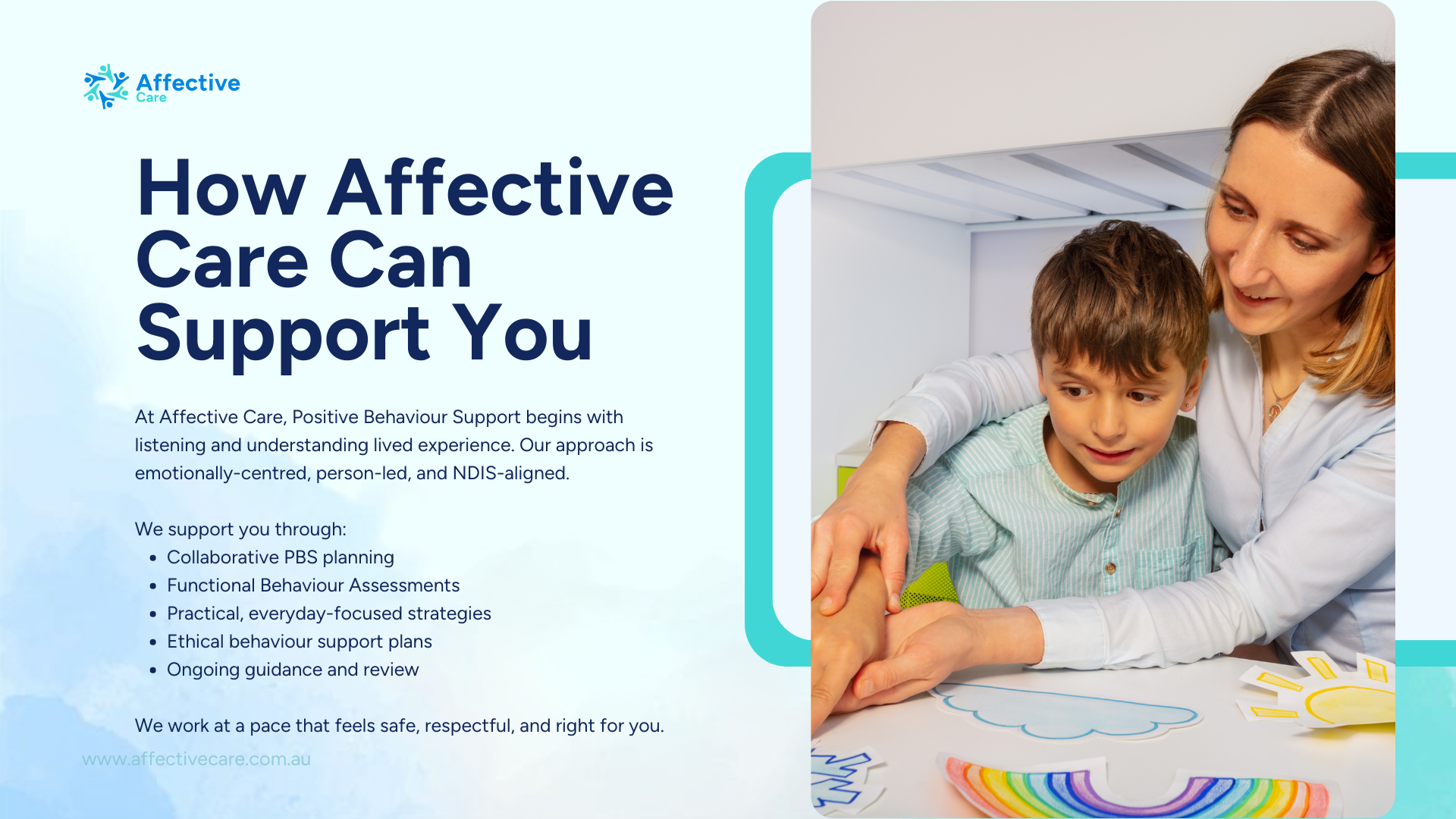
How Affective Care Can Support You
At Affective Care, we believe that effective Positive Behaviour Support begins with genuine understanding and respect for lived experience.
We take a person-centred, emotionally aware approach that prioritises dignity, safety, and meaningful relationships.
Our Positive Behaviour Support services include:
- Collaborative planning that involves the person, their family, carers, schools, and support teams
- Comprehensive Functional Behaviour Assessments to understand the why behind behaviours of concern
- Practical, easy-to-use behaviour support plans that fit into real everyday life
- Proactive strategies that focus on prevention, communication, and skill-building
- Ethical reduction and elimination of restrictive practices, in line with NDIS requirements
- Ongoing guidance, coaching, and review to support consistent implementation
We understand that navigating behaviour support and the NDIS can feel complex and emotionally demanding.
Our role is to walk beside you, listening first, supporting second, and working at a pace that feels safe and respectful.
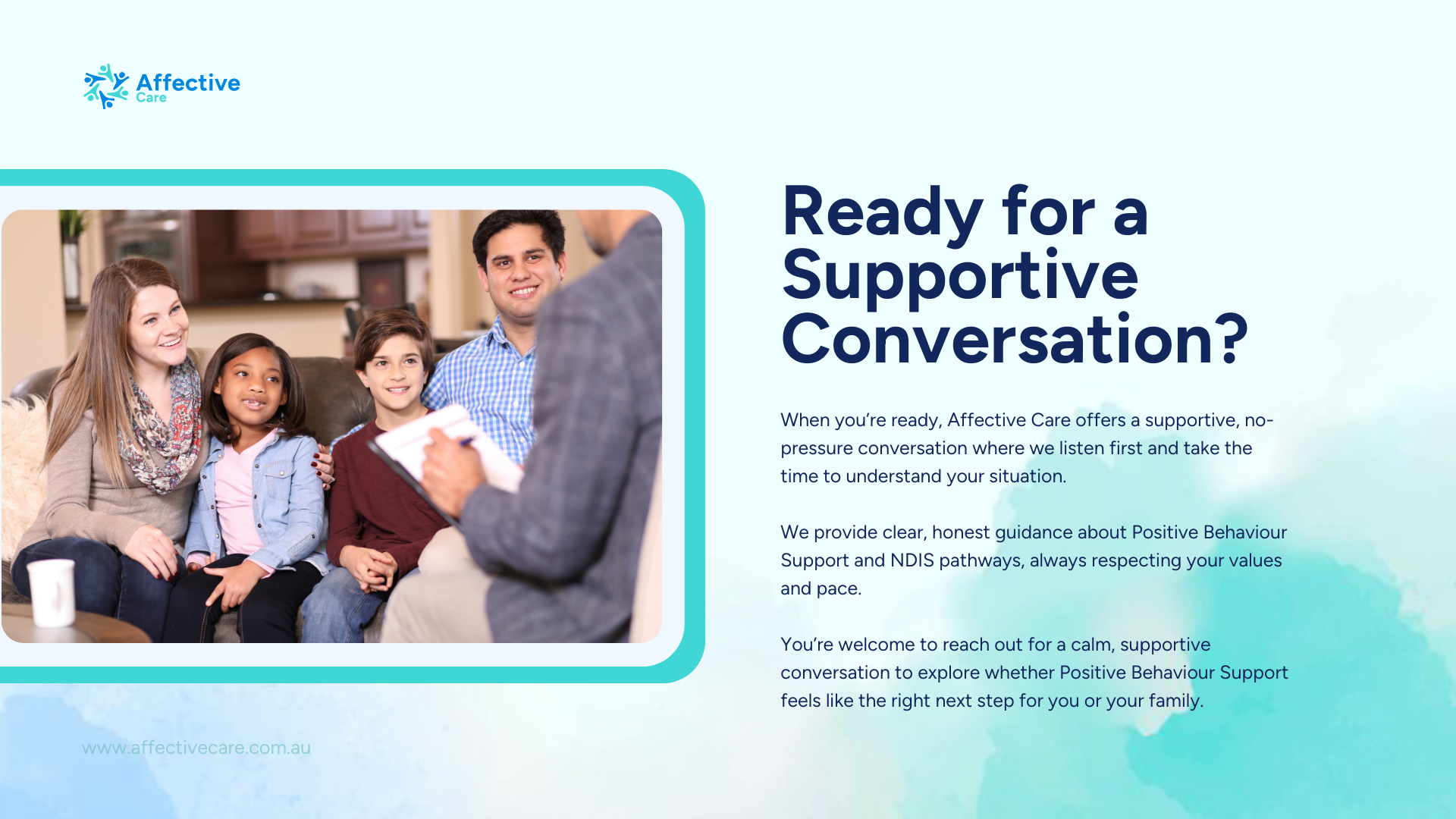
A Supportive Conversation, When You’re Ready
If behaviour support feels like the next step, you don’t have to navigate it alone.
We understand that reaching out can come with questions, uncertainty, or past experiences that make you cautious, and that’s okay.
Our team takes the time to listen first, offering clarity about Positive Behaviour Support, reassurance that your concerns are valid, and practical guidance on how behaviour support may fit within your NDIS plan.
These conversations are about helping you feel informed, respected, and supported.
We’ll explain what PBS may involve, how it aligns with NDIS requirements, and what support could look like in everyday life, always guided by your goals, values, and pace.
There’s no obligation to proceed. Just a chance to ask questions, talk things through, and decide what feels right for you and your family.