
As an NDIS Support Coordinator, Local Area Coordinator (LAC), or NDIS participant in Australia, you may have come across the term “SIL housing.”
SIL stands for Specialist Disability Accommodation (SDA) and Supported Independent Living (SIL).
SIL vs SDA housing options can be confusing, as SIL relates to the support you receive in your home, while SDA relates to the specialised housing designed for people with higher support needs.
This type of housing provides essential disability support for individuals with high support needs who cannot live independently.
NDIS accommodation supports are designed to help people living with disability access housing and living arrangements that meet their support needs, safety requirements, and independence goals.
These supports can include specialist housing, daily living support in the home, flexible living arrangements, home modifications, and temporary accommodation during transitions.
Rather than focusing on the property alone, NDIS accommodation supports are about creating a living setup that enables stability, participation, and a better quality of life, based on each person’s individual circumstances and goals.
In this blog post, we will dive deeper into SIL housing, learn about the SIL eligibility criteria and funding, and discuss the benefits of these accommodations.
Eligibility Criteria for SIL Housing
Understanding who is eligible for supported independent living involves looking at whether a person needs regular daily support to live safely, manage personal care, and build independence at home due to their disability.
To be eligible for SIL housing, a person must meet the guidelines established by the National Disability Insurance Agency (NDIA).
A person with a permanent impairment and high support needs may be considered eligible for SIL accommodation if they require assistance from a carer and support staff for daily essential tasks such as bathing, feeding, and toileting.
SIL accommodations also cater to people who have complex and challenging behaviours or require frequent monitoring for their well-being.
The person must have an approved NDIS plan, which includes funding for SIL to be considered for Specialist Disability Accommodation.
If you are unsure whether SIL is the right fit, our guide on who is eligible for supported independent living explains the support needs, evidence and NDIS criteria that may be considered.
Funding for SIL Housing
SIL Housing receives funding from the NDIS under the SDA program. The SDA funding covers the costs of building and maintaining specialist housing for people with disabilities.
The NDIA also provides funding for Supported Independent Living Assistive Technology, which can include technology to help manage medication, mobility assistance, communication devices, and height-adjustable kitchen appliances.
Apart from NDIS funding, the state government in Australia may also provide funding for SIL housing in some cases.
If you are planning a move into SIL housing, it is important to understand how SIL rent works, including what participants may need to pay separately for rent, board, utilities and everyday living costs.
Benefits of SIL Housing
The benefits of supported independent living include having the right level of daily support while still maintaining choice, control, and independence in your home.
SIL can support personal care, household tasks, routines, and skill development, helping people living with disability feel safer, more confident, and more settled in their daily lives.
SIL accommodates people with high support needs, providing a better quality of life and a sense of independence. The housing is designed with accessibility in mind, making daily routines easier for residents.
Supported Independent Living housing provides 24/7 care, ensuring the person’s safety, security, and mental well-being. The residents can engage in community activities, tours, and social events organized by SIL support staff, such as day trips, lunch outings, and movie screenings.
SIL housing allows family members and carers to have peace of mind, knowing that their loved ones are in a safe and caring environment.
NDIS Support Coordinators and Local Area Coordinators
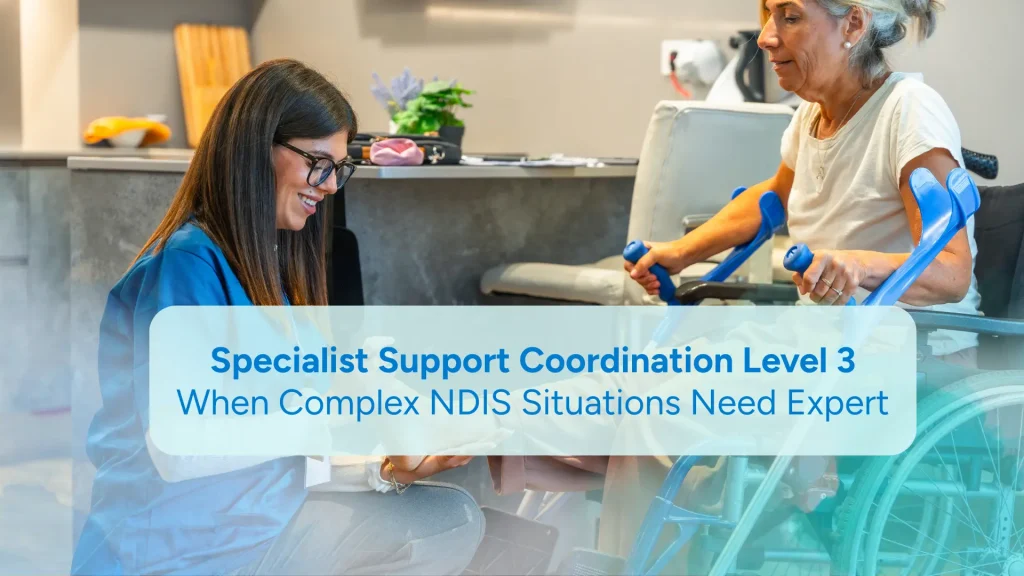
As an NDIS Support Coordinator or Local Area Coordinator, you can assist NDIS participants in determining their eligibility for SIL housing and guide them through the application process for SDA funding.
You can also assist in coordinating services and support before and after the person moves into SIL housing.
By working together, you can help ensure that people with high support needs can live a fulfilling life while maintaining independence, dignity, and safety.
Conclusion
SIL housing in Australia provides essential disability support for individuals with high support needs.
It caters to people who need assistance with daily essentials, complex behaviour management, and frequent monitoring.
NDIS (SIL) focuses on accessibility and safety and provides people with the opportunity to participate in community events and engage in social activities.
As an NDIS Support Coordinator or Local Area Coordinator, you play an essential role in identifying eligible individuals, assisting with the application process for SDA funding, and coordinating services and supports.
With SIL housing, people with high support needs can lead better lives, maintain independence, and contribute to their communities.
If SIL housing is right for you and you need help getting started, learn more about how Affective Care can help you, or simply reach out to us by filling out the form below.