
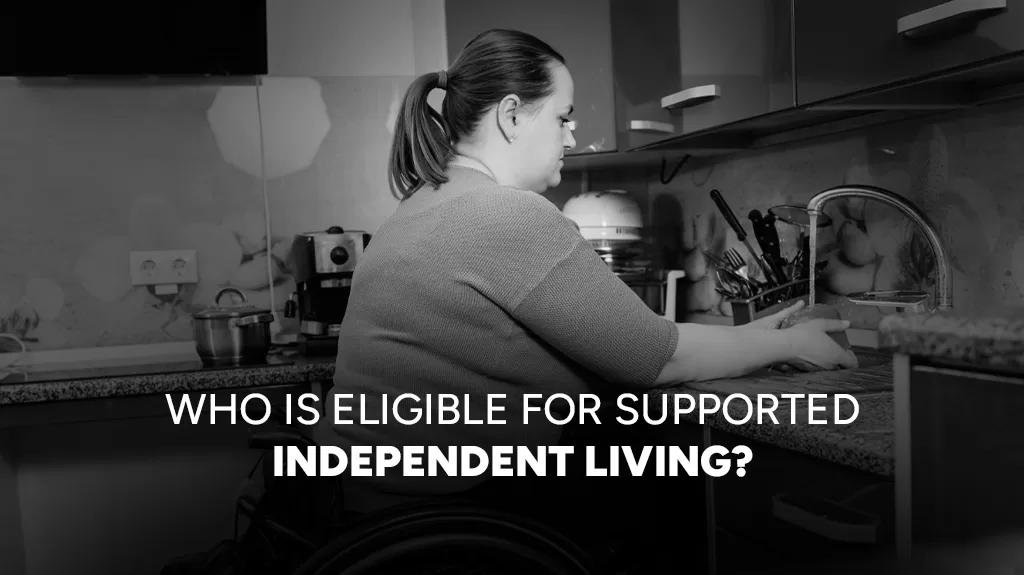
Supported Independent Living (SIL) is an NDIS support that provides participants with ongoing assistance to manage daily living tasks and build independence at home.
Many participants, families, and Support Coordinators ask the same question: who is eligible for Supported Independent Living under the NDIS?
Understanding NDIS Supported Independent Living eligibility is important because SIL is designed for participants who require regular or intensive support to live safely and independently.
SIL supports may include help with:
- Personal care and daily routine
- Cooking and meal preparation
- Cleaning and household tasks
- Medication reminders
- Support with appointments
- Developing independence and life skills
- Assistance with community participation
However, not every NDIS participant automatically qualifies for SIL funding. The NDIA assesses several criteria to determine who qualifies for SIL in the NDIS.
This guide explains the SIL eligibility criteria, including disability requirements, age, living arrangements, support needs, and how SIL funding decisions are made.
Disability requirements for SIL eligibility
One of the most important factors when determining who is eligible for Supported Independent Living is the participant’s disability.
To qualify for NDIS Supported Independent Living, the participant must have a significant and permanent disability that impacts their ability to manage everyday tasks independently.
The NDIA considers several factors when assessing SIL eligibility criteria, including:
- Whether the disability is permanent or lifelong
- How the disability affects daily functioning
- The participant’s ability to complete personal and household tasks
- The level of supervision or support required
Participants must usually provide evidence from medical professionals, therapists, or support providers confirming that their disability significantly affects their ability to live independently without support.
This evidence helps the NDIA determine whether the Supported Independent Living support is reasonable and necessary.
Once you understand who may qualify for SIL, it is also helpful to know how SIL rent works, including what participants may usually pay for rent, board, utilities and everyday household costs.
Age requirements for SIL eligibility
Another key factor in determining who is eligible for Supported Independent Living is age.
Generally, SIL funding is intended for adult NDIS participants aged 18 and over.
Participants under the age of 18 are typically supported through family-based care arrangements rather than Supported Independent Living services.
This is because SIL is designed to support independent living arrangements, which are more commonly relevant for adults who are:
- Moving out of the family home
- Transitioning to shared living arrangements
- Developing independent living skills
- Building long-term housing stability
However, younger participants may still receive other NDIS supports to build independence and prepare for future SIL housing options.
Living arrangements for SIL eligibility
Living arrangements are another important factor when determining who is eligible for Supported Independent Living housing under the NDIS.
SIL support is typically provided in the following living arrangements:
- Shared living environments with other participants
- Supported independent living homes
- Individual apartments with support access
- Private homes where SIL support workers provide assistance
Most SIL housing arrangements in Australia involve two to four participants sharing a home with support workers available throughout the day or night.
In some cases, a participant may receive SIL support while living alone, particularly if they require higher levels of support.
However, participants living in institutional environments such as hospitals or correctional facilities are generally not eligible for SIL housing supports.
Deemed support for SIL eligibility
To determine who qualifies for Supported Independent Living, the NDIA assesses whether a participant requires ongoing assistance with daily living tasks.
This assessment focuses on the participant’s functional capacity, which includes their ability to manage:
- Personal care and hygiene
- Household tasks and routines
- Safety in the home environment
- Medication management
- Social and community participation
- Communication and decision-making
Participants who already receive adequate support from family members, carers, or informal networks may not automatically qualify for SIL funding.
However, if a participant requires structured, rostered support to live safely and independently, SIL may be considered a reasonable and necessary support under the NDIS.
A functional capacity assessment or home and living assessment is often used to provide evidence for SIL eligibility.
If you are still comparing living options, our guide to sil housing in Australia explains how SIL housing works, what daily support may look like and how it differs from other NDIS home and living supports.
Funding Decisions: Who is Eligible for Supported Independent Living Funding?
Even if a participant meets the general criteria, the final decision about who is eligible for Supported Independent Living funding is made by the NDIA.
SIL funding is provided on a case-by-case basis and depends on the participant’s:
- Individual support needs
- Functional capacity
- Living arrangements
- Long-term independence goals
If approved, SIL funding is included in the participant’s NDIS plan under the Capacity Building category.
This funding is used to pay for support workers who assist with daily living tasks and independence-building activities.
- The amount of funding allocated will depend on:
- The number of support hours required
- Whether overnight support is needed
- Whether support is shared with other residents
- The participant’s level of supervision and assistance
Participants maintain choice and control over which provider delivers their Supported Independent Living services.
If you are exploring housing options in more detail, our article on SIL accommodation types, shared living options, and how supported homes work under the NDIS can help.
Conclusion
Supported Independent Living is a valuable NDIS support item that helps participants with a disability to live independently and safely in their homes.
Eligibility for SIL is determined by a range of criteria, including age, disability, living arrangements, deemed support, and funding.
To determine whether you or your clients are eligible for SIL services, it is important to speak with an NDIS Local Area Coordinator or Support Coordinator and to discuss your individual needs and goals.
SIL services can help to provide participants with greater independence and choice and can help to improve their overall quality of life.
Are you looking for Supported Independent living services? Learn more about our Supported Independent Living Services or get in touch by filling out the form below.