


Empower Lives with Heart

Promoting Social Inclusion: Peer Support Groups and Community Engagement 

Start your care
journey with someone
who understands.

Table of Contents

JOIN OUR NEWSLETTER & GET FREE UPDATES

Core Essentials

Affective Care Instrument
Affective Care New Branded Post
Affective Care AED
Promoting Social Inclusion AFCR

Social isolation is a major challenge faced by many people with disabilities.

Lack of access, stigma, and other barriers can make it difficult to build connections and feel included in the community.

However, initiatives like peer support groups and community engagement programs are making a positive impact by fostering social inclusion.

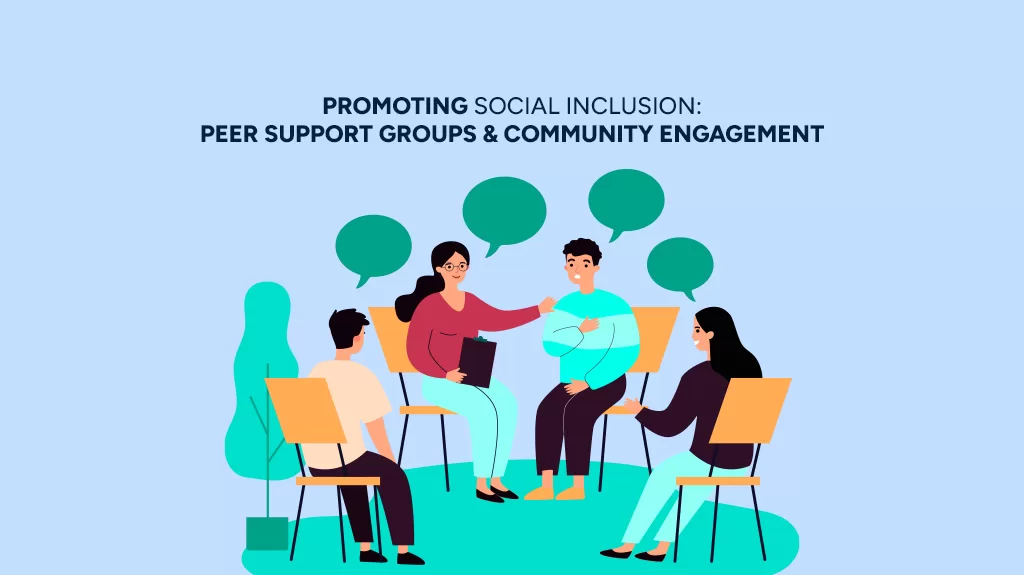
Peer support groups provide a safe space for people with disabilities to share experiences, offer mutual support, and build meaningful connections.

The Brisbane Hot Topics Peer Support Group is one such example, bringing together individuals to discuss relevant issues and find strength in shared understanding.

Community engagement efforts also play a crucial role in promoting inclusion by raising awareness, breaking down stereotypes, and creating opportunities for people with disabilities to actively participate in various aspects of community life.

Discover Social & Community Support
Explore how peer support and community engagement can support connection, confidence, and inclusion.

The Importance of Social Inclusion

Social inclusion is vital for overall well-being and quality of life. It fosters a sense of belonging, purpose, and self-worth.

When people with disabilities are socially isolated, they may experience higher rates of depression, anxiety, and other mental health challenges.

Social participation and community engagement provide structured opportunities for people living with disabilities to practise communication skills, build social confidence, and participate more fully in community life.

Promoting social inclusion not only benefits individuals but also enriches communities by embracing diversity and creating a more inclusive society.

It challenges misconceptions, breaks down barriers, and fosters understanding and acceptance.

If you are new to disability support funding, our guide to the NDIS explained gives a simple overview of the scheme, who it supports and how participants may use their plans.

New to the NDIS?
Our free “Where Do I Start?” Starter Pack walks you through your very first steps in plain language.

Peer Support Groups: A Lifeline for Connection

Peer support groups provide a unique and invaluable platform for people with disabilities to connect with others who share similar experiences.

These groups offer a safe and supportive environment where individuals can openly discuss their challenges, celebrate their successes, and learn from one another.

The Brisbane Hot Topics Peer Support Group is a shining example of the positive impact such initiatives can have.

Facilitated by experienced professionals, the group meets regularly to explore various topics relevant to the disability community, such as accessibility, employment, and mental health.

Participants not only gain valuable insights and practical advice but also form lasting friendships and a strong support network.

The sense of camaraderie and understanding fostered within these groups can be truly empowering, helping individuals feel less alone and more confident in navigating their unique circumstances.

When planning regular community activities, it can also help to understand how to make NDIS funding last across the full plan period while still protecting meaningful social participation.

Community Engagement: Building an Inclusive Society 

While peer support groups play a vital role in fostering connections within the disability community, community engagement initiatives are essential for promoting broader social inclusion and breaking down barriers.

These efforts can take many forms, such as awareness campaigns, inclusive events, and partnerships with local organisations and businesses

Moreover, When planning social inclusion or community participation supports, it can help to understand the NDIS Price Guide so you know how support rates, pricing limits and claiming rules may apply.

By actively involving people with disabilities in community activities and decision-making processes, we can create a more inclusive and accessible society.

Community engagement not only raises awareness about the challenges faced by people with disabilities but also highlights their valuable contributions and perspectives.

Moreover, Community engagement supports are easier to plan when you understand how NDIS funding works, including how supports need to connect with participant goals, needs and daily life.

It encourages open dialogue, challenges stereotypes, and fosters a greater understanding and appreciation for diversity. 

By working together and fostering a culture of inclusion and understanding, we can create more inclusive and supportive communities for people with disabilities.

For questions about invoices, payments or financial responsibilities related to NDIS supports, our guide to NDIS Taxation explains key points participants, families and providers may need to understand.


Looking for Community Connection?
Speak with our team about accessing Social and Community Support that aligns with your goals and needs.

Start your care
journey with someone
who understands.

FAQ

Social inclusion is crucial for people with disabilities because it promotes a sense of belonging, purpose, and overall well-being. When socially isolated, individuals may experience higher rates of mental health challenges like depression and anxiety. Inclusion also enriches communities by embracing diversity and fostering understanding. 

Peer support groups provide a safe and supportive environment for people with disabilities to connect with others who share similar experiences. They offer a platform to discuss challenges, celebrate successes, and build meaningful connections. Groups like the Brisbane Hot Topics Peer Support Group foster a sense of camaraderie and understanding, empowering individuals to feel less alone and more confident. 

Community engagement initiatives are essential for promoting broader social inclusion and breaking down barriers. These efforts can include awareness campaigns, inclusive events, and partnerships with local organisations and businesses. By actively involving people with disabilities in community activities and decision-making processes, we can create a more inclusive and accessible society, raise awareness, challenge stereotypes, and foster a greater appreciation for diversity. 

Examples of community engagement initiatives that promote social inclusion include: 

Awareness campaigns to educate the public about the challenges faced by people with disabilities and the importance of inclusion
Inclusive community events and activities that are accessible and welcoming to people with disabilities 
Partnerships with local businesses and organisations to improve accessibility and create inclusive spaces 
Involving people with disabilities in decision-making processes and community planning to ensure their needs and perspectives are represented 

Individuals and communities can get involved in promoting social inclusion in various ways: 

Attend or support local peer support groups and community engagement initiatives
Advocate for accessibility and inclusive practices in public spaces, workplaces, and community events
Educate themselves and others about disability rights, challenges, and the importance of inclusion
Volunteer or partner with organisations that support people with disabilities
Challenge stereotypes and promote positive representations of people with disabilities 
Actively listen to and amplify the voices of people with disabilities in decision-making processes 

JOIN OUR NEWSLETTER & GET FREE UPDATES

Core Essentials

Affective Care Instrument
Affective Care New Branded Post
Affective Care AED

Why Affective Care?

Trusted Partner in Your Life Journey

Affective Care Why To Choose Us Image

Care with
Heart

Affective Care offers more than services. We bring genuine compassion and empathy to your NDIS and aged care journey, supporting your goals with kindness, respect and personalised care everyday.

Why Choose Us Affective Care BG

Empowering Your Journey

Your goals matter. Affective Care partners with you to build confidence, independence, and joy in your daily life through tailored NDIS and aged care support, always delivered with heart.

Affective Care Why To Choose Us

Support with
Trust

Trust matters in care. That's why our experienced, compassionate team puts your wellbeing first. Delivering reliable, personalised NDIS and aged care support that makes a real difference every day.

Affective Care Why To Choose Us

Together We
Thrive

At Affective Care, we walk beside ypour goals anmd live life ypour way. Our care empowers people living with disability and older Australians to thrive with confidence.

You May Like

Specialist Support Coordination Level 3

Navigating the NDIS can feel demanding at the best of times. When life becomes unstable, unsafe, or overwhelming, that complexity can quickly escalate into crisis.   Many people living with disabilities, and the families who support them, reach a point where standard supports are no longer enough to hold everything together.  Moreover, you might be dealing […]

......
Does the NDIS Cover Telehealth Psychology

It may, when the psychology support relates to a participant’s disability, builds or maintains functional capacity, connects with their NDIS goals and is consistent with the funding available in their plan.  Telehealth is simply a way of delivering psychology support. An online appointment does not automatically become eligible for NDIS funding just because it is delivered by […]

......
Autism level 3 NDIS Funding

A person with Autism Level 3 may qualify for the NDIS when their autism-related impairments are permanent and substantially affect everyday activities such as communication, social interaction, learning, self-care or self-management.  However, an Autism Level 3 diagnosis does not automatically guarantee NDIS access, a particular service or a fixed funding package. The NDIA considers the person’s functional capacity, support needs, goals, […]

......
Telehealth vs face to face psychology

Choosing between Telehealth vs face-to-face psychology depends on therapy goals, communication preferences, accessibility needs, location and clinical circumstances. Telehealth psychology is delivered remotely, usually through secure video or, where appropriate, by telephone. Face-to-face psychology involves attending a clinic or suitable service location and meeting the psychologist in person. Understanding Telehealth vs face-to-face psychology can help […]

......

JOIN OUR NEWSLETTER & GET FREE UPDATES