

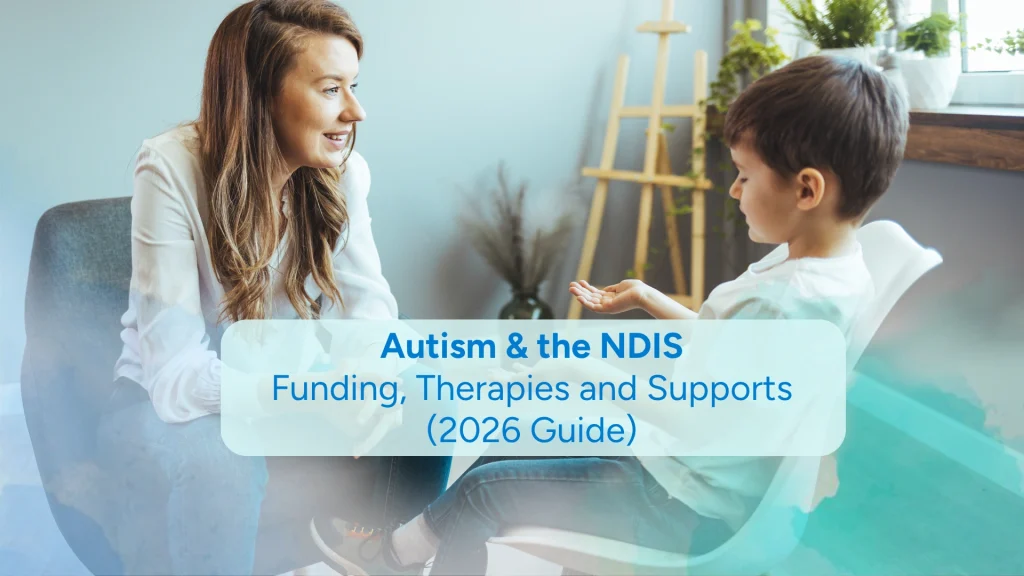
Autism is the most common primary diagnosis among NDIS participants, yet for many families, understanding what the scheme actually funds and how to access it, remains confusing.
Eligibility rules are changing, therapy options vary widely, and every child or adult has different support needs.
This guide explains how NDIS autism funding works in 2026: who is eligible, what supports can be funded, and how to build a therapy team around your goals.
Whether you’re a parent beginning the journey, an autistic adult exploring your options, or a support coordinator helping a participant, this is your starting point.
New to the scheme entirely? Start with our plain-English overview of the National Disability Insurance Scheme.
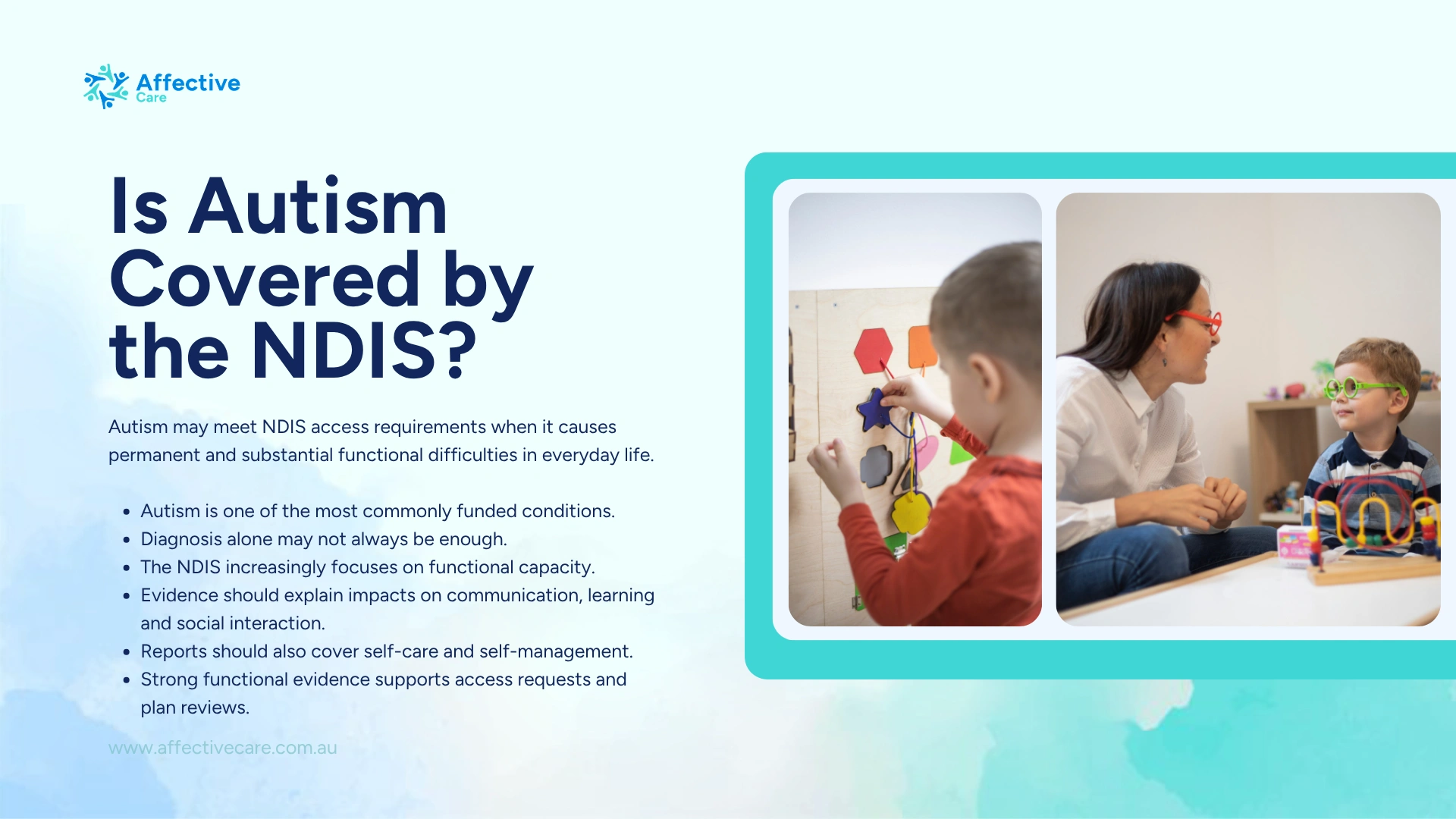
Is Autism Covered by the NDIS?
Yes, autism is one of the most commonly funded conditions under the NDIS.
Historically, an autism diagnosis at Level 2 or Level 3 was treated as meeting the disability requirements without further functional evidence, while Level 1 required additional information about how autism affects daily life.
What’s changing in 2026: The NDIS is progressively moving from diagnosis-based eligibility toward assessments of functional capacity, that is, how a person’s disability affects their everyday life, not just what the diagnosis is called.
For autistic applicants, this means the quality of your supporting evidence matters more than ever.
Here’s what that shift looks like in practice:
The Access Lists are Being De-Emphasised
Historically, “NDIS List A” conditions (including autism Levels 2 and 3) were treated as meeting the disability requirements without further evidence.
Under the announced reform direction, functional capacity assessment becomes the basis of access decisions, and the lists themselves are expected to play a diminishing role with proposals to phase them out entirely in the coming years.
Existing Participants aren’t Cut Off Overnight
Reform is being staged, and current plans continue under their existing terms. Changes apply progressively, mostly at reassessment and new-access points.
“Reasonable and necessary” Still Governs Funding
What the NDIS pays for continues to depend on the link between your goals, your functional needs and the supports requested, the reforms change how needs are evidenced, not the underlying principle.
The Practical Takeaway
Families who invest in strong functional evidence, rather than relying on the diagnosis label are positioned well under both the old rules and the new ones.
Reform detail changes quickly; always cross-check against the NDIA’s current guidance at ndis.gov.au, and see our regularly updated analysis of the 2026 NDIS changes for what each announcement means on the ground.
What This Means in Practice
- A diagnosis alone may not be enough; reports should describe functional impact across communication, social interaction, learning, self-care and self-management.
- Reports from psychologists, occupational therapists and speech pathologists carry significant weight. Our guide to NDIS evidence and reports explains what assessors look for.
- If you’re preparing an access request or plan review, the NDIS Plan Review Evidence Checklist walks you through the documents to gather.
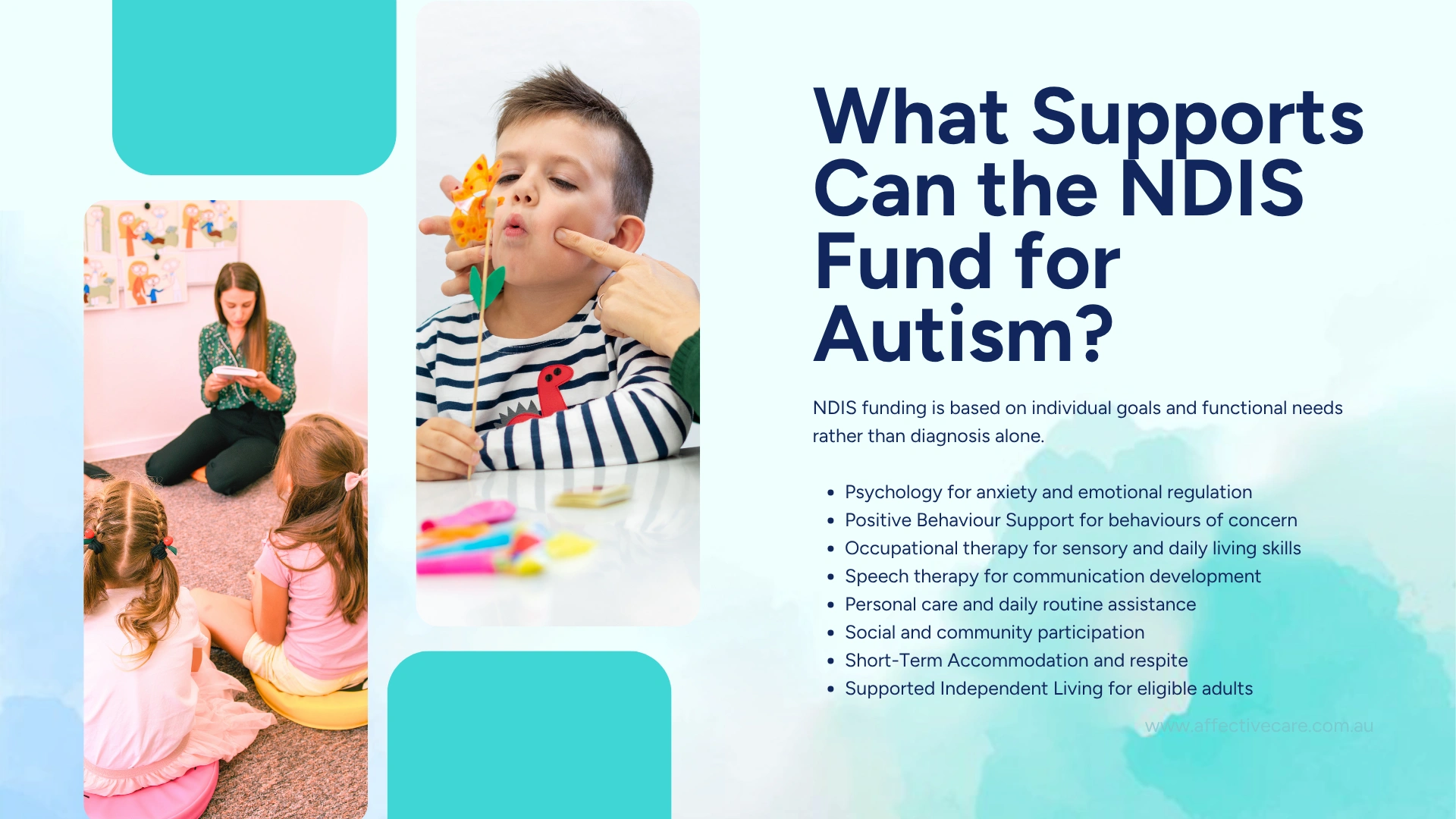
What Supports can the NDIS Fund for Autism?
NDIS funding is built around your goals, not your diagnosis. For autistic participants, commonly funded supports include:
Therapy and Capacity Building
- Psychology services: Emotional regulation, anxiety support, and psychological assessment. See our detailed guide to psychological assessments for the NDIS.
- Positive Behaviour Support (PBS): Person-centred strategies that reduce behaviours of concern by understanding what drives them, delivered in partnership with families and schools.
- Occupational therapy: Sensory regulation, daily living skills, fine motor development and school readiness.
- Speech therapy: Verbal and non-verbal communication, social communication, and alternative communication tools.
Daily Life and Participation
- Social and community support: Building confidence and connection through supported community participation.
- Personal care: Assistance with daily routines where autism significantly affects self-care.
Home and independence (teens and adults)
- Supported Independent Living (SIL): For autistic adults working toward living away from the family home with daily support.
- Respite and short-term accommodation, planned breaks that support both participants and carers.
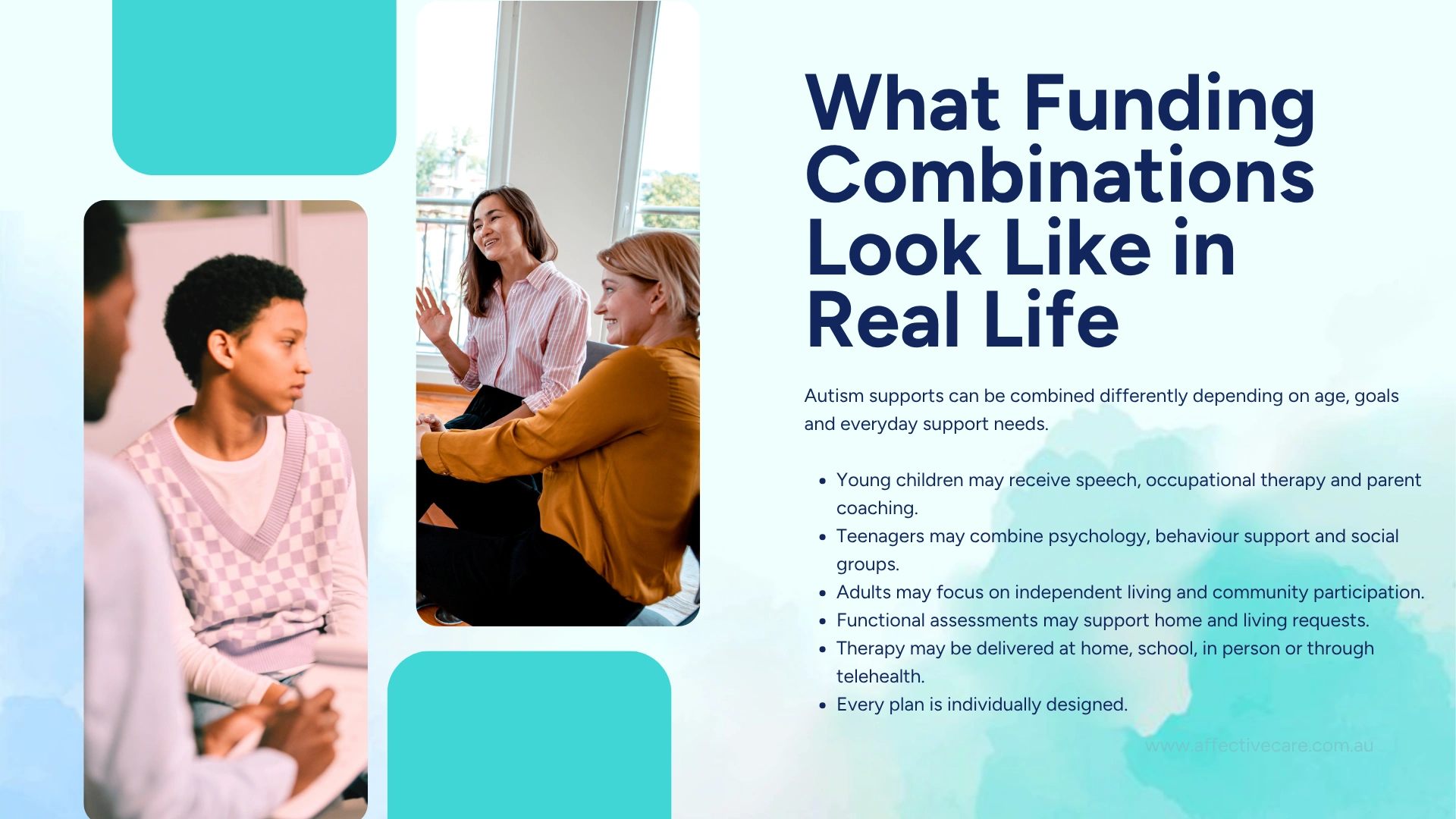
What Funding Combinations Look Like in Real Life
Every plan is different, but these three illustrative examples (composites, not real participants) show how supports combine at different ages:
Mia, 6: Early Support, Building Foundations
Mia’s family entered through the Early Childhood Approach with concerns about speech and big emotional reactions.
Her plan now combines weekly speech therapy for communication, fortnightly occupational therapy for sensory regulation and preschool readiness, and parent coaching from a behaviour support practitioner so home strategies stay consistent.
The emphasis: capacity building, delivered where Mia lives and learns.
Daniel, 14: Consistency Across Home and School
Daniel’s autism and anxiety show up differently in the classroom than at home, which used to mean two sets of strategies pulling against each other.
His plan funds a behaviour support practitioner who works across both settings, psychology sessions for anxiety and emotional regulation, and a supported social group on weekends.
The emphasis: one coherent approach, everywhere Daniel is.
Priya, 24: Independence as the Goal
Priya wants to move out of her parents’ home within two years.
Her plan combines telehealth psychology (her preference), OT-led daily living skills work, community participation support, and a functional capacity assessment to evidence her home-and-living request.
The emphasis: a staged pathway toward supported independent living, with skills built before the move.
Notice the pattern: same diagnosis, three completely different plans; because funding follows goals and function, not the label.
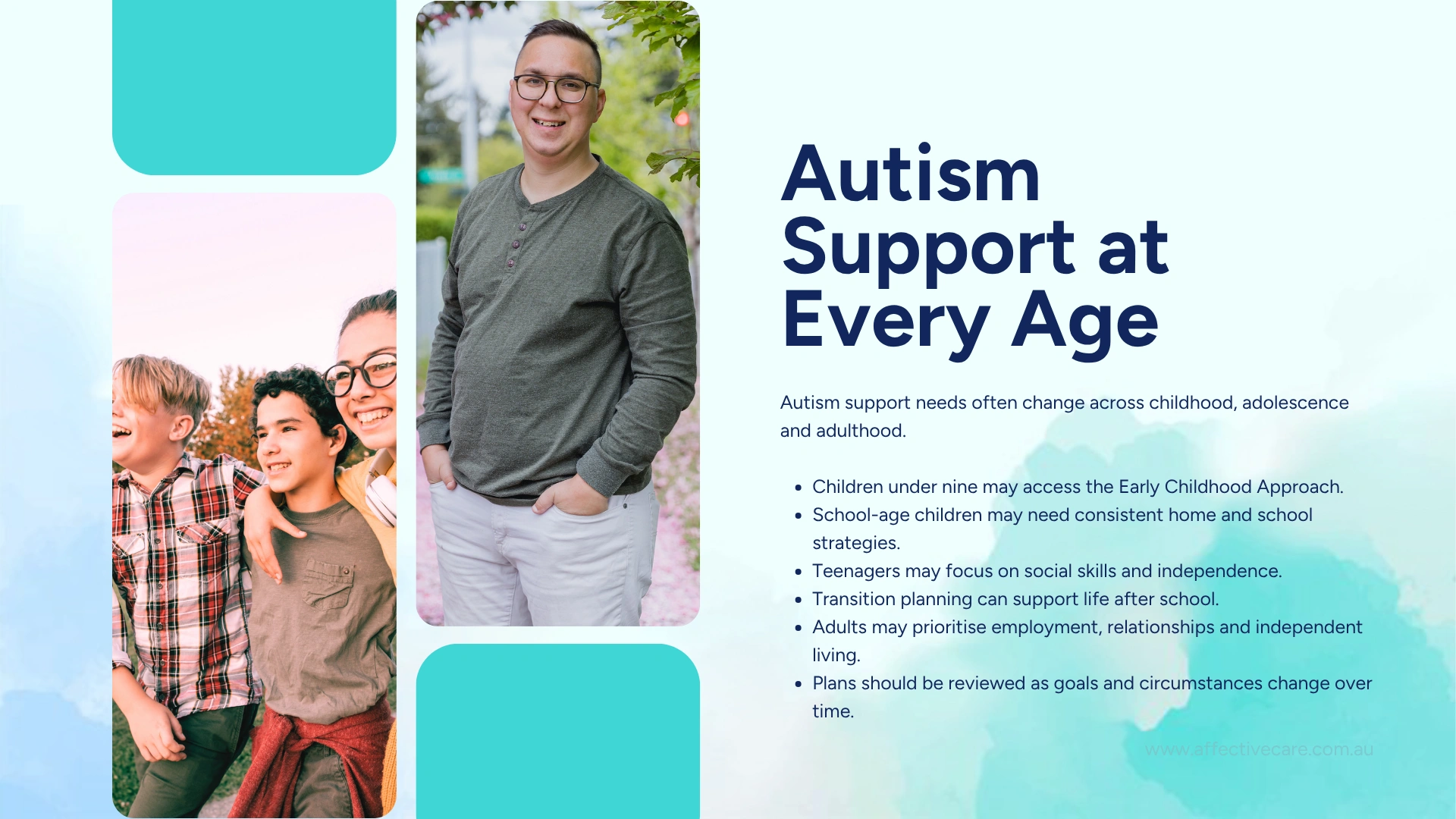
Autism Support at Every Age
Support needs change across a lifetime, and NDIS plans should change with them.
- Children under 9 may be supported through the NDIS Early Childhood Approach; often without needing a formal access decision first.
- School-age children commonly combine therapy supports with behaviour support that works across home and school.
- Our School to Home Behaviour Support Planner helps families keep strategies consistent between settings.
- Teenagers often shift focus toward independence skills, social participation and planning for life after school.
- Adults may focus on employment readiness, independent living, and mental health support, including telehealth psychology for those who prefer support from home.
Not sure which supports fit your situation? Our Child vs Teen vs Adult Support Needs Planner is a free tool designed for exactly this question.
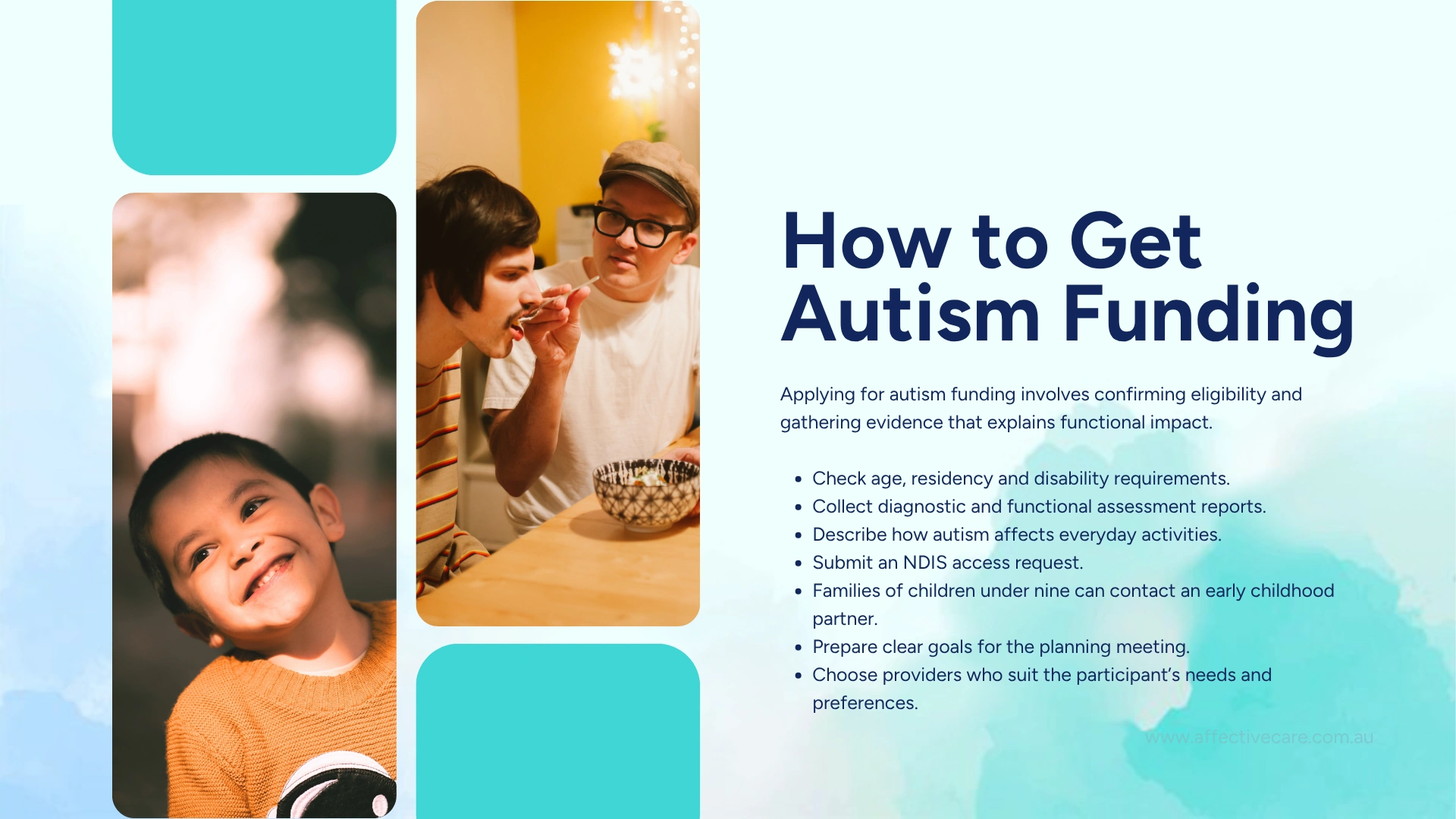
How to Get Autism Funding: Step by Step
- Confirm eligibility basics: Age, residency, and disability requirements. The NDIS eligibility checker is the official starting point.
- Gather your evidence: Diagnostic reports plus functional assessments. See autism assessments for the NDIS for what a strong report includes.
- Submit your access request or, for children under 9, connect with an early childhood partner first.
- Prepare for your planning meeting: Our Goals, Supports & Next Steps Workbook helps you translate daily challenges into NDIS goals.
- Choose your providers; registered providers like Affective Care meet NDIS quality and safeguard standards. Our guide on registering with the NDIS covers the practical steps.
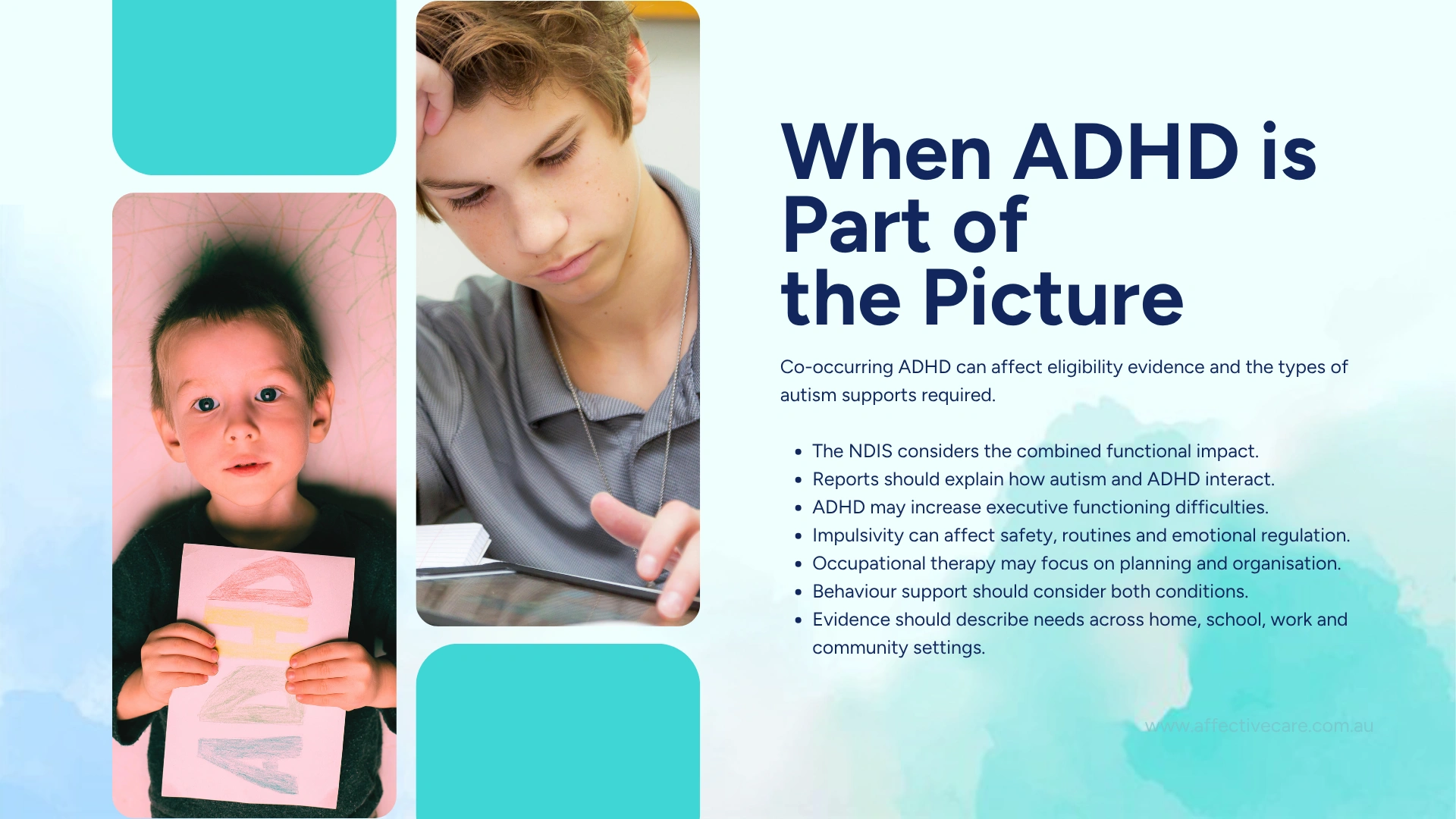
When ADHD is Part of the Picture
Autism rarely travels alone, and ADHD is its most common companion. If your child (or you) has both diagnoses, two things are worth knowing.
First, for eligibility, the NDIS assesses combined functional impact autism as the primary diagnosis with co-occurring ADHD often paints a clearer picture of daily-life impact than either condition alone.
For a more detailed look at higher autism support needs, see our guide to Autism Level 3 NDIS funding, eligibility and supports, including how individual functional needs can influence an NDIS plan.
Make sure assessment reports address both, and describe how they interact: the sensory overwhelm and the impulsivity, the social communication differences and the executive functioning load.
Second, for support planning, co-occurring ADHD usually shifts the therapy emphasis, more executive functioning and routine-building work in occupational therapy, and behaviour support strategies that account for impulsivity rather than treating every behaviour as autism-driven.
We’ve written a full companion guide on this: Is ADHD covered by the NDIS? including what happens when ADHD is the only diagnosis.