


Autism in women is often misunderstood, under-recognised, and diagnosed later than autism in men.
For many years, research and diagnostic criteria were based largely on how autism presents in boys.
As a result, many girls and women whose experiences look different may go undiagnosed for years or even decades.
Autism spectrum disorder (ASD) is a neurodevelopmental condition that affects communication, behaviour, sensory processing, and the way a person experiences the world.
However, autism in women can present differently, which is why many autistic women learn to mask their traits or adapt socially in ways that make autism less visible.
For some women, recognition comes during childhood.
For many others, understanding arrives later in life after years of wondering why social interactions feel difficult, why certain environments are exhausting, or why sensory experiences feel intense.
This guide explains what autism in women looks like, the common signs of autism in adult women, why diagnosis is often delayed, and how women can access support and assessment.
What is Autism Spectrum Disorder?
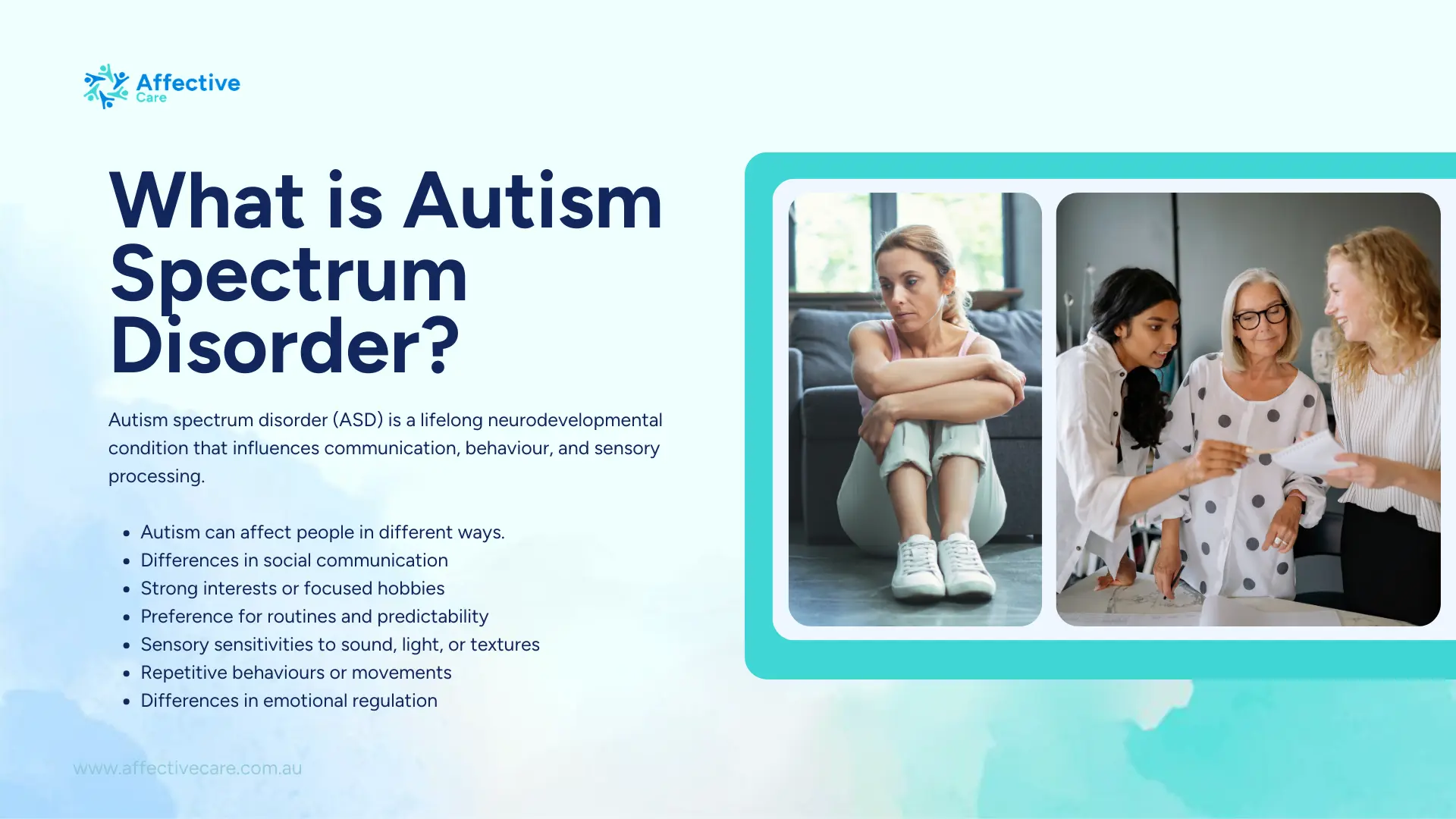
Autism spectrum disorder (ASD) is a lifelong neurodevelopmental condition that affects how a person communicates, processes information, and interacts with the world around them.
Autism is called a spectrum because it includes a wide range of experiences, strengths, and challenges.
No two autistic people are the same. Some people need significant daily support, while others live independently and may not realise they are autistic until adulthood.
Common characteristics of autism include:
- Differences in social communication
- Strong interests or focused hobbies
- Preference for routines or predictability
- Sensory sensitivities to sound, light, textures, or smell
- Repetitive behaviours or movements
- Differences in emotional regulation
Importantly, autism is not an illness to cure. Many autistic people view autism as a natural variation in how the brain works.
The neurodiversity perspective recognises that autistic individuals bring valuable strengths, perspectives, and abilities to communities.
Understanding autism in women and girls has become an important area of research because female autism symptoms may appear differently from traditional descriptions.
For families wanting to understand what happens before, during, and after an autism assessment, our guide to the autism diagnosis process in Australia explains the key steps, professionals involved, and what to expect next.
Why Autism Often Looks Different in Women
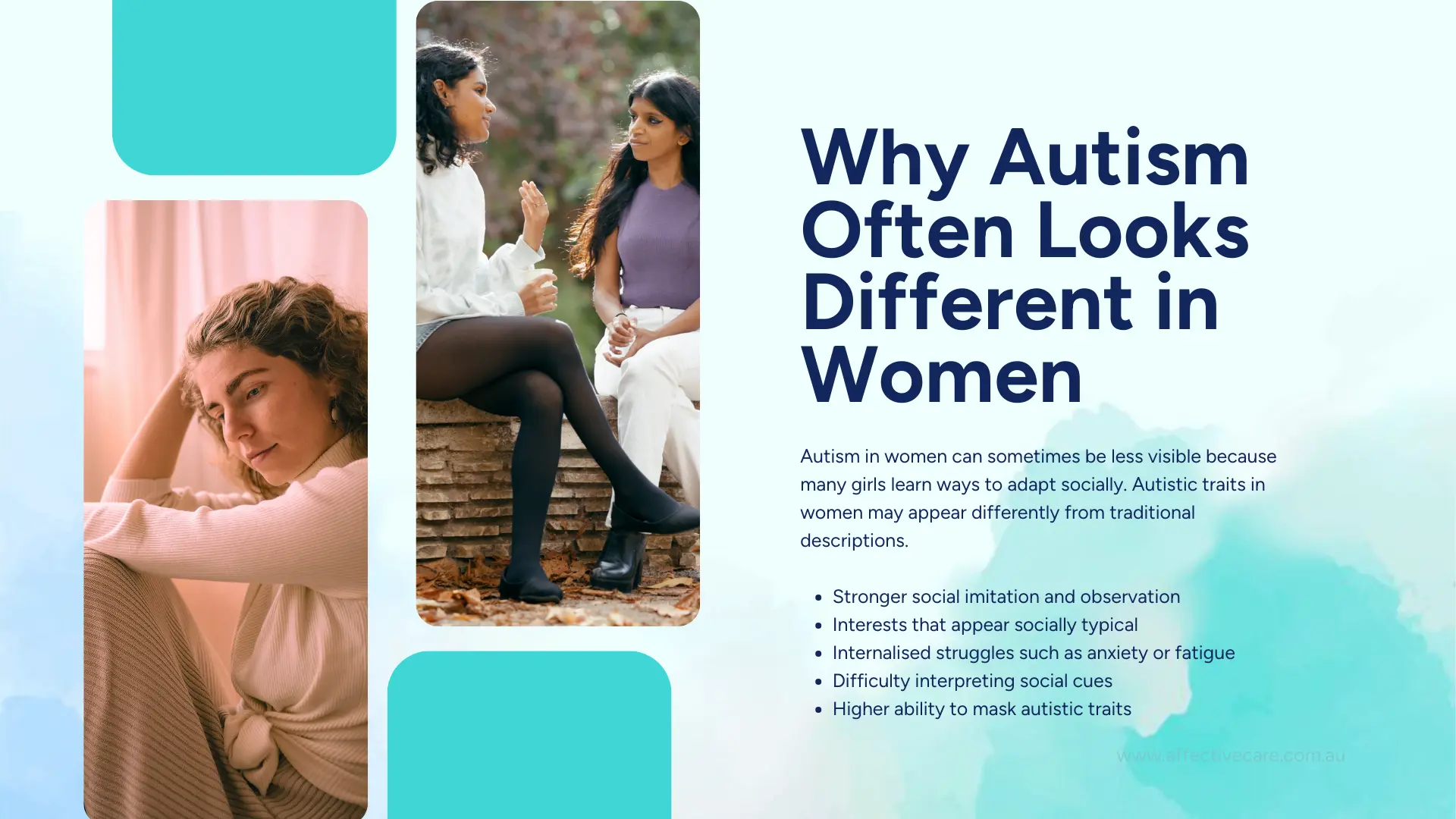
One reason autism in women is frequently missed is that autistic traits in females may appear more subtle or socially hidden.
Historically, autism research focused mainly on boys. Diagnostic frameworks were therefore based on male presentations of autism.
However, studies now show that girls and women often experience autism differently. Common ways autism in women may present include:
Stronger Social Imitation
Many autistic girls learn to observe and copy social behaviours.
They may study how others speak, gesture, or interact and try to reproduce those behaviours to fit in.
Interests That Appear Socially Typical
Autistic boys are often described as having highly specialised interests such as trains or engineering systems.
Autistic girls may have intense interests too, but those interests may appear socially typical, such as animals, literature, celebrities, psychology, or art.
Internalised Struggles
Instead of outward behavioural differences, autistic women may experience internal challenges such as anxiety, exhaustion after socialising, or difficulty interpreting social cues.
Higher Masking Ability
Many autistic women develop sophisticated strategies to hide autistic traits, which can make autism less visible to teachers, clinicians, and family members.
Because of these differences, female autism symptoms are sometimes misunderstood or attributed to personality, anxiety, or shyness rather than autism.
Common Signs of Autism in Women
The signs of autism in women can vary widely, but certain patterns appear frequently across research and lived experience.
Recognising these traits can help women better understand themselves or seek a professional assessment.
Social Differences
Some autistic women report feeling as though social interaction requires conscious effort rather than feeling automatic.
Autistic women may experience social interaction differently from neurotypical peers.
Examples include:
- Difficulty interpreting social cues such as tone or body language
- Feeling unsure how to join conversations
- Needing time to process social information
- Feeling drained after social events
- Preferring deep one-to-one conversations rather than large groups
- Analysing social interactions afterwards
Communication Differences
Communication styles may also differ. Common autistic women’s traits include:
- Rehearsing or scripting conversations
- Difficulty knowing when to speak in group discussions
- Taking language very literally
- Strong empathy, but uncertainty about social expectations
- Intense interest in specific topics and speaking about them at length
Sensory Sensitivities
Many autistic women experience strong sensory processing differences. Sensory sensitivities can influence daily life, workplace comfort, and social participation.
Common examples include sensitivity to:
- Bright lights
- Loud environments
- Crowded Spaces
- Clothing textures
- Strong smells
- Certain food textures
Behaviour Patterns and Routines
Many autistic women rely on routines or structured environments. These behaviours can provide comfort and emotional regulation.
Examples include:
- Strong preference for predictable schedules
- Distress when plans change unexpectedly
- Repetitive movements such as tapping, rocking, or fidgeting
- Intense focus on hobbies or areas of interest
- Collecting information about favourite topics
Many autistic individuals may also benefit from structured behavioural support approaches.
You can learn more about how positive behaviour therapy supports autistic individuals in building practical coping strategies in our detailed guide on Positive Behaviour Therapy for Autism under the NDIS.
Masking and Camouflaging in Autistic Women
Masking, also known as autistic camouflaging, refers to strategies autistic people use to hide their traits in social environments. It is particularly common in autistic women.
Examples of autism masking include:
- Forcing eye contact
- Suppressing stimming behaviours
- Copying others’ facial expressions
- Rehearsing social scripts
- Studying social interactions to imitate behaviour
- Hiding sensory discomfort
Masking can help someone blend into social environments, but it often comes at a cost.
Many autistic women report experiencing:
- Mental fatigue
- Anxiety
- Identity confusion
- Social burnout
- Emotional exhaustion
Over time, constant masking may lead to autistic burnout, a state of extreme fatigue and reduced ability to cope with daily demands.
Understanding masking is an important step in recognising autism in adult women who may have hidden their traits for many years.
Why Autism in Women is Often Diagnosed Late
Many women receive an autism diagnosis in adulthood rather than childhood.
This often happens because autism in girls can look different from traditional descriptions based on boys.
Several factors contribute to late autism diagnosis in women.
Diagnostic Criteria Historically Based on Boys
Early autism research focused mainly on boys, which influenced how diagnostic criteria were developed.
Because of this, female autism symptoms were less recognised, and many autistic girls were overlooked.
Subtle or Internalised Symptoms
Autistic girls may show fewer obvious behavioural differences.
Instead, their challenges may appear internally, such as social confusion, anxiety during interactions, or needing significant time alone after social activities.
Masking Behaviours
Many girls learn to mask autistic traits by copying social behaviours, rehearsing conversations, or forcing eye contact.
While masking can help them blend in socially, it can also hide autism from teachers, clinicians, and family members.
Misdiagnosis of Mental Health Conditions
Autistic women are sometimes first diagnosed with other conditions such as:
- Anxiety disorders
- Depression
- Eating disorders
- Obsessive-compulsive disorder (OCD)
These conditions can occur alongside autism, but they may also delay recognition of the underlying autistic traits.
Because of these factors, many women begin exploring autism in adulthood, often after learning more about autism through research, lived experiences shared by others, or discussions within autistic communities.
Moreover, after receiving an autism diagnosis, some individuals may be eligible for support services depending on their needs.
You can learn more about NDIS funding pathways for people with Level 1 and NDIS Level 2 autism funding and how supports may be accessed.
Autism and Mental Health in Women
Mental health is an important part of understanding autism in women.
Many autistic women experience mental health challenges at higher rates than the general population, particularly when their autism has gone unrecognised for many years.
Living in environments that do not fully understand autistic traits can create ongoing stress and emotional strain.
Several co-occurring conditions are commonly reported among autistic women.
These conditions do not cause autism, but they may appear alongside it and can influence overall wellbeing.
Anxiety
Autism and anxiety in women are closely connected. Social expectations, unpredictable environments, and sensory sensitivities can create constant pressure.
Many autistic women describe feeling anxious about social situations, workplace interactions, or changes in routine.
Over time, this persistent stress can develop into generalised anxiety or social anxiety.
Depression
Autism and depression in women can occur when individuals feel misunderstood, isolated, or unable to express their needs.
Years of trying to fit into environments that do not recognise autistic differences can affect self-confidence and emotional wellbeing.
ADHD
Attention-deficit/hyperactivity disorder (ADHD) is another condition that often occurs alongside autism.
Some women experience both autism and ADHD traits, which may include difficulty focusing, restlessness, or challenges with organisation and planning.
Obsessive-Compulsive Disorder (OCD)
Some autistic women may also experience OCD. While autism can involve routines and repetitive behaviours, OCD typically includes intrusive thoughts and compulsive actions performed to reduce anxiety.
Eating Disorders
Research has also found a higher rate of eating disorders among autistic women.
Sensory sensitivities, strong preferences for specific textures, or a need for predictability in food choices can influence eating patterns.
The Impact of Masking and Misunderstanding
Years of masking autistic traits or feeling misunderstood can have a significant effect on mental health.
Many women spend years trying to meet social expectations, hiding sensory discomfort, or suppressing behaviours that help them regulate emotions.
This constant effort can lead to:
- Emotional exhaustion
- Reduced self-esteem
- Chronic stress
- Autistic burnout
When autism is recognised and understood, many women find that their mental health improves because they can begin building environments and coping strategies that support their needs.
Understanding the link between autism, anxiety, and depression in women can be an important step toward receiving appropriate support and improving overall wellbeing.
Support needs among autistic women can vary widely, and our guide to Autism Level 3 NDIS funding and supports provides further information for people who require very substantial support in daily life.
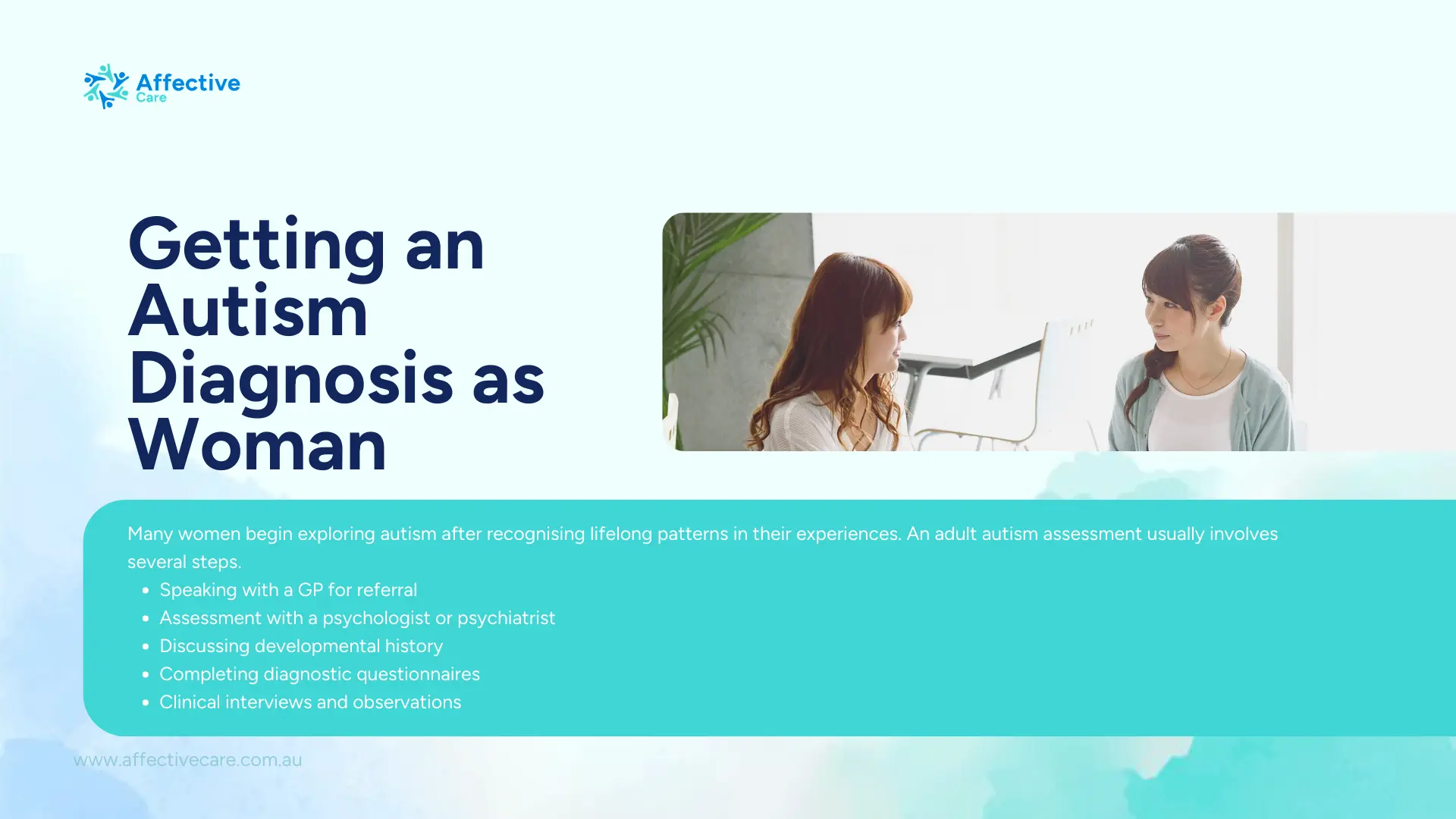
Getting an Autism Diagnosis as an Adult Woman
Many women begin exploring an adult autism diagnosis after recognising traits that have been present throughout their lives.
Learning about autism in adult women can help explain long-standing experiences with social communication, sensory sensitivities, routines, or feeling different from peers.
Seeking a professional assessment can provide clarity and access to appropriate support if needed.
In Australia, the process for an autism assessment for adults usually involves several steps.
GP referral
The first step is often speaking with a general practitioner (GP).
A GP can discuss your concerns and provide a referral to a specialist who is experienced in assessing autism in adults.
Psychologist or Psychiatrist Assessment
Clinical psychologists, neuropsychologists, or psychiatrists typically conduct autism assessments for adults.
These professionals use evidence-based assessment tools designed to evaluate communication patterns, behaviour traits, and sensory experiences associated with autism spectrum disorder.
Developmental History
A key part of the assessment involves discussing developmental history, including childhood behaviour, learning patterns, friendships, and early social experiences.
Clinicians may also ask about education, work, and daily functioning.
Questionnaires and Interviews
The assessment process often includes structured questionnaires, diagnostic interviews, and observation tools.
These help clinicians understand whether a person’s experiences align with autism diagnostic criteria.
Some women also choose self-identification without pursuing a formal diagnosis.
Reading about autistic experiences, connecting with autistic communities, and accessing peer support can help individuals better understand themselves and build supportive environments.
For many women, whether through formal diagnosis or self-identification, recognising autism can bring clarity and self-acceptance.
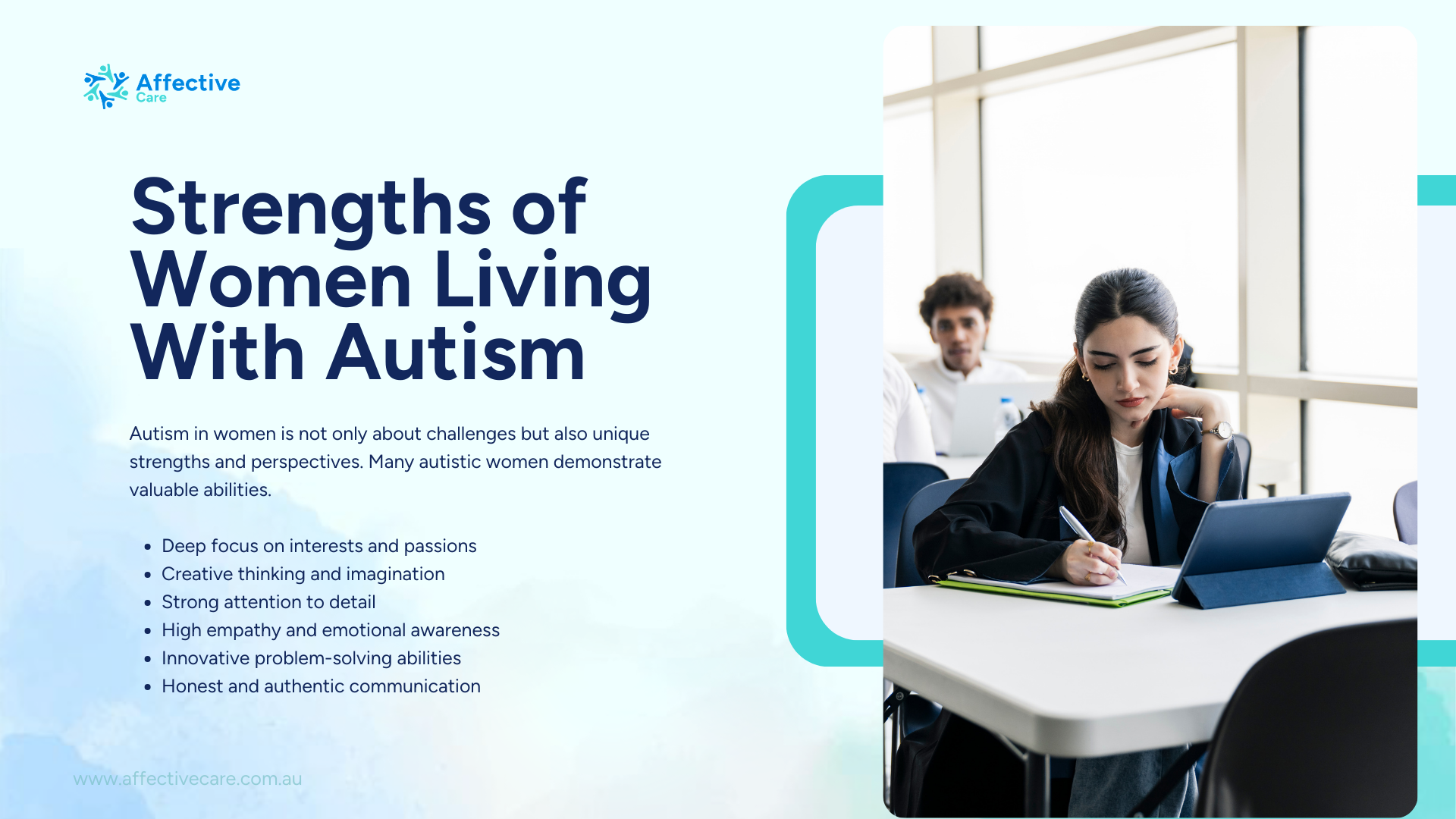
Strengths and Unique Perspectives of Autistic Women
Discussions about autism in women often focus on challenges, but it is equally important to recognise the many strengths and perspectives autistic women bring to their communities, workplaces, and relationships.
From a neurodiversity perspective, autism is understood as a natural variation in how people think, process information, and experience the world.
Many autistic women develop valuable skills and insights through their unique ways of perceiving and analysing their surroundings.
One commonly recognised strength is deep focus and creativity.
Autistic women often develop strong interests in specific topics and can spend long periods exploring ideas, research, or creative projects.
This focused thinking can lead to expertise in areas such as science, art, writing, technology, or design.
Another important strength is attention to detail. Many autistic individuals notice patterns, small changes, or details that others might miss.
This ability can be highly valuable in fields that require precision, analysis, or problem-solving.
Some common strengths often seen in autistic women include:
- Strong concentration and deep focus when working on meaningful interests
- Creative thinking and imagination, particularly in artistic or analytical fields
- High attention to detail, helping identify patterns or inconsistencies
- Strong empathy and emotional awareness, especially around fairness and compassion
- Innovative problem-solving abilities that lead to unique perspectives
- Honesty and authenticity in communication and relationships
Many autistic women also demonstrate innovative problem-solving abilities.
Their ability to think differently, question assumptions, and analyse situations from new angles can lead to creative solutions that others may not immediately see.
Finally, many autistic women value honesty and authenticity. They often prefer clear communication and genuine relationships rather than relying on social conventions or indirect meanings.
Recognising these strengths helps shift the conversation from focusing only on difficulties to appreciating the diverse abilities, insights, and contributions autistic women bring to society.
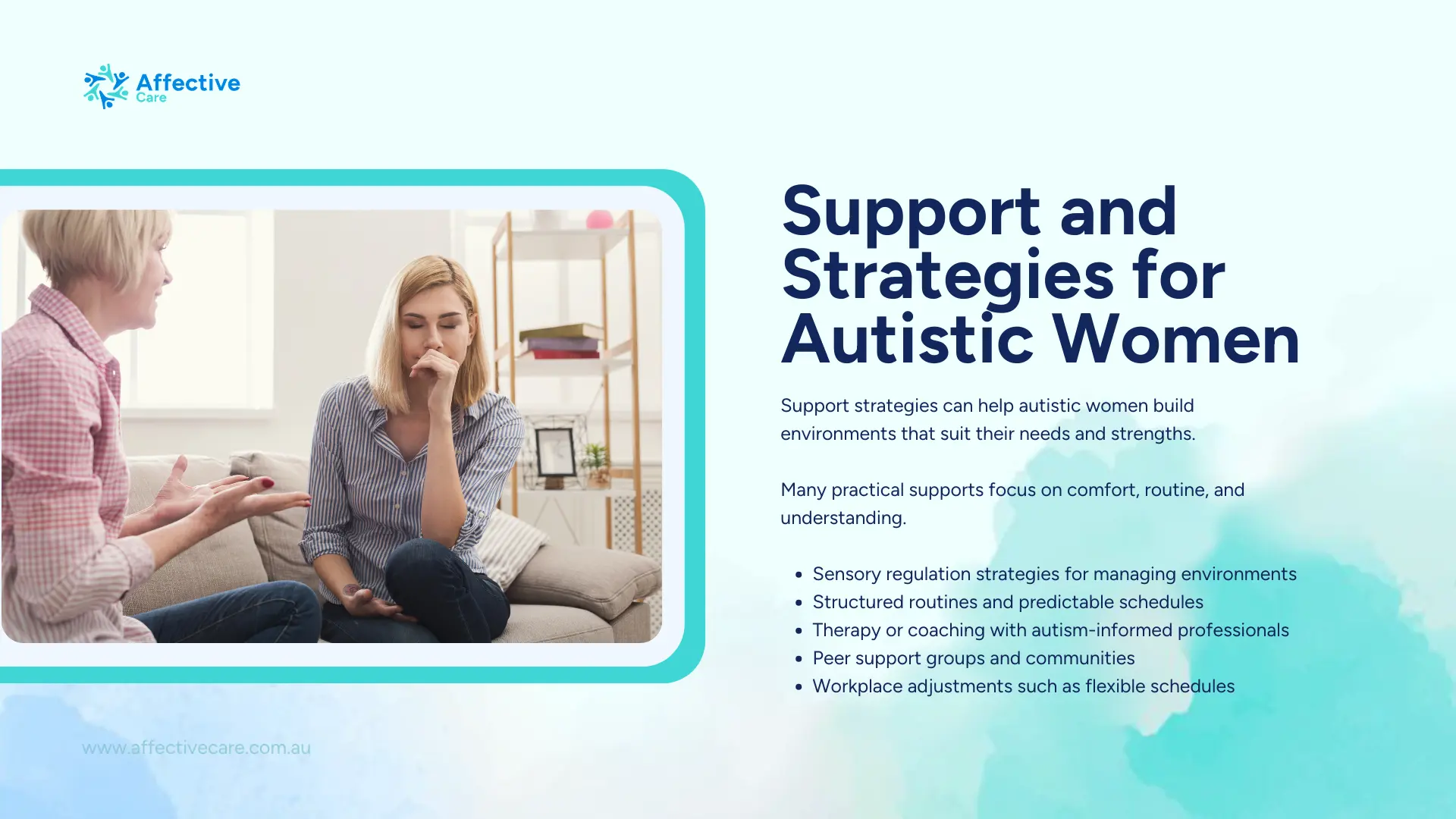
Support and Strategies for Autistic Women
Access to the right autism support for women can make a meaningful difference in daily life, wellbeing, and confidence.
Many autistic women benefit from practical strategies that help create environments that suit their needs and reduce stress.
These supports work best when they respect individual preferences, strengths, and sensory experiences.
One important area is sensory regulation strategies. Many autistic women experience sensitivity to noise, light, textures, or crowded spaces.
Small environmental adjustments can help reduce sensory strain and improve comfort. Examples include:
- Using noise-cancelling headphones in loud environments
- Choosing comfortable clothing that avoids irritating textures
- Reducing bright lighting or strong smells in work or home spaces
- Creating quiet spaces for rest and recovery
Another helpful approach is building structured routines.
Predictable schedules and organised environments can make daily tasks easier to manage and reduce anxiety related to unexpected changes. Useful tools may include:
- Planners or digital calendar reminders
- Written to-do lists or visual schedules
- Breaking tasks into clear, manageable steps
Professional support can also be valuable. Therapy or coaching with autism-informed professionals can help autistic women better understand their needs and develop practical coping strategies.
Community connection is another important support. Autistic peer groups or online communities provide opportunities to share experiences, learn from others, and feel understood.
Workplaces can also offer helpful adjustments, such as:
- Flexible work schedules
- Quieter workspaces
- Written instructions and clear expectations
Together, these coping strategies for autism can help autistic women build supportive environments that encourage wellbeing, confidence, and meaningful participation in everyday life.
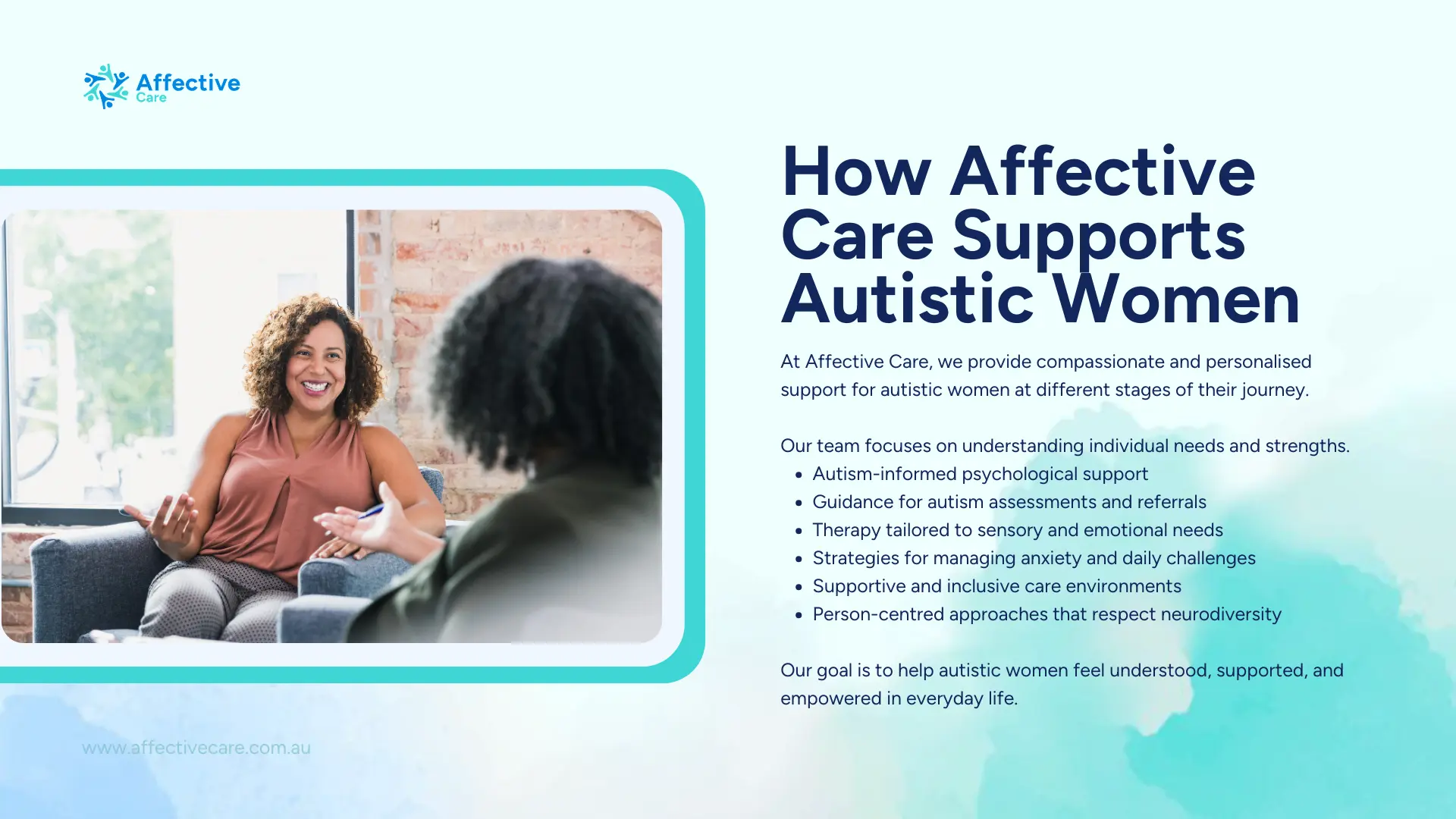
How Affective Care Supports Autistic Women
At Affective Care, we understand that autism in women can present differently and may often go unrecognised for many years.
Our approach focuses on compassionate, neurodiversity-affirming support that respects each person’s unique experiences, strengths, and goals.
We work alongside individuals, families, and health professionals to provide guidance and personalised support at every stage of the journey.
Our team provides practical and emotionally supportive services designed to help autistic women better understand themselves and access the right care.
- Autism-informed psychological support tailored to individual needs and experiences
- Guidance for autism assessments and referrals with qualified professionals
- Therapeutic support to manage anxiety, stress, and emotional wellbeing
- Strategies for sensory regulation and daily life challenges
- Support for building confidence, communication, and social understanding
- Person-centred care that respects neurodiversity and individual strengths
We also work closely with families, carers, and referring professionals to ensure care is collaborative and consistent.
By creating a supportive environment where individuals feel heard and respected, Affective Care helps autistic women explore their strengths, build coping strategies, and improve overall wellbeing.
Whether someone is seeking guidance about autism, exploring assessment pathways, or looking for ongoing psychological support, Affective Care is here to help.
We provide compassionate, informed, and personalised care that empowers autistic women to live meaningful and fulfilling lives.