


The NDIS latest new changes 2025 are reshaping how people living with disability, their families, and providers interact with the Scheme.
With new funding periods, updated pricing structures, and tighter safeguards, the aim is clearer budgeting, more equitable supports, and a stronger focus on individual needs.
If you’re feeling unsure about how these changes affect you, this guide breaks it all down in a clear, practical, and supportive way.
Key Changes to NDIS Funding Periods
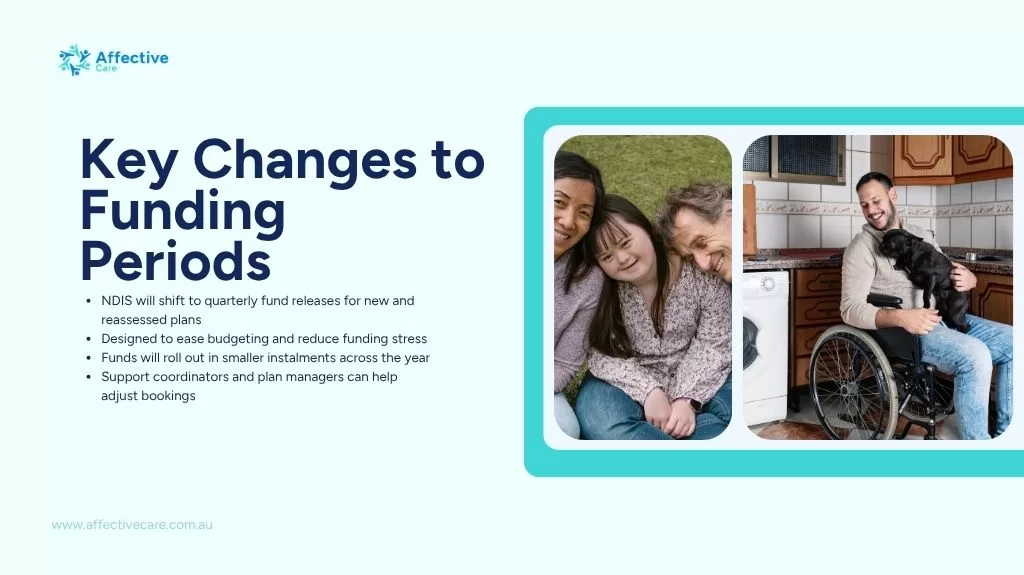
From 19 May 2025, the way funding is released in new or reassessed NDIS plans will shift from yearly to quarterly cycles. This is one of the most significant structural changes the Scheme has introduced in recent years.
This change is intended to make budgeting easier and ease the stress participants may feel about using up their entire funding before a plan review.
- Funding will be released in smaller, scheduled instalments throughout the year.
- Each participant’s rollout date will be determined by their plan reassessment schedule and risk profile.
- The goal is to provide funding in smaller, more manageable amounts, helping participants track how their supports are being used over time.
For many families, this will mean a shift in how supports are booked.
For example, longer-term agreements like therapies or weekly supports may need to be broken into quarterly service bookings.
Plan managers and support coordinators will play an important role in helping participants understand how to make the most of each instalment.
To understand how the latest pricing changes may affect support costs, read our NDIS Price Guide 2026 for a clearer breakdown of current price limits and provider charges.

New Pricing Framework Effective July 2025
From 1 July 2025, the NDIS will begin using a pricing structure aligned with Medicare and private health insurance systems.
This update, reflected in the PAPL 2025–26 (NDIS Pricing Arrangements and Price Limits), is about fairness and consistency.
- Prices for many supports will now mirror what is charged outside the Scheme.
- Participants will no longer face inflated costs simply because their service is NDIS-funded.
- Services that exceed the new price limits may not be covered by the NDIS for reimbursement.
For example, if a physiotherapy session typically costs $85 through Medicare, a provider delivering this support to an NDIS participant should not charge significantly more.
This protects participants from financial exploitation and helps regulate the disability support market.
Providers must stay informed and transparent. Participants are encouraged to request updated service agreements from providers to confirm that charges align with the new limits.
Moreover, as NDIS rules and funding processes continue to change, participants should also know what practical steps to take when their approved funding is limited.

Legislative Updates Impacting Plans
In 2025, a number of changes are being introduced to help make NDIS plans clearer and easier to manage.
The aim is to build more transparency, protect your funding, and reduce the stress that often comes with navigating the system.
Key NDIS latest changes:
- Improved self-management eligibility checks: From 4 March 2025, participants who wish to self-manage all or part of their plan will need to meet clear capability criteria. This ensures that participants can manage funding responsibly and reduces the likelihood of misuse.
- Clarified plan variation rules: The NDIA has introduced clearer guidance to help participants and providers understand the difference between a variation (a small change to an existing plan) and a reassessment (a full review). This helps reduce delays and confusion when life circumstances change.
- Enhanced fraud prevention measures: Tighter oversight of how funds are claimed and used helps ensure that participants receive the support they are entitled to. This includes better detection of suspicious claims and improved participant protections.
These updates aim to create a more stable, secure NDIS for everyone involved.
For families managing complex supports or those in rural and remote areas, these safeguards offer peace of mind and accountability.
To better understand how quarterly funding periods may affect your plan, read our guide to NDIS funding and support budgets for a simple explanation of how NDIS money is structured and used.
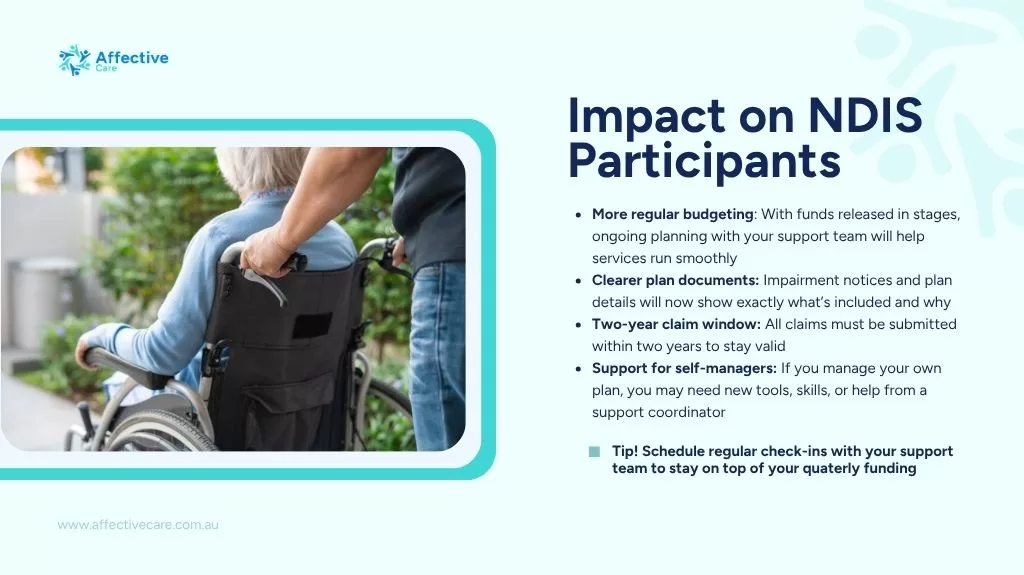
Impact on NDIS Participants
While the updates are systemic, they will be felt most directly by participants and families.
Here’s what you might notice:
- A need for more regular budgeting. With funding released in stages, you may need to work more closely with your support team to ensure services continue smoothly across the year.
- Improved transparency around what supports are covered. New impairment notices and plan documentation will make it clearer what’s included in your plan and why.
- Claims must be submitted within two years. This ensures that support delivery is tracked and invoiced in a timely way.
For participants managing their own plan, these latest changes may mean learning new skills or accessing additional support.
For families supporting children or adults with disability, it may be helpful to schedule regular check-ins with a plan manager or support coordinator to monitor spending across the quarters.
Moreover, if you are new to these updates, our guide to the NDIS explained gives a clear overview of the scheme, who it supports and how participants may use their plans.
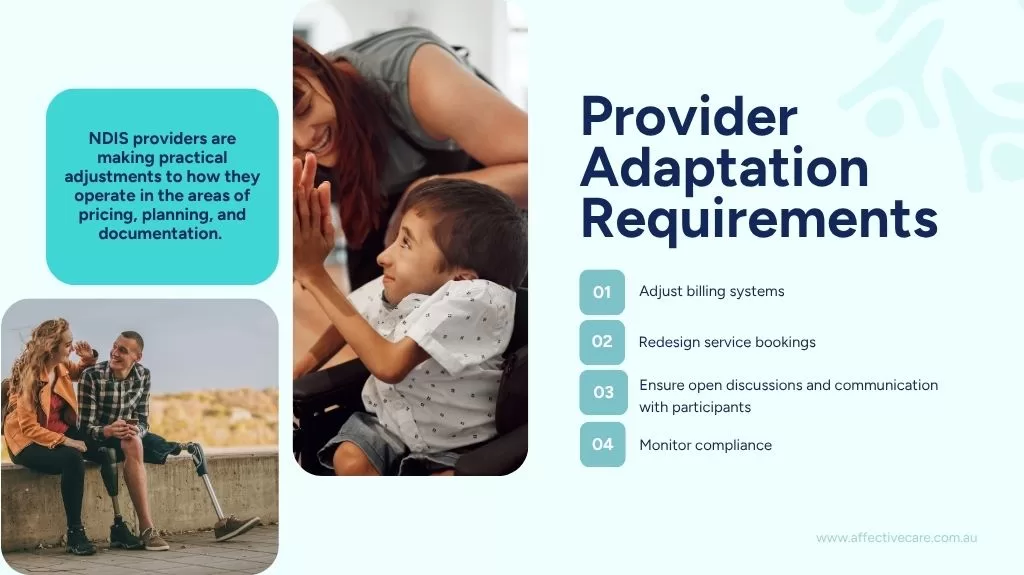
Provider Adaptation Requirements
NDIS providers will need to make practical adjustments to how they operate, particularly in the areas of pricing, planning, and documentation.
Here’s what that looks like in action:
- Adjusting billing systems to match the new quarterly budgets and revised price limits.
- Redesigning service bookings to align with how participants now receive their funding.
- Training frontline staff on the importance of working collaboratively with participants to meet their goals within each instalment of funding.
- Monitoring compliance to ensure claims are submitted within the two-year timeframe and align with PAPL limits.
Providers will also benefit from improved communication with participants.
By having open discussions about pricing, budgets, and support plans, trust is built, and outcomes are more likely to be achieved.
This is an opportunity for providers to lead with transparency and empathy, demonstrating their value as collaborative partners in a participant’s journey.
If you have heard claims about holiday funding, our article What is the NDIS $15,000 holiday in Australia? explains what the term means and what participants should check before relying on online information.
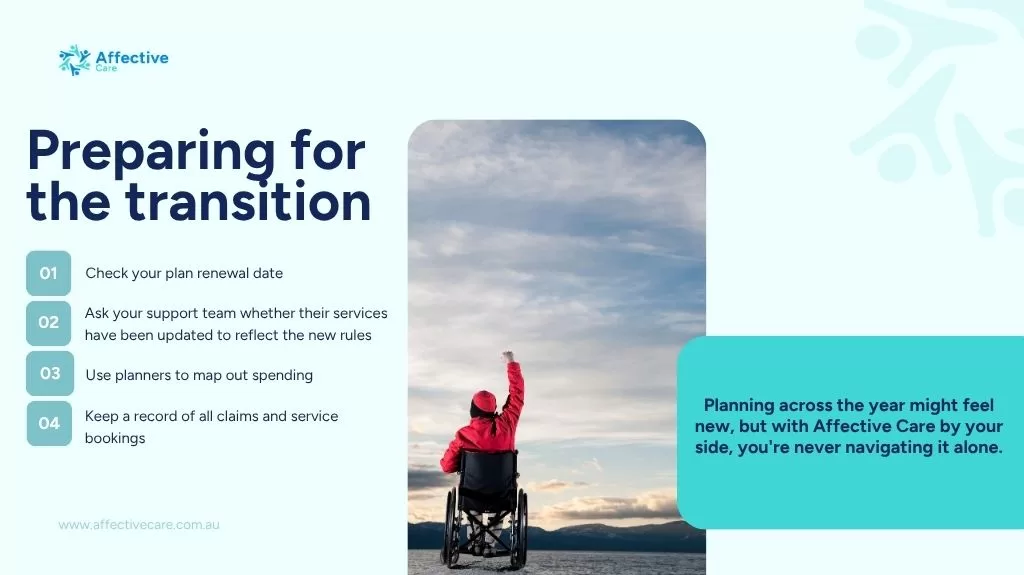
Preparing for the Transition
The NDIS latest changes 2025 is being rolled out in phases between March and July, depending on the type of plan and participant profile.
To get ready:
- Check your plan renewal date to see if the changes will apply to your next plan.
- Ask your provider or plan manager whether their services have been updated to reflect the new rules.
- Use digital or paper budget planners to map out spending across quarters.
- Keep a record of all claims and service bookings to avoid delays in reimbursements.
NDIS participants and providers alike should prepare for more active involvement in financial planning.
But you won’t be alone. Many organisations, including Affective Care, are offering planning tools and tailored support to help everyone adjust.
Moreover, for questions about invoices, tax or financial responsibilities connected to NDIS supports, our guide to NDIS Taxation explains key points participants, families and providers may need to know.

A New Opportunity
The NDIS new 2025 changes are significant, but they are also an opportunity.
With better structures in place for budgeting, clearer pricing, and improved safeguards, participants can feel more secure and supported in their plans.
If you’re unsure what these changes mean for you, reach out to trusted support professionals.
With the right guidance, these updates can lead to greater control, confidence and clarity in your NDIS journey.
If recent NDIS updates mention the NDIA, our guide to the difference between NDIA and NDIS can help readers understand the terms before exploring policy or funding changes.